
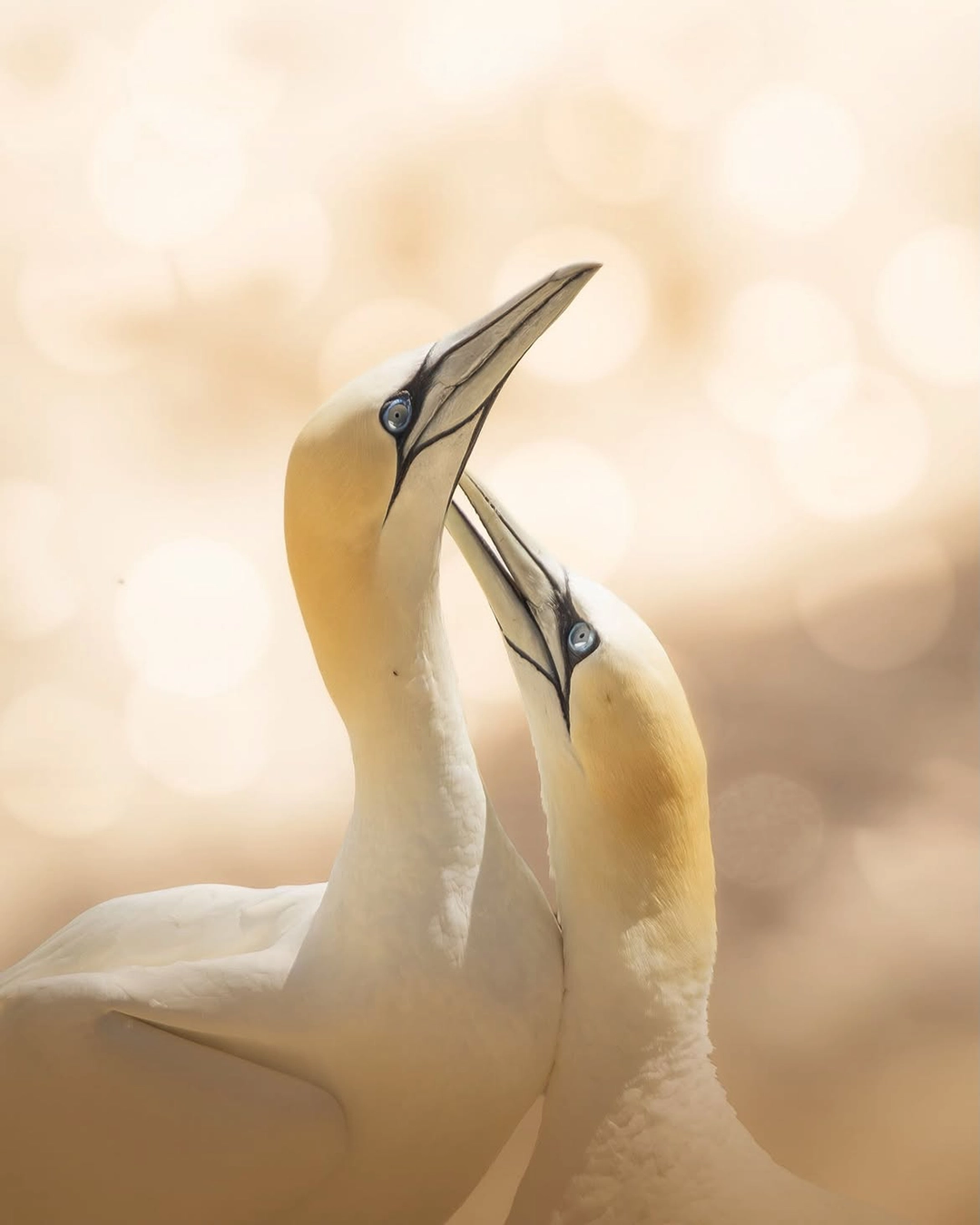
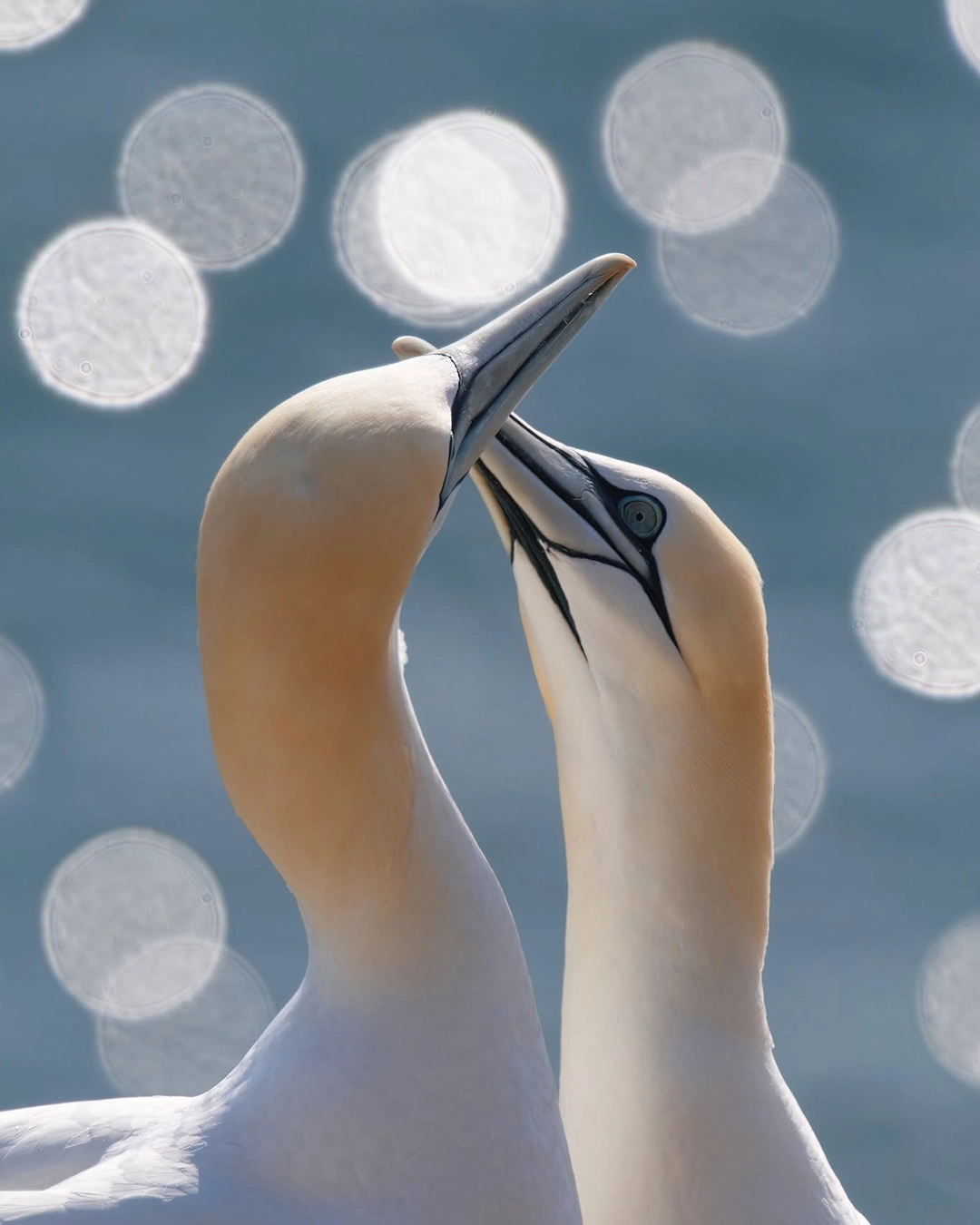
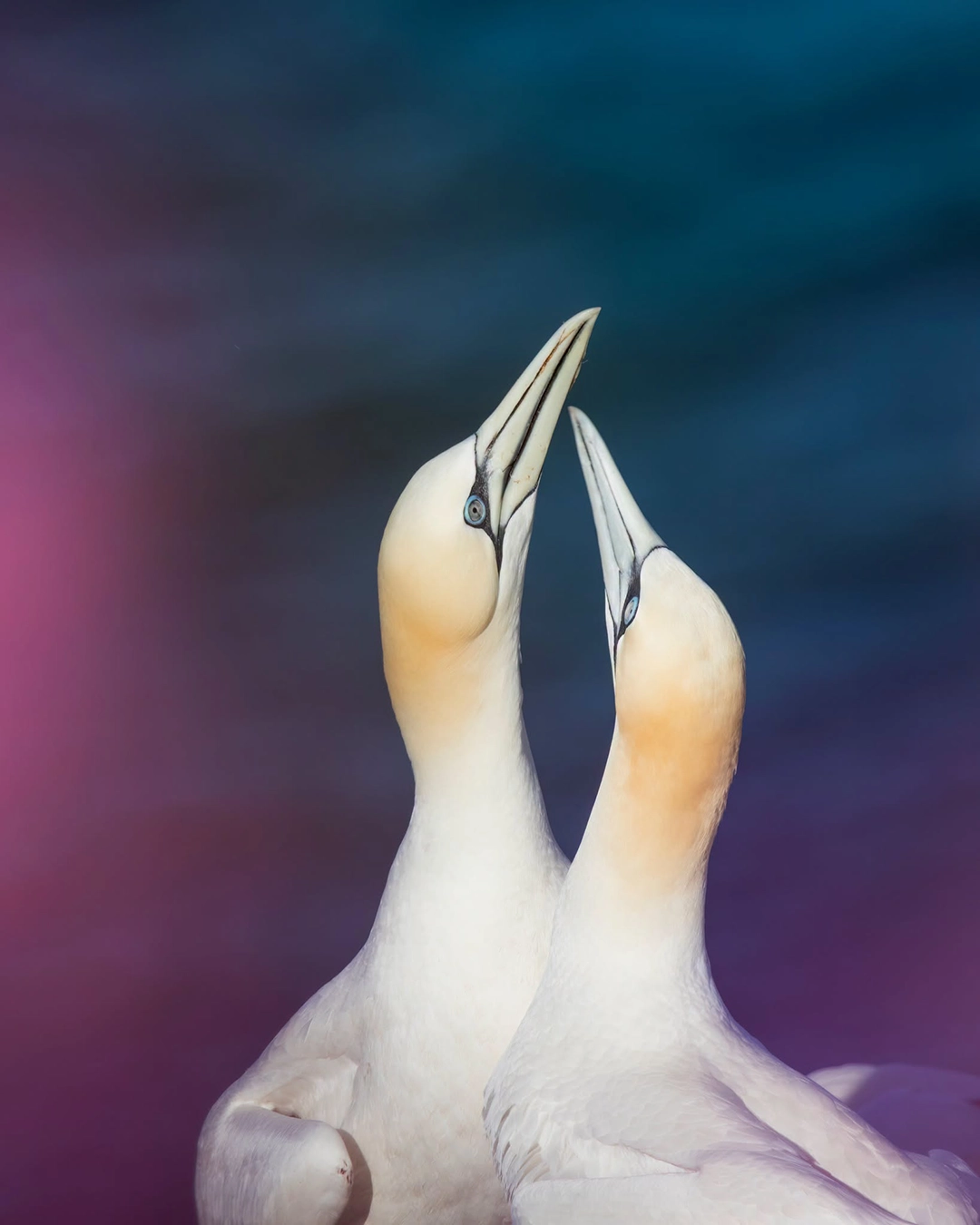
‘Devotion’ by Laura Peyton “This image was taken at RSPB Bempton Cliffs in Yorkshire, using a Canon EOS R7 and Canon RF 100-500mm lens.
Instagram: @laura\_peyton\_photography: The seawater behind the gannets was creating a beautiful bokeh effect, and I loved that I was able to capture this affectionate moment. It gave the overall image a dreamy atmosphere.
Digital Camera says: This is a perfectly timed capture, with a brilliant pose and incredible light.
Like so many other wildlife photographs, this one immediately caught my attention. It was published in Digital Camera World, issue 312, October 2026, in the Reader Gallery section. A space intended to give visibility to work submitted by readers, with no distinction between amateurs, emerging photographers, and established professionals. They do not seem particularly interested in any genre or style, only in creativity, provided it finds a technically solid resolution, and in the ability to capture truly singular moments. This last quality, for reasons I cannot quite understand, many people continue to interpret as the manifestation of an exceptional artistic intuition.
The thermal register of this image felt familiar to me. Those are my dog’s tones. So is the golden haze advancing over the peace of the body. The hesitant circles of reverie approaching from the background, which English speakers call bokeh. The term comes from the Japanese boke, derived from the verb bokeru, and specifies the qualities of what is out of focus, blurred, softly deprived of sharpness. How it came to designate whatever dissents from the focus, particularly the points of light I am referring to, I do not know. I bring it up only because it amuses me and, even if it dirties the commentary a little, because the English spelling ultimately imposed a pronunciation very close to the Japanese one, given that in English boke refers to retching, to the sensation of an unavoidable vomit.
How does one leap from nausea to the blinding luminescence of certain Gustav Klimt canvases? Or, seen from another distance, and more specifically, to the Jugendstil —the Vienna Secession— and fin-de-siècle Symbolism.
Two birds enjoy one another, interact —as a naturalist would say— according to the dictates of their biology. They merge into a single visual structure. Their necks and beaks rise in elegant curves against a golden, abstract background that silences any spatial reference. Like trouble-free coexistence, the integration of a pair of bodies and the gold of opportunity and of themselves. Allowing for astronomical distances, Klimt’s The Kiss is organized around a similar argument.
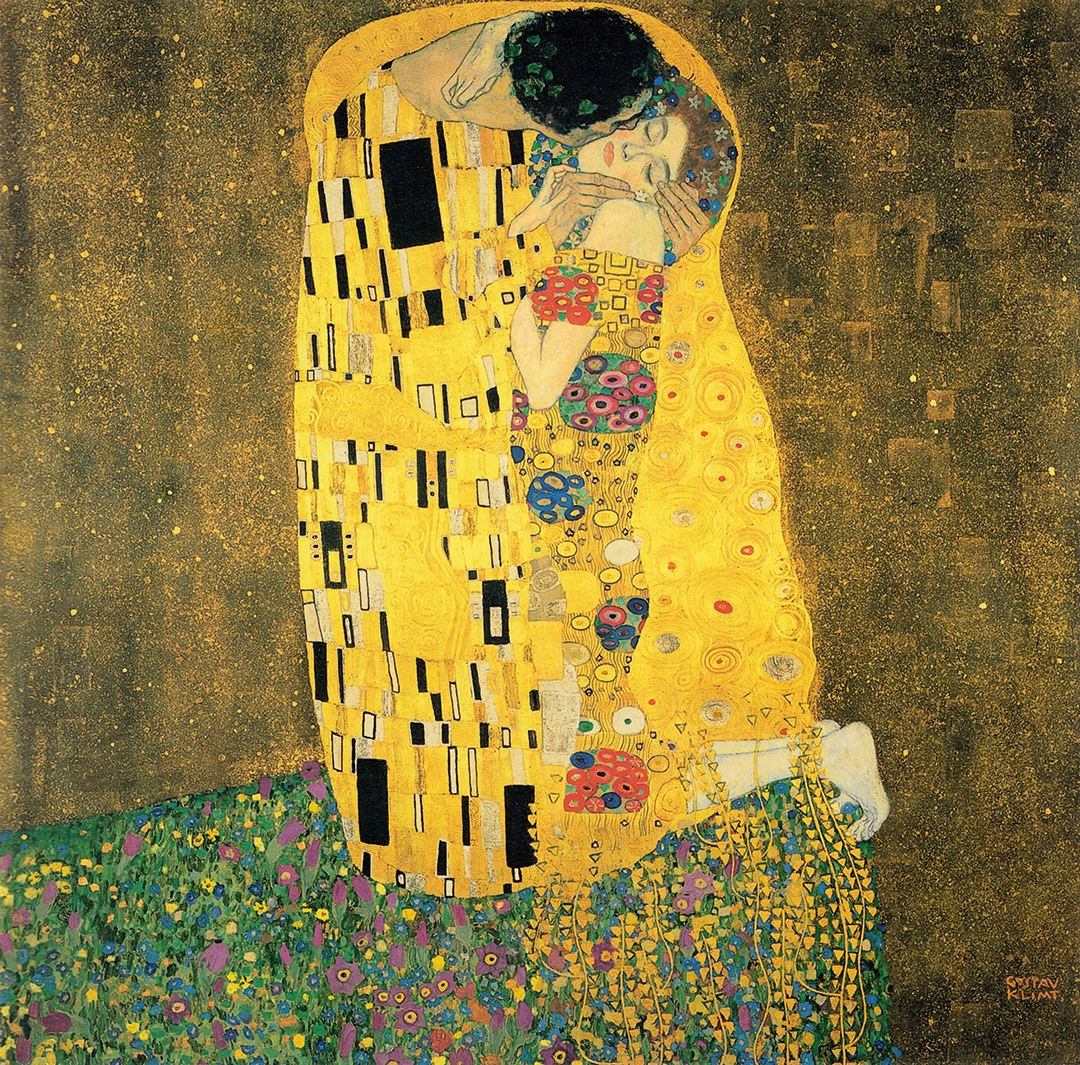
Gustav Klimt (1862–1918), The Kiss (Lovers) (Der Kuss / Liebespaar), 1908–1909
Oil, gold leaf, silver, and platinum on canvas | 180 × 180 cm
Signed lower right “GUSTAV / KLIMT,” Belvedere, Vienna, inventory no. 912.
I may as well confess that I do not particularly like this exceedingly famous piece. Perhaps because of the grappling, the contorted sumptuousness of the scene, and the intense caramelization of a kiss that, except for its first taste, is fairly ordinary. I like his Danaë better. He once again soaks us in little flakes of light and tiny gold coins, yet gives us the spectacle of a juicy abandon contained within a snail-like spiral that seems to protect a vulnerable intimacy.
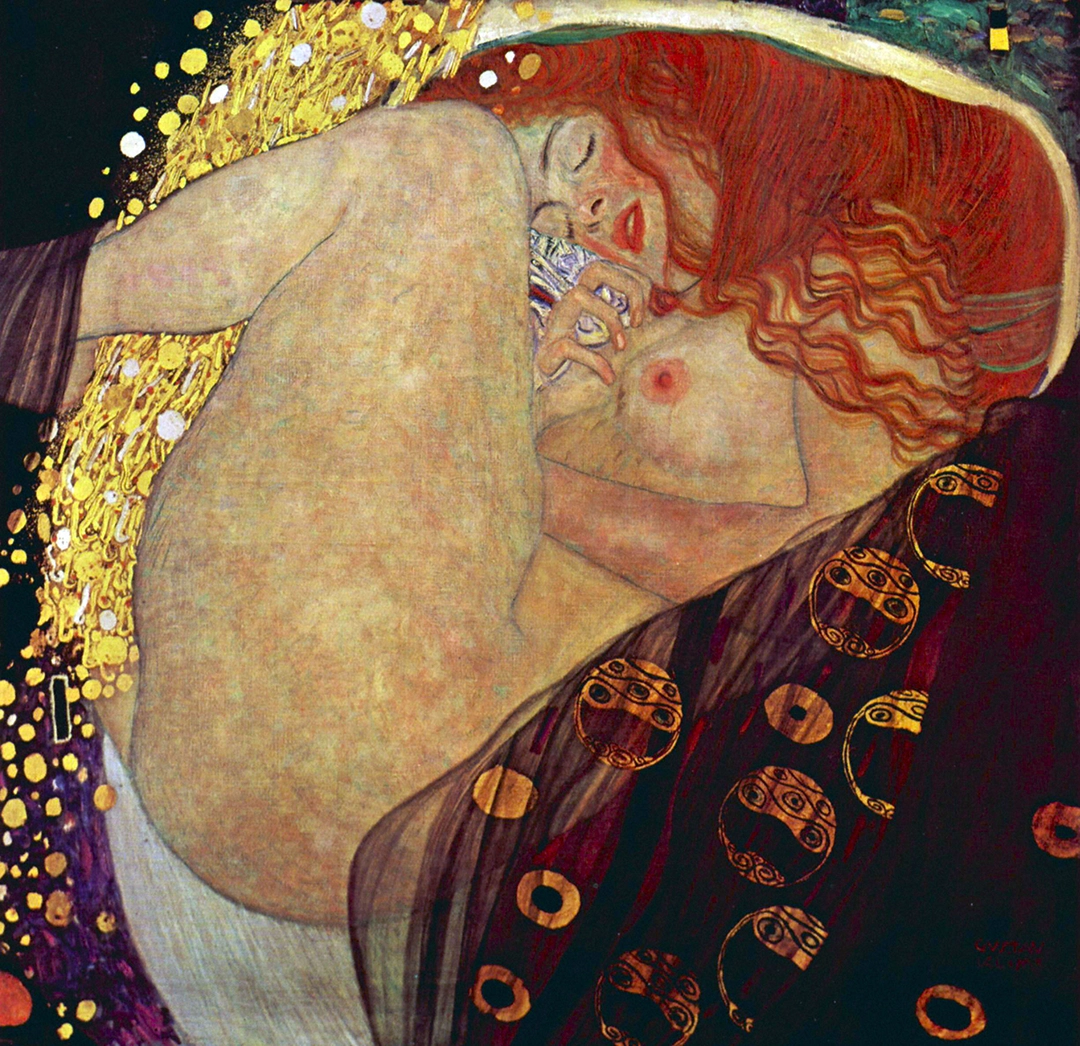
Gustav Klimt (1862–1918), Danaë, 1907–1908
Oil on canvas | 77 × 83 cm, private collection, formerly Collection Hans Dichand, Vienna.
Behind this entire display of luminous pyrotechnics, one can hear the little bells of what we now know as Japonismus, which one day offered its breasts to transnational Art Nouveau.
In the photograph under discussion, the clean silhouettes, the attentive observation of contour, and the subordination of the setting to the naturalism of the birds lead us directly to those typical decorative prints. The Belvedere characterized Klimt’s work from this period precisely through its ornamental determination, flattened forms, and the influence of Japanese aesthetics.
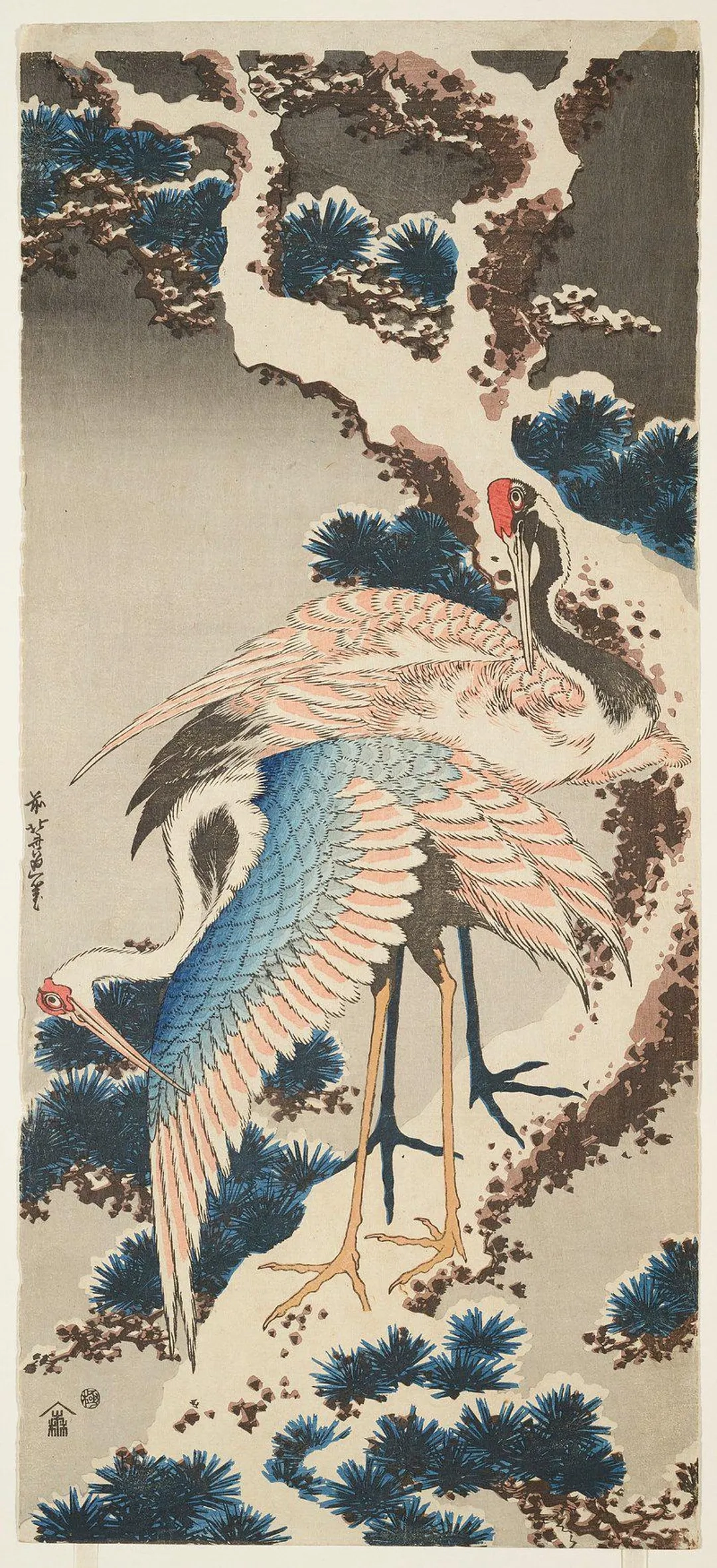
Katsushika Hokusai (1760–1849). Cranes on Branch of Snow-covered Pine, late 1820s. Woodblock print, ink and color on paper. The Metropolitan Museum of Art, New York. Public Domain.
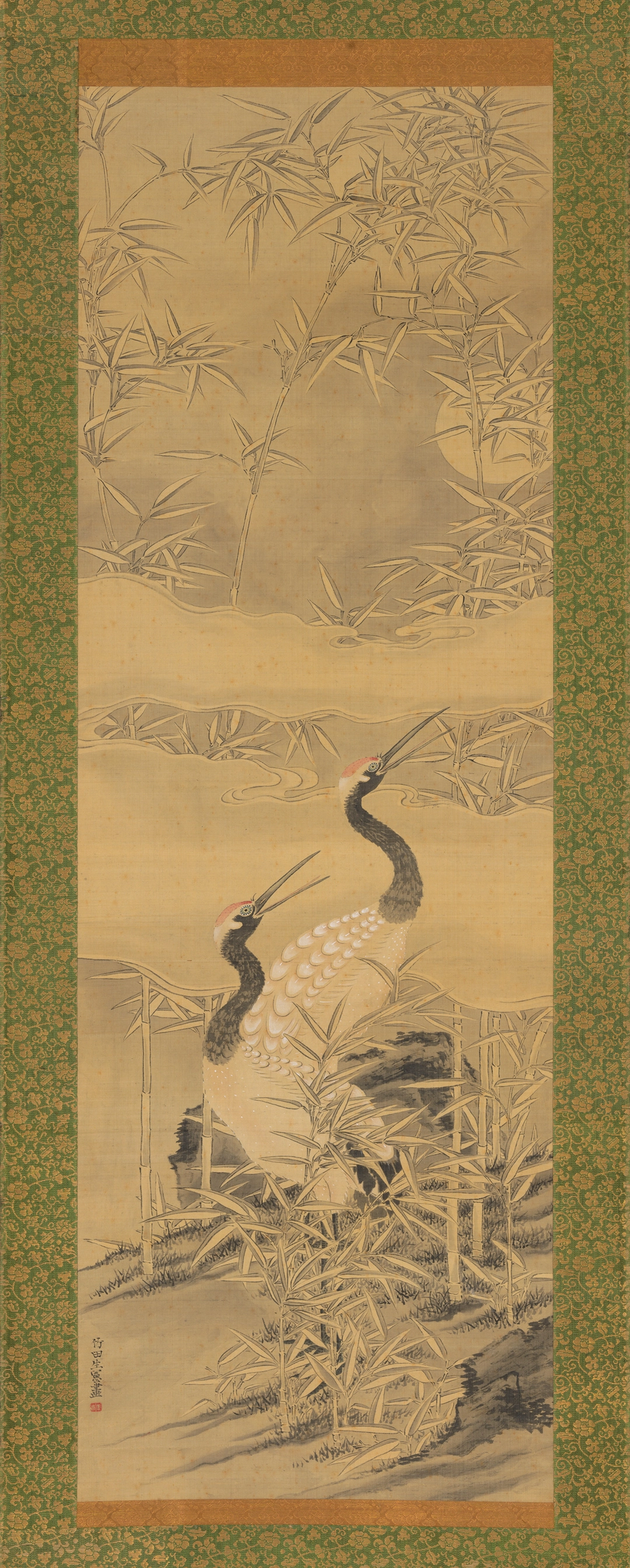
Observe how Hokusai constructs the relationship between these two cranes through proximity and the contrast between their postures. One stands upright, although paying no attention whatsoever, while the other, inclined, seems attentive to the first one’s inattention. It is a minor detail, but it is curious that Hokusai let it slip by. As for the composition, and from a Gestalt perspective, the wing extended by one of the cranes reaffirms and finds continuity in the curve proposed by the pine trunk. The trunk generously accommodates the head of the distracted crane and, together with the wing, closes an impeccable arc that the eye can travel in a single gesture.
The birds, then, form a single visual unit. Without the slightest affectionate gesture, they guarantee at least coexistence, mutual attention, and acceptance or tolerance while occupying the same space.
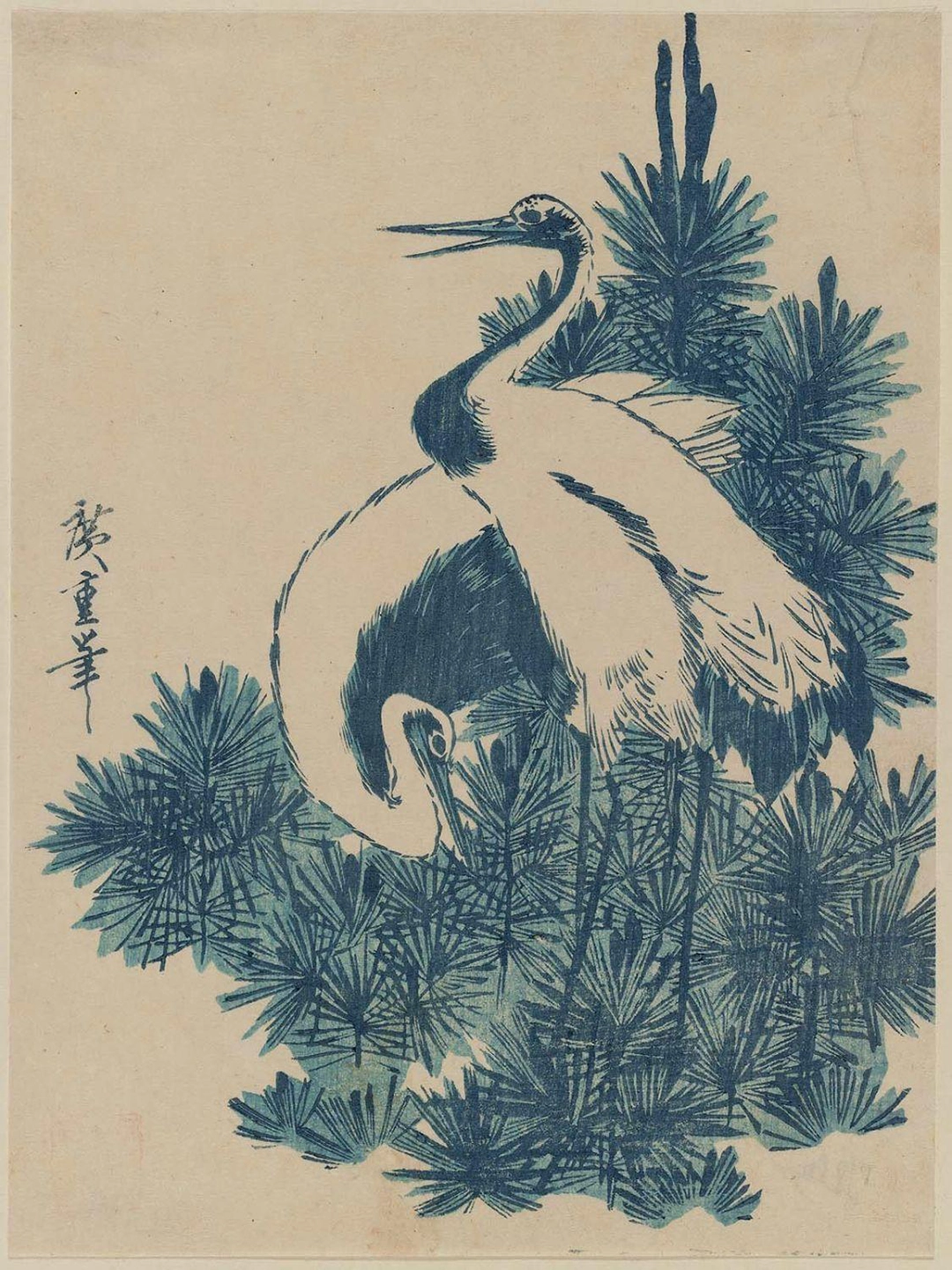
As far as his iconography is concerned, he was suffering at the time from an almost pathological obsession with cranes, herons and, in general, any waterbird whatsoever. These little bird-and-flower prints —kachō-ga— recur frequently in Hokusai, Hiroshige and, above all, although later, in Ohara Koson. All of them combined gestures of affection between two birds with slender necks, precise profiles, and a great deal of space around them. Purely atmospheric, of course.
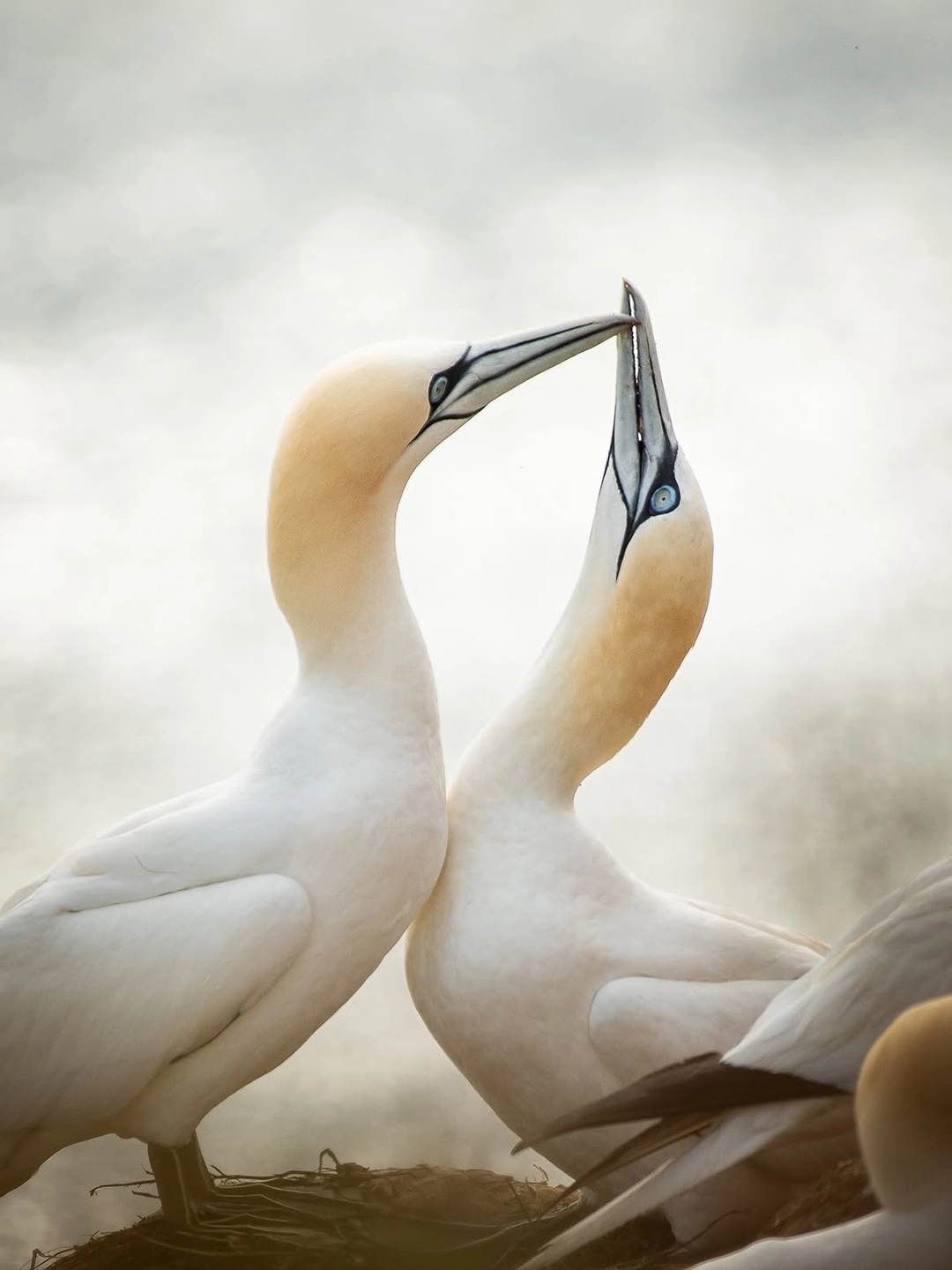
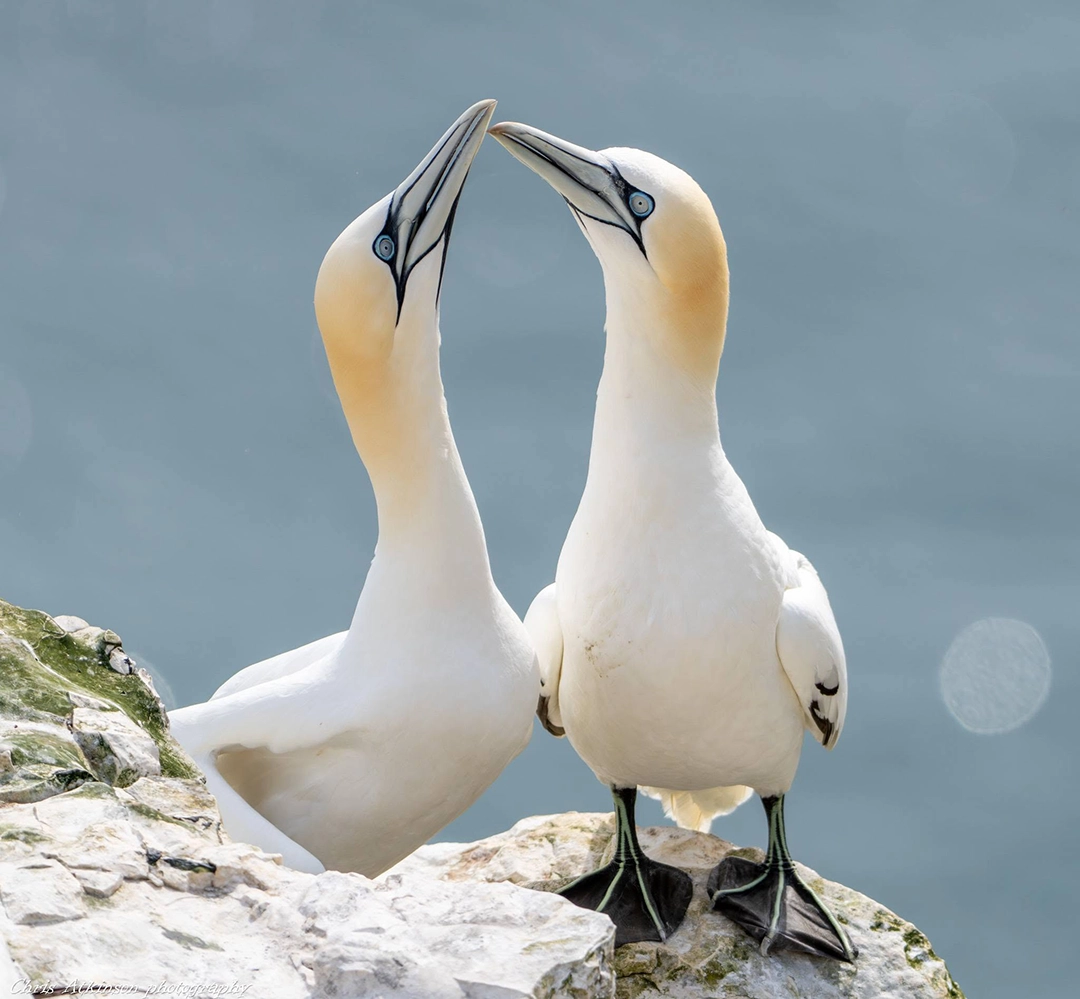
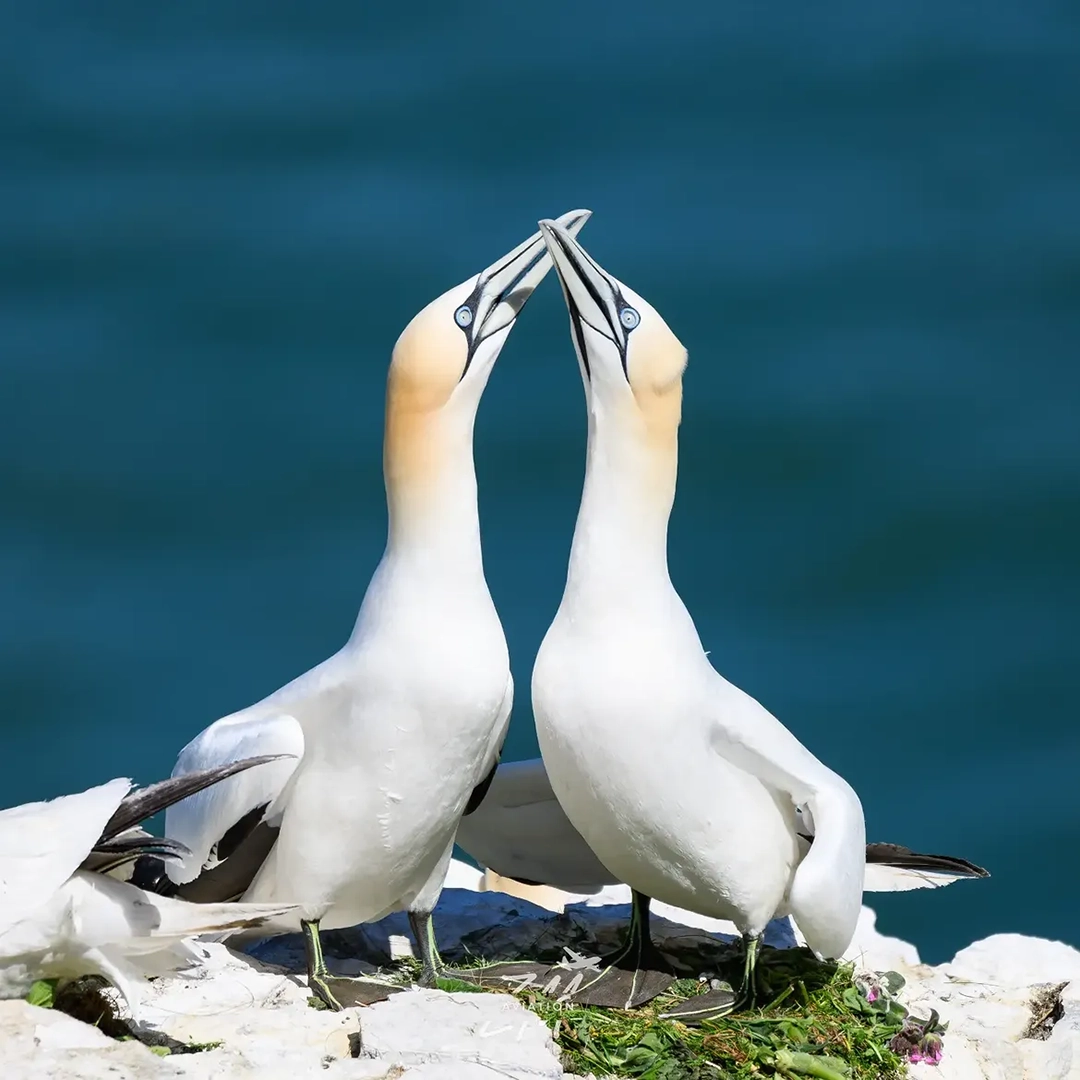
Ours are not cranes, nor are they so slender. They are northern gannets —Morus bassanus, northern gannets—. The photographer identifies them as gannets and says they were found at RSPB Bempton Cliffs, Yorkshire. They do have something interesting. The black lines around the eyes and beak. Beyond the way the birds are arranged within the composition and the stylization of their gestures, they make me think of an almost calligraphic intervention, a finishing stroke executed with a brush.
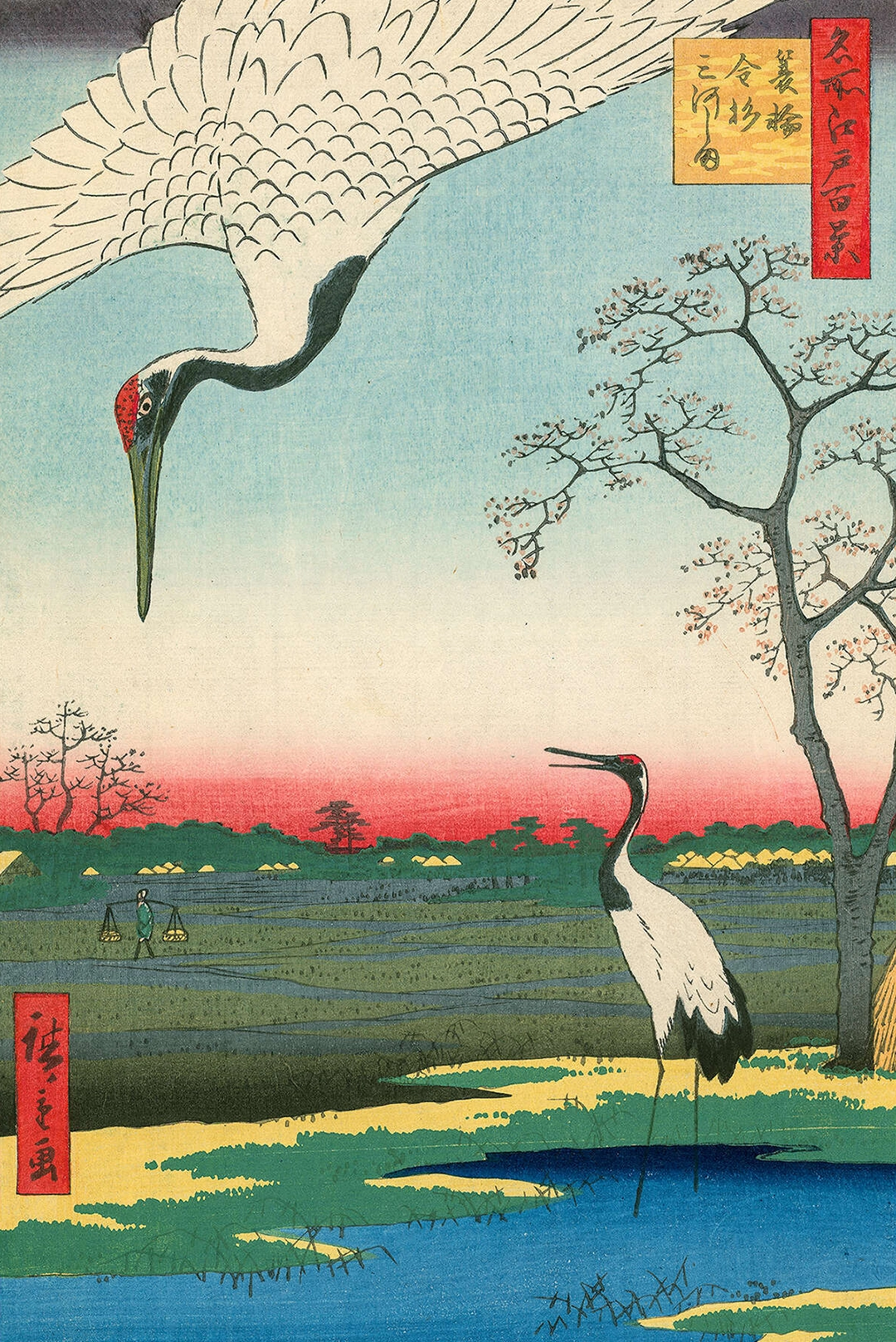
Utagawa Hiroshige (1797–1858), Minowa, Kanasugi at Mikawashima, from One Hundred Famous Views of Edo, 1857, woodblock print, ink and color on paper, 33.7 × 21.7 cm, The Metropolitan Museum of Art, New York.
The Vienna Secession may then lay claim to the decorative sensibility, the dematerialized space ignited in its blazing unreality; österreichische Japonismus, to the visual economy, the almost editorial design, the shared and silent dissolution of landscape.
Japan erupted into Vienna with the 1873 World’s Fair, when it presented itself for the first time as a nation on a grand scale. It brought thousands of objects, decorative art, architecture, gardens, and design products that made a powerful impression on the European public. Some of those objects later entered Viennese collections, including the Imperial and Royal Museum of Art and Industry, today the MAK. From that first contact onward, a taste for Asian decorative patterns, asymmetry, spatial simplification, and the ornamental treatment of nature was progressively incorporated into Austrian design and applied arts. Decades later, they would be assimilated by the artists of the Wiener Secession, Klimt among them, along with Josef Hoffmann and Koloman Moser.
Laura Peyton’s photograph does not have to have very much to do with any of this. Every photographer finds and takes advantage of whatever they believe to be their “decisive moment.” For my part, I have never liked yellows or golds. Back when I designed regularly and occasionally fell into the hands of some small businessman from Doral or Hialeah who demanded more glitz—far more, much more, gloriously more: a Viennese rain of golden sparkles, I would be seized by a poisonous rage. Furious, I would step away and retreat into Asian sobriety, into semantic half-light.
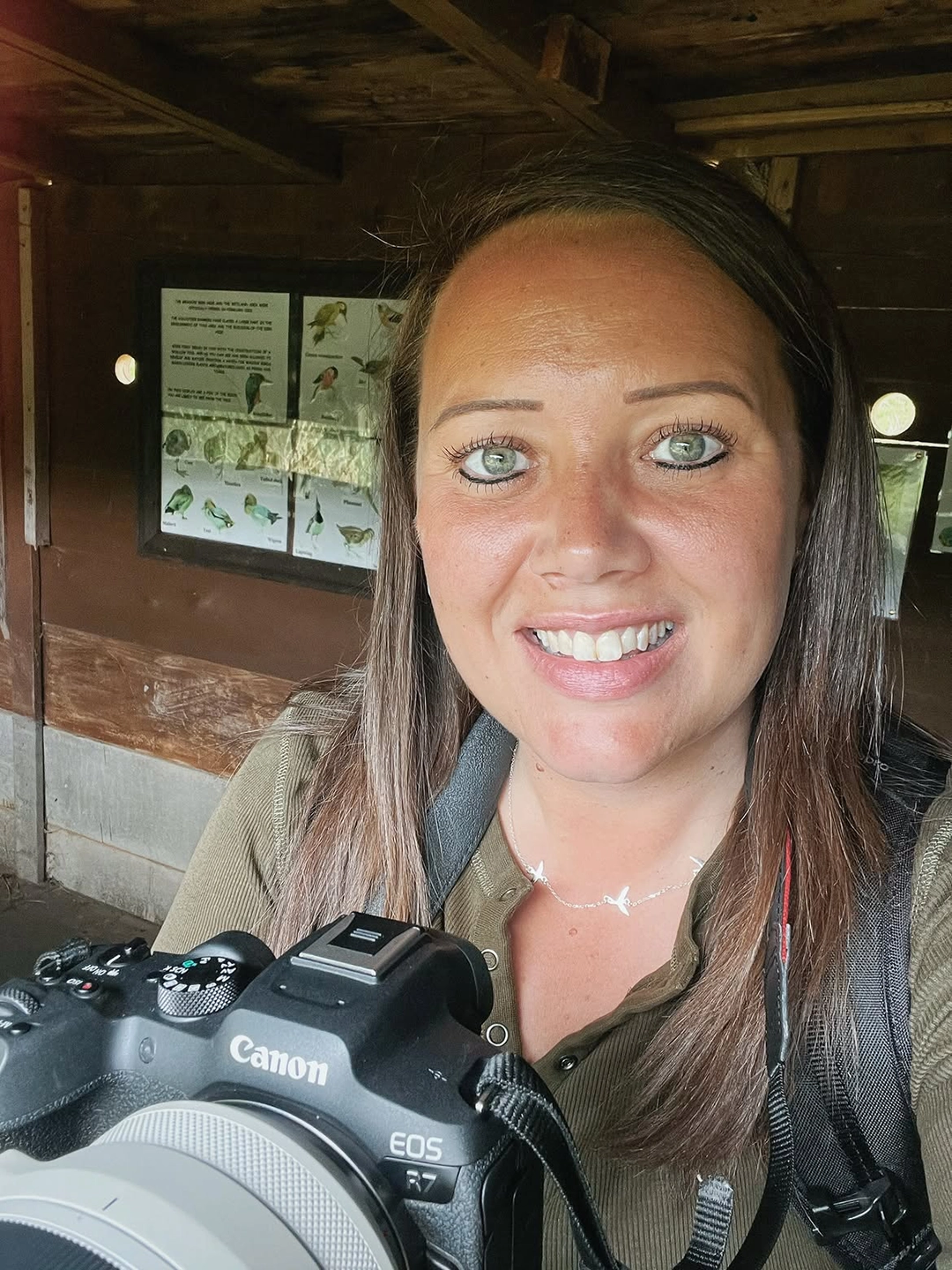
Our Photographer: Laura Peyton
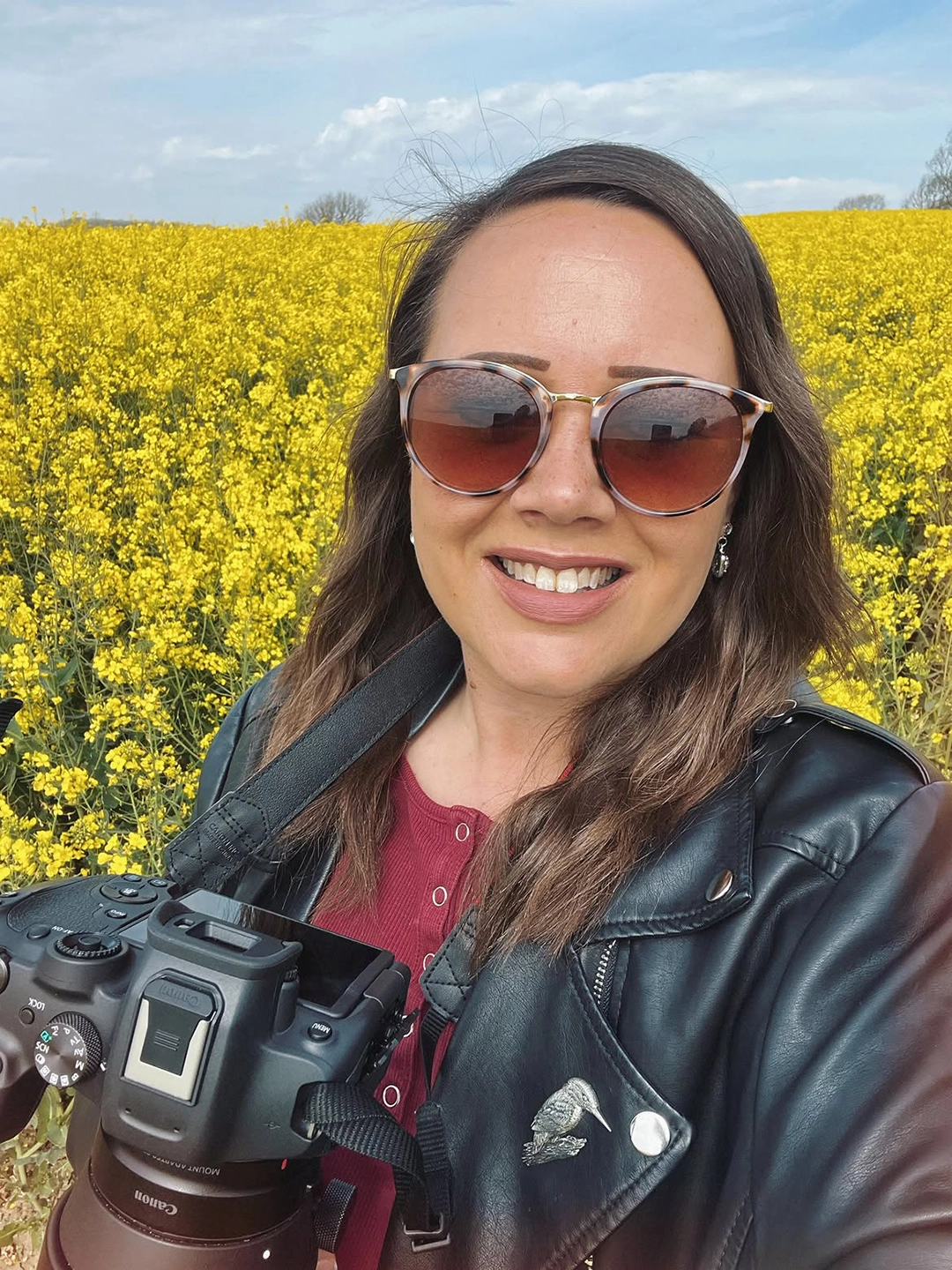
Laura enters the world of wildlife photography through a side door. Without a long professional genealogy and without any intention of turning her practice into a trade, she began devoting herself seriously to it in February 2025. Her relationship with birds had begun a little earlier and in a more domestic way. An Instagram video about how to attract them to the garden led her to put out sunflower seeds and, a few weeks later, some siskins appeared —birds whose existence, as she herself has said, she did not even know about. That small discovery was enough to get things moving. Curiosity mutated into an increasingly patient attention toward that tiny world fluttering around us, which we so often allow to pass unnoticed.
A decent way into photography is to learn how to look first and worry about the camera and the equipment afterward. Peyton began with a Canon 80D and a Sigma 150–600 mm. She recently moved to a Canon R7 with an RF 100–500 mm. On social media she has gradually gathered a considerable community around her images and created #RobinFriday almost by accident, after noticing that every Friday she somehow ended up posting a photograph of a robin. The gesture became a custom shared by other photographers. She is also a founding member of The Wild Den, a community devoted to nature photography that she recognizes as an important space for learning and encounter.
Her daily life unfolds quite far from the romantic image of the photographer permanently lost among fields and birds. She lives in Telford, Shropshire, England. During the day she works as a systems administrator for an international workplace-solutions company. It may come as a surprise to discover that before photography there was music. She reached Grade 8 in clarinet during her school years and went on to perform on stages such as London’s Royal Albert Hall and New York’s Carnegie Hall. Alongside that musical training comes a personality difficult to pigeonhole. She likes Formula 1, professional wrestling, and heavy metal, a combination she embraces with humor by describing herself as a tomboy. That mixture of discipline, curiosity, and enthusiasm without too much ceremony may help explain the freshness of her photographs. She still inhabits that privileged moment of photographing whatever astonishes her. The joy of discovering that, on the other side of the window, there is an enormous amount to see.

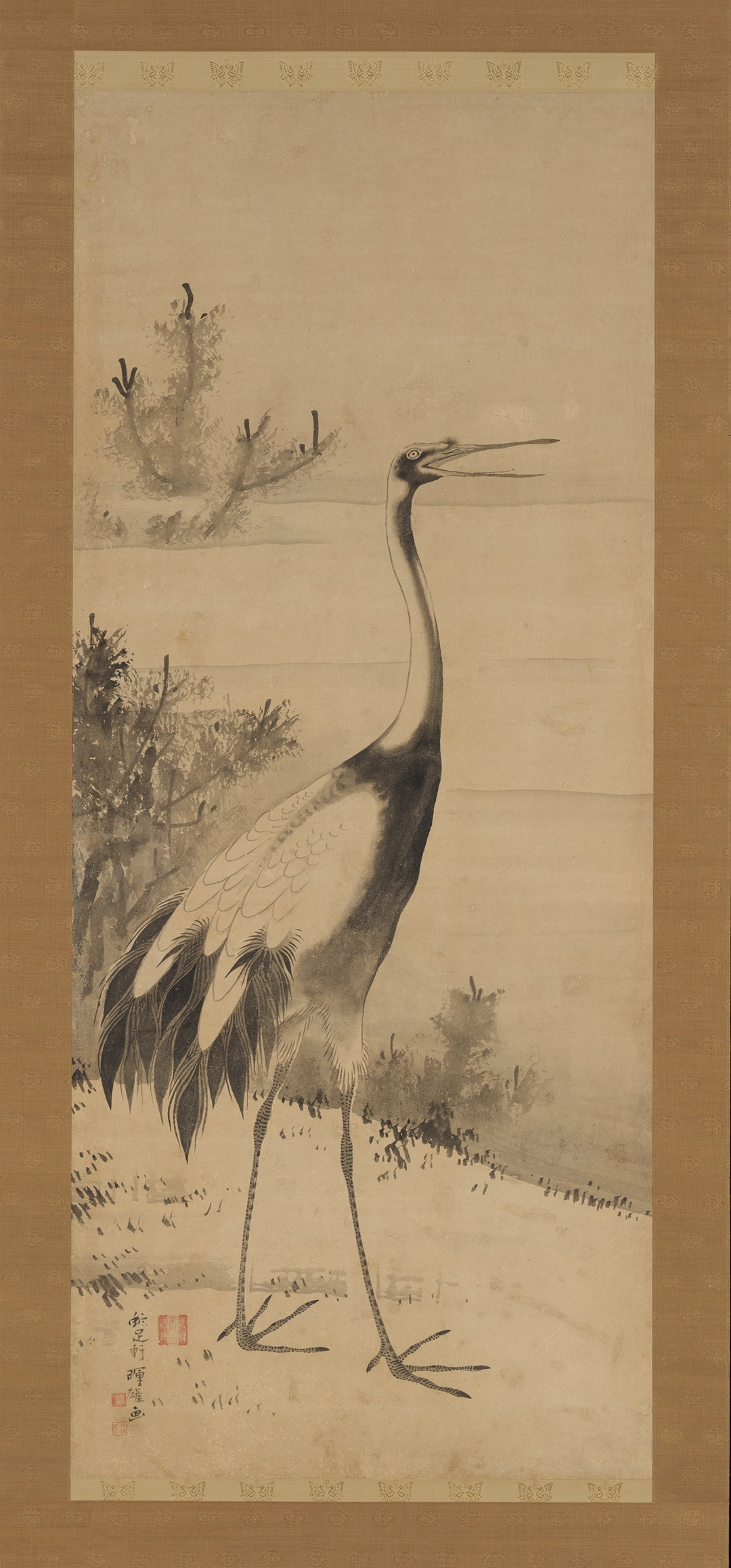
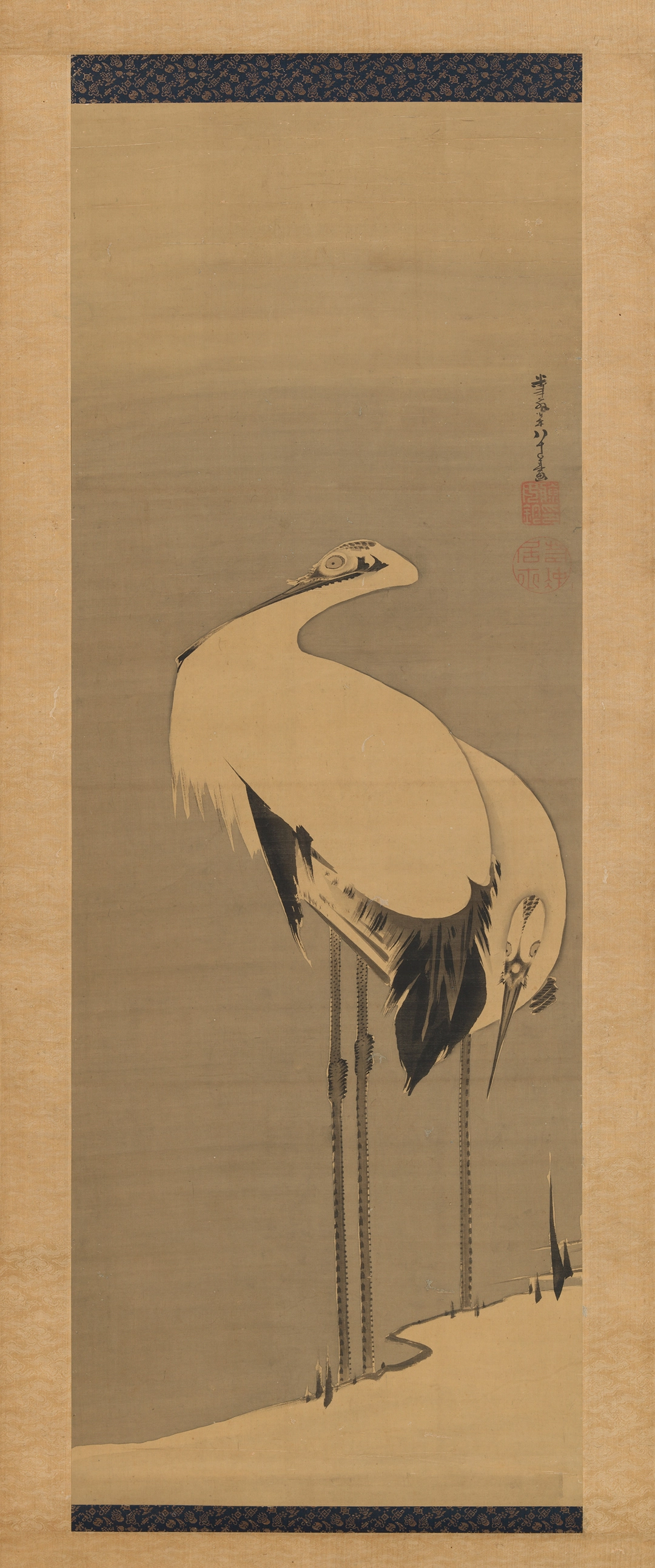




If you’re a regular reader of this blog and enjoy its content, you might consider contributing to its upkeep. Any amount, no matter how small, will be warmly appreciated
Founded in 2021, Echoes (Notes of Visual Narrative) invites everyone to explore together the visual codes that shape our world—art, photography, design, and advertising in dialogue with society.

Copyright © 2026 r10studio.com. All Rights Reserved. Website Powered by r10studio.com
Cincinnati, Ohio


Comments powered by Talkyard.