
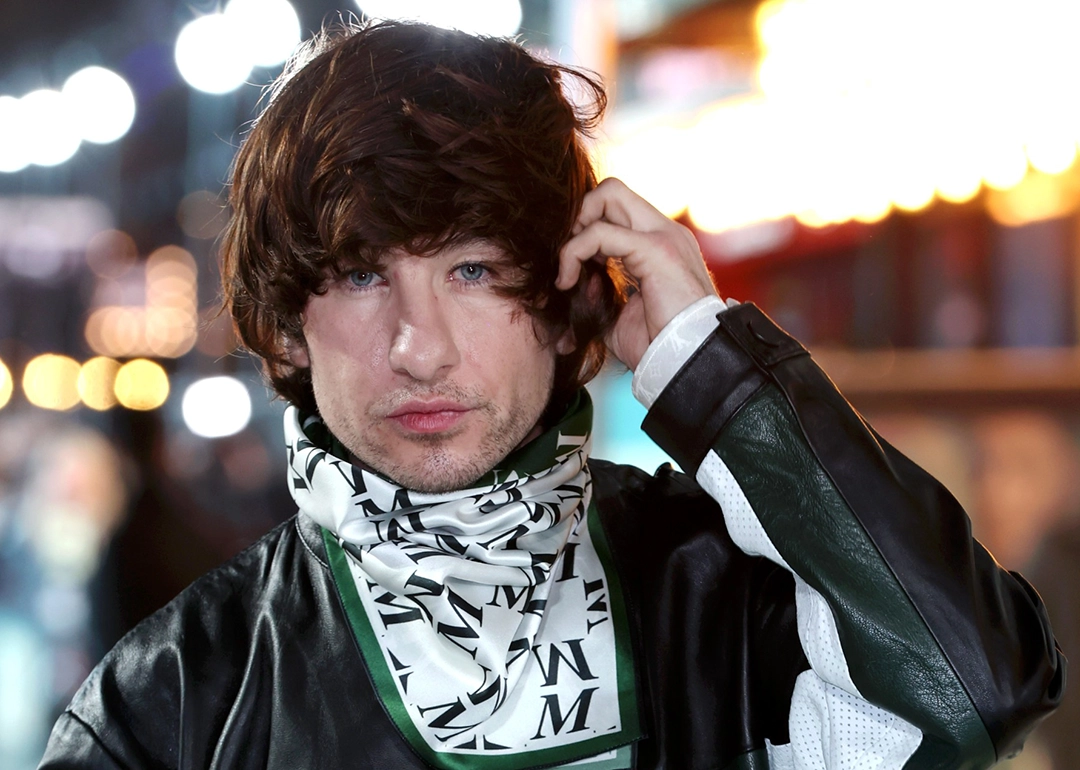
Barry Keoghan at the Crime 101 premiere, Los Angeles, 2026
I finally watched Peaky Blinders: The Immortal Man. What stayed with me was not the film. It was the fact that people hate Barry Keoghan’s face, and that Barry Keoghan has begun to listen. He has even said that comments about his appearance on social media make him feel insecure and unsettled. I admit I am somewhat surprised by his fragility—or his “high sensitivity to sensory processing.” He is hardly a nobody. He enjoys fame, and everything money can buy. What it cannot buy belongs to the cost.
It is true that his presence on screen can produce a certain unease, perhaps because of the comparison with the appearance and character—already ratified by the collective imagination—of his enigmatic and magnetic father. One thing is Cillian Murphy and another his unruly, sealed-off bastard. There is something tragic about having such a father in real life, one of those figures who shine from the bottom of a well with a blinding light. Imagine, in a pool of tears, the children of John Lennon, Bruce Lee, Marlon Brando and many others swimming for a small medal of dignity. It runs deep in the marrow of social consciousness that sons must surpass their fathers. Some cannot be surpassed.
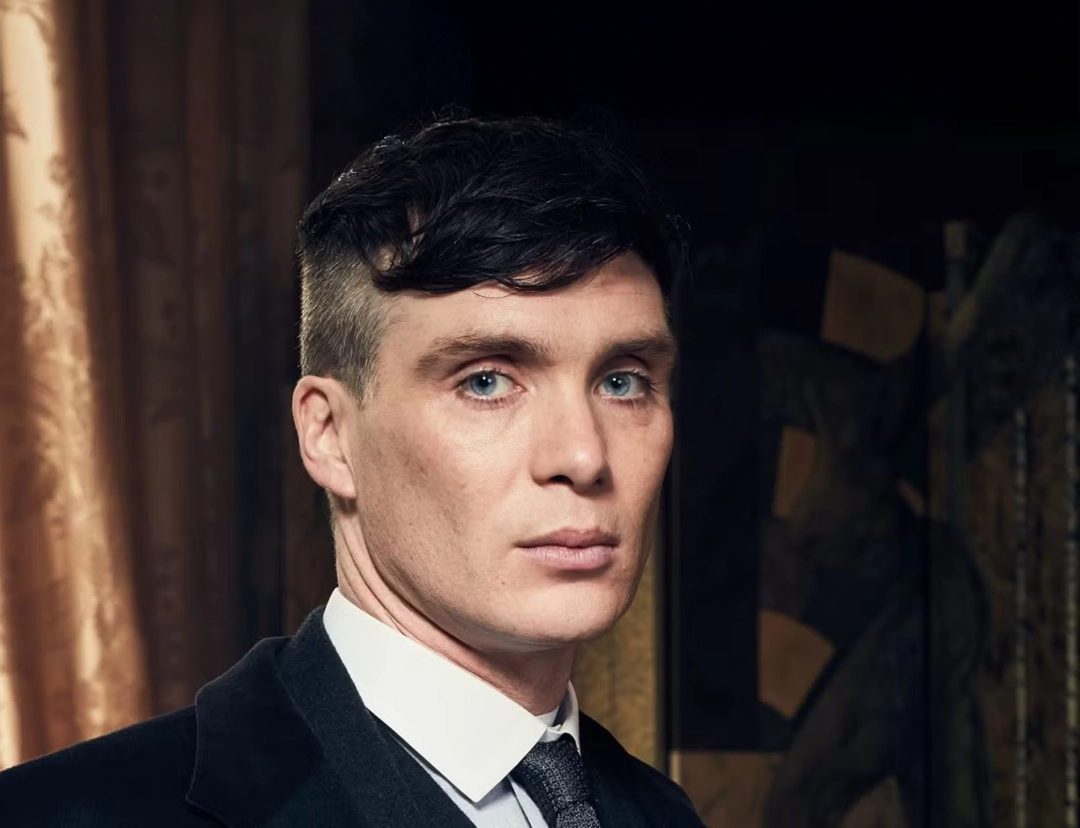
Cillian Murphy as Tommy Shelby, where the character ends and the myth begins.
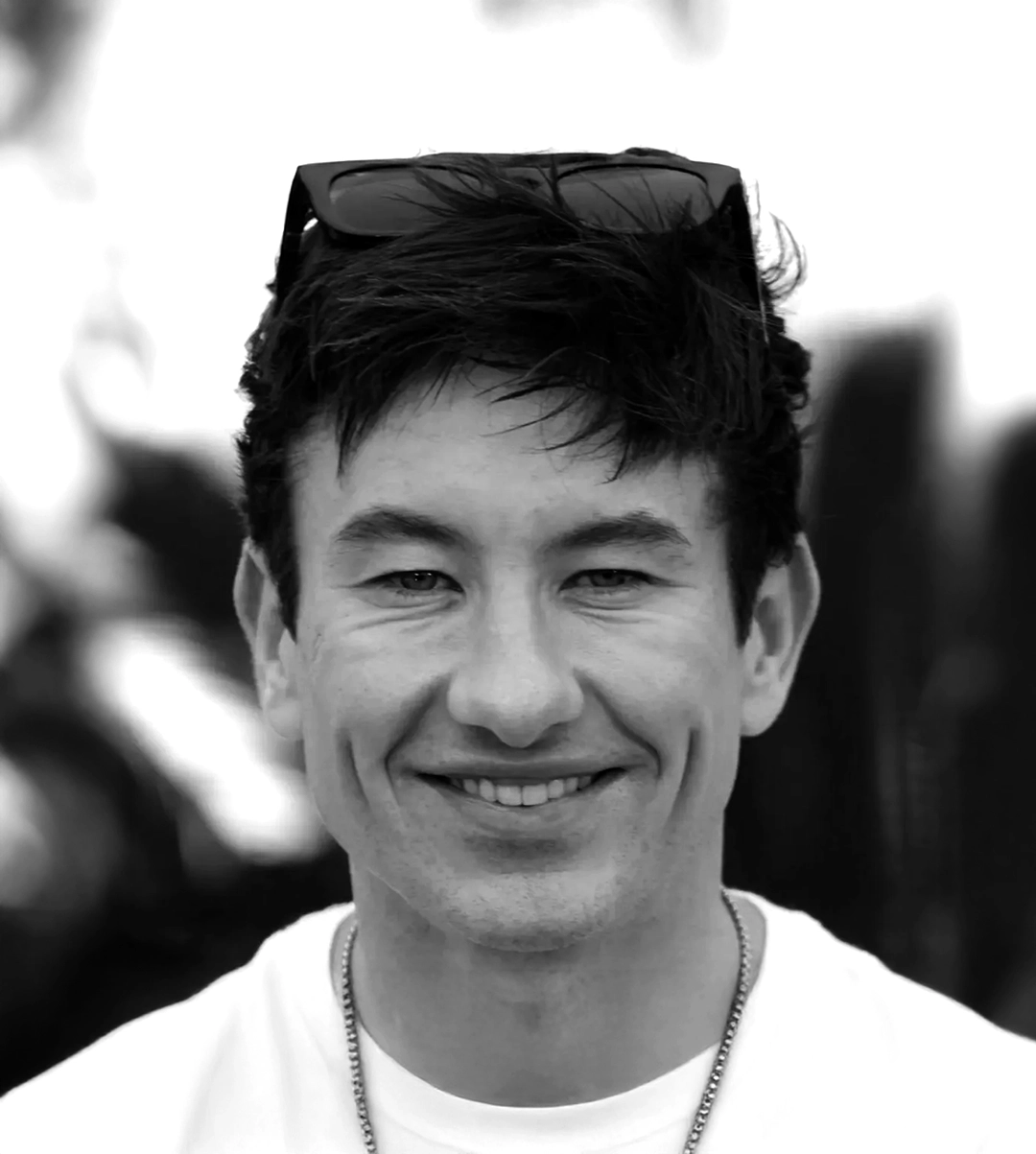
Something of that sort happens to poor Duke, who, to make matters worse, possesses a kind of attractiveness I am not entirely sure deserves the name. I found it unpleasant, I admit, only because his father stands as the very image of elegance and nearly everything else. That is where it ends.
How do we need to process or accept a public figure. What drives this animosity.
Barry was cast in a secondary role of considerable weight. He was chosen because his face embodies the opacity required by the ambivalence of the character. The casting needed to avoid beauty. It required a face without glamour, one that would not yield to a lazy glance. Removed from canon, from the grace of symmetry and proportion. Keoghan’s face resists immediate decoding. It is unreadable in any stable sense. Faces of this kind struggle to project even basic emotions. They refuse closed identities. They force the viewer to interpret.
What the crowd does—under the pretense of affection—to his appearance is a process of semiotic reduction. Within that discipline, it can be understood as an open sign, one whose reading and intention must be inscribed by the viewer. This produces tension within the narrative. It produces something worse, a form of affective ambiguity. Barry appears vulnerable and childlike, and at the same time dark and threatening. The binary reading collapses. It becomes impossible to determine where he stands. In semiological terms, the sign resists. As an unpredictable human presence, he keeps the viewer in a state of permanent alert.
In the ecosystem of social media, a spark is enough to trigger a disproportionate fire. That is where the seed of the complex takes hold. It does not belong to the subject as an internal property. It is the effect of a gaze that returns a diminished and degraded version of oneself. The subject begins to see himself as he is seen. A fracture opens between the lived body and the body that is redefined from the outside.
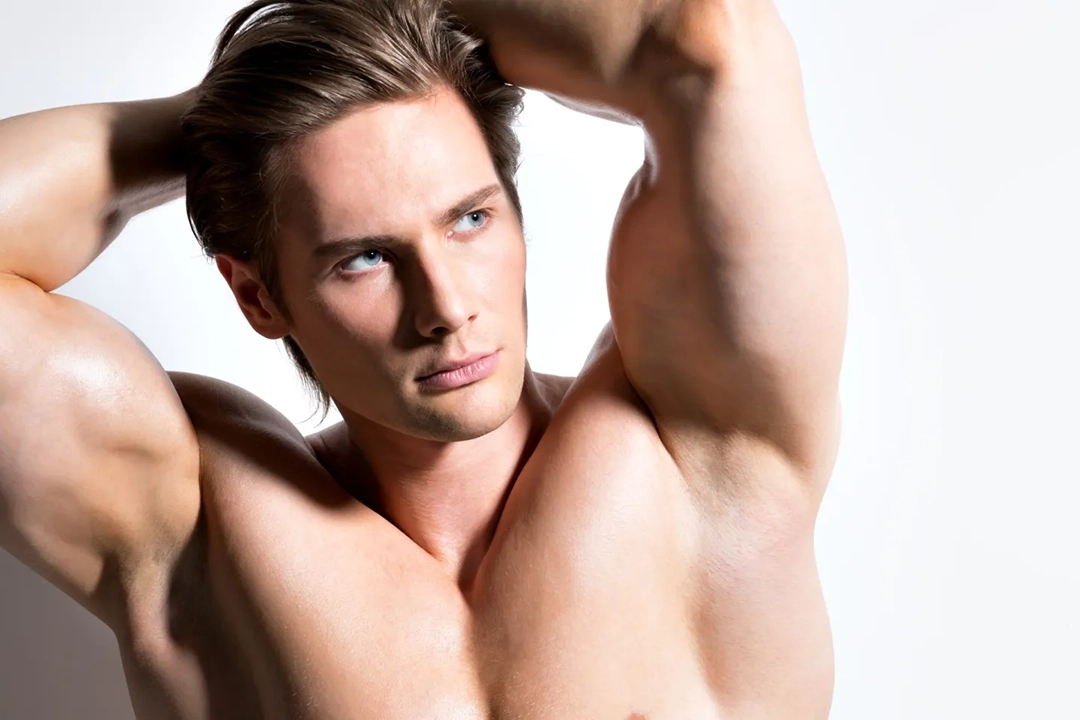
Looksmaxxing.
This has acquired a new name for a very old anxiety: looksmaxxing. It is where male anxiety now concentrates, especially among adolescents. It rests on the premise that appearance can be continuously optimized at will. It begins with the ordinary—grooming, dressing, exercise—but in certain corners of the internet it shifts toward a more technical logic. The body becomes something measurable, adjustable, correctable through various methods, from strict routines to extreme interventions. The aim is to approach an optimal version of oneself through an incremental process. That state is never reached in full. It remains open to further improvement.
This contest reveals a faint homoerotic undertone. The cultivation of beauty has little to do with attracting women or embodying what they desire. It is tied instead to homosocial validation and the adolescent’s disorientation in the absence of stable norms. Some grow taller, develop deeper voices, grow beards, acquire athletic skill. Others inherit acne, weight, misaligned teeth. The pressure erodes group cohesion. It fosters punitive scrutiny and constant mutual surveillance.
The good part is that it does not last forever. Most of us learn with time that perfection is not required to achieve certain outcomes, to awaken interest in some women. Self-acceptance takes longer. One learns where the limits lie, how far one can shape one’s appearance, how to strengthen what one has instead of pursuing impossible goals. It makes little difference how much you do or refrain from doing. Some will be drawn to you. Others will discard you as if you were a two-legged table. That is what it means to develop a strong identity.
For that reason, I find it somewhat strange that a global star would be carried away by the noise of the herd. What is happening, Barry. Try not to stand too close to the Tommy Shelbys of this world. You make them look far better than they are. Enjoy yourself.





If you’re a regular reader of this blog and enjoy its content, you might consider contributing to its upkeep. Any amount, no matter how small, will be warmly appreciated
Founded in 2021, Echoes (Notes of Visual Narrative) invites everyone to explore together the visual codes that shape our world—art, photography, design, and advertising in dialogue with society.

Copyright © 2026 r10studio.com. All Rights Reserved. Website Powered by r10studio.com
Cincinnati, Ohio

Comments powered by Talkyard.