
For professional reasons—and for many others—I tend to download and archive magazines devoted to specialized subjects. Among them, a very considerable number are dedicated to photography. The regular ones—that is, those almost always available—number around thirty-five. I suspect that most of them are sponsored by major manufacturers of professional and semi-professional cameras.
At the beginning of this century, digital compact cameras—point-and-shoots—proliferated. They were conceived for ordinary people. They introduced a rupture in a photographic culture that until then had been dominated by experts. They generalized a technology capable of producing competent photographs with minimal technical intervention. I bought one of them in Berlin, sometime around 2004. It stayed with me for many years and recorded unforgettable moments—good and bad, as God intended. I have no idea what became of it.
They were doomed from the moment they were born. Between 2008 and 2010, a structural shift took place. Mobile phones began to compensate for their physical limitations through software—more reliable autofocus, stable white balance, noise reduction—and for the first time achieved results comparable to those of a basic compact camera under good lighting conditions. The definitive blow came between 2011 and 2012. Image quality had become “good enough,” the camera was always at hand, and photographs could be shared immediately. From that point on, we stopped buying those endearing cameras—not because the phone was technically far superior, but because the experience–result equation became unbeatable. From 2013 onward, low-cost compact cameras entered a state of practical extinction, with only premium models and specialized devices surviving.
These, however, are expensive—out of reach for a casual whim, though not so much for a true enthusiast, who, with patience and saving, can acquire genuinely good equipment over a few years: camera body and lenses.
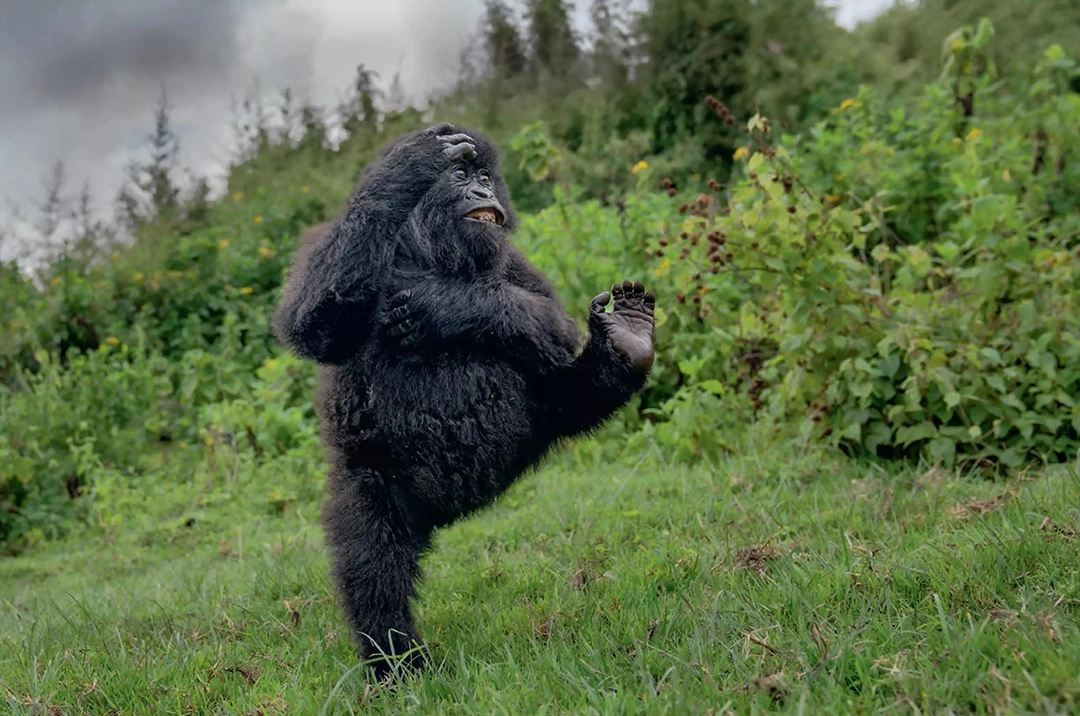
That is why a great deal of enthusiasm must be generated. One effective way is through competitions. All the major players in the industry launch them. Nikon, for example. One of these, the Nikon Comedy Wildlife Awards, is an international competition devoted to highlighting the most amusing and expressive images of wildlife. As its creators—the professionals Paul Joynson-Hicks and Tom Sullam—like to explain, it was conceived “to celebrate animal life from a playful and respectful perspective, showcasing gestures, situations, or visual coincidences that evoke humor without exploiting or denigrating animals.” I would only add, on my part, that the competition was created barely two years after the collapse of low-cost compact camera models.
This year’s winner was Mark Meth-Cohn, a UK-based wildlife photography enthusiast. The edition attracted a record figure of 10,000 photographs from 109 countries.
Everyone who knows me is aware of how much I like animals. Their photographs always draw my attention—especially those that raise the question of whether they might possess emotional structures more complex than we tend to imagine. They lack language to express them, or perhaps we only grasp the most basic layer of what they communicate in their own way.
If we attempt to understand an animal’s gestures solely through their resemblance to human experience, we are lost. Even so, it is undeniable that it is enjoying itself—or performing a choreography through which it seeks to convey an affirmative state, one of action rather than flight.
It is evident that its ancestors are the same as ours.
P.S. Guess which camera was used to take the majority of the photographs submitted to this competition—approximately 10,000 images. A mid-range Nikon camera sells for around US$ 2,500. The raw result is 25 million dollars—to audit it in some fashion—from this competition alone.





If you’re a regular reader of this blog and enjoy its content, you might consider contributing to its upkeep. Any amount, no matter how small, will be warmly appreciated
Founded in 2021, Echoes (Notes of Visual Narrative) invites everyone to explore together the visual codes that shape our world—art, photography, design, and advertising in dialogue with society.

Copyright © 2026 r10studio.com. All Rights Reserved. Website Powered by r10studio.com
Cincinnati, Ohio


Comments powered by Talkyard.