
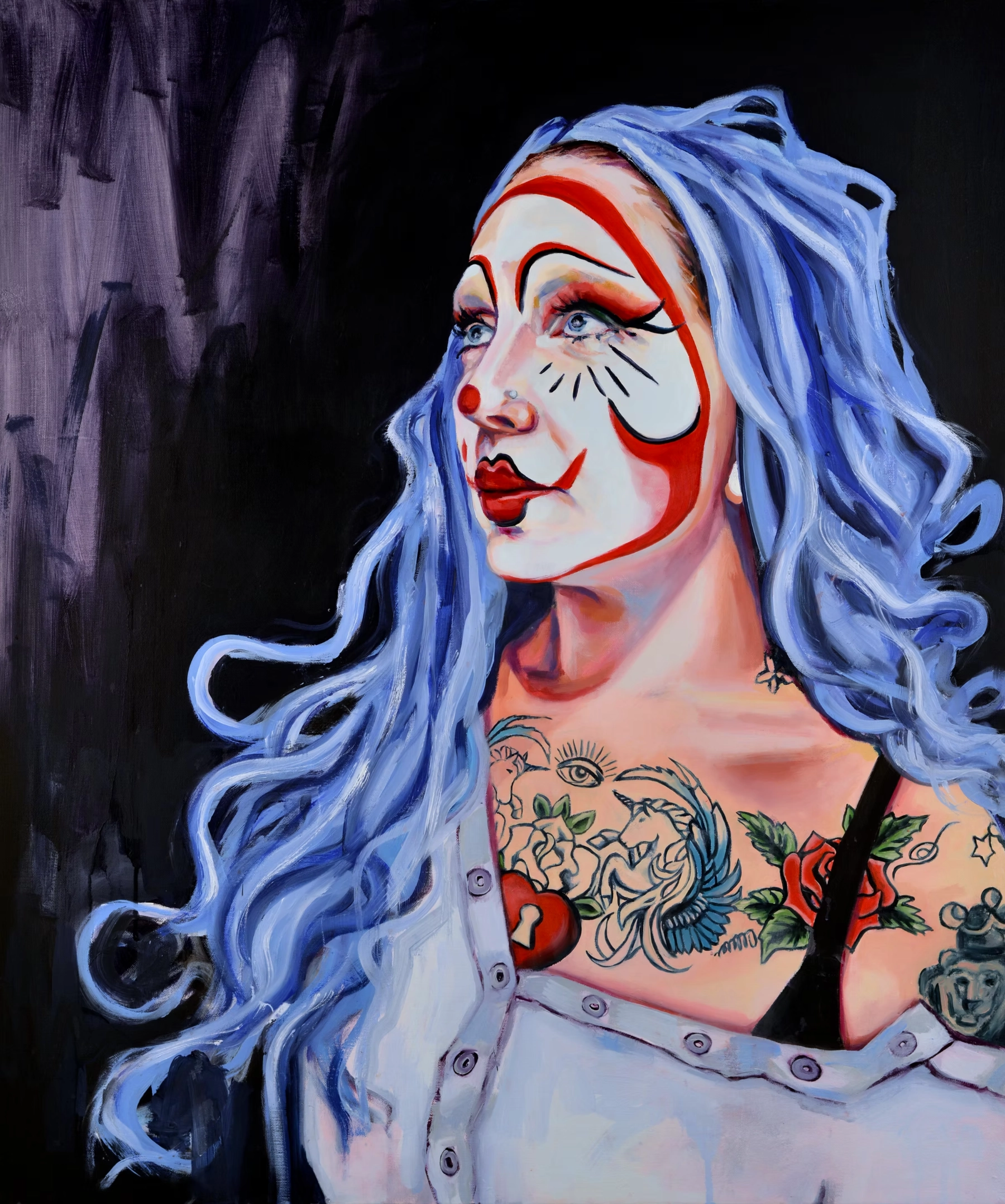
Image taken from the project’s website
Perhaps I am a member of The Grief Club. For several weeks now, a small print has rested on my desk granting me that privilege — dark cobalt green, number 137 in an edition of 200, signed by Sarah Stolar. It is not a relic, nor even a reminder of mortality. It is evidence that artistic experience, when born of pain, orients us toward an identitarian core that endures even through fracture. In the act of retracing what has been lived, we might find reconciliation, perhaps even peace.
My first impression of Stolar’s work was not a positive one. Yet ten minutes into her world, I felt ashamed of that initial reaction — hurried, shortsighted, and clouded. The narrowness of the exhibition space had misled me. Standing closer to each piece, I realized that the true space — the inward one — expanded into an immeasurable circle.

Sarah Stolar
Sarah’s universe is built upon an intimate territory where personal memory converges with aesthetic intention. It emerges from loss, from the experience of accompanying her mother’s illness and death —Merlene Schain, a fundamental figure in Cincinnati’s cultural history, artist and educator. That inheritance is not only her lineage but also the point of departure for a meditation on continuity and disappearance: on how the creative gesture can persist even after the source of its impulse has vanished. Stolar transforms disappearance into method, and absence into structured resistance.
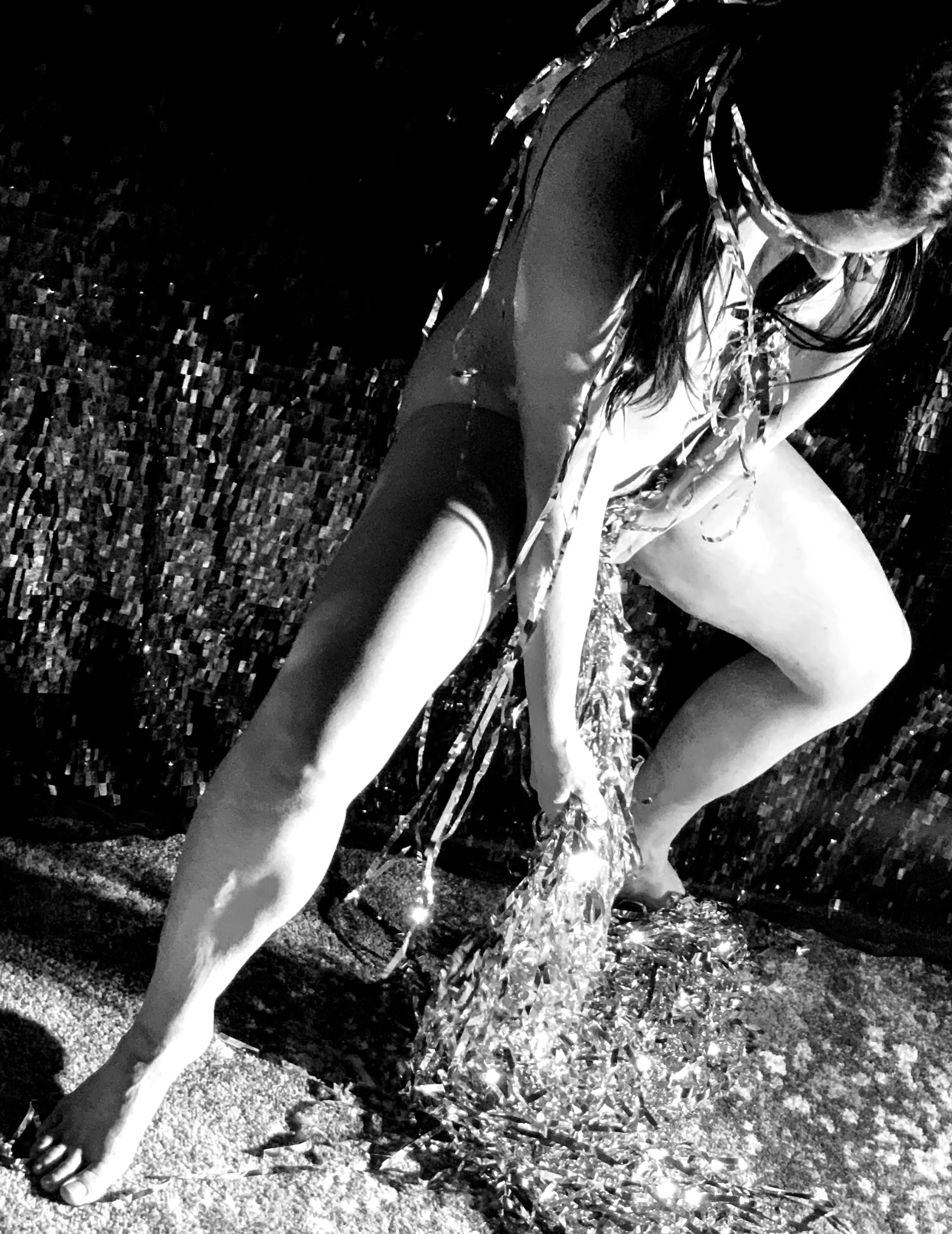
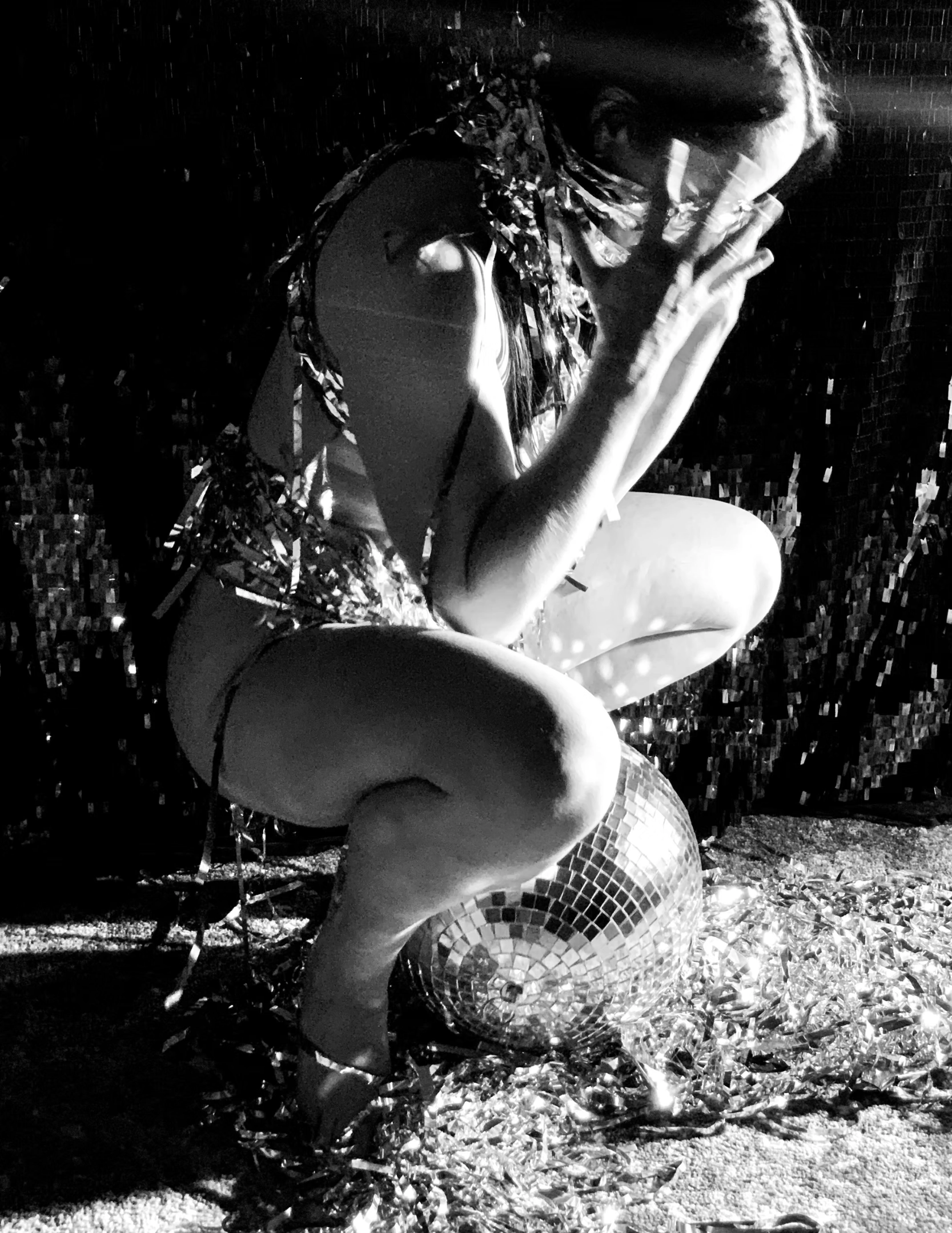
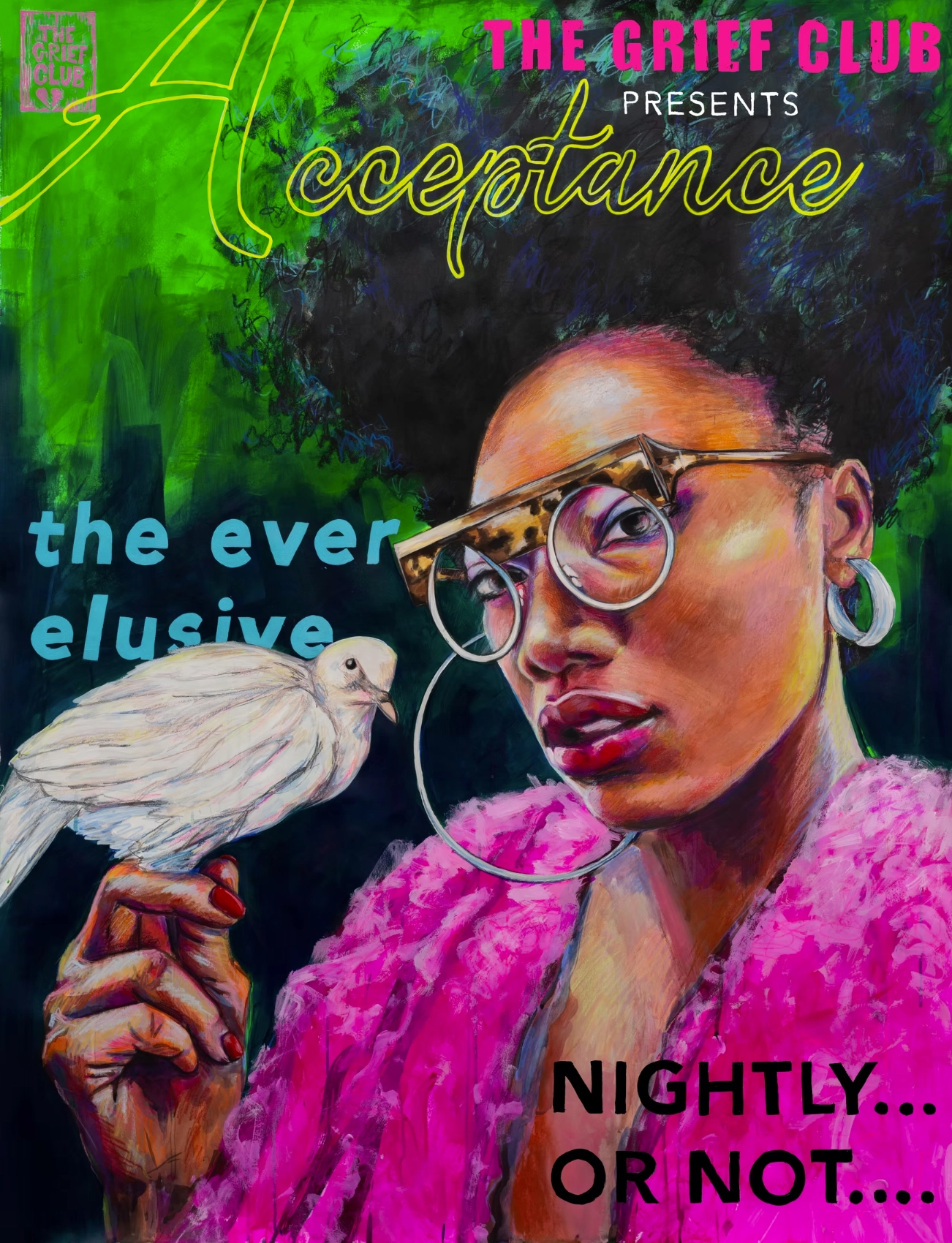
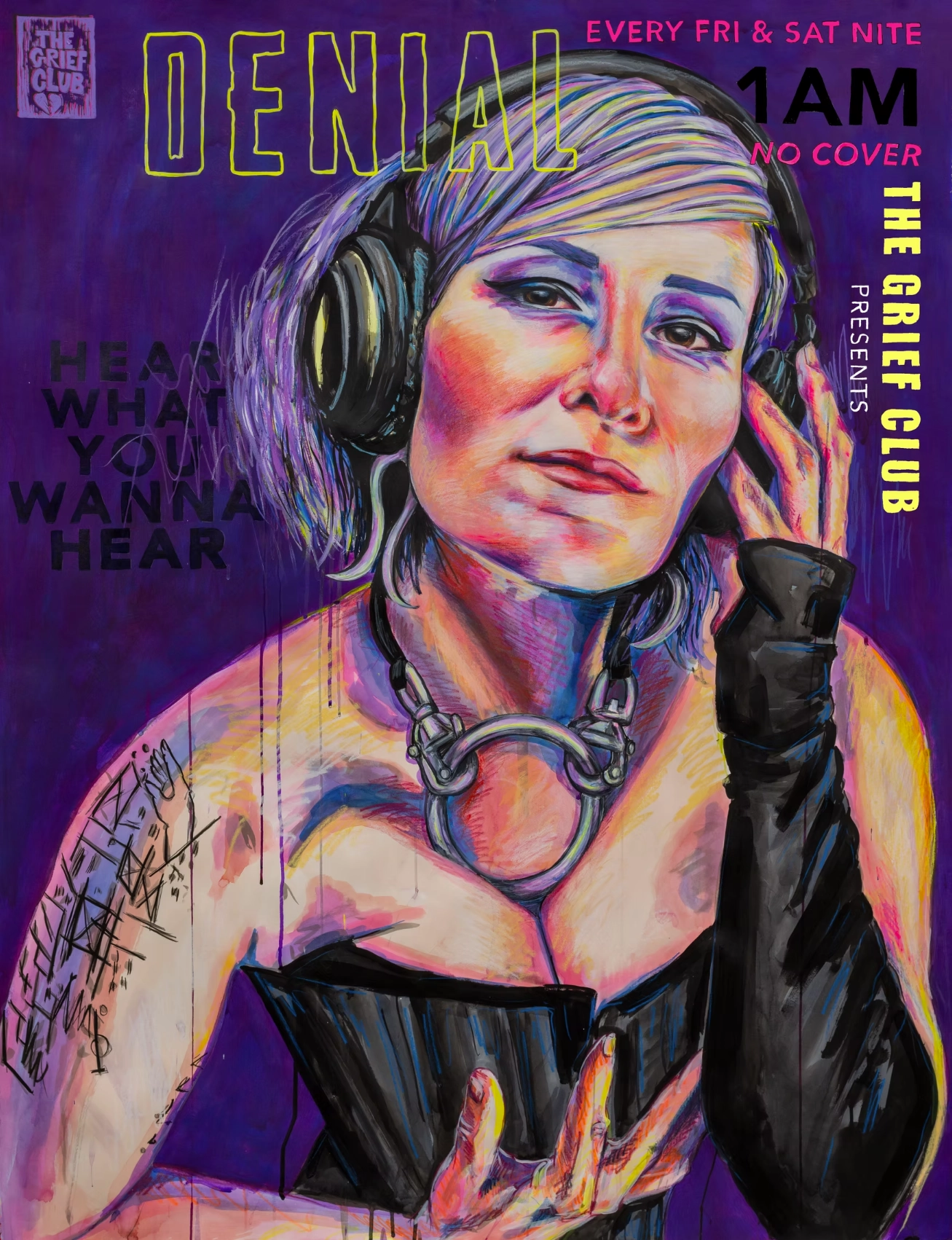
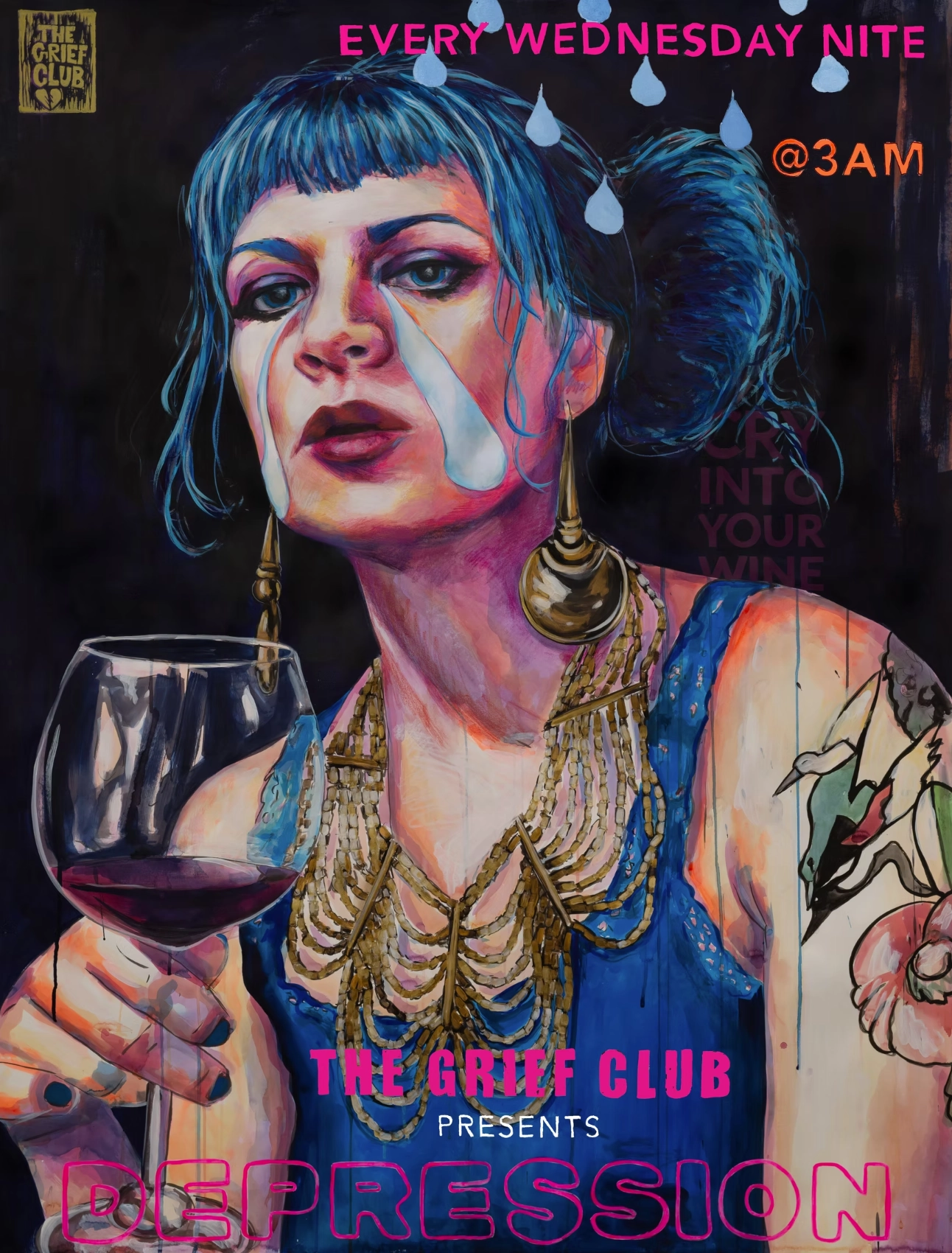
In 2018, she assumed the care of her mother, then diagnosed with advanced-stage Alzheimer’s. From that experience arose The Grief Club, an interdisciplinary body of work presented as a fictitious nightclub — a kind of cabaret of sorrow where mourning is transfigured into collective ritual. Her creative drive feeds on dark humor and irony, tools she wields to probe human vulnerability. Inspired both by seventeenth-century Dutch vanitas still lifes — meditations on sensual pleasure, time, and the certainty of death — and by the Kübler-Ross model of the Five Stages of Grief, Stolar personifies those stages as performers: the keening women, Celtic mourners who cry, dance, and sing in funerals conceived as ecstatic celebrations. In her hedonistic merry wake, grief becomes performance and pain becomes excess. Thus sorrow finds its stage.
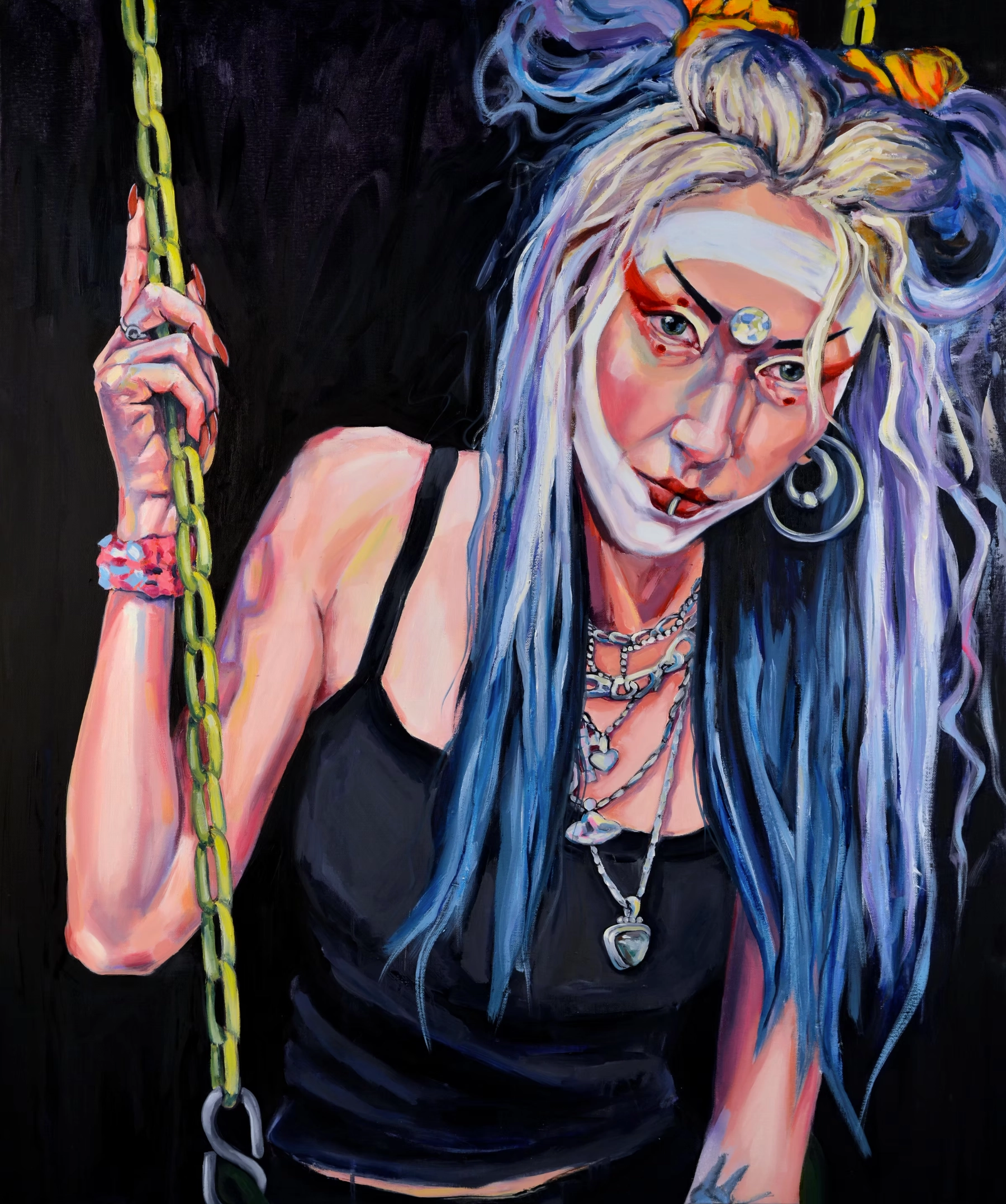
Image taken from the project’s website
While rooted in autobiography, The Grief Club transcends the personal and speaks to our collective trauma. In an age marked by pandemics, wars, isolation, and political anxiety, it proposes a symbolic community to which anyone might belong — a space where grief is neither concealed nor repressed, but rather shared and even celebrated. “Live Shows and Private Parties with Your Favorite Keening Women,” one piece proclaims, echoing the visual rhetoric of an advertising poster. “Wailing Bar with Custom Lamentations. Membership Always Free.” The pitch, poised between satire and manifesto, reveals the artist’s lucidity in confronting sentimentalism itself. If we can celebrate pain rather than sublimate it into a dark homage to itself, we need no therapy, no medication, no positive thinking. Human history has offered many other ways to bear loss: feast, sex, excess. Pain escapes equally through the door or the window. In The Grief Club, every exit remains open.
Although her training is rigorously pictorial and her devotion to oil painting unwavering, Sarah Stolar works at the threshold between the classical and the contemporary. Her visual language begins with figuration yet expands into a symbolic system interweaving painting, installation, text, neon, video, and even edible works — a system that insists all meaning is provisional.
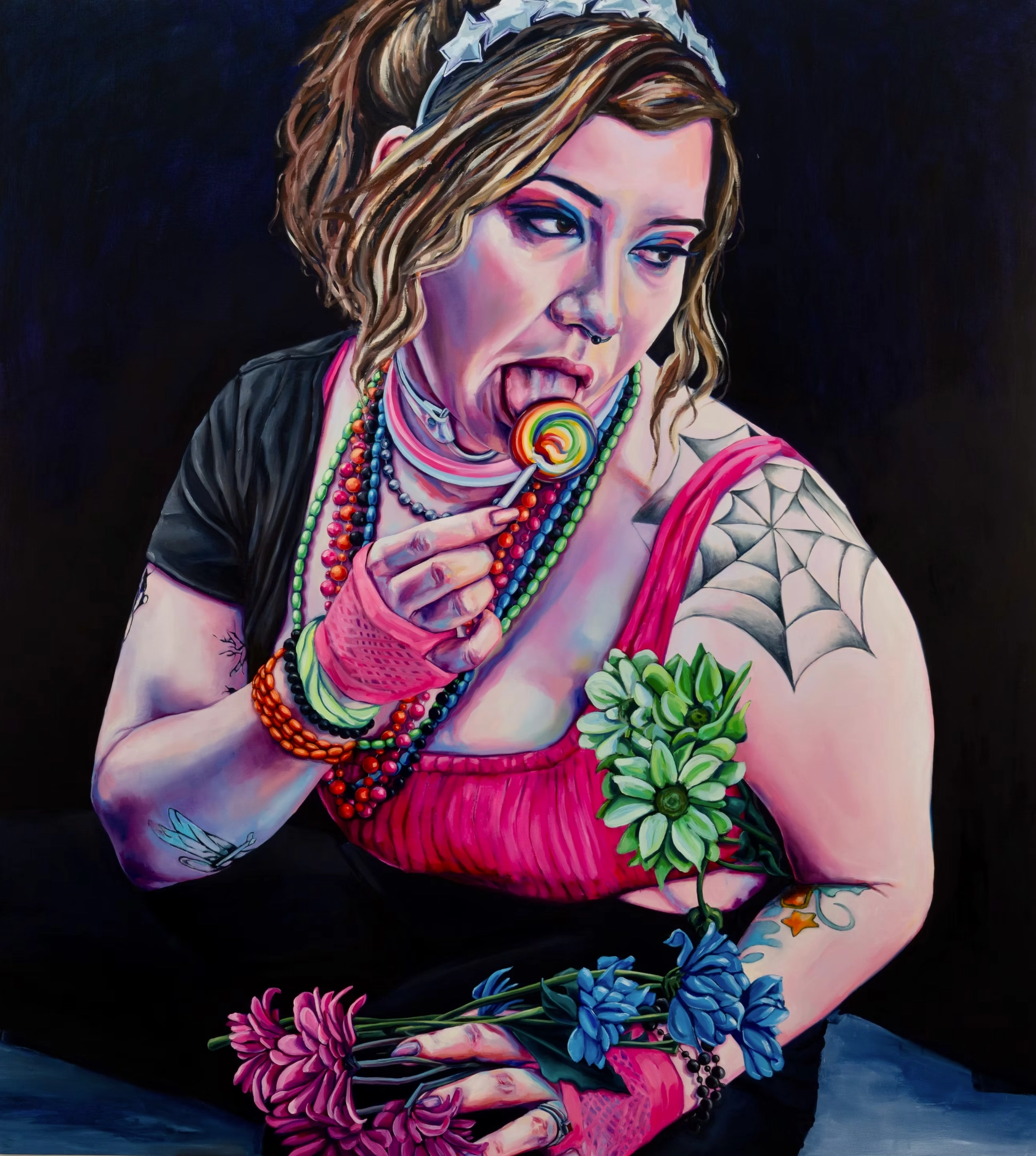
Image taken from the project’s website
This raises a question: is the anxiety to endure also provisional? Does pain share that same fragility — or is it, perhaps, the only imperishable thing we possess? I cannot answer.
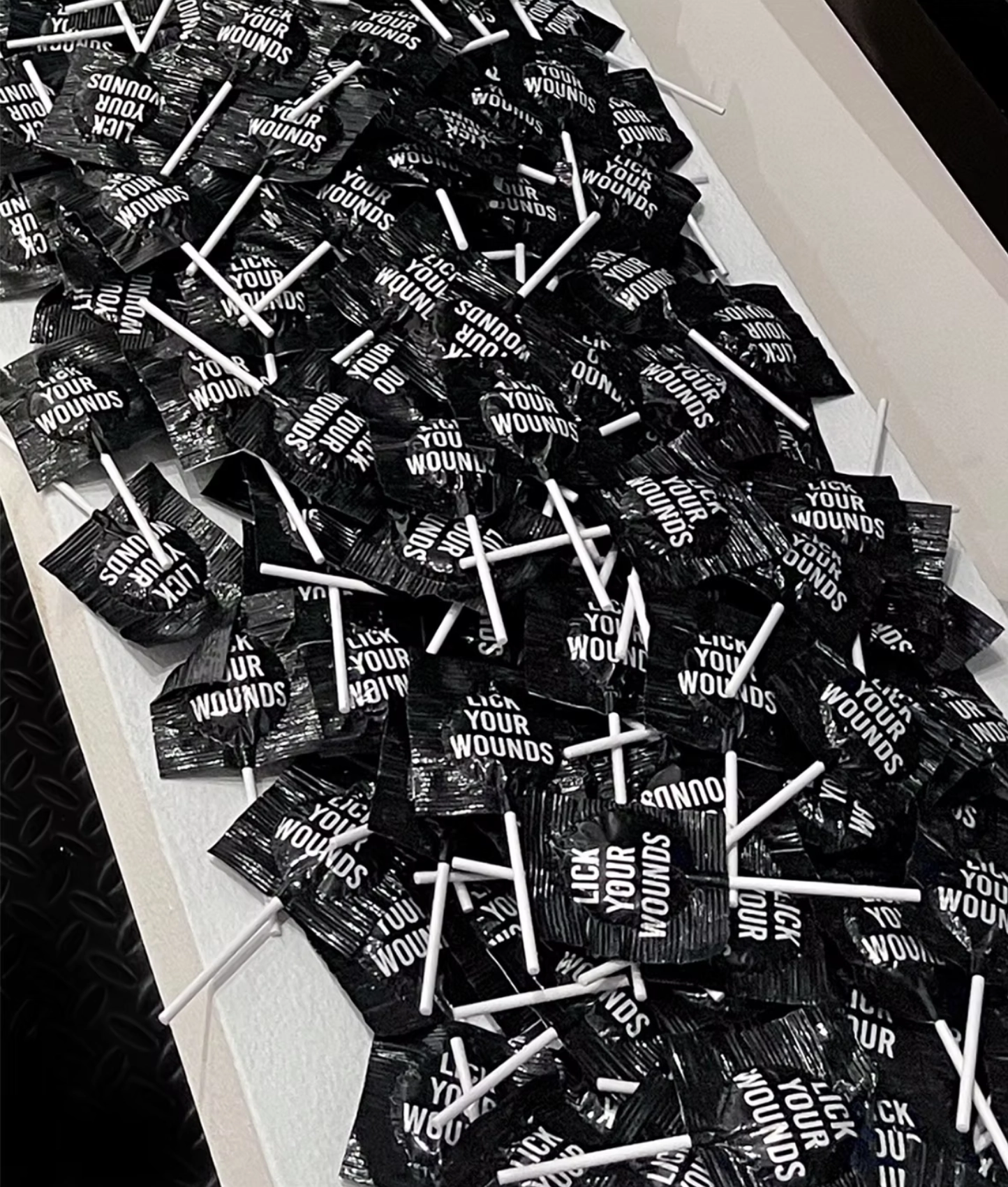
The tension between the sacred and the ironic reaches one of its most resonant moments in her dialogue with Félix González-Torres, whom she calls “a collaborator from the grave.” By intervening in his iconic piles of candy or by using his paper as a support, Stolar extends the Cuban artist’s lesson: the act of sharing and disappearing can itself be an aesthetic gesture of love and communion. In her work, sugar becomes both substance and metaphor — a way to taste pain, to make it physically present, digestible, even sweet.

Image taken from the project’s website
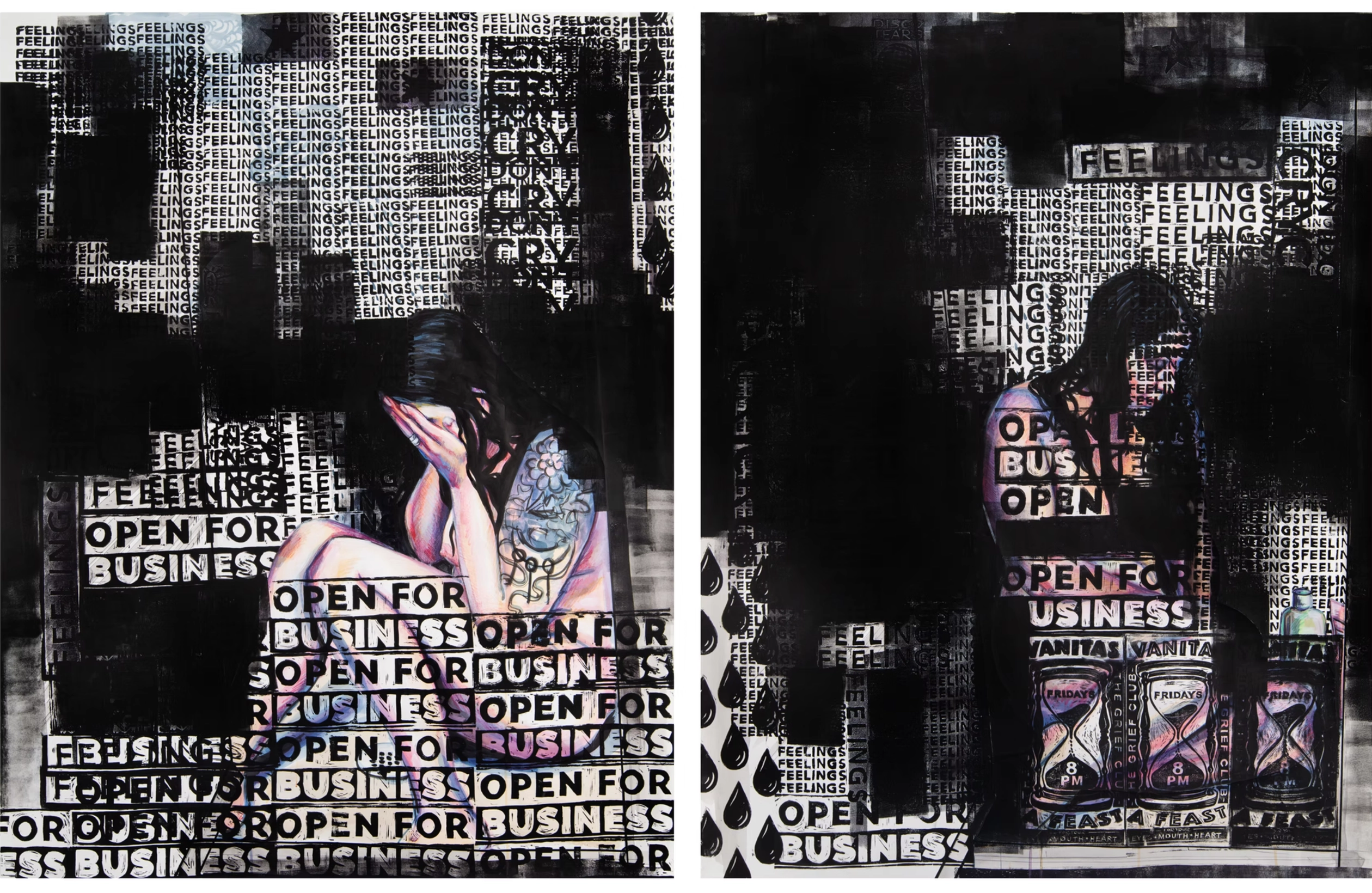
In pieces such as 60 Yards of Feelings, language becomes matter. Each word, printed on Japanese paper, is a tactile residue of emotion. To roll, stack, or transport those fragments is to archive feeling — to turn memory into physical labor. This ritual act again evokes the keening women, whose wails transformed loss into music and mourning into communion. Like theirs, Stolar’s art restores the collective dimension of sorrow. Better to weep together.
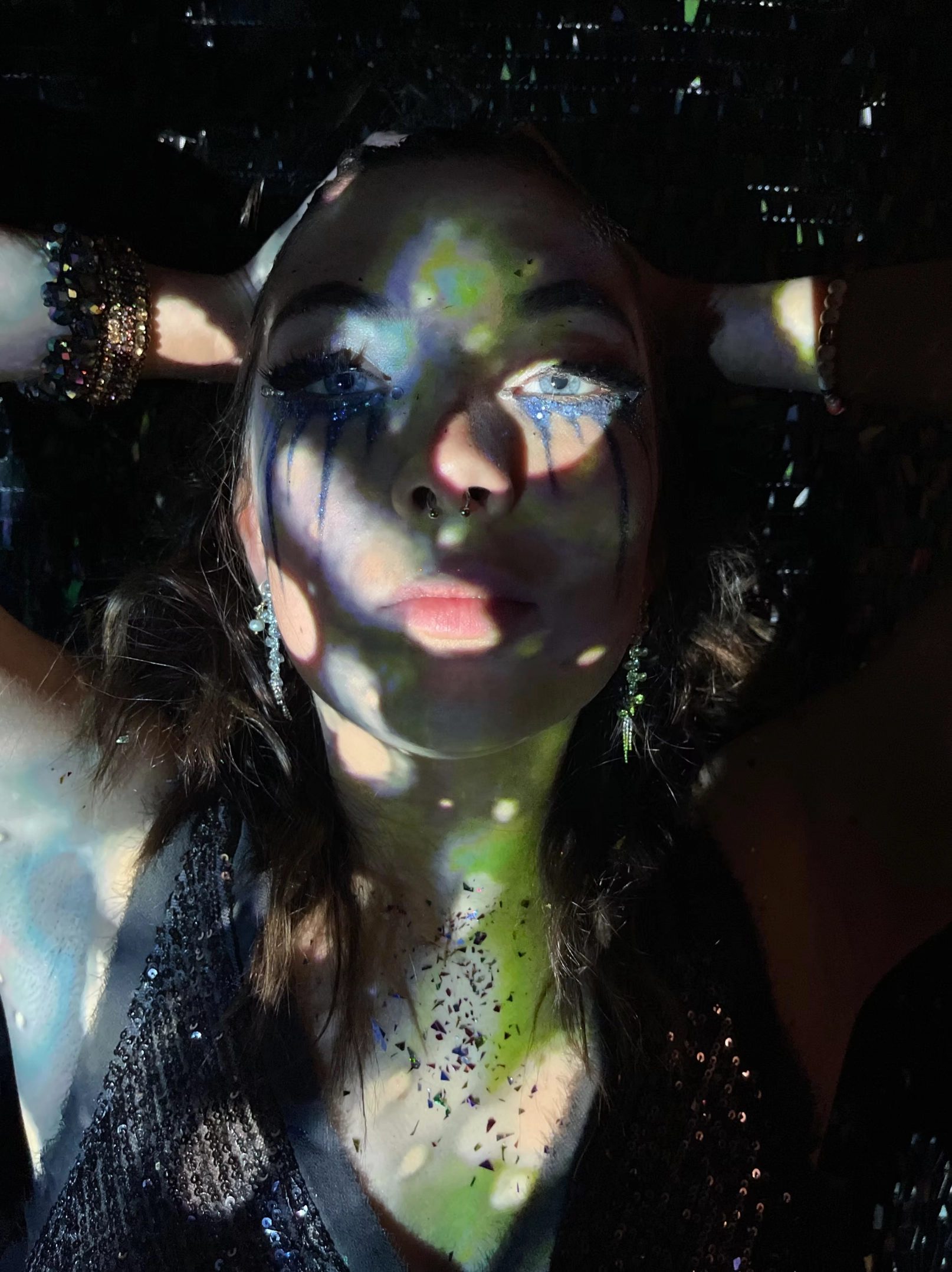
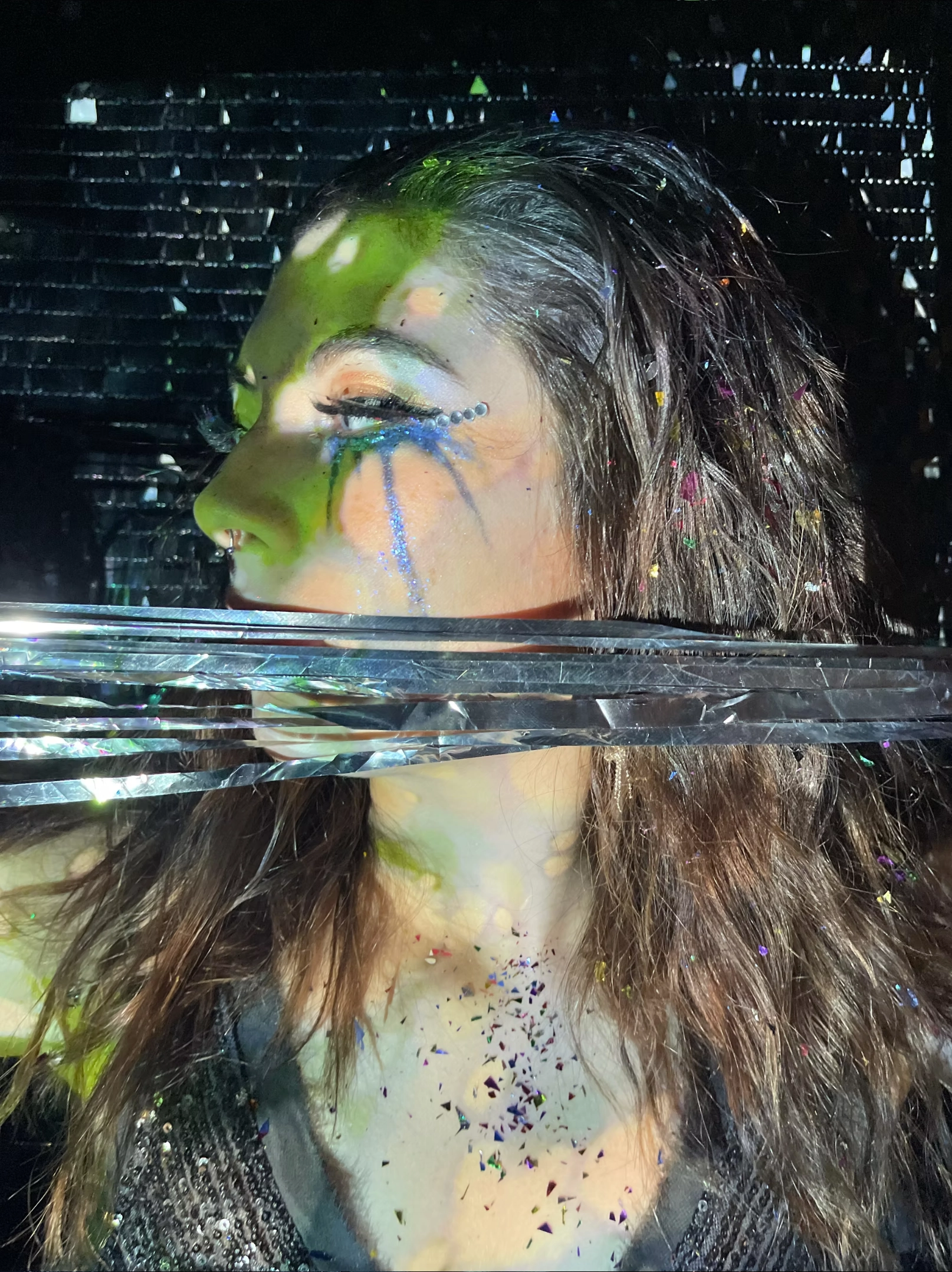
In her portraits and self-portraits, the body becomes a site of contradiction: painted faces, masks, tears, and costumes recall the tragic clown — the one who smiles while decomposing inside. The theatrical gesture encloses the certainty that pain, when made public, becomes language. Stolar’s body becomes a threshold between the personal and the social, between the feminine and the universal, between the wound and its staging as spectacle. There is a feminist undertone, yet it goes beyond gender — it concerns what has been wounded.
Everything in her discourse, even her teaching practice, reveals an existential poetics, a processual ethic: “Enter the studio, make the work, and let it lead you.” For Sarah Stolar, creation is not a search for comfort but a way of remaining in the world — of resisting the silence that loss leaves behind. Though her art offers neither consolation nor redemption, it reclaims a forgotten space in the history of art: an alternative management of suffering. There is no way to escape pain, or death. If, by gravity, nothing escapes this planet, we walk quite literally upon mountains of concluded lives. And from them, every day, flowers are born.
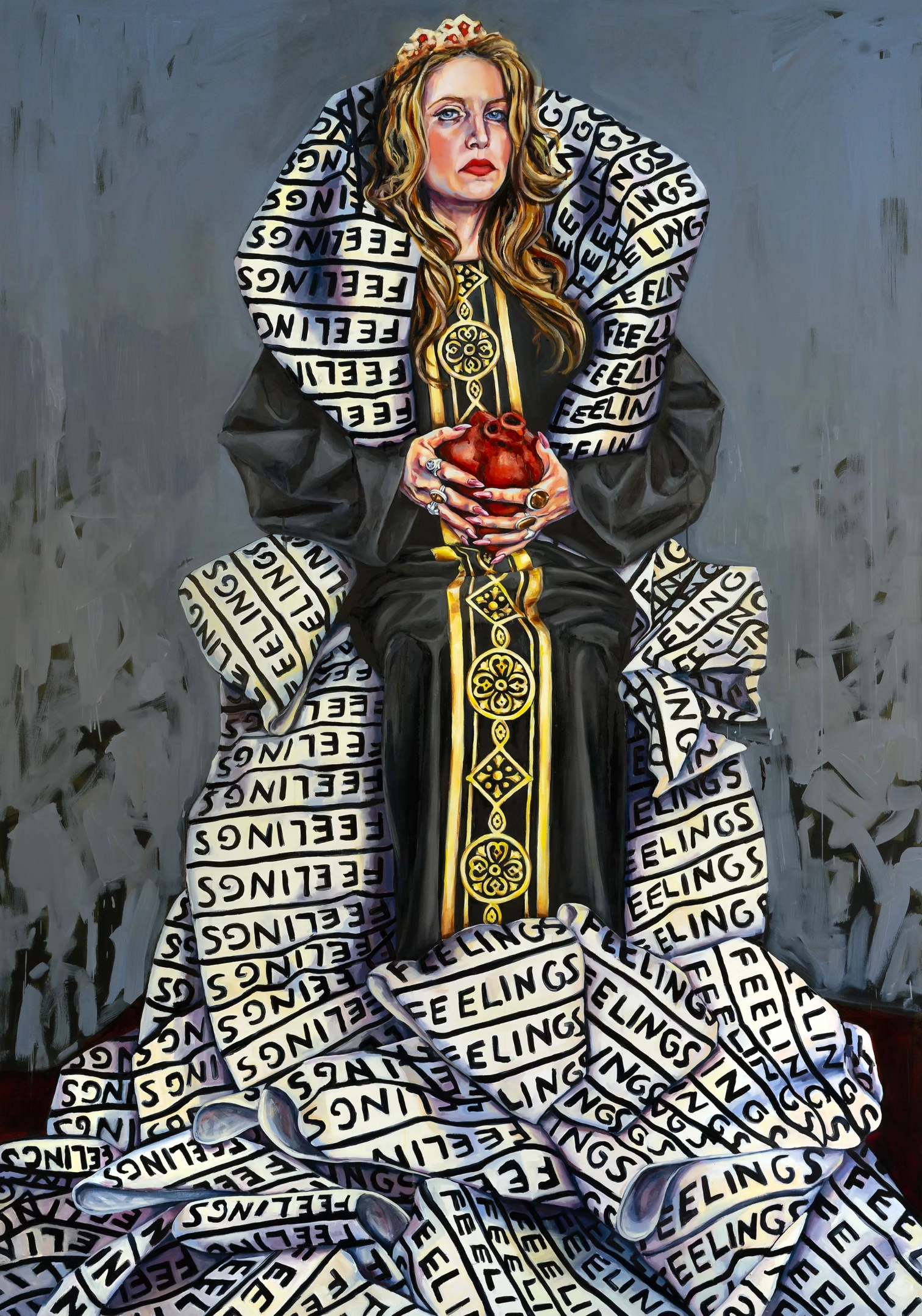
Image taken from the project’s website






If you’re a regular reader of this blog and enjoy its content, you might consider contributing to its upkeep. Any amount, no matter how small, will be warmly appreciated
Founded in 2021, Echoes (Notes of Visual Narrative) invites everyone to explore together the visual codes that shape our world—art, photography, design, and advertising in dialogue with society.

Copyright © 2026 r10studio.com. All Rights Reserved. Website Powered by r10studio.com
Cincinnati, Ohio



Comments powered by Talkyard.