
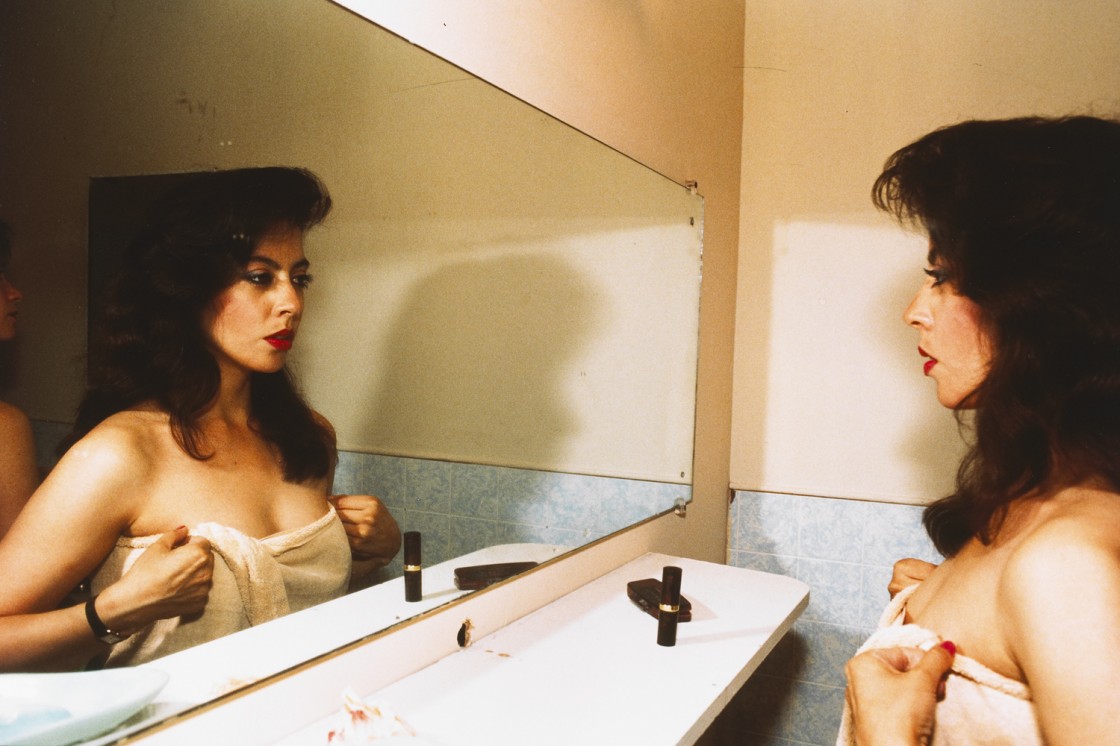
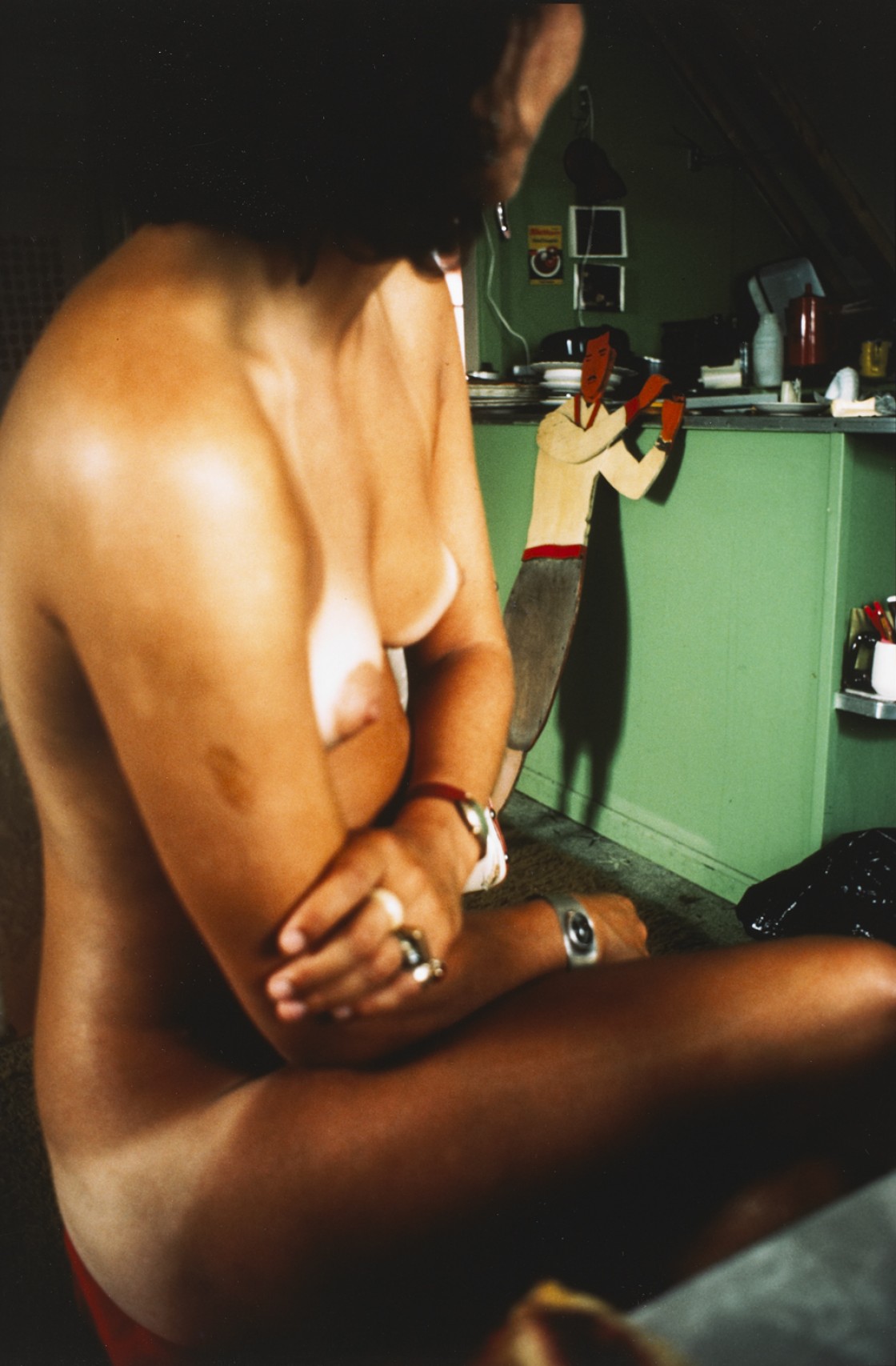
Sandra in the mirror, New York City, 1985
Cibachrome print
Image: 9 x 13¾ in. (22.86 x 34.93 cm)
Paper: 10¾ x 14 in. (27.31 x 35.56 cm)
The Museum of Contemporary Art, Los Angeles
The Nimoy Family Foundation
Forty years ago, the American photographer Nan Goldin published what is now widely regarded as one of the most influential photobooks in contemporary art. That is the view of Jacqui Palumbo—journalist, editor, and producer specializing in art and culture—who covered this event for CNN. Titled The Ballad of Sexual Dependency, the book documents Goldin’s life in New York City’s East Village throughout the 1970s and 1980s, with forays into Chicago, London, and Mexico City.
Critics have described these images as brutally intimate. They show Goldin and her circle—predominantly queer—across the most assorted settings: precisely the kinds of places where that level of intimacy can, of course, be found. Nightclubs in near-darkness; bedrooms washed by daylight; nothing overly romantic. And yet the gaze of her protagonists can be, without distinction, radiant, indifferent, or aching with desire. The only constant is cigarette smoke, suspended somewhere within the frame.
Goldin conceived the series as “a slideshow synchronized to songs by The Velvet Underground and Dionne Warwick,” meant to be projected in its natural habitat—nightclubs, for instance. Until now, these photographs had rarely been shown together. They have arrived in the United Kingdom for the first time, where they are presented as a whole, even delicately framed, at Gagosian in Mayfair.
Goldin, born in 1953, left her mother’s home—according to India Block, a British journalist and editor writing for The London Standard—after the suicide of her older sister, Barbara Holly Goldin, for whom she felt a particular devotion. She also wanted to escape Swampscott, an airless suburb on the North Shore near Boston. She moved to New York and entered its marginal, nocturnal scene. She began by photographing the mischief of her friends, and soon discovered that alcohol—and later heroin—could wrench her out of pain’s grip. She kept enough lucidity, however, to understand that her records needed to remain untouched, not made contingent on the mental states induced by drugs.
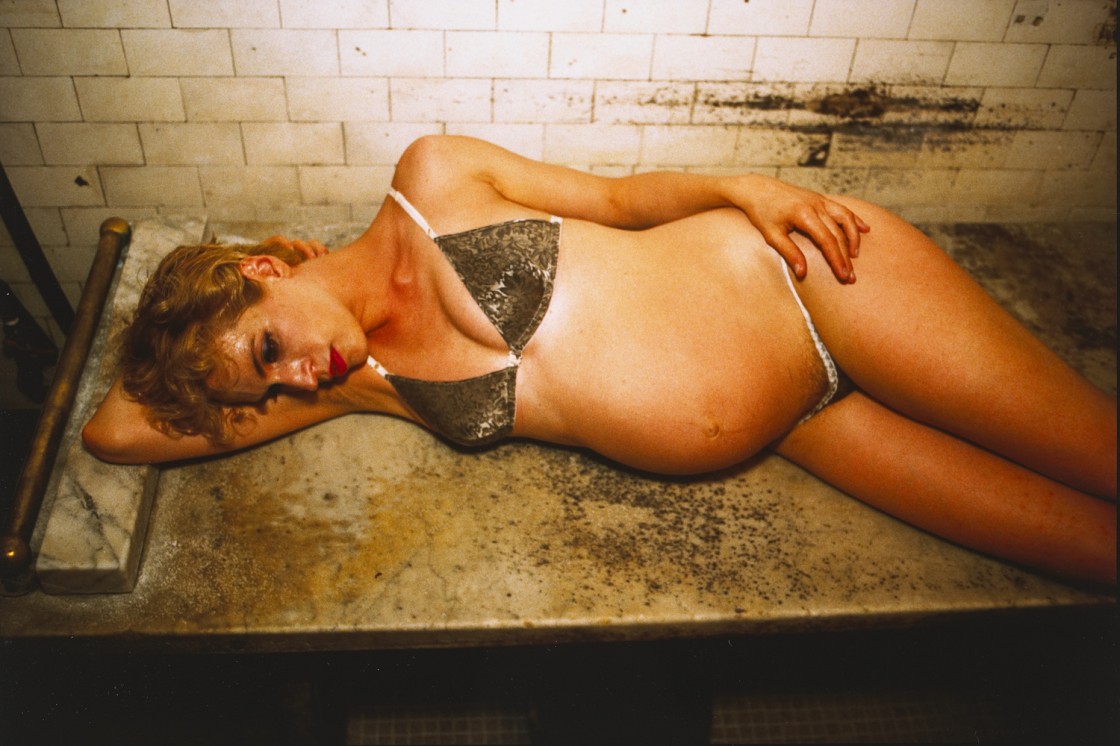
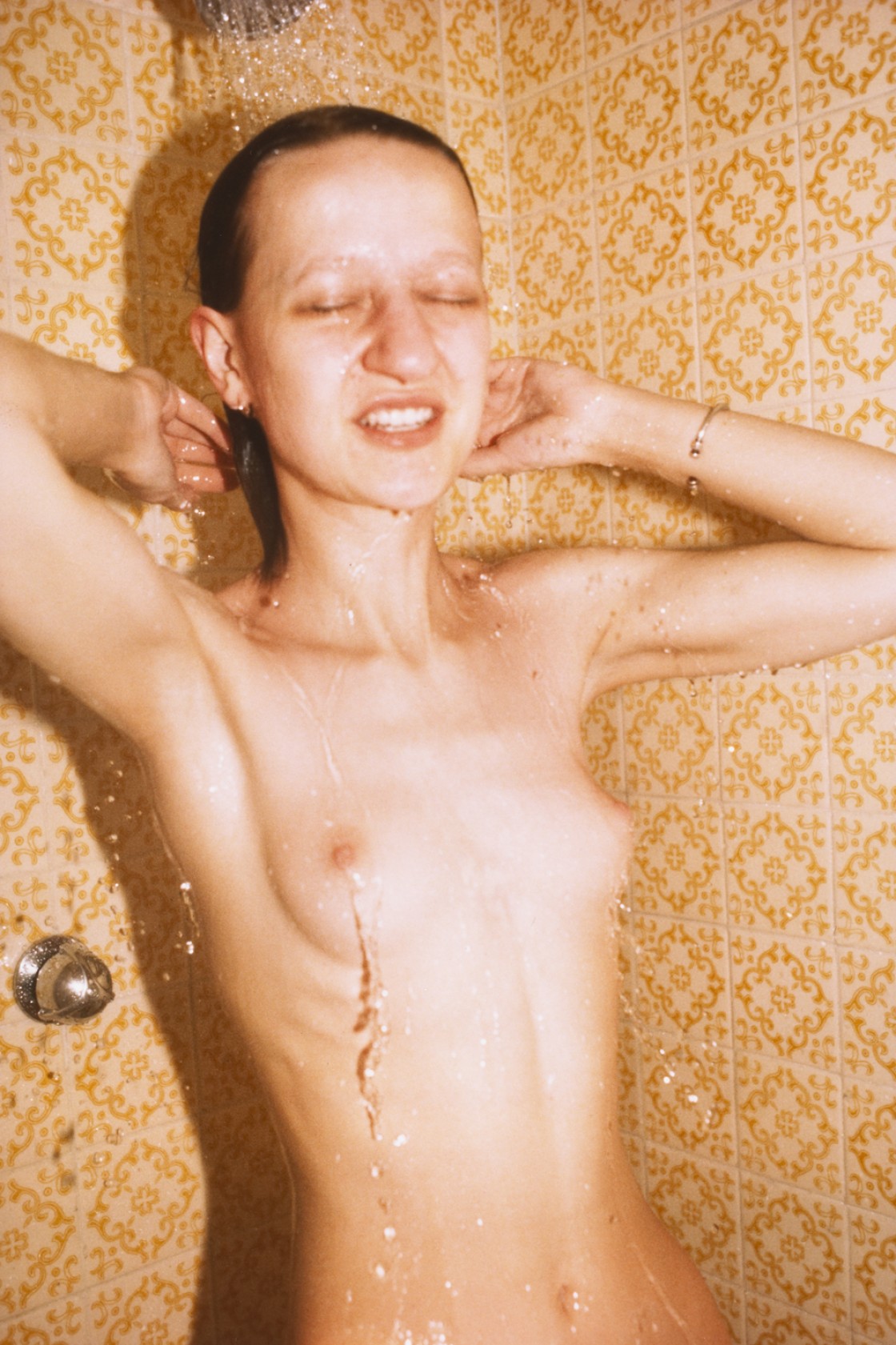
Rebecca at the Russian Baths, New York City, 1985
Cibachrome print
Frame: 17 5/8 × 21 5/8 in. (44.8 × 54.9 cm)
Paper: 11 × 14 in. (27.9 × 35.6 cm)
Image: 9 × 13 3/4 in. (22.9 × 34.9 cm)
The Museum of Contemporary Art, Los Angeles
The Nimoy Family Foundation
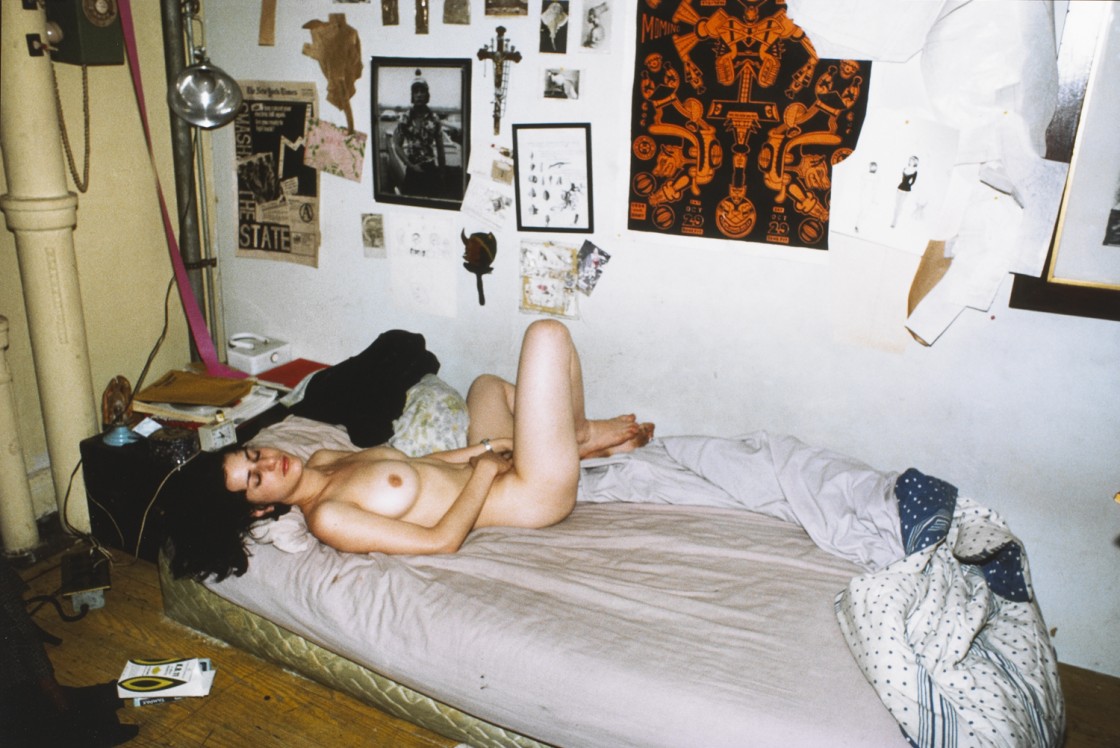
Her Ballad series—its title drawn from a song associated with Bertolt Brecht (“Die Ballade von der sexuellen Hörigkeit”), a piece included in The Threepenny Opera with music by Kurt Weill—has been described as “glamorous, absorbing, and, in the best sense of the word, unpleasant.” It includes images that refuse friendly tonalities, saturated by the use of indoor flash: among them, a heavily pregnant woman in a bikini reclining on a filthy stone bench; a friend masturbating; someone urinating; even a vulva framed by the scar of surgery after an ectopic pregnancy.
To see these images in the gallery—under careful museography, perfectly installed—grants them a certain punk quality. The setting cannot neutralize their raw frontality, their painful indecency. They are too “real,” too crude: images that might more properly be contemplated in a space closer to the conditions in which they were made. A more stimulating darkness, perhaps—deeper, less accommodating—pulsing to the music that provoked or inspired them.
With each photograph occupying a uniform frame, the eye is free to stop at whichever moment best feeds its curiosity—or its morbid fascination. Either way, it is striking that, so many years later, they retain such freshness and emotional charge, while being, at once, comforting and confrontational—just as they were in 1986.
Adrian Searle, writing for The Guardian, noted that he has been familiar with them for much of his adult life. What catches his attention now, however, is how everyday they can seem—how surprisingly normal these testimonies look.
In the times we inhabit, it has become normal for all of us to publish photographs on social media that, in one way or another, belong to our intimacy—our private lives. Also to the life we wish we had and do not. To secure those mirages requires a state of self-consciousness and a rather cold calculation of the limits of what is, or is not, advisable to share.
Goldin’s images remain extraordinarily powerful. They leave you at the feet of a revelation, on the verge of nausea. The decision to hang them against dark walls proved satisfyingly immersive: your gaze leaps from one to the next without distraction, absorbed by the sheer number of emotional moments they offer when taken as a whole.
The casual is only apparent—deceptive. In practice it is not so simple to find such emotional and atmospheric textures. Today we all carry a phone with a fairly good camera. But not all of us can make photographs capable of withstanding the sustained attention of a sensitive viewer—one who is aesthetically educated.
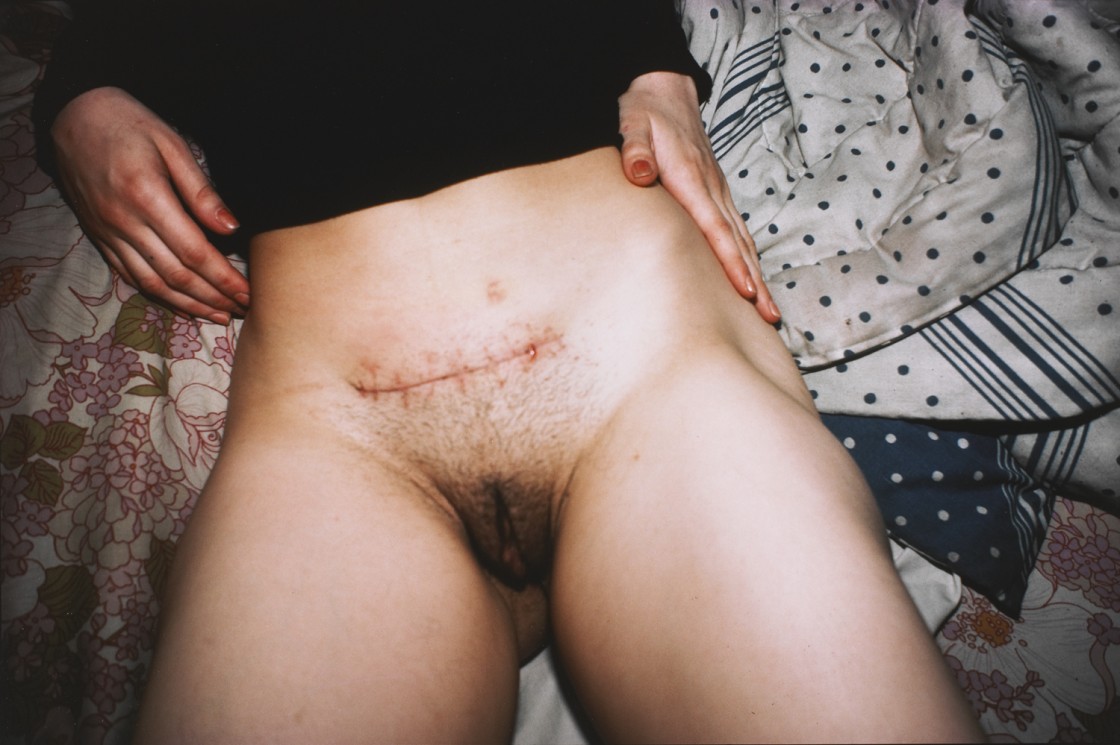
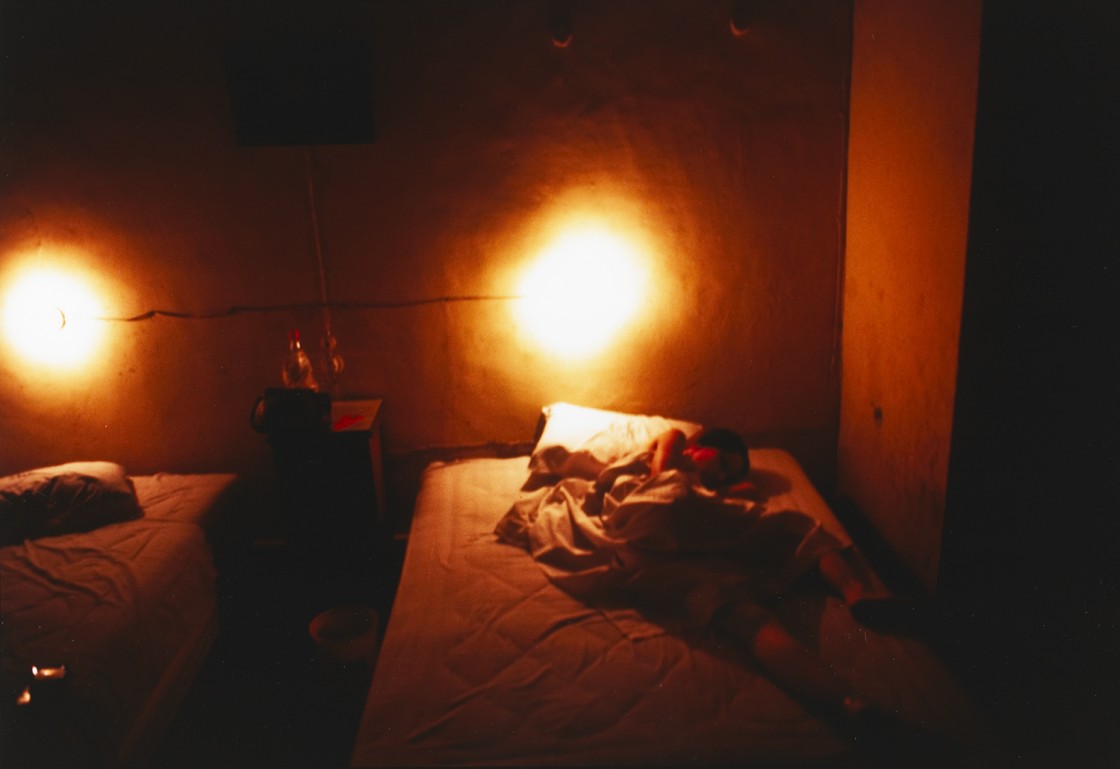
Ectopic pregnancy scar, New York City, 1980
Cibachrome print
Image: 9 x 13 3/4 in. (22.9 x 34.9 cm)
Paper: 10 3/4 x 14 in. (27.31 x 35.56 cm)
The Museum of Contemporary Art, Los Angeles
The Nimoy Family Foundation

![Bobby masturbating, New York City [Bobby at home], 1980](https://cdn.prod.website-files.com/629d4c468cb8b45ac2e4ae97/6988a5095f8f2537584f5bfd_1.jpg)






If you’re a regular reader of this blog and enjoy its content, you might consider contributing to its upkeep. Any amount, no matter how small, will be warmly appreciated
Founded in 2021, Echoes (Notes of Visual Narrative) invites everyone to explore together the visual codes that shape our world—art, photography, design, and advertising in dialogue with society.

Copyright © 2026 r10studio.com. All Rights Reserved. Website Powered by r10studio.com
Cincinnati, Ohio


Comments powered by Talkyard.