
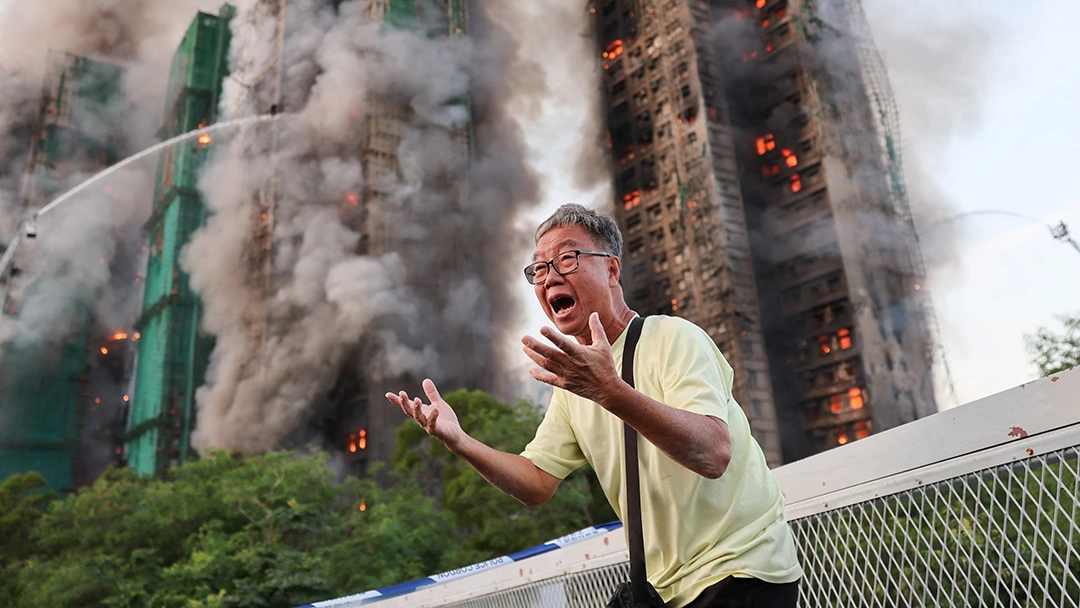
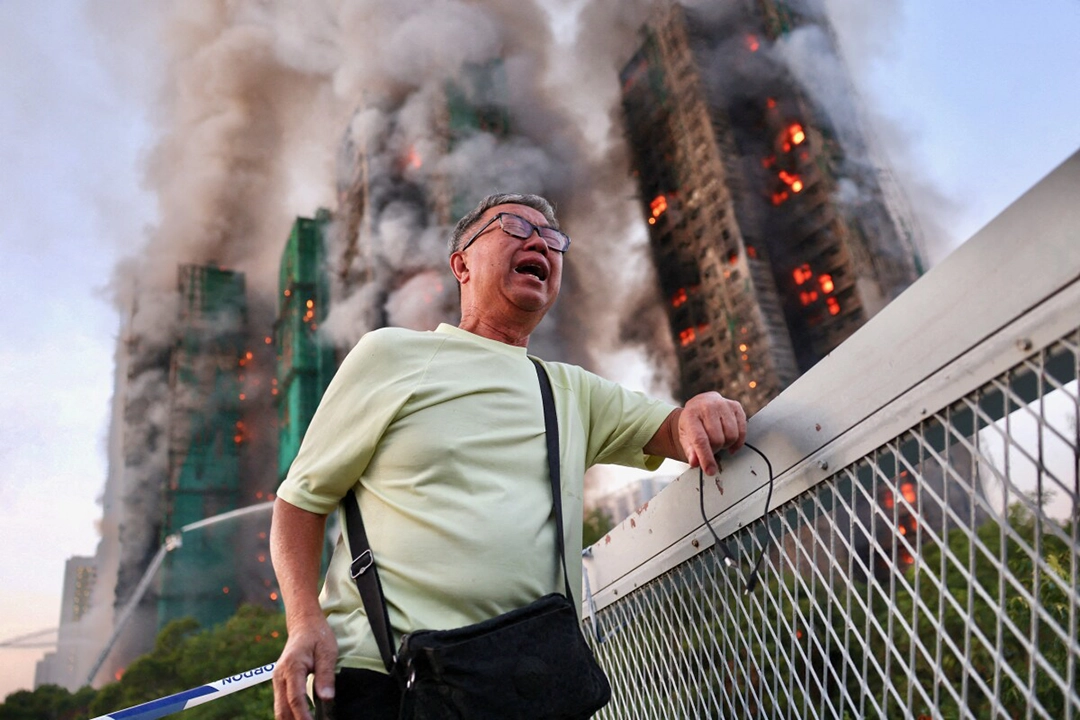
Over the past two weeks, I have seen this photograph reproduced again and again across an overwhelming number of news outlets. I cannot say it impresses me from a technical standpoint—far from it. And yet it unsettles me in a way very little manages to these days. It is likely to be chosen among the year’s most striking images. Even if it isn’t, it already belongs to my private selection.
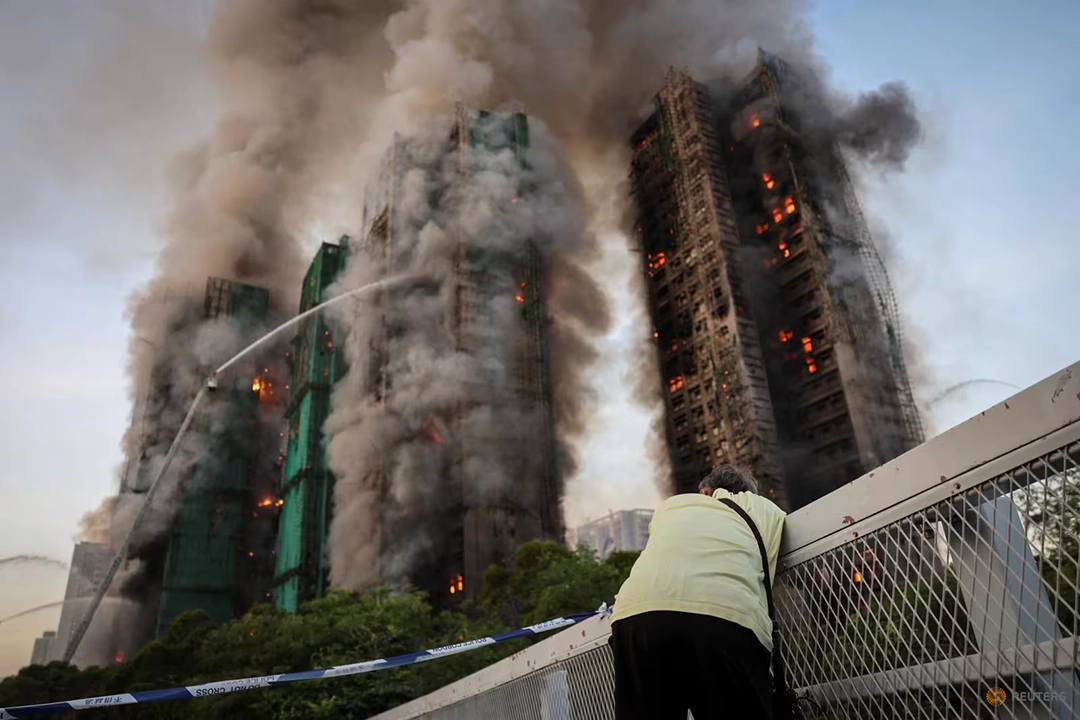
On November 26, a massive fire broke out at Wang Fuk Court, an eight-tower residential complex in Tai Po, Hong Kong. The blaze began in a bamboo scaffold wrapped in plastic netting, installed for renovation work, and rapidly climbed the façades toward the upper floors. Seven of the eight buildings sustained considerable damage. Authorities declared a level-five alarm—the highest for this type of emergency. Nearly 800 firefighters and 128 specialized vehicles were mobilized, and every nearby road and expressway was closed.
The ferocity of the flames was driven by the abundance of highly flammable materials meant to “protect” the property: nets, polystyrene panels placed over windows, everything supposedly designed to shield the structures during construction. Several residents had previously warned about safety hazards on site, including issues with the scaffolding and with waste handling.
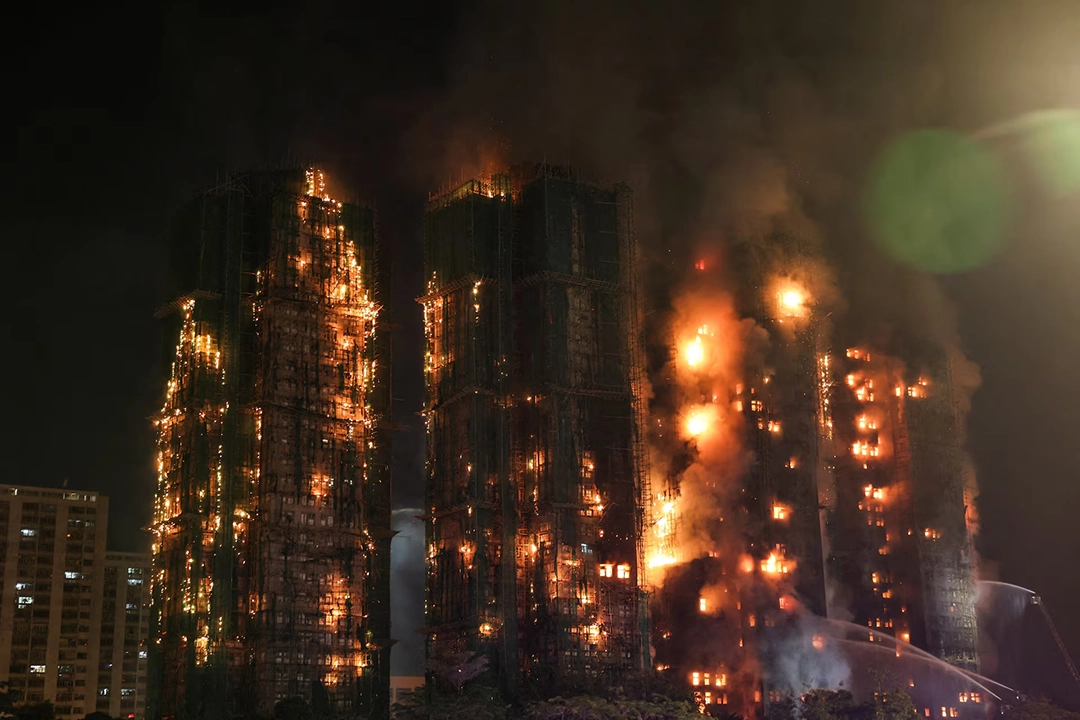
Flames and dense smoke rise from several residential blocks at the Wang Fuk Court housing complex during the deadly fire in Tai Po, Hong Kong, China, November 26, 2025. REUTERS/Tyrone Siu/File Photo. Licensing rights available.
The photograph that became the emblem of the tragedy
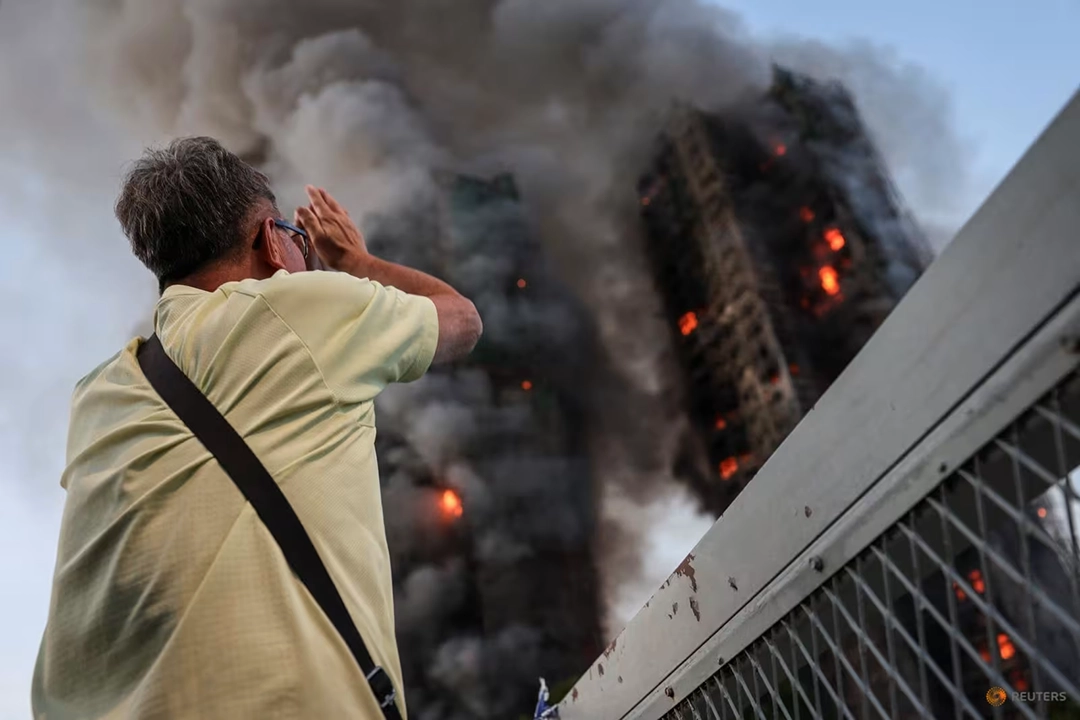
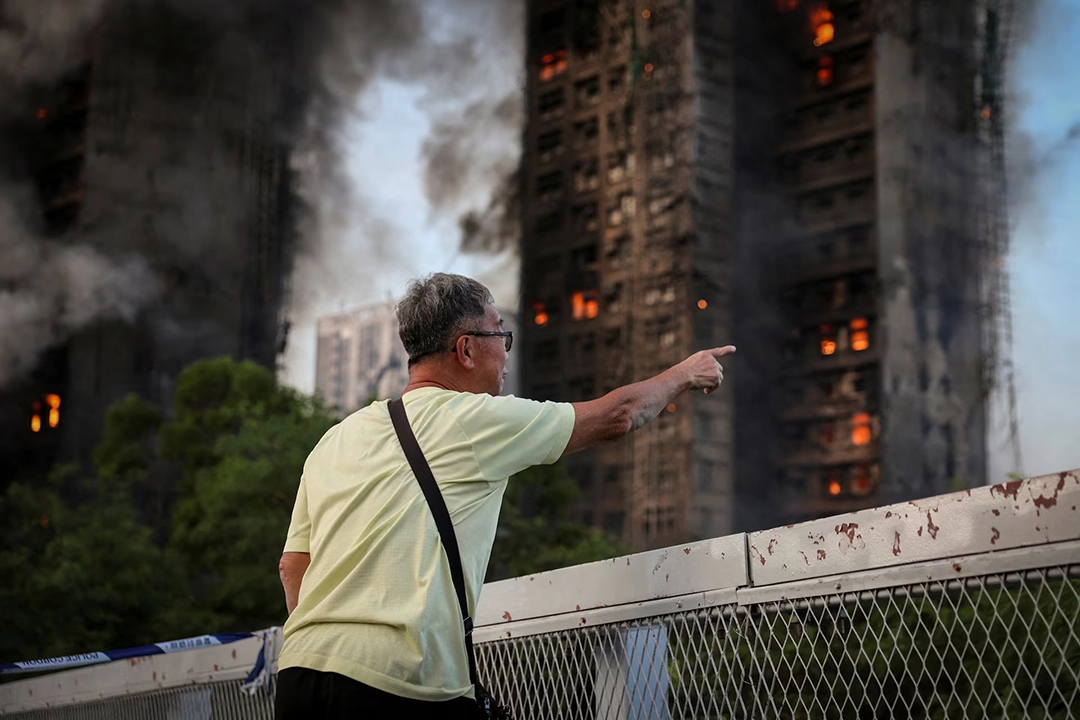
On what seemed like an ordinary autumn afternoon, Wong, a 71-year-old retiree, went out to pick up his granddaughter from school, a routine he alternated with his wife. Shortly after leaving their apartment, he noticed that one of the towers was beginning to burn. Rushing back—leaving the girl behind—he saw flames pouring from the mid-level floors of his own building. “My wife is inside,” he cried, pointing desperately at the tower engulfed in fire.
His despair was captured by Reuters photographer Tyrone Siu roughly an hour after the blaze began. The image went viral and became the visual distillation of the tragedy because it conveyed, instantly and without mediation, the universal register of helplessness and sorrow.
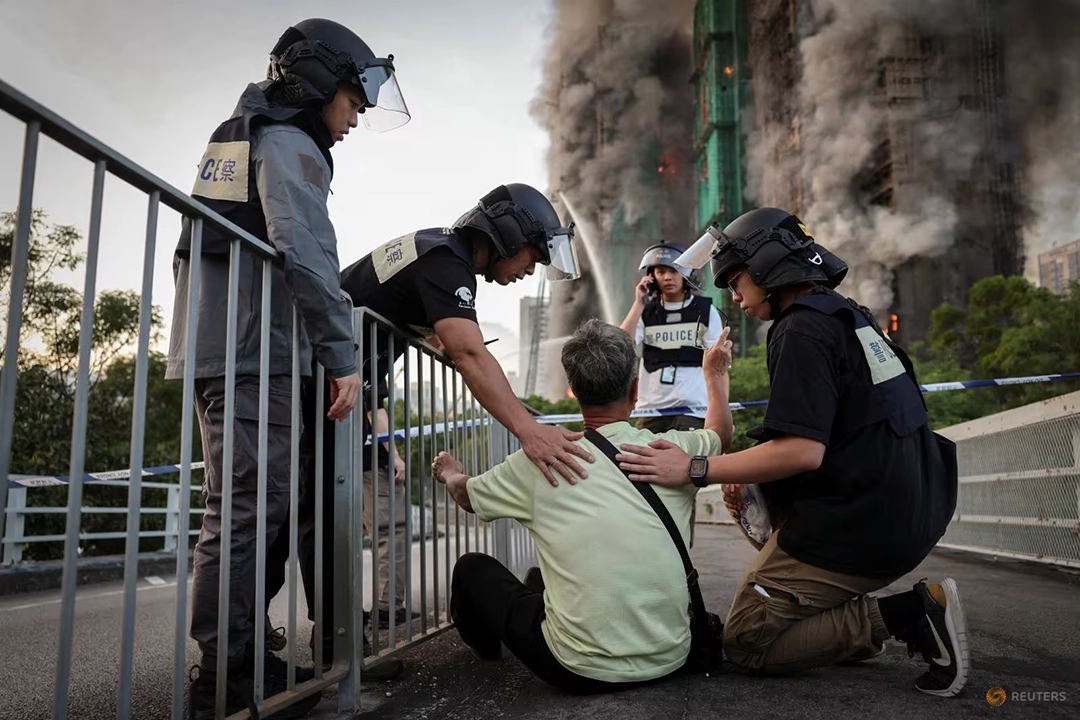
Wong’s son spoke with Reuters while specialized teams searched for bodies inside the towers. He explained that he wanted to share the family’s story as part of a healing process, adding that his father—once a maintenance foreman, electrician, and certified plumber—had long been worried about the risks posed by the renovation work. He had torn down the polystyrene sheets covering his windows and replaced them with fire-retardant plastic, and repeatedly soaked the green mesh outside to keep it damp. It made little difference. After the brief call his wife managed to make when the fire erupted—a call that lasted barely a minute before cutting off—he suffered an emotional collapse, standing for hours watching the destruction until he eventually collapsed onto the pavement and was assisted by an officer. He kept repeating: I am coming to find you.
I find myself asking several questions.
After witnessing so much devastation in Gaza—hundreds dead, hundreds mutilated—why does the suffering of a single person affect me more?
It is, of course, a rhetorical question. This is how the human brain works: the Identifiable Victim Effect. For most of human history—of which civilization is only a narrow sliver—survival depended on small groups in which recognizing individual faces, voices, and emotional states was essential. The image of Wong, condensed into a single gesture of absolute despair, triggers in me an immediate and unavoidable emotional impact.
The crowd waiting at an airport for news of the missing plane carrying their families does not provoke the same response. That is the collapse of compassion. We cannot process a mass tragedy. Statistics and numbers activate regions of reasoning, while the story of a single person mobilizes those of emotion, memory, and affective resonance.
There is something else. As we grow older, companionship ceases to be something we can assume. We become more withdrawn, more intolerant, more difficult. There are no crowds waiting to sustain or comfort us. Our circles narrow to almost nothing, through life and through death. The presence of a single person at our side acquires extraordinary weight, anchored in shared testimony and accumulated memory. It becomes a shelter against vulnerability. Beyond a certain point, companionship is not easily replaced. A sudden and unforeseen sentence of solitude is, therefore, devastating.
The provisional toll of the disaster stands at at least 159 dead, dozens injured, and hundreds missing, according to official figures still being updated.
There is still no news of Wong’s wife, nor of more than 30 other individuals.
Meanwhile, criminal proceedings have begun against the construction company and the supervising firm, with preliminary charges including negligence and involuntary manslaughter.






If you’re a regular reader of this blog and enjoy its content, you might consider contributing to its upkeep. Any amount, no matter how small, will be warmly appreciated
Founded in 2021, Echoes (Notes of Visual Narrative) invites everyone to explore together the visual codes that shape our world—art, photography, design, and advertising in dialogue with society.

Copyright © 2026 r10studio.com. All Rights Reserved. Website Powered by r10studio.com
Cincinnati, Ohio


Comments powered by Talkyard.