
.webp)
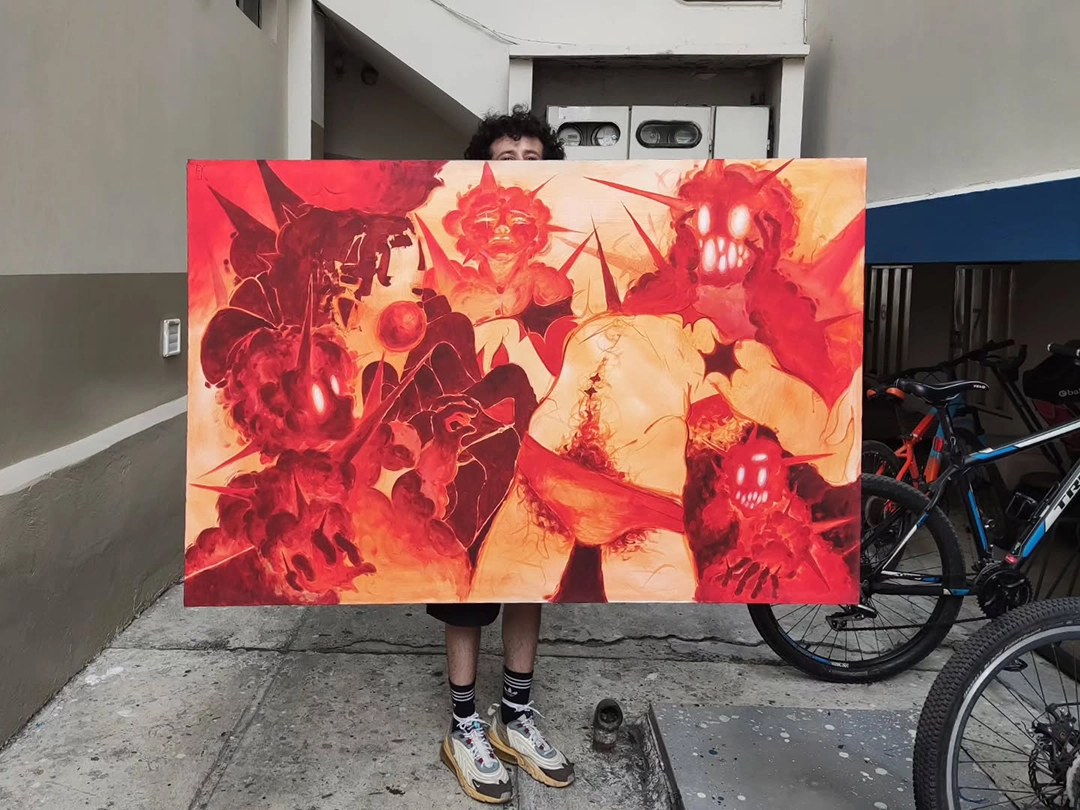
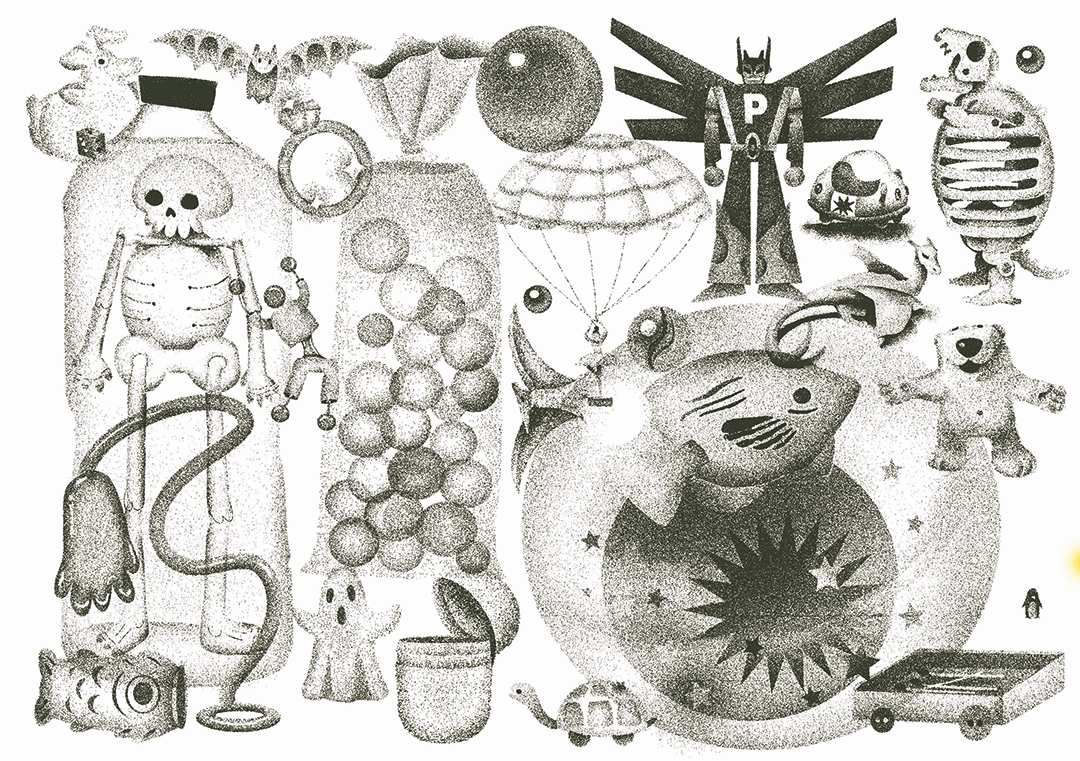
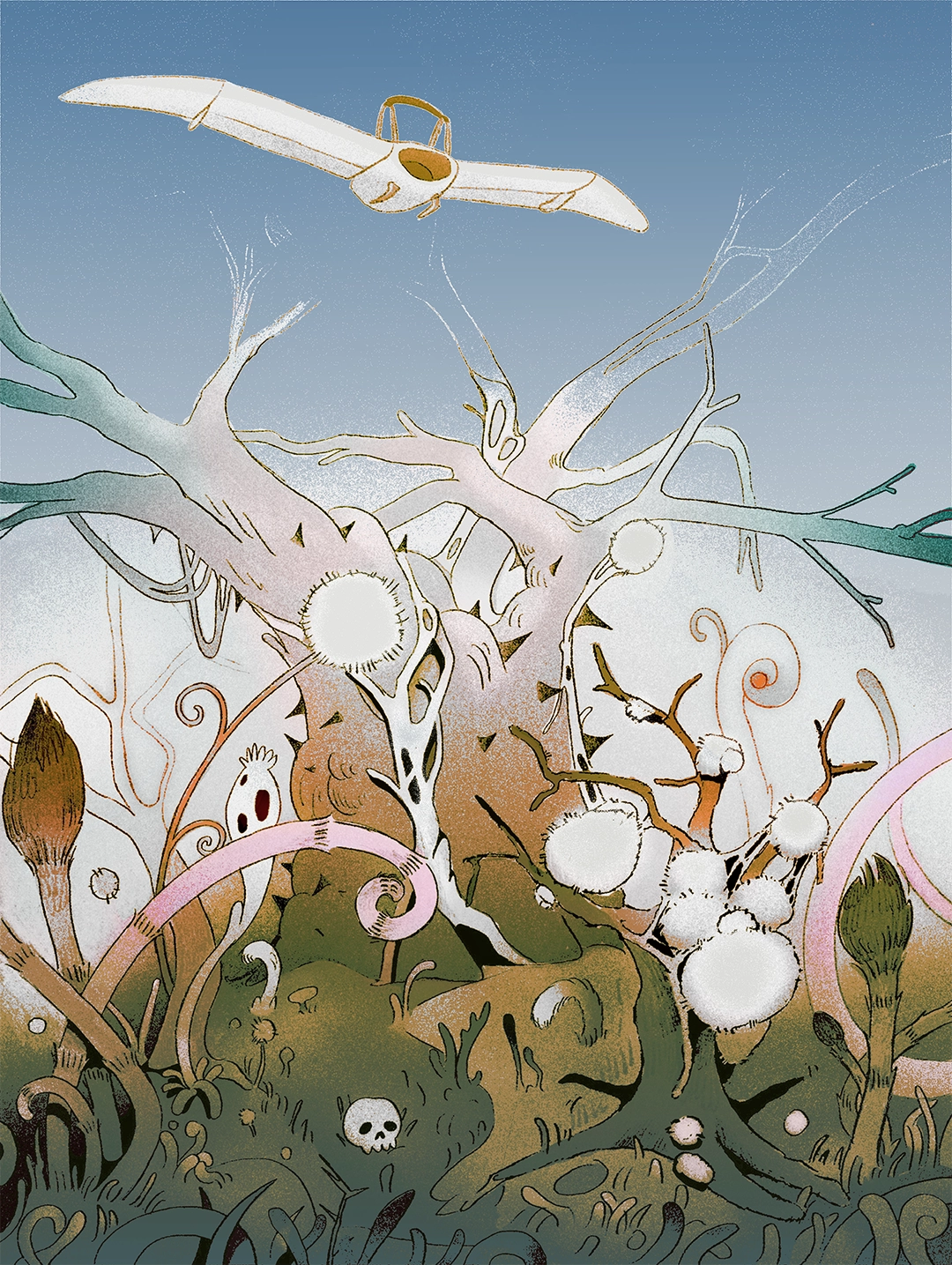
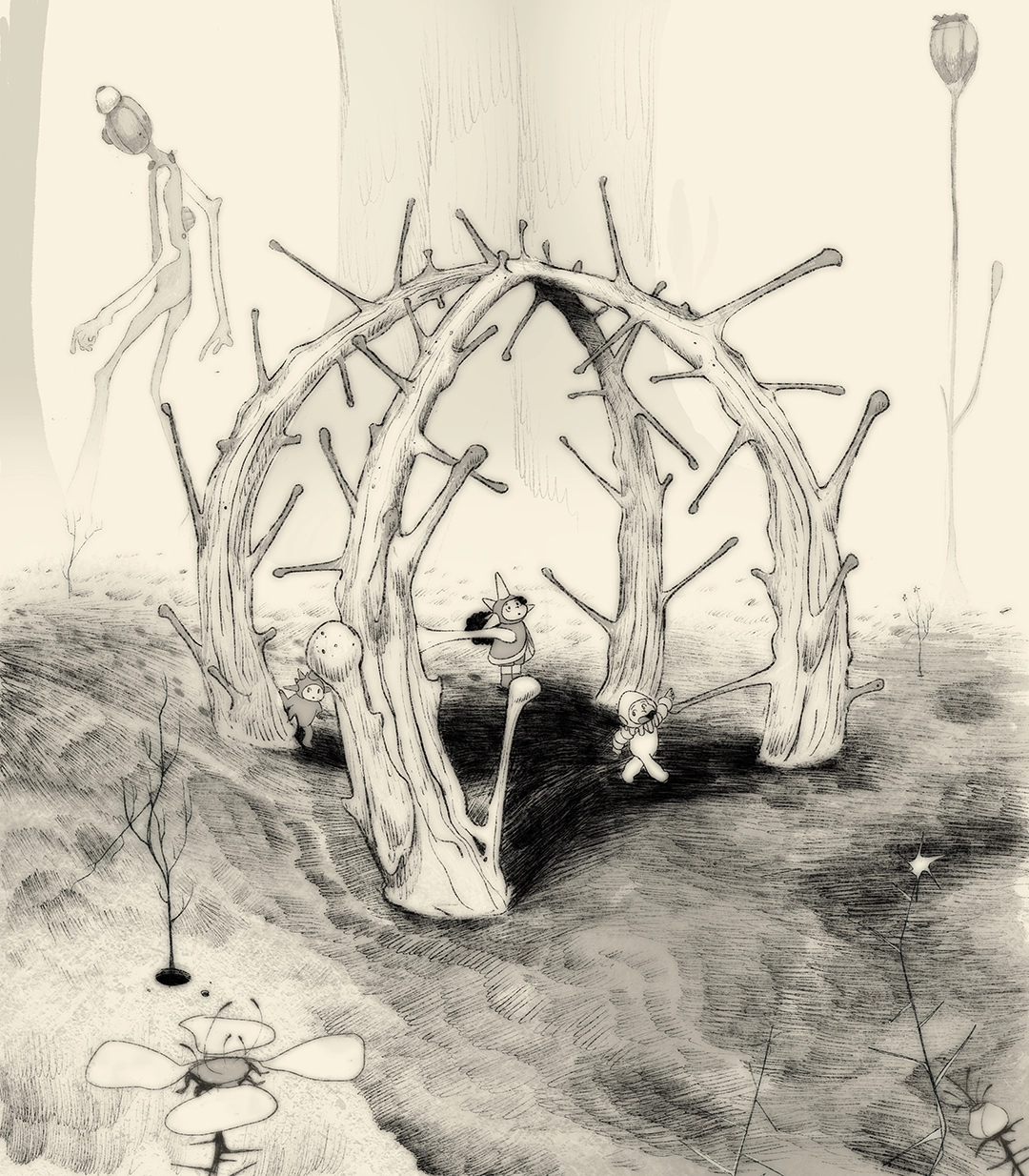
Meteorite, 2025
Illustration
The aesthetic and existential possibilities that Pedro Guevara opens through his practices summon us to sustain an attentive gaze toward how we perceive the world in relation to our authentic growth and existential harmony, bearing in mind that his artistic doing never detaches itself from lived practice when establishing its discourse. We are in the presence of a temperament akin to that harbored by the artists of the historical avant-garde. Might we find in his methodology the necessary revival of the anti-artist? Could his practice offer another way of entwining ourselves with the world that does not culminate specifically in production, optimization, and success? I recall movements such as Dadaism and Surrealism, where the artistic stance condensed a profound exhaustion with the art system. Guevara confronts us with the questions we habitually evade, like a perennial Gauguinian summons: Where do we come from? Who are we? Where are we going? Put in Cuban vernacular: if your ailment has a cure, why hurry; and if it has no cure, why hurry. The importance the artist grants to stillness and enjoyment is especially resonant within current sociopolitical circumstances.
His recent exhibition Other Practices, Beyond the Abyssal (Quito, Ecuador), part of his graduation thesis in Visual Arts (Universidad de las Artes, Guayaquil), underscores the coherence of someone who, time and again, embraces the practice of the Baudelairean flâneur—later reclaimed by the Situationists in the mid-twentieth century—drift, collection, as gestures that reconnect him to his origins in Atuntaqui, Imbabura. The artist’s childhood home constitutes a universe in itself, for within it trades were shared, crafts were cultivated, and a sense of belonging to the land prevailed—among other notions that invite us to reconsider the pertinence of a life that finds in harmony and calm the proper optic from which to situate oneself in the world.
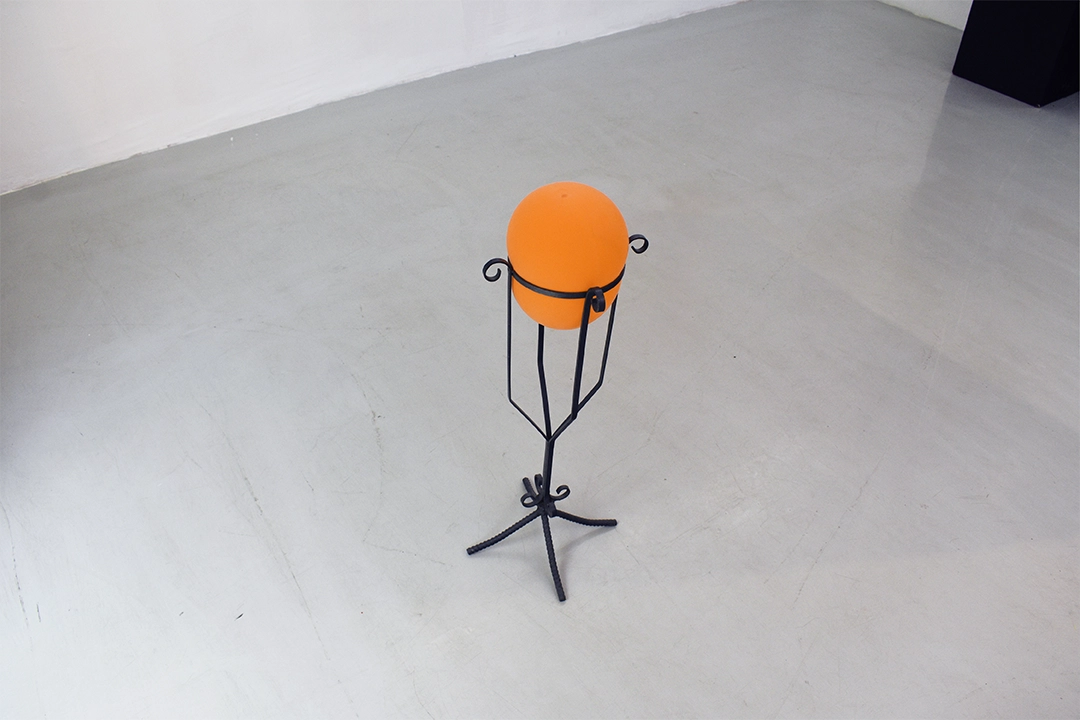
Apriétame fuerte, conPasión (Hold Me Tight, with Passion), 2025
Approximate translation due to linguistic singularity.
Assembly, balloon and metal structure | 19.7 × 7.9 × 7.9 in
Of Eternal Returns
As the celebrated Argentine musician Fito Páez remarked in a recent interview, “they managed to domesticate youth; everyone is clutching their phones, and that has distanced us from love, from sex, from prayer.” It is urgent to reclaim methodologies that foreground tenderness, affection, and communication, for we inhabit nearly unbridgeable voids that are scarcely even named.
The way art is conceived today—even within academies—continues the antiquated aesthetics of the market, rendering Walter Benjamin’s essay The Work of Art in the Age of Its Mechanical Reproducibility almost gentle and restrained when speaking of resistance to commerce. Yet the work of Guevara Nieto reminds us that the prominent indices of auction houses, galleries, and the institutions that deploy merchandising as their way of “handling” art do not detach from the notion of simulacrum advanced by Jean Baudrillard in Simulacra and Simulation, when he addressed the distorted management of what we call art. Did Benjamin foresee the disarray that would follow from turning even artistic education into a militant ally of a practice predetermined by its insertion within specific spaces, platforms, agents, and trajectories—structures that ultimately advance most effectively those who can afford to pay, even to sustain the “bids” within already constructed standards?
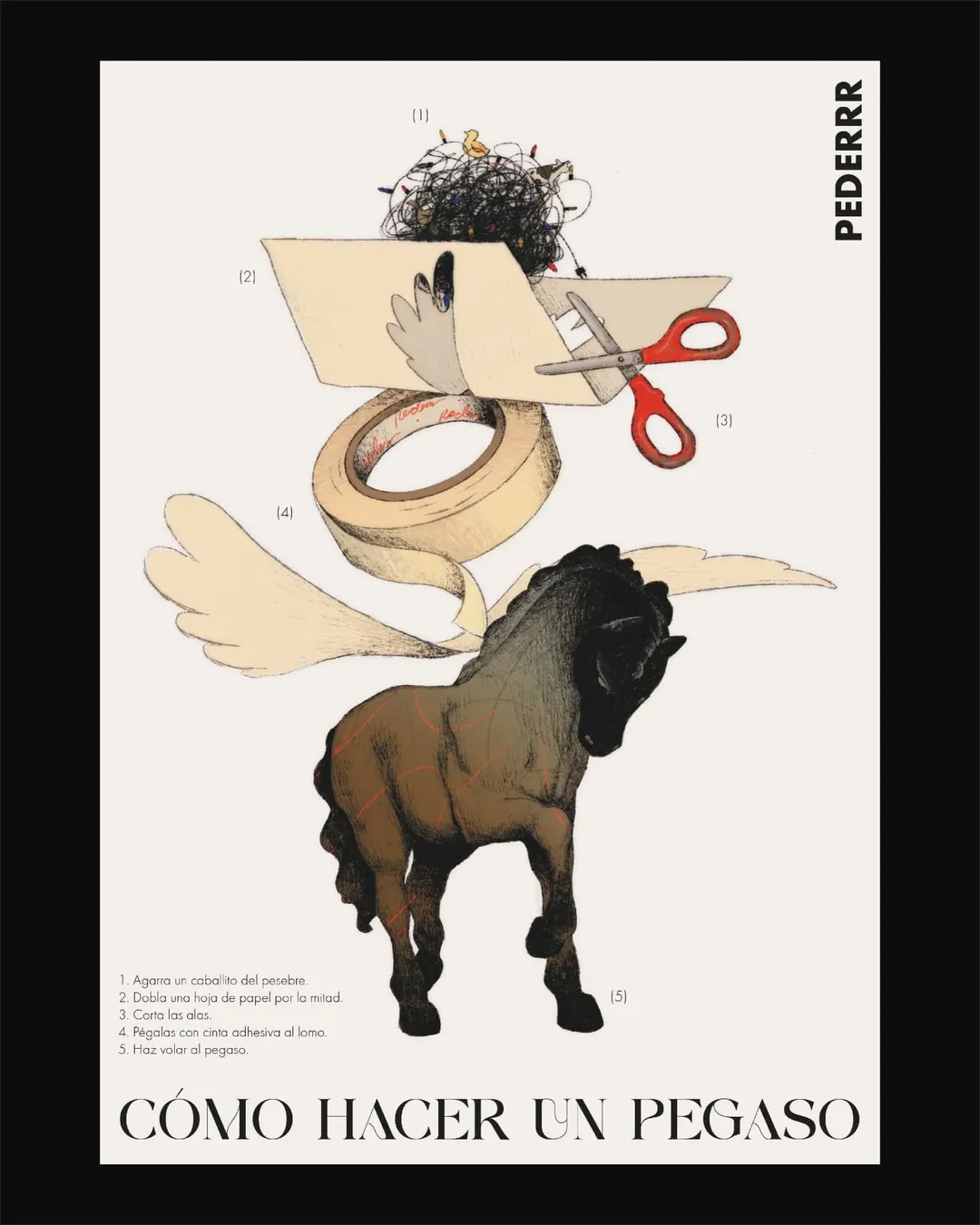
Another idea surfaces when considering how the artist unapologetically distances himself from the theoretical or formal corsets that often burden contemporary works. In him converge nearly all visual media—drawing, design, painting, installation, illustration, photobook, sculpted objects—with comparable artistic solvency and from a liberation from discursive standards that dominate the Ecuadorian scene. Locally, it has become habitual to repeat certain aesthetic “niches” (dystopian landscapes, hybrid transpositions that never fully crystallize into solid discourses, excessive pictorialism, a stubborn absence of corporeal languages, to name only a few recurring symptoms) that fail to configure themselves as practices grounded in consistent research or definable aesthetic positions.
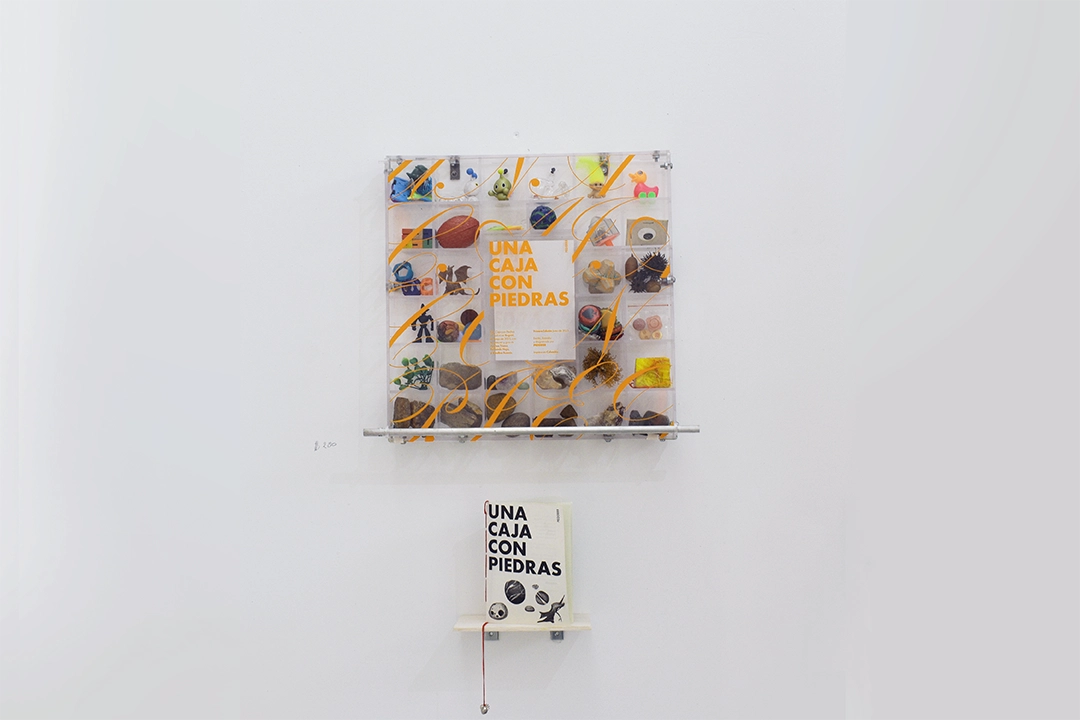
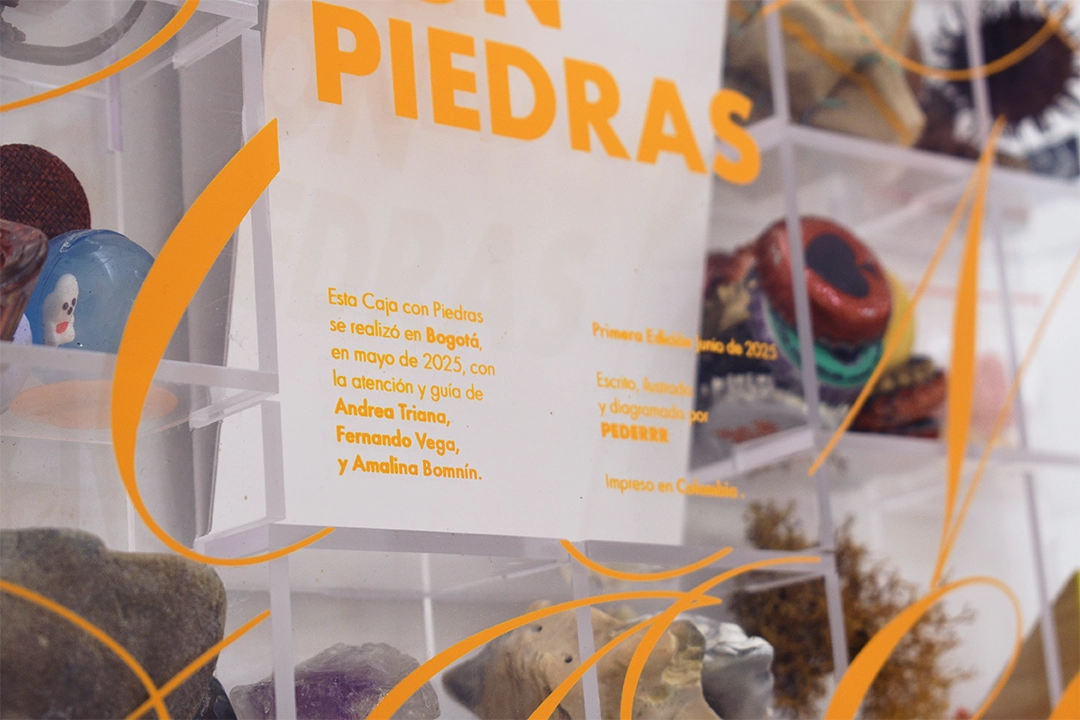
A Box with Stones, 2025
Designed and screen-printed acrylic box and archival objects | 11.8 × 11.8 × 2 in
Expanded publication (printed A6 booklet)
Guevara was my student from his earliest semesters, and what stood out was the degree of assurance he displayed in every class exercise—his arguments (as though he had been formed outside the Ecuadorian educational system, or at least within an institution of differentiated quality), his interest in exploring urban spaces, the malleability of his practices, his constant investigative drive. It may sound exaggerated or apologetic on my part, given that I served as his thesis advisor, yet his peers would not let me lie. I have had very few students who demonstrate such maturity from the first semesters onward, and he belongs to that reduced circle of disciples, among whom I could also mention Luis Enrique Medina, César Delgado Paladines, Cinthya Paredes, and not many more.
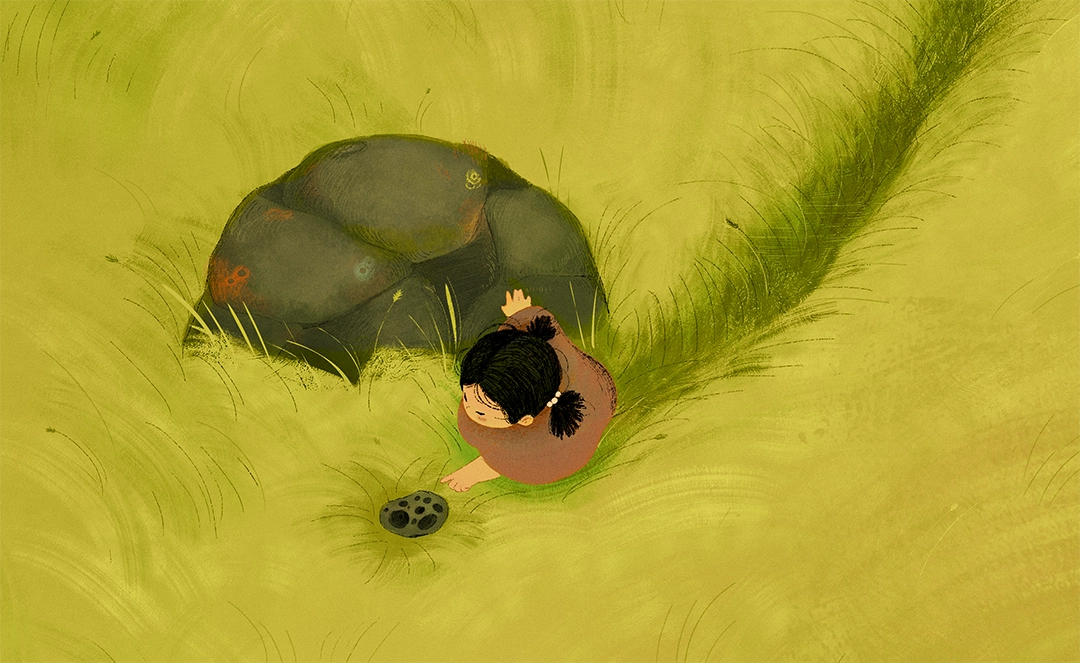
What do I mean by eternal return? The artist is aware that this cannot be the path toward a genuine artisticity capable of reflecting the value of our times—the restoration of community, the urgency of weaving networks of cooperation that safeguard our childhoods from the fascist dementia that is usurping vital delight, embraces, care, in this maelstrom where we pretend to be connected while only exhausting ourselves in profound estrangement. To return to the earth, to the home, to memories, to toys, to albums, to the astonishment of watching clouds that resemble familiar figures, or the sunrise unfolding more slowly than the week before—so that we might truly tell our children, nieces, friends, or grandchildren something ineffable. To demonstrate to them that we were alive through certain evidence; otherwise, we would not be able to attest to it.
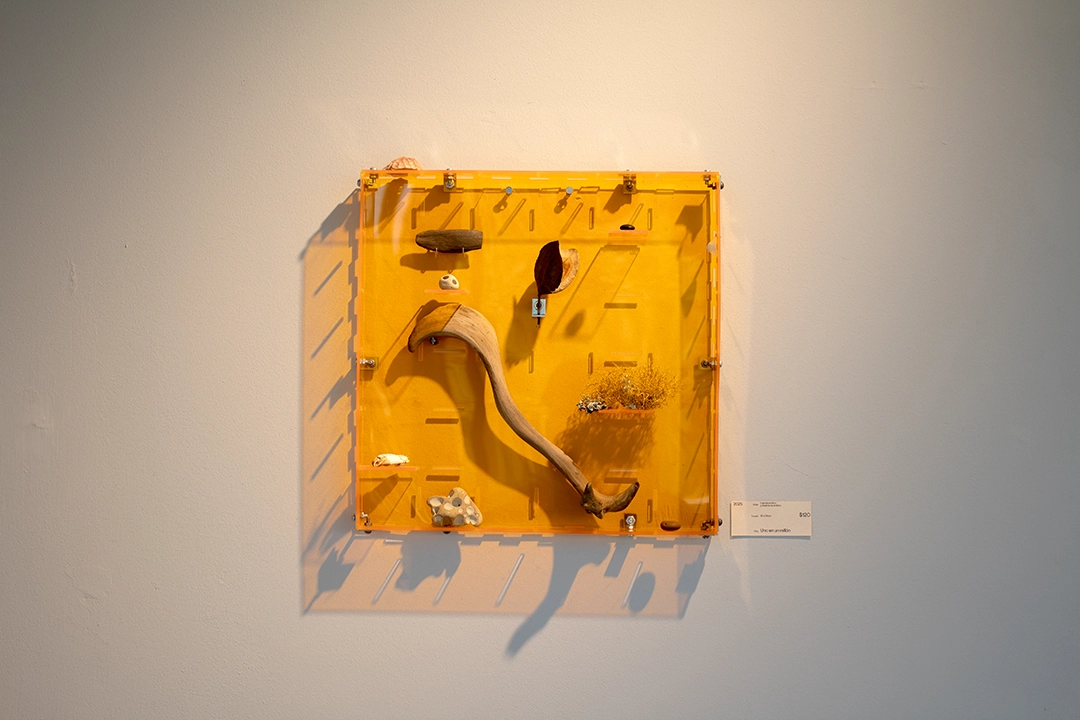
One in a Million, 2025
Designed object. Orange acrylic and archival objects | 13.8 × 13.8 × 2 in
One of the ideas I rescue and vindicate in Guevara Nieto is his insistence on calm, on tenderness, on the loving act—a certain human condition evident in his manner, his conversation, his way of facing life. These gestures lead not to a sophisticated or complex philosophy, but rather to a lucid understanding of what unfolds—a way of walking through life as if returning from everything. He is connected to those gentle modes characteristic of people of rural origin, often incorruptible. Pedro simply returns me to hope and binds me to it, as in early youth: passionately and without the need for certainties.






If you’re a regular reader of this blog and enjoy its content, you might consider contributing to its upkeep. Any amount, no matter how small, will be warmly appreciated
Founded in 2021, Echoes (Notes of Visual Narrative) invites everyone to explore together the visual codes that shape our world—art, photography, design, and advertising in dialogue with society.

Copyright © 2026 r10studio.com. All Rights Reserved. Website Powered by r10studio.com
Cincinnati, Ohio


Comments powered by Talkyard.