

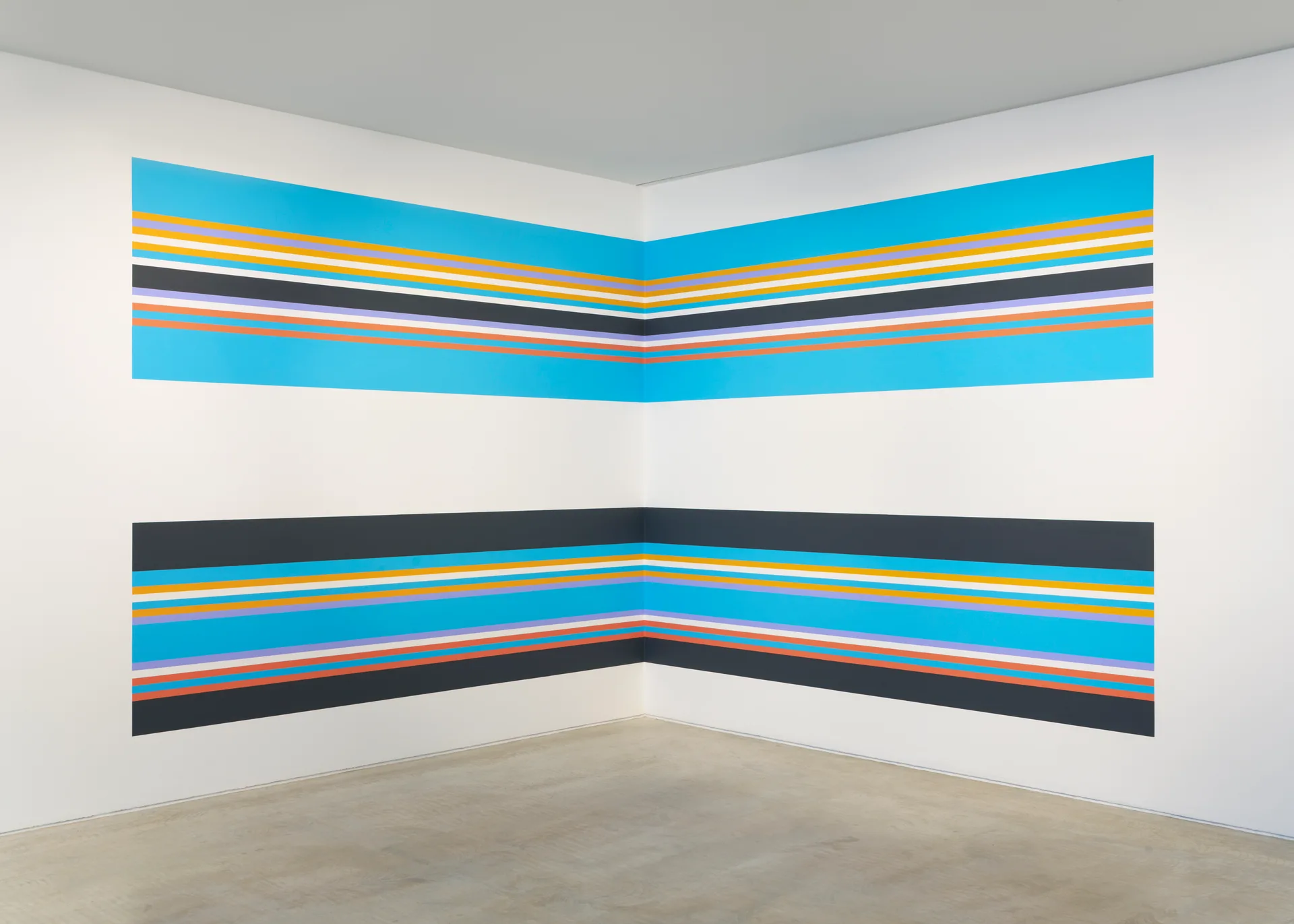
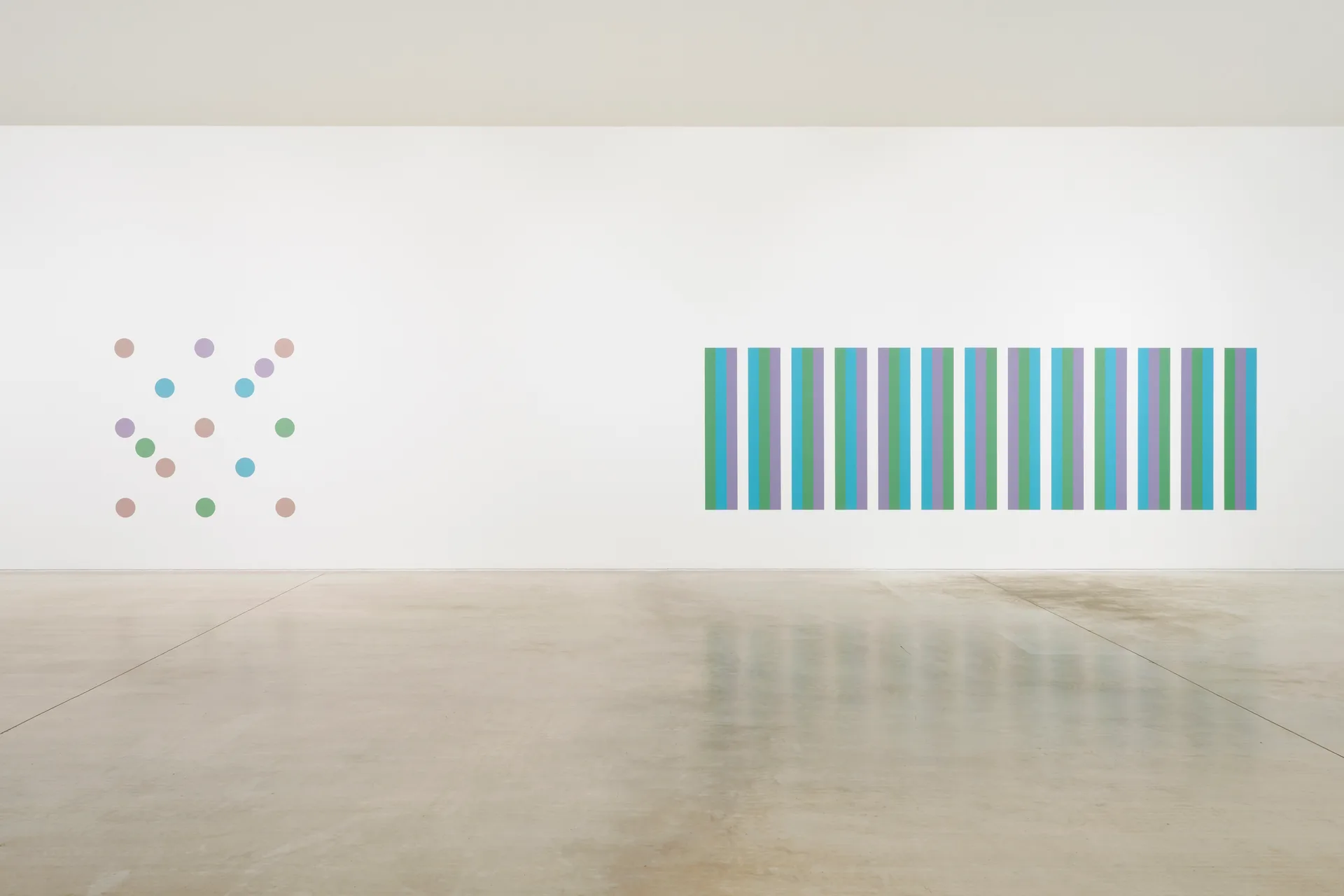
'Streak 3', 1980. Private Collection. Photo: John Webb © Bridget Riley 2025. All rights reserved. Courtesy of the artist.
Margate is a coastal town in southeastern England. Located in the county of Kent, on the shores of the North Sea, it forms part of the Thanet district and lies approximately 120 kilometres east of London.
Directly facing the sea stands Turner Contemporary, a contemporary art centre designed by David Chipperfield Architects and inaugurated in 2011. The institution is devoted to temporary exhibitions of modern and contemporary art, with a programme centred on internationally relevant artists and, conceptually, on dialogues between historical and recent practices.

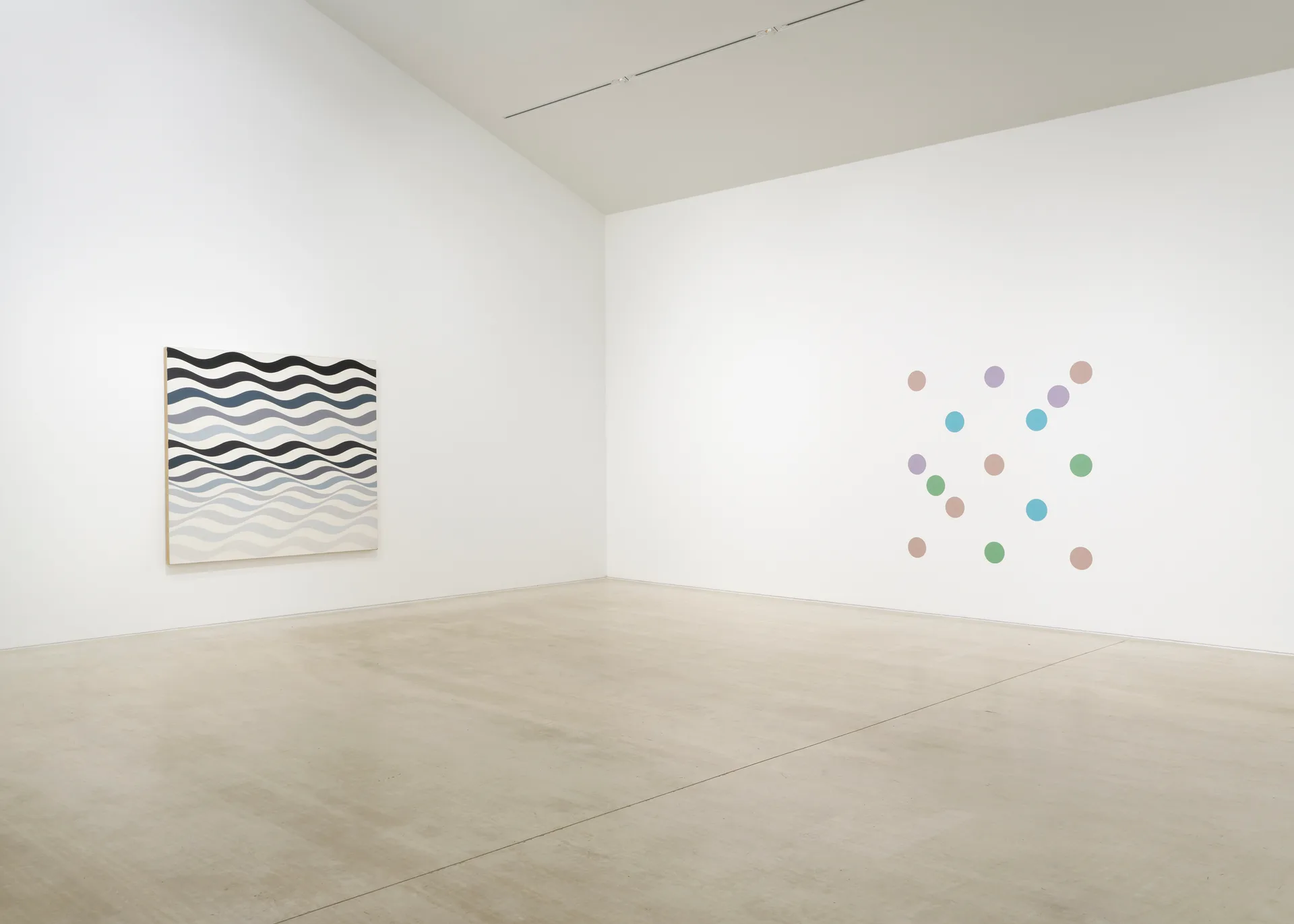
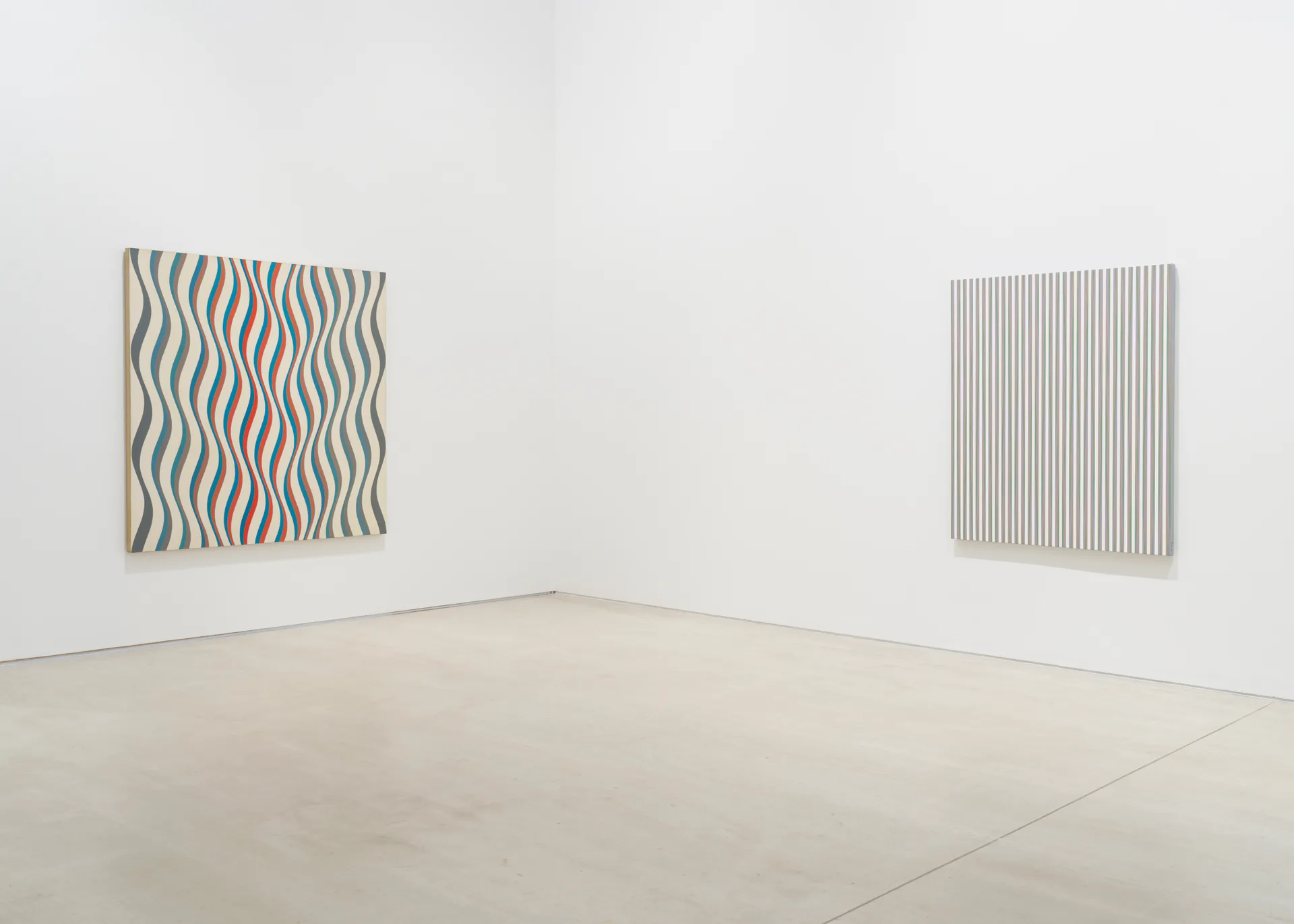
'Silvered Painting 2', 2023. Private Collection. Photo: Prudence Cuming Associates, London. © Bridget Riley 2025. All rights reserved. Courtesy of the artist.
In this specific case, context carries a particular weight. Not only because the centre is situated along Margate’s seafront—a site historically associated with British seaside leisure and marked in recent decades by a sustained process of cultural revitalisation.
The observation of the sea has been, precisely, one of the constants in the work of the 94-year-old British artist Bridget Riley. The exhibition currently on view at Turner Contemporary, Bridget Riley: Learning to See, refers to visual investigations into maritime kinetics that the artist herself identifies as early formative elements of her visual language, notably shaped by her childhood on the Cornish coast.
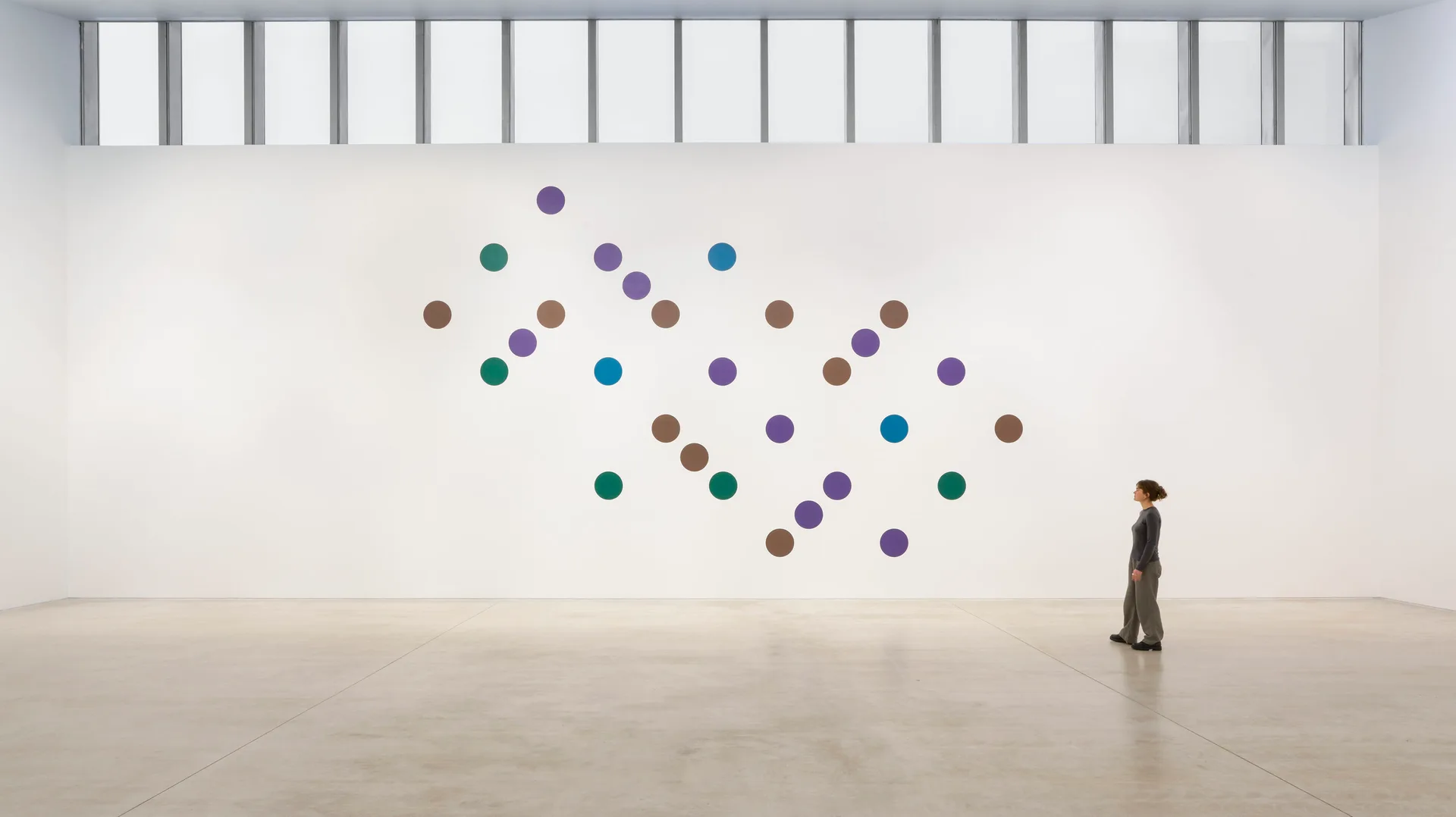
The exhibition brings together 26 paintings spanning nearly every stage of her career and traces the evolution of her work from the abstract, geometric compositions of the 1960s to later works structured around undulating lines and repetitive systems—a panoramic view of more than six decades of sustained artistic production.
The works generate perceptual effects that shift according to the viewer’s distance and the time devoted to observation. Some pieces appear to alter their colour as one approaches, while others produce sensations of undulation and visual displacement where none physically exist. These strategies point to a sustained inquiry into how perception processes pattern, colour and form.

Serpentine rhythms … Current: Dark Colours 12, 2025.
Photograph: Prudence Cuming Associates, London./© Bridget Riley 2025. All rights reserved. Courtesy of the artist.
Because of my work with the Museum of Contemporary Art of the Americas, I had the opportunity to learn—starting from the most elementary principles—the foundations and development of geometric abstraction, largely, at least in Florida, through the work of Venezuelan artists. Those I came to know were remarkable individuals. Encountering this artist and this exhibition promoted by the British edition of The Week, I could not avoid recalling a saying my grandmother was fond of repeating: it’s the same the world over.
The exhibition remains open until 4 May. Turner Contemporary, Margate (01843 233000, turnercontemporary.org).
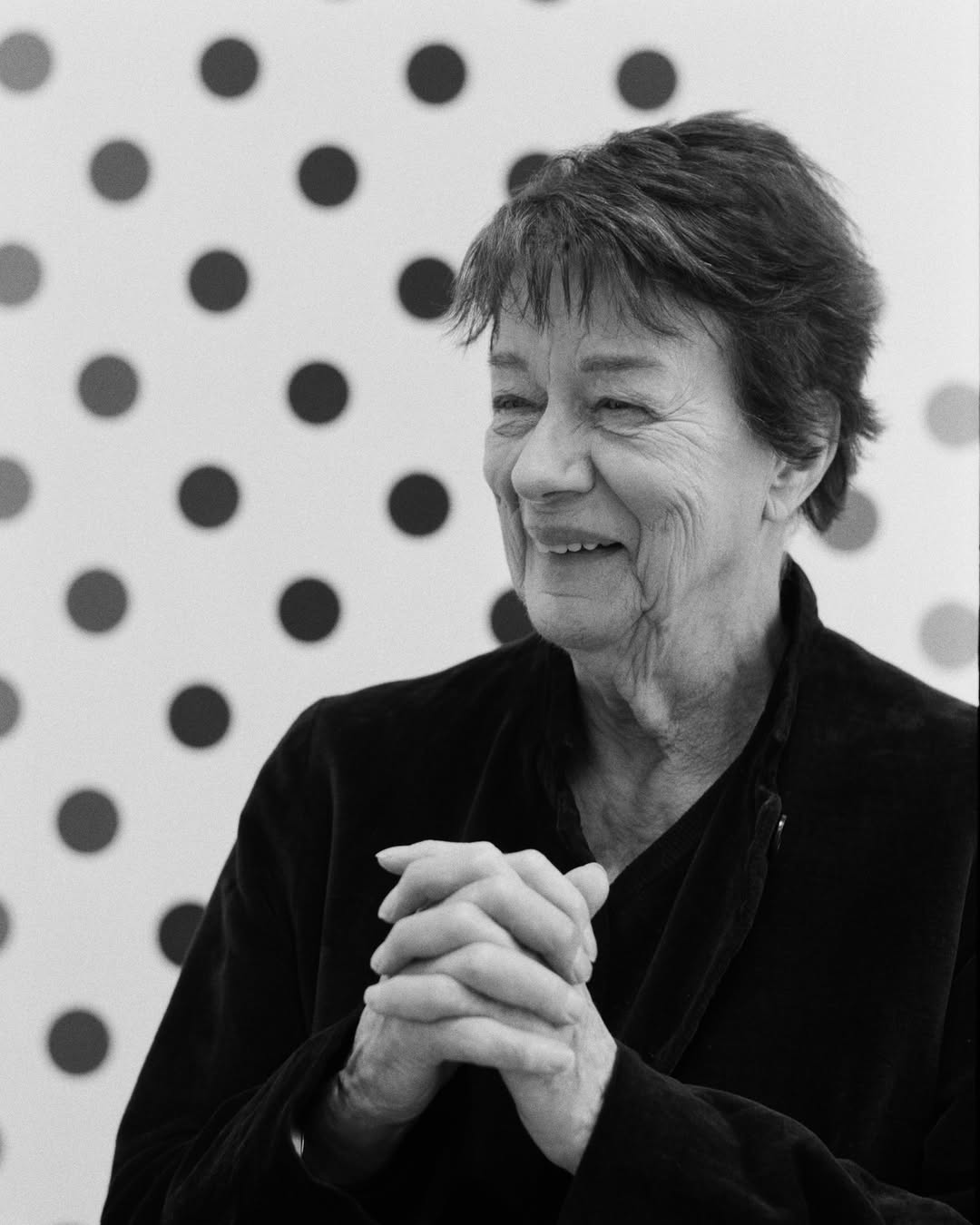
Bridget Riley (London, 1931) is a British artist associated with the development of Op Art and with the systematic investigation of visual perception through geometric abstraction. Over more than six decades of practice, her work has maintained a strong formal and conceptual continuity, focused on the study of color, rhythm, and optical movement. Her continued relevance lies in the enduring validity of these perceptual investigations, which remain in dialogue with contemporary debates on visual experience, cognition, and the active relationship between artwork and viewer.







If you’re a regular reader of this blog and enjoy its content, you might consider contributing to its upkeep. Any amount, no matter how small, will be warmly appreciated
Founded in 2021, Echoes (Notes of Visual Narrative) invites everyone to explore together the visual codes that shape our world—art, photography, design, and advertising in dialogue with society.

Copyright © 2026 r10studio.com. All Rights Reserved. Website Powered by r10studio.com
Cincinnati, Ohio

Comments powered by Talkyard.