
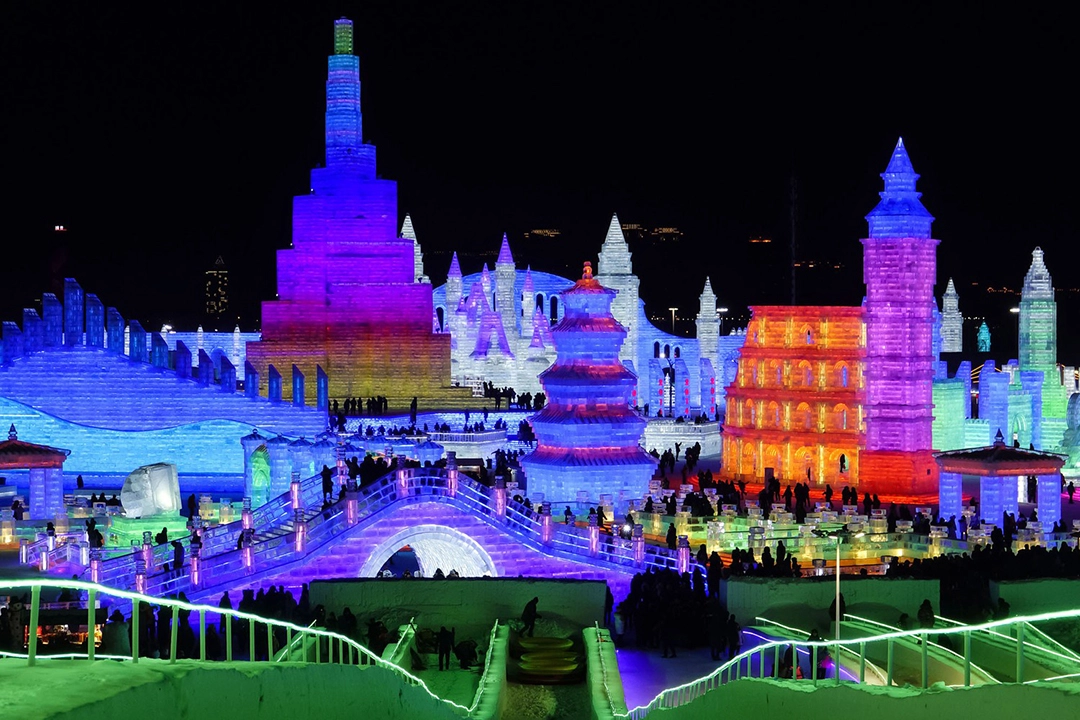
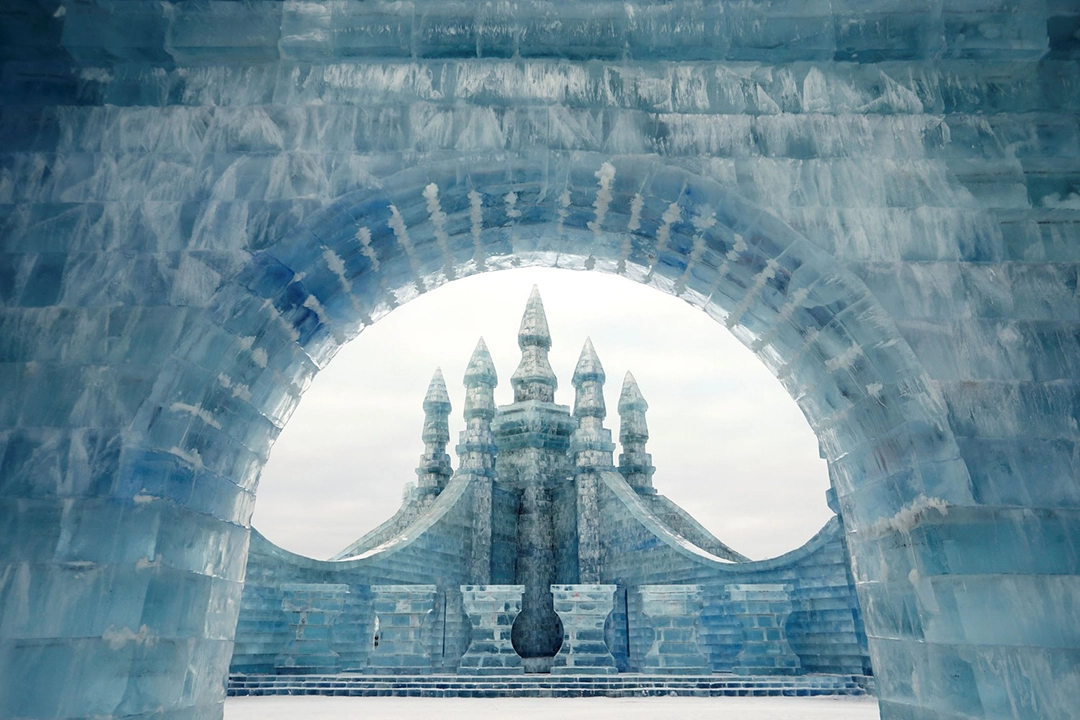
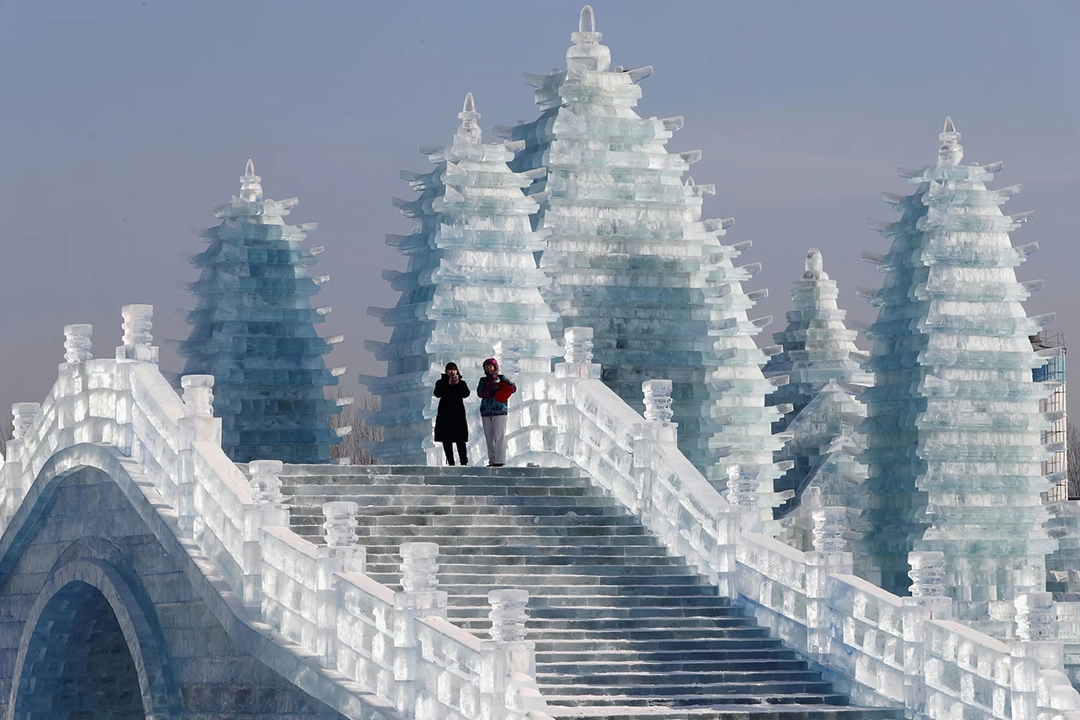
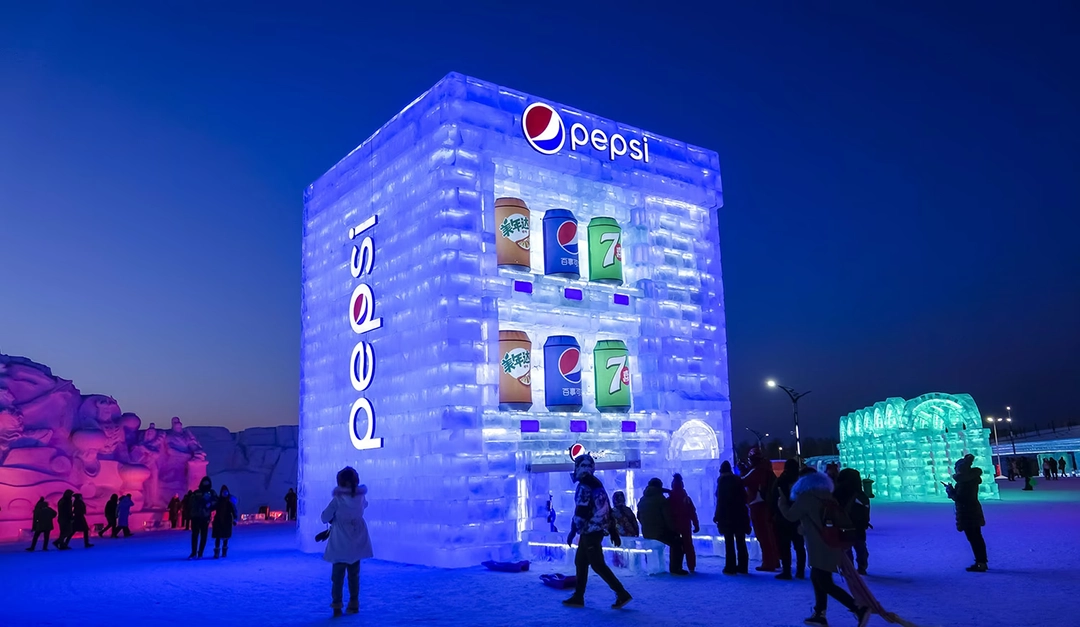
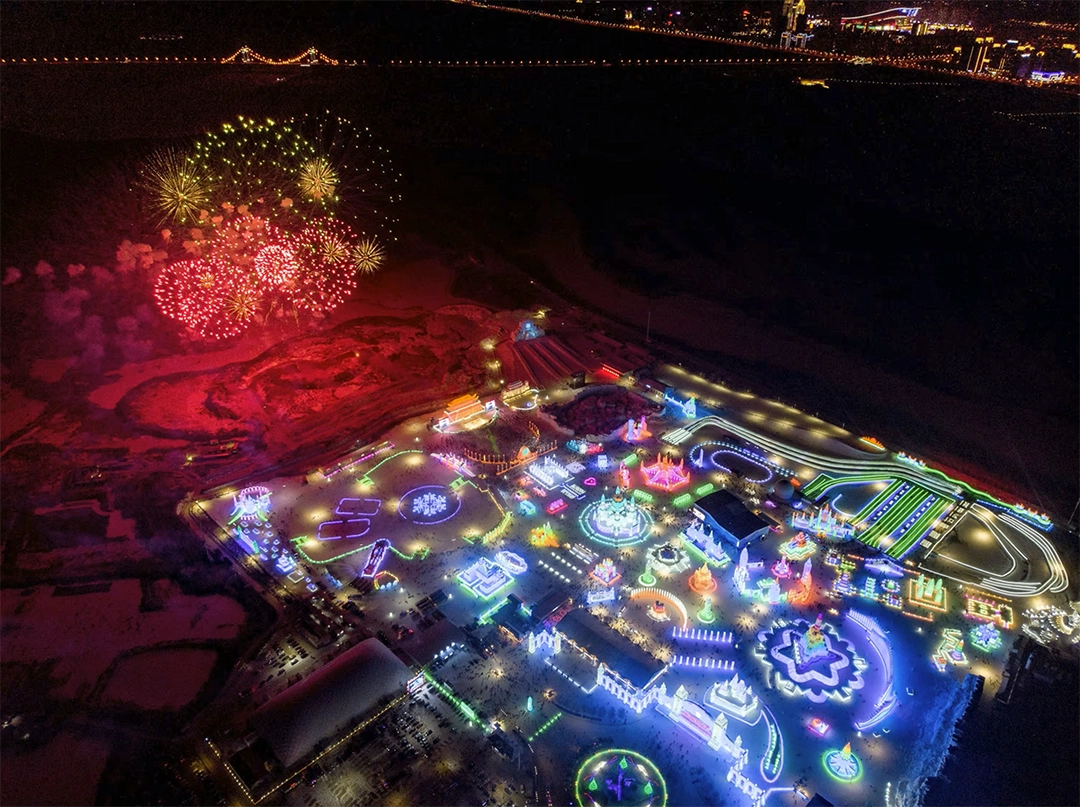
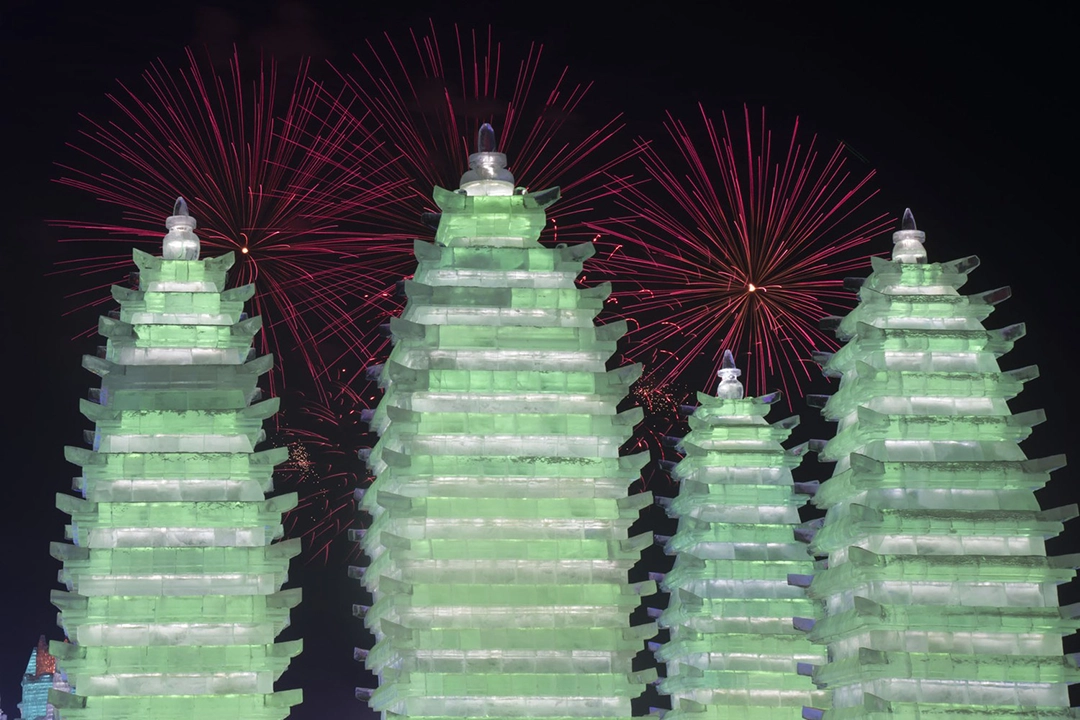
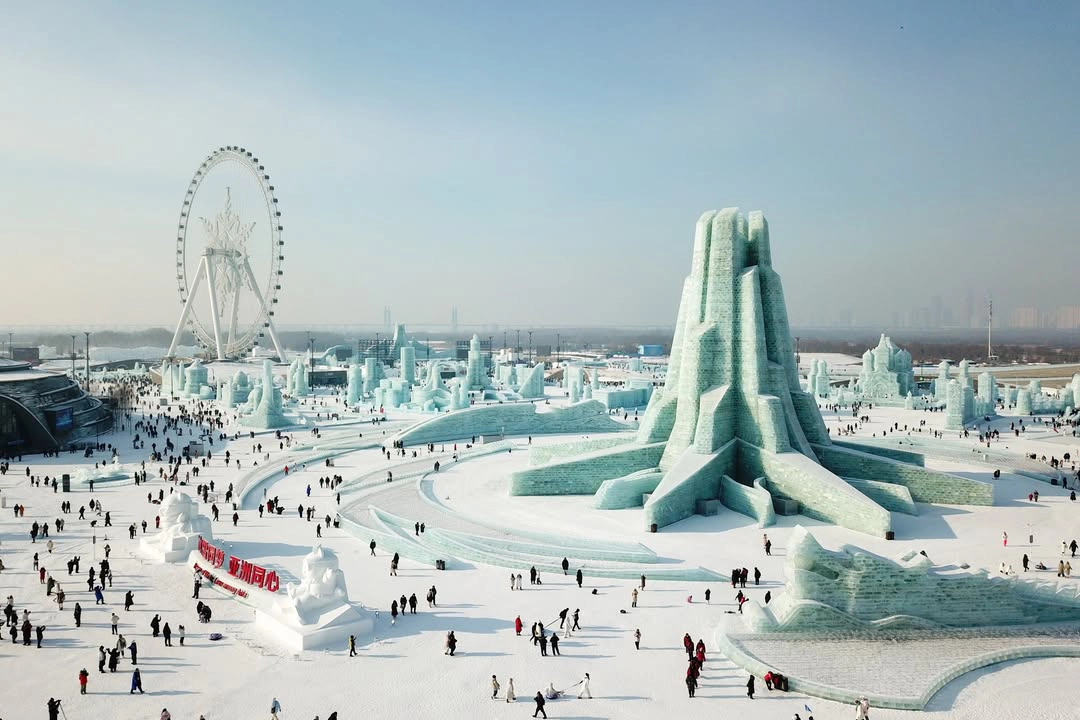
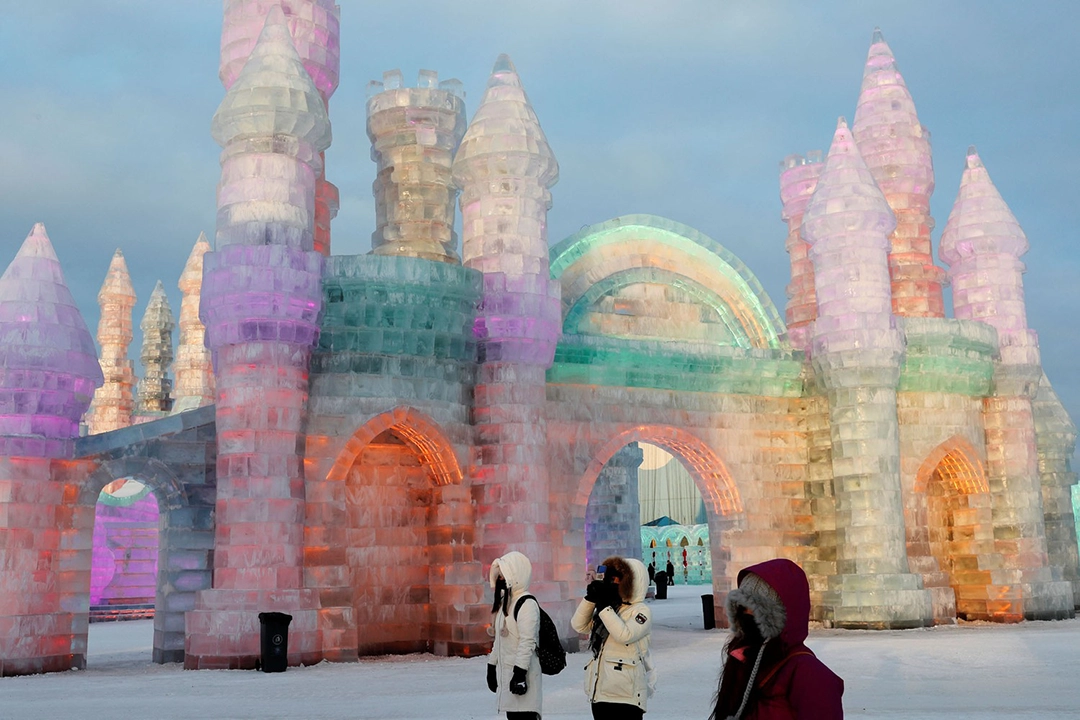
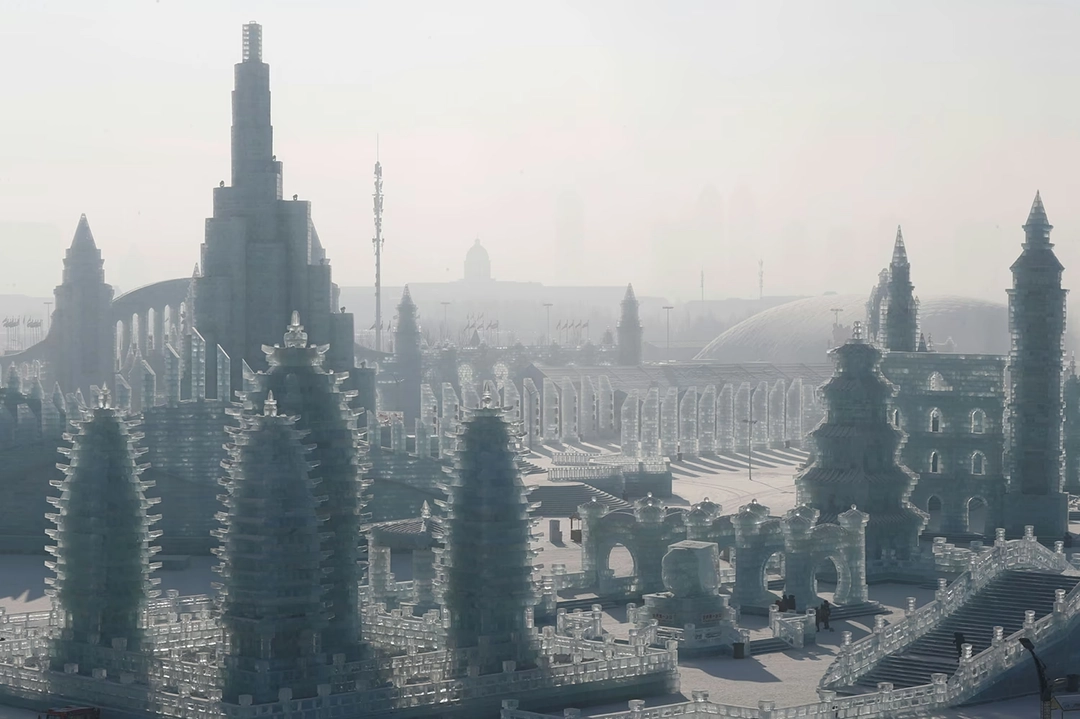
Tourists walk among illuminated ice sculptures during the opening day of the 35th Harbin International Ice and Snow Festival, on January 5, 2019. Image courtesy of The Atlantic.
It is cold in Harbin, a city located in China’s northeastern reaches. It is the capital of Heilongjiang Province, on the banks of the Songhua River. Winters here are long and severe. Nearly three quarters of its territory borders the far—and frozen—Russian Far East.
One of the qualities I most admire in the Chinese people is their practical intelligence. They perform small miracles with whatever lies at hand. Harbin has ice in abundance, so they built themselves an Ice and Snow Festival. Today, it is the Festival—international in scope, the largest and most significant of its kind in the world. It runs for roughly two months, until late February, sometimes into early March if weather conditions allow. This year it opened in late December, though the official inauguration ceremony took place on January 5.
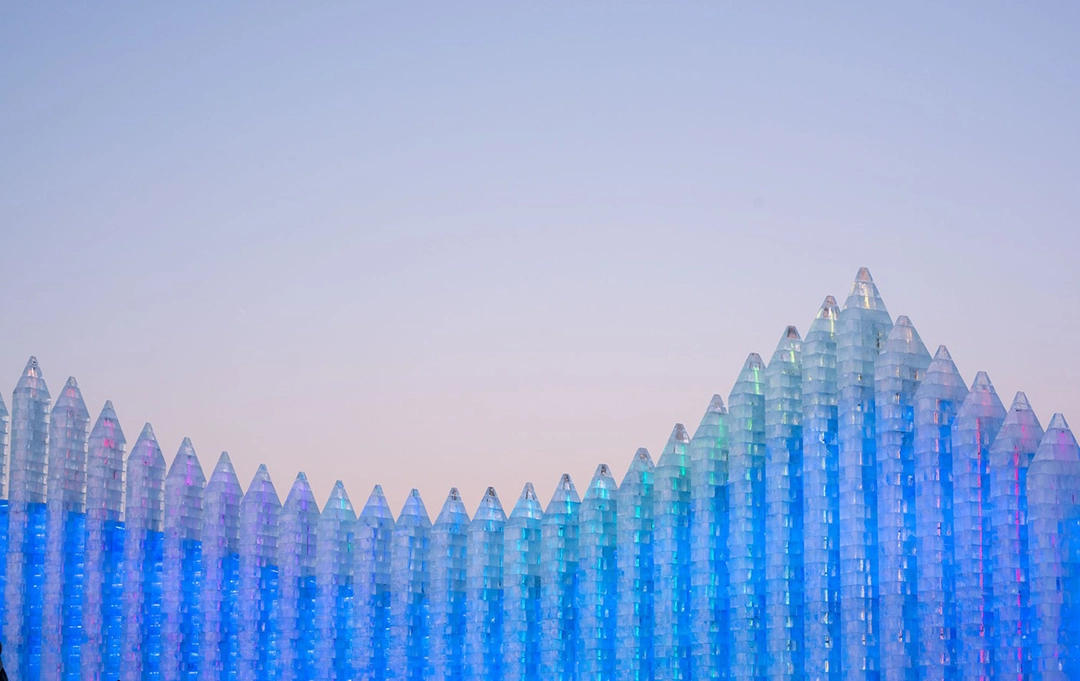
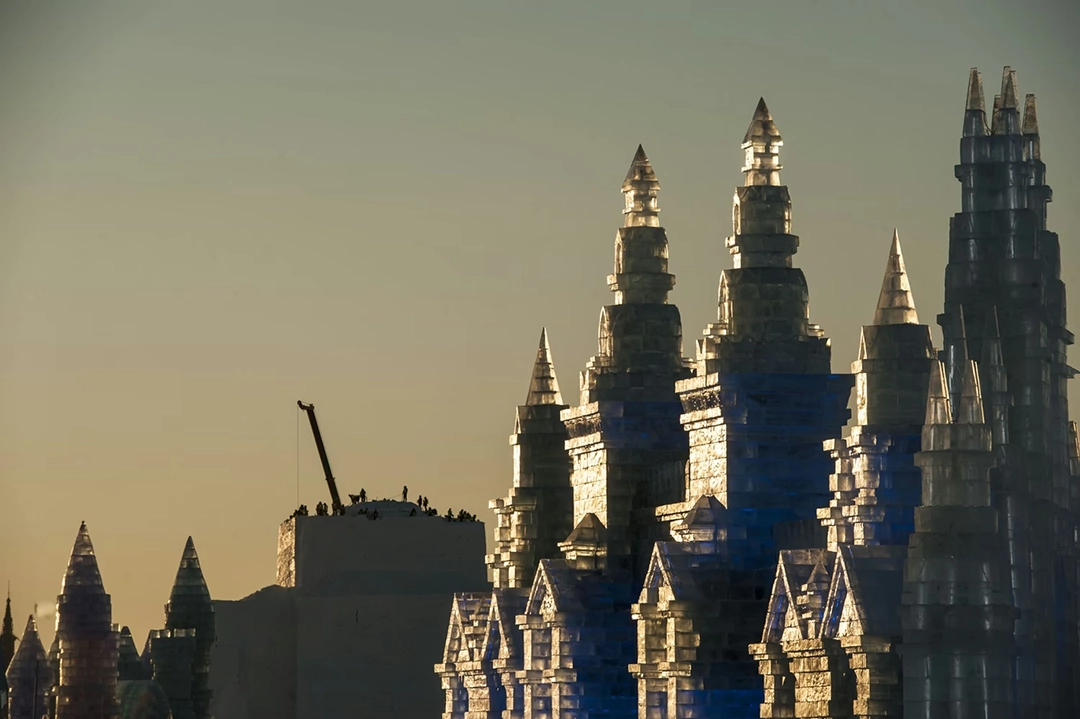
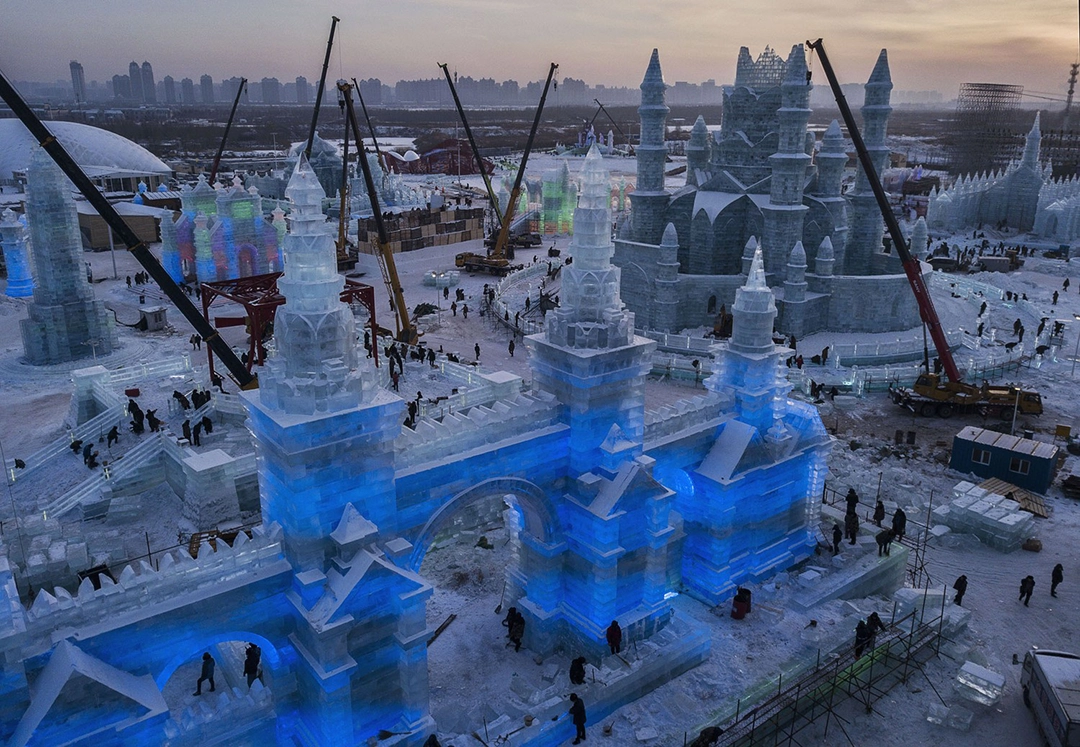
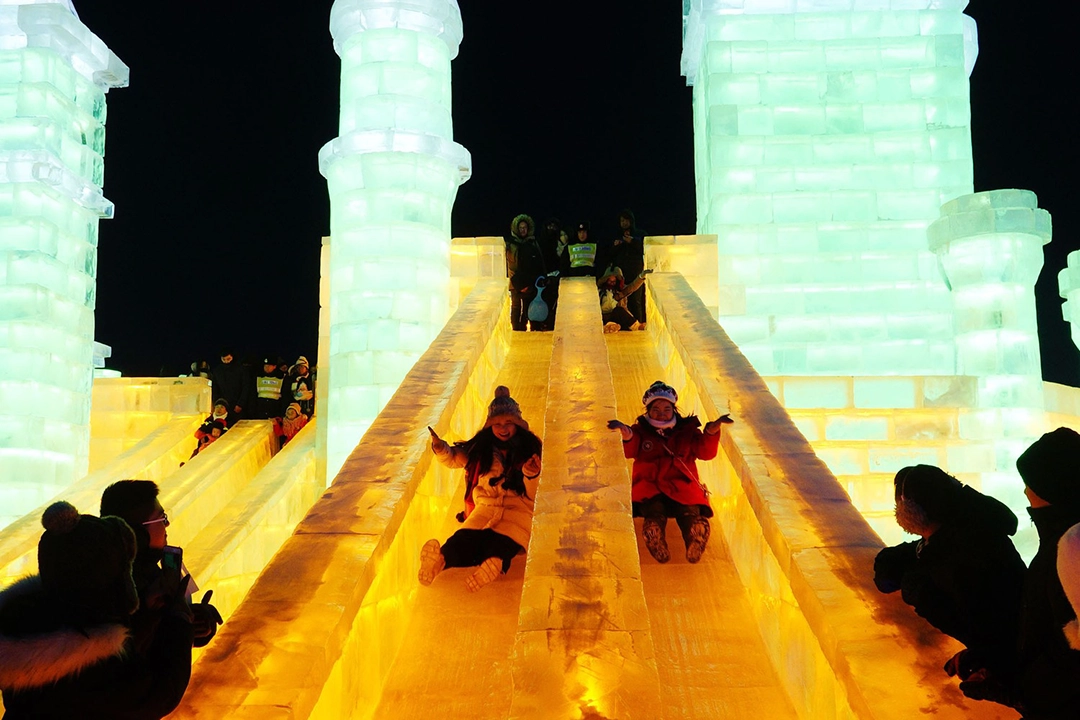
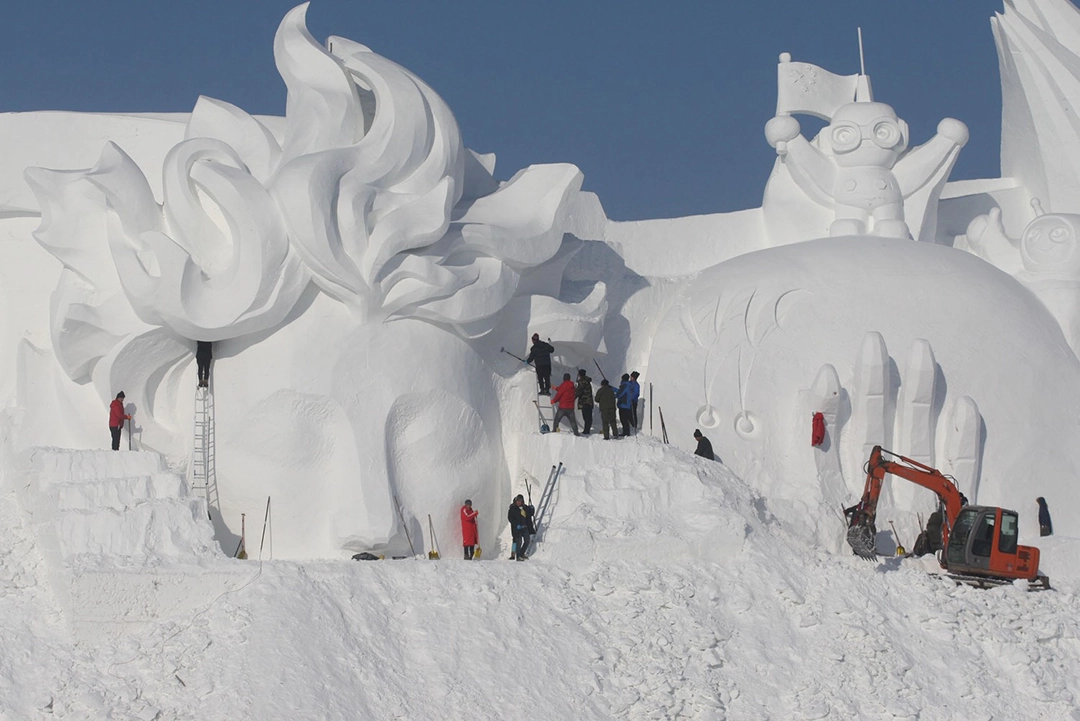
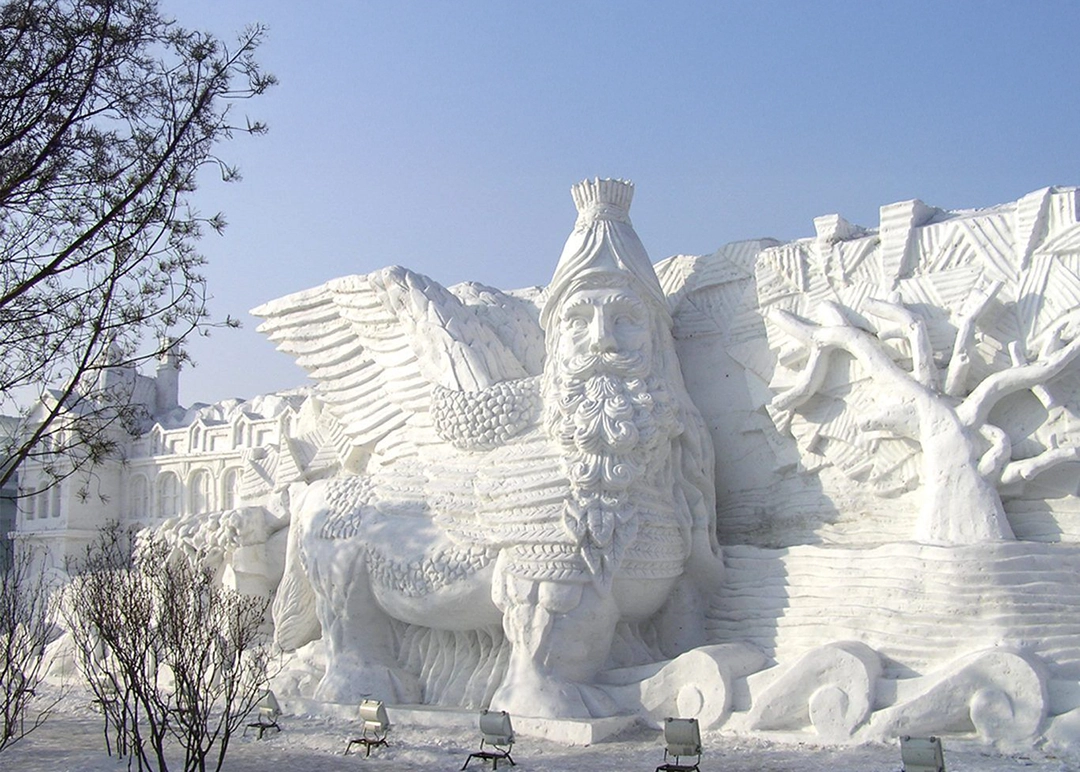
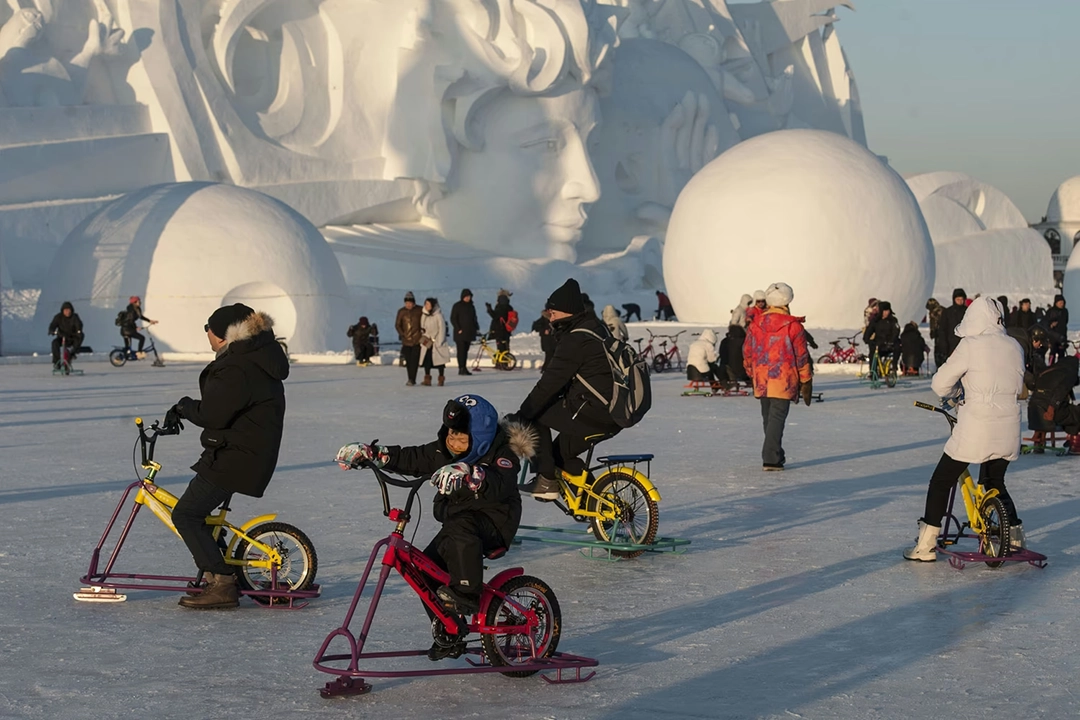
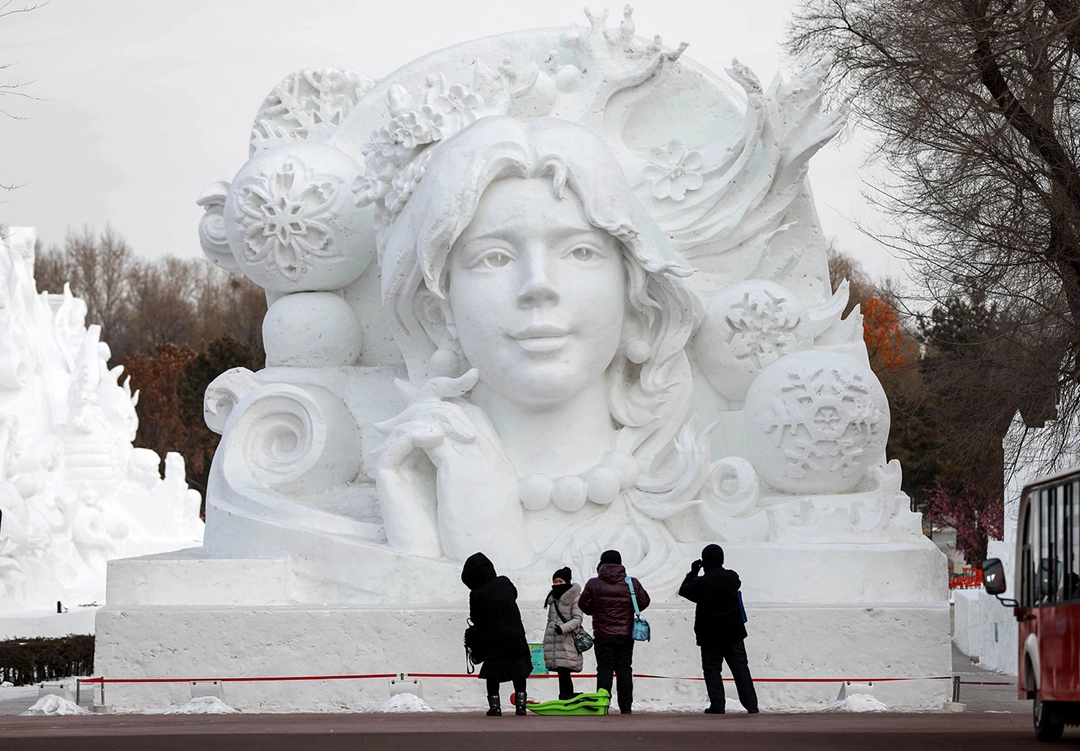
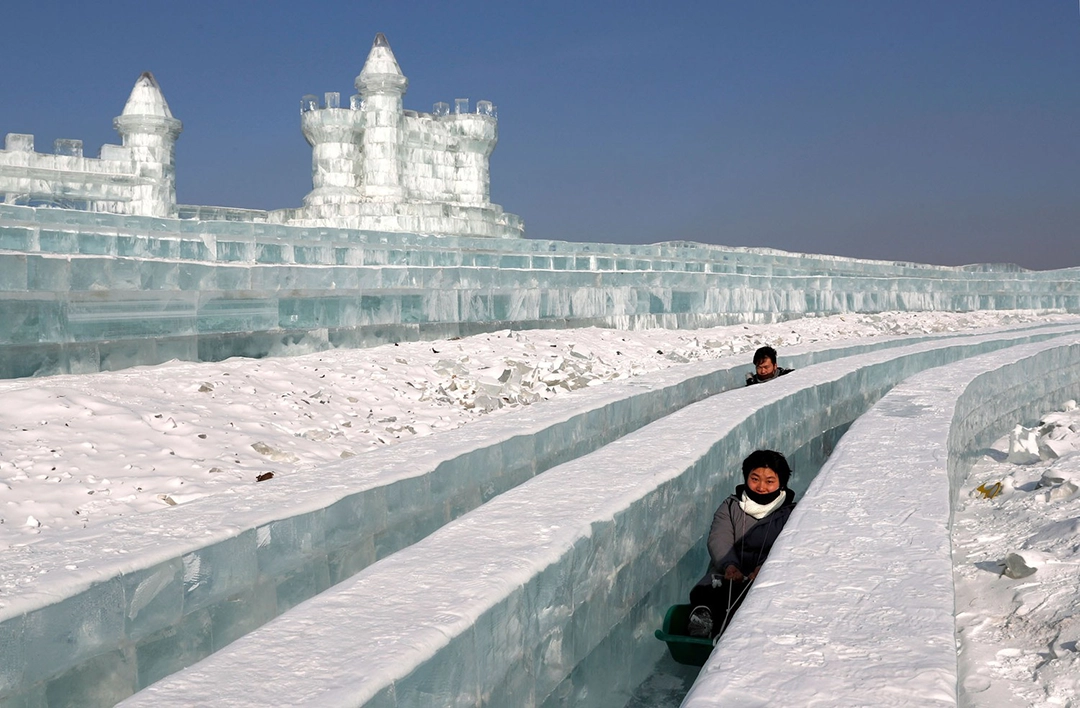
Its origins date back to 1985, when it was little more than a modest local winter celebration. Over time, that initial form expanded and thickened until it became a global event, marked by sustained growth in scale, technical complexity, and artistic ambition. This edition is expected to attract millions of visitors eager to witness entire neighborhoods transformed into ephemeral cities, erected from ice and compacted snow. Each year, illuminated palaces are constructed—structures that glint like diamonds—alongside monumental sculptures that have positioned Harbin as a universal reference point for ephemeral environmental art.
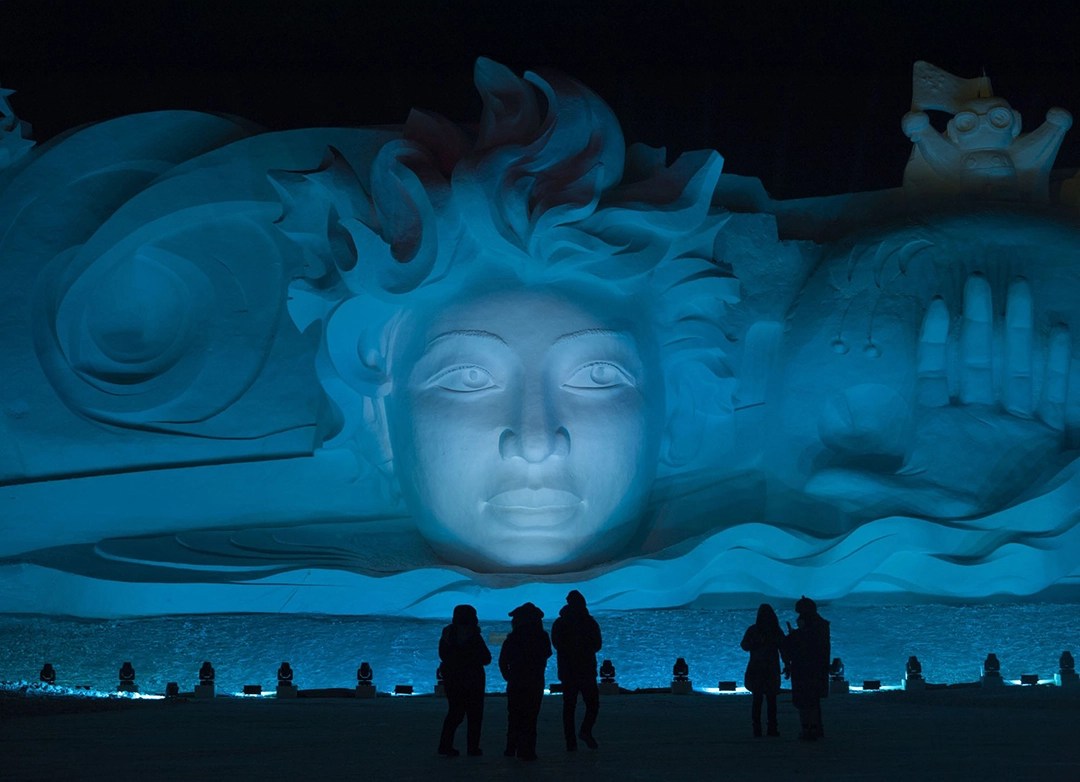
Tourists visit the Harbin International Snow Sculpture Art Expo on January 5, 2019. Image courtesy of The Atlantic.
There is snow everywhere, and yet the West seems incapable of producing anything comparable. Quebec’s Winter Carnival, perhaps—but its scale remains strictly urban. This, by contrast, is a geopolitical spectacle. Another small chime of the bell, reminding us of China’s intention to position itself as a global leader across all domains—not only economically or technologically, but in terms of cultural and symbolic soft power.
While the West shivers and retreats beneath the blanket, China articulates a narrative of technical sufficiency, aesthetic spectacle, and coordinated organization. Drawing on a free resource—water that nature freezes without issuing an invoice—it erects an architecture that hovers between engineering and art, unfolding less as an exceptional event than as an organic mass experience: structured, predictable, and collectively assumed as part of the cultural landscape.
The precision of execution, the lighting, the security, and the careful maintenance sustained over weeks configure an image of efficiency exercised even upon the transitory. These are not the days of cheap imitation. China emphasizes what is its own—its nature, its climate, its coordinated labor—and elevates it to a new dimension. It is also positioning itself, at vertiginous speed, as a producer of exceptional cultural experiences.
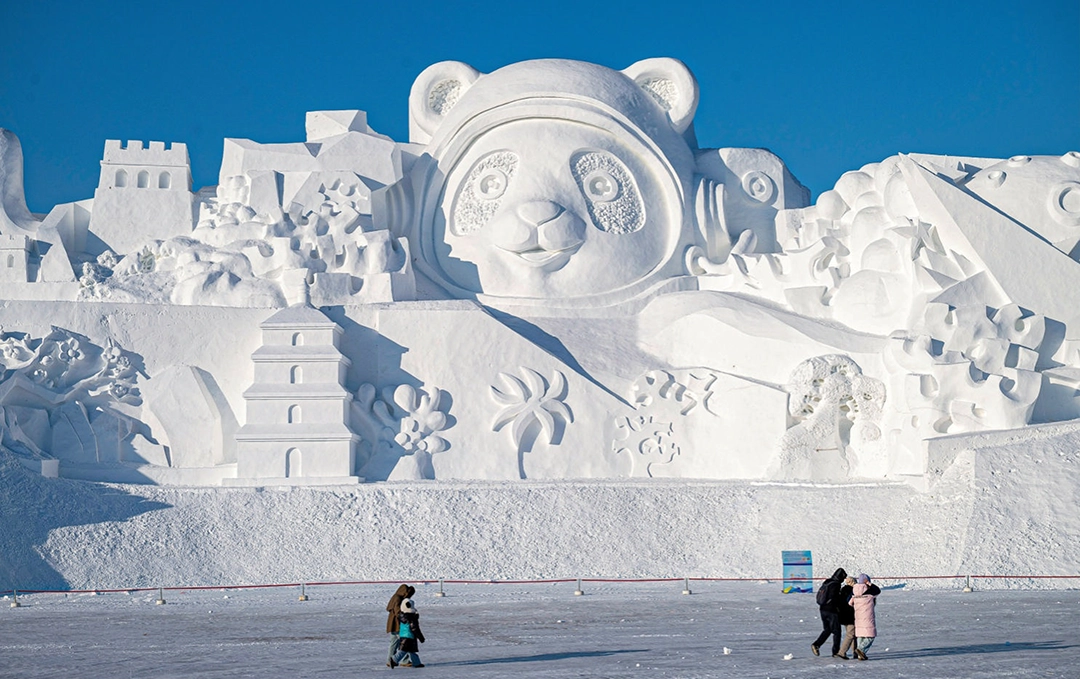
Imagen taken from The Guardian Weekly, Vol. 214, No. 2
These slightly flushed paragraphs were prompted by a small bear I encountered in the opening pages of The Guardian Weekly, Vol. 214, No. 2. A panda, naturally. An affective and immediately recognizable icon, especially for family-oriented and international audiences.
What surprised me somewhat was its placement so far north. The panda inhabits regions much further south, in the bamboo forests of central China. I venture a few explanations: because it is a highly exportable cultural image, powerful enough to suggest dominance and monumentality, yet sufficiently gentle to avoid appearing threatening. And perhaps also because, viewed through a lens of suspicion, it can be read as a counter-image—through its childlike appearance—to the neighbor’s bear, the Russian one, which has lost much of its charm since the days of Misha, the teddy bear of the 1980 Soviet Olympics.
Along the path various powers are taking to reconfigure a new multipolar order—likely one of shared leadership—China is practically unmatched as the world’s leading industrial power. By volume, installed capacity, and control over supply chains. By infrastructure and strategic technologies. This festival, for example, bears witness to its ability to stage massive, multinational cultural events, to sustain a vigorous domestic tourism sector, and to exercise a growing diplomatic capacity—one that anticipates the New Silk Road.
Its sophistication and intricately calibrated delicacy, however, make it heavy going for the flat spectator. It stands little chance against North America’s Wegwerf-Kultur. Or, as the affected French would phrase it, esthétique du prêt-à-mâcher. Yet this is the narrative that prevails globally, because the world has been domesticated and trained to consume it.
China, however, does not seem intent on imposing a universal cultural model. God alone knows what they want.





If you’re a regular reader of this blog and enjoy its content, you might consider contributing to its upkeep. Any amount, no matter how small, will be warmly appreciated
Founded in 2021, Echoes (Notes of Visual Narrative) invites everyone to explore together the visual codes that shape our world—art, photography, design, and advertising in dialogue with society.

Copyright © 2026 r10studio.com. All Rights Reserved. Website Powered by r10studio.com
Cincinnati, Ohio

Comments powered by Talkyard.