
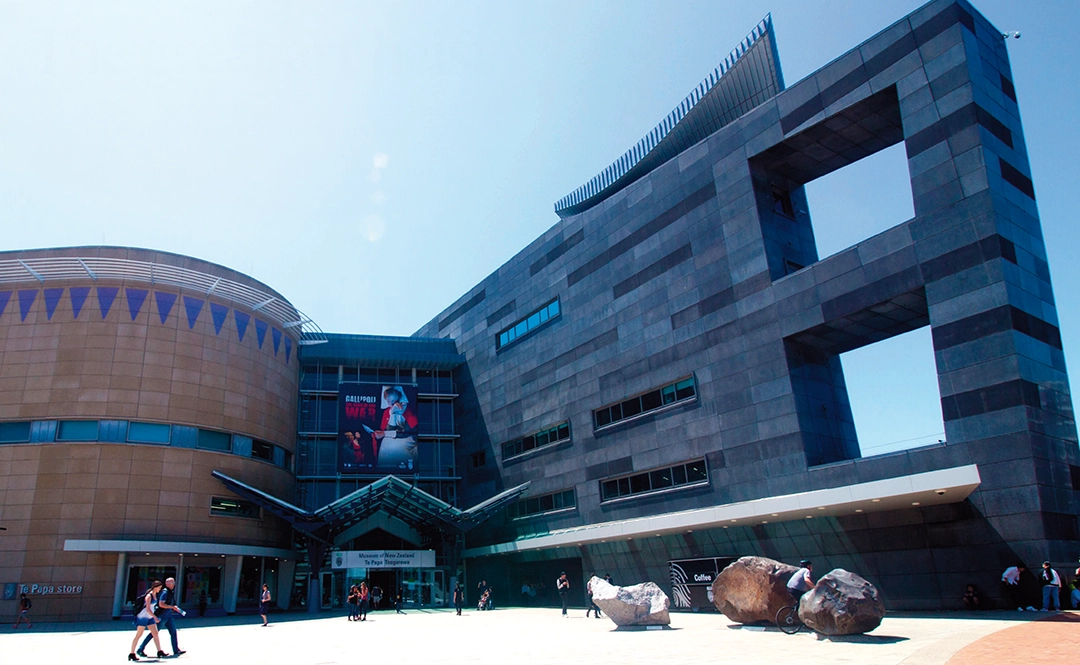
It is generally understood that national museums ought to be the natural custodians of their cultural memory.
Spaces where the history of national art is presented in an ordered and intelligible form. Where foundational images can still be contemplated. Yet, primarily for reasons of funding, an increasing number of state institutions now accumulate thousands of works of which only a few are actually on display. We have also learned that not all such absences are logistical in nature, but matters of meaning: many institutions choose to conceal those pieces that do not reinforce a bland, simplified narrative, almost designed for fools. These unseen works generate, in and of themselves, a kind of curatorship — an inverted one.
One example I recently encountered in an issue of New Zealand Listener — not yet on sale, incidentally — covering the week from January 31 to February 6, 2026, alerts us to the case of Te Papa, New Zealand’s national museum, where one of the country’s most extensive art collections remains largely outside the public gaze.
Iconic works, canonical pieces, and foundational trajectories have been replaced by curatorial narratives that privilege the contingent, the immediately identitarian, or the ideologically comfortable. They construct bespoke narratives, dismember a historical corpus that may be complex in favour of one that is flat, simplistic, designed for the intellectually idle.
It is the local artists themselves who have begun to generate enough noise for it to be heard — here, thousands of kilometres away, in Ohio. They coincide with historians, curators, and collectors on one essential point: when local heritage ceases to be visible, the institution forfeits its formative and symbolic function. A national museum that does not exhibit its central collection is not renewing the canon; it is severing the transmission of knowledge.
More specifically, the article suggests that this reflects a cultural vision instituted by internal politics and its bureaucratic machinery. Institutions turn to the marketplace of knowledge to hire orthodox curators to assemble exhibitions that reaffirm their political strategy under the guise of culturally sustainable foundations.
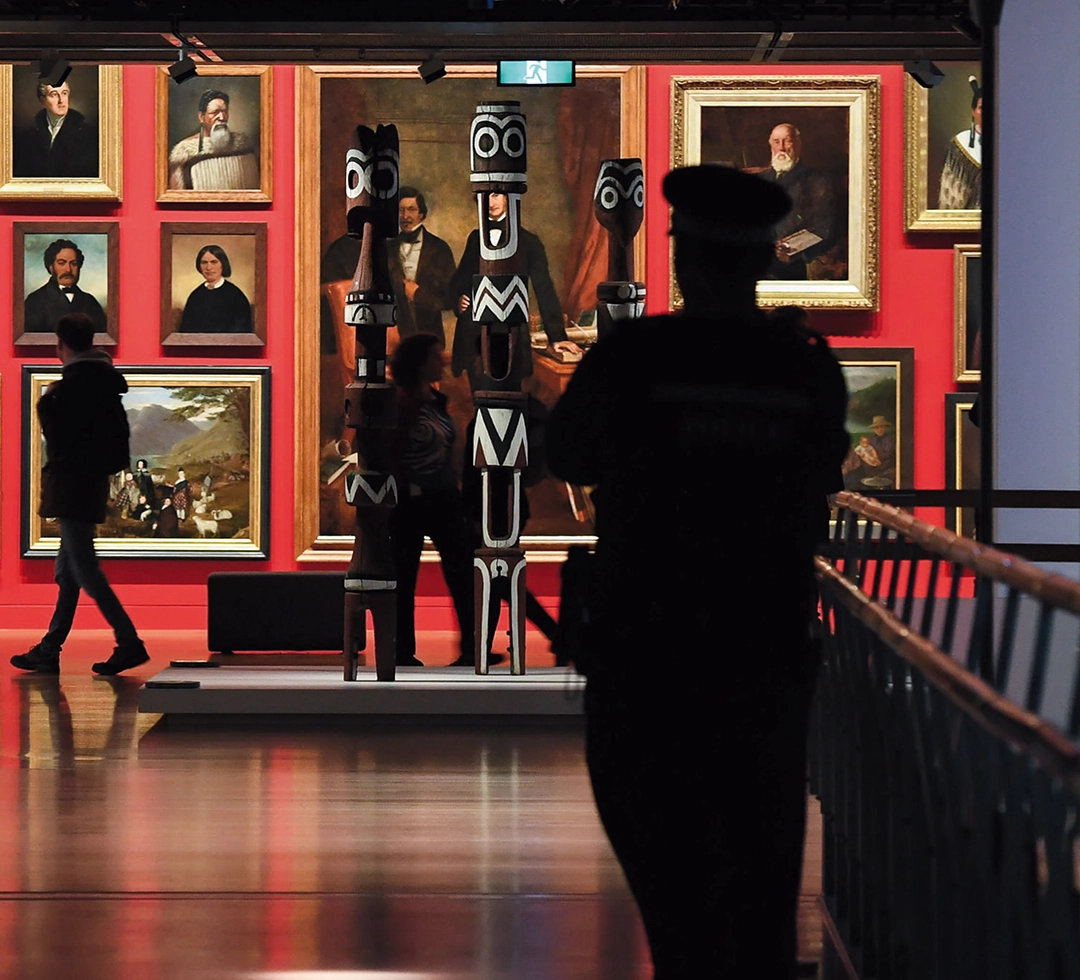
It does not resemble open censorship, but rather a tacit administration of memory. Hidden away, the works dissolve within collective memory. As if they had never existed.
As I suggested at the outset, this is a global symptom. We witness it daily. There is no need to travel to New Zealand, nor to Australia, nor to the depths of Africa. The major centres that host contemporary artistic production are rapidly rewriting their discourses under the pressure of identitarian agendas, political demands, and branding strategies. The temptation to sacrifice stable heritage in favour of transitory narratives has become structural. That Te Papa’s case is being discussed is admirable for the local audience. Yet in this part of the world we can already sense that something is being done to withdraw culture and museology from the dominion of the hordes now reconfiguring history and abducting popular narratives.
If museums begin to treat their collections as inconvenient archives rather than as living inheritances, the chains that transmit tradition and cultural continuity begin to lose their pins and rollers. What follows is the violation of the people’s right — however “tribune-minded” it may sound — to recognise themselves as historical subjects of their own artistic heritage.
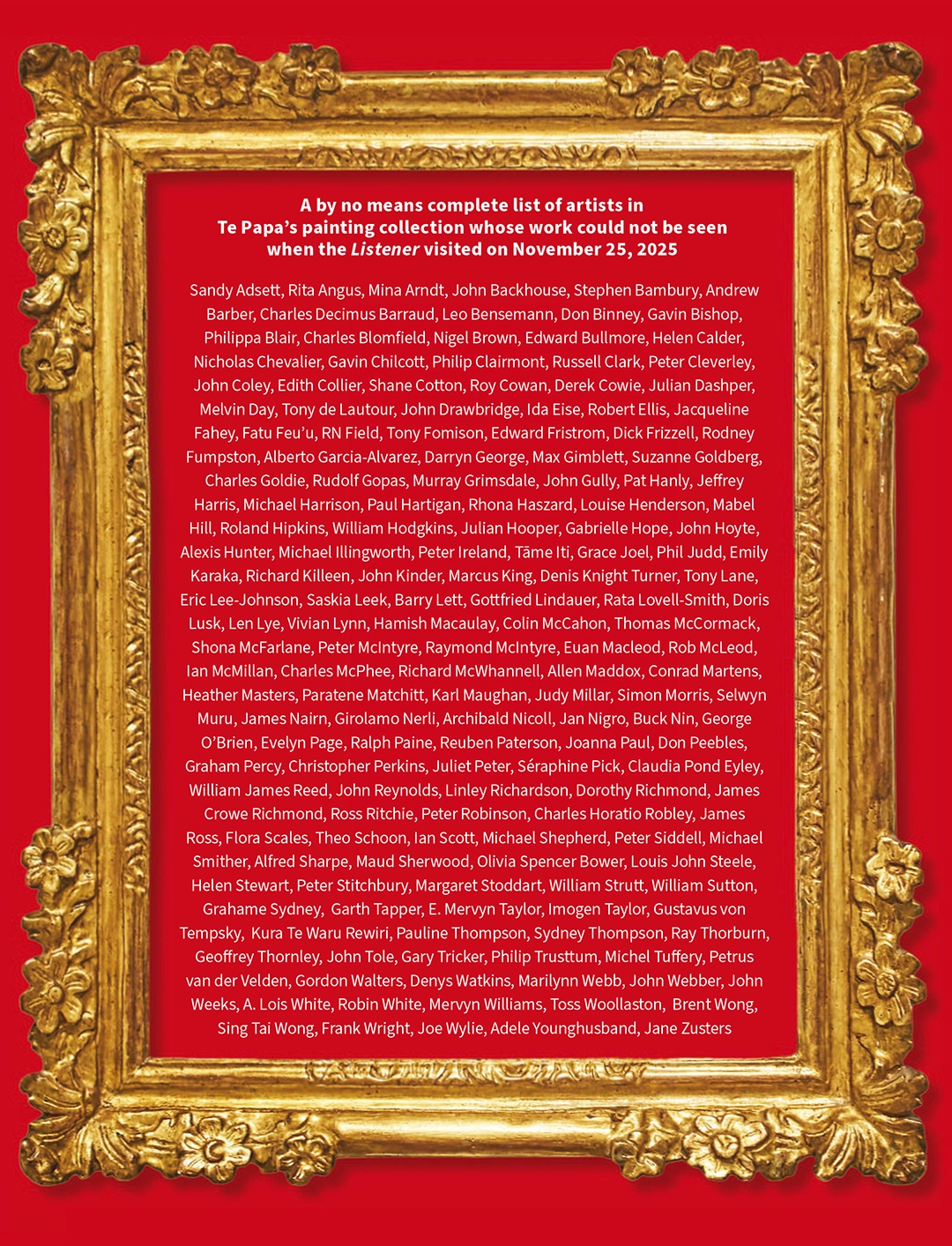
This is the list of artists whom specialists consider indispensable to any serious representation of Te Papa’s collection.





If you’re a regular reader of this blog and enjoy its content, you might consider contributing to its upkeep. Any amount, no matter how small, will be warmly appreciated
Founded in 2021, Echoes (Notes of Visual Narrative) invites everyone to explore together the visual codes that shape our world—art, photography, design, and advertising in dialogue with society.

Copyright © 2026 r10studio.com. All Rights Reserved. Website Powered by r10studio.com
Cincinnati, Ohio
Comments powered by Talkyard.