
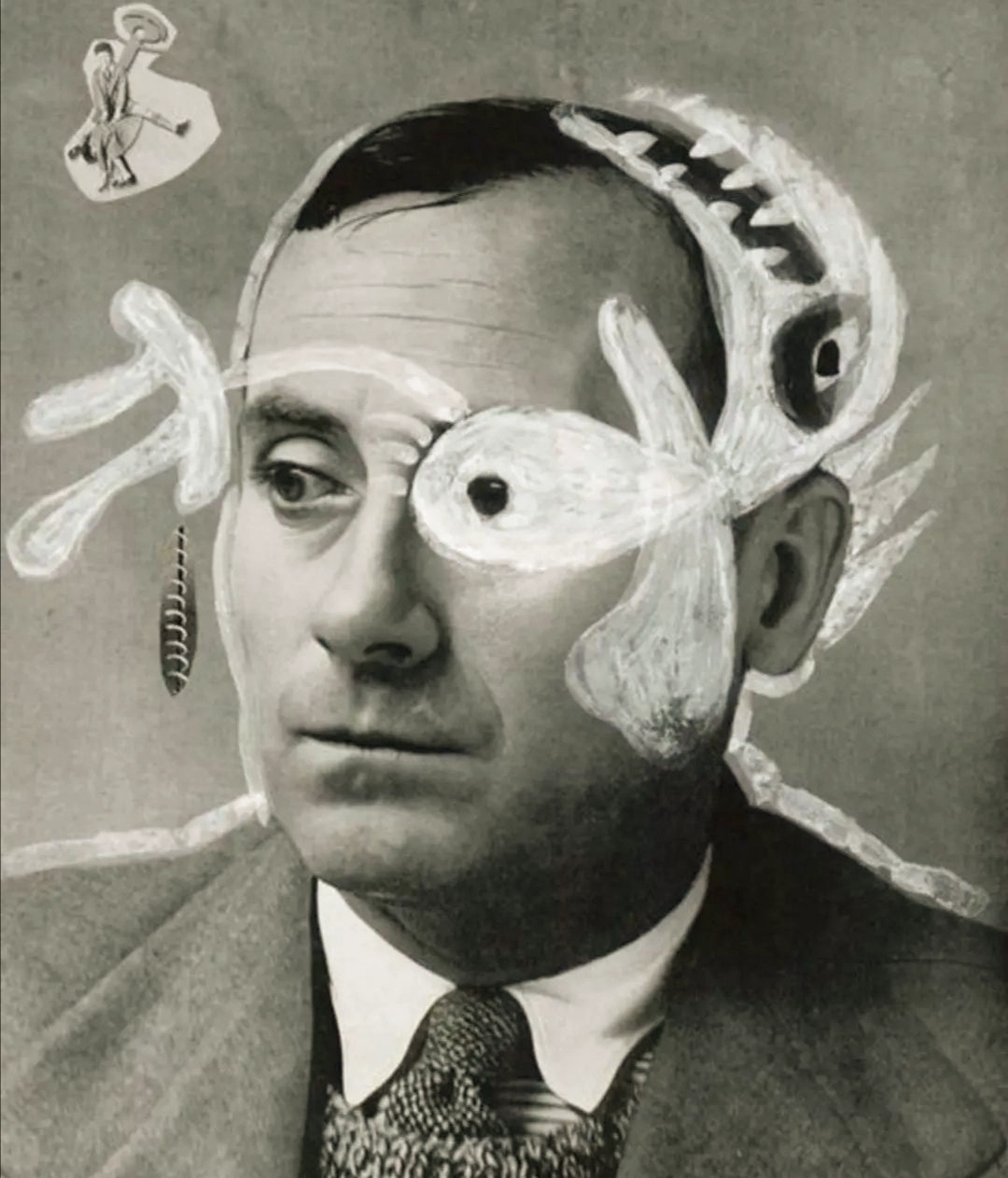
ref. Brzekowski, Jan. 1935. Portrait of the painter Joan Miró
On March 25, we published a commentary on a prize awarded to a retired British schoolteacher for a photograph taken in Southeast Asia during an ordinary vacation.
The image presents the face—deeply etched by the wrinkles wrought by sun and exposure—of an elderly man with a faintly wry expression. He holds two small silver fish before his eyes, aligned in such a way that they replace them. A playful illusion that, at another moment, might have unsettled. In the article, which I found particularly enjoyable to write, I noted that both the photograph and the very same subject had already been captured by numerous amateur and professional photographers, and that, until then, neither had received any significant recognition.
The photographs taken in that small coastal village are preceded by countless versions produced by all manner of photographers. The scene appears to exert a peculiar fascination upon them. I have encountered it in a striking number of variations, both before and after writing the text. As recently as today, one of them appeared on my Facebook feed.
I cannot categorically affirm, in this case, that it is a fish. It could just as well be the flowering of an atypical species, a modest angiospermic eccentricity. It advances across a somewhat recognizable face, that of Joan Miró, and operates in the same manner as those that have concerned us before, replacing an eye with a sign of morphological affinity. It is a portrait that Jan Brzękowski made of the painter, a Polish poet, essayist, and visual artist associated with the European avant-gardes of the interwar period. Brzękowski remained particularly active at the intersection of experimental literature and the visual arts, and maintained—this matters—a close relationship with Surrealism. His work traverses dissimilar languages and, at times, surprising systems of representation.
This new image is, therefore, a hybrid construction, entirely consistent with avant-garde strategies and the Surrealist milieu. It is built upon a conventional photograph of Miró. He drew a number of organic forms directly onto the image, most likely using ink, gouache, or grease pencil. The biomorphic figures, slightly displaced from their anatomical logic, embody his visual universe. It is also possible that he physically intervened in the image, only to rephotograph it later and fix it as an autonomous work. Such procedures were common at the time. In that moment, portraiture begins to withdraw from mere representation and to explore psychic or symbolic readings of the subject. In all likelihood, the forms that cover part of the artist’s face are not incidental, but rather a visual translation of the Mironian imaginary—graphic signs, suspended marks, organic forms, metamorphoses—as though his thought were literally rising toward the surface of the image.
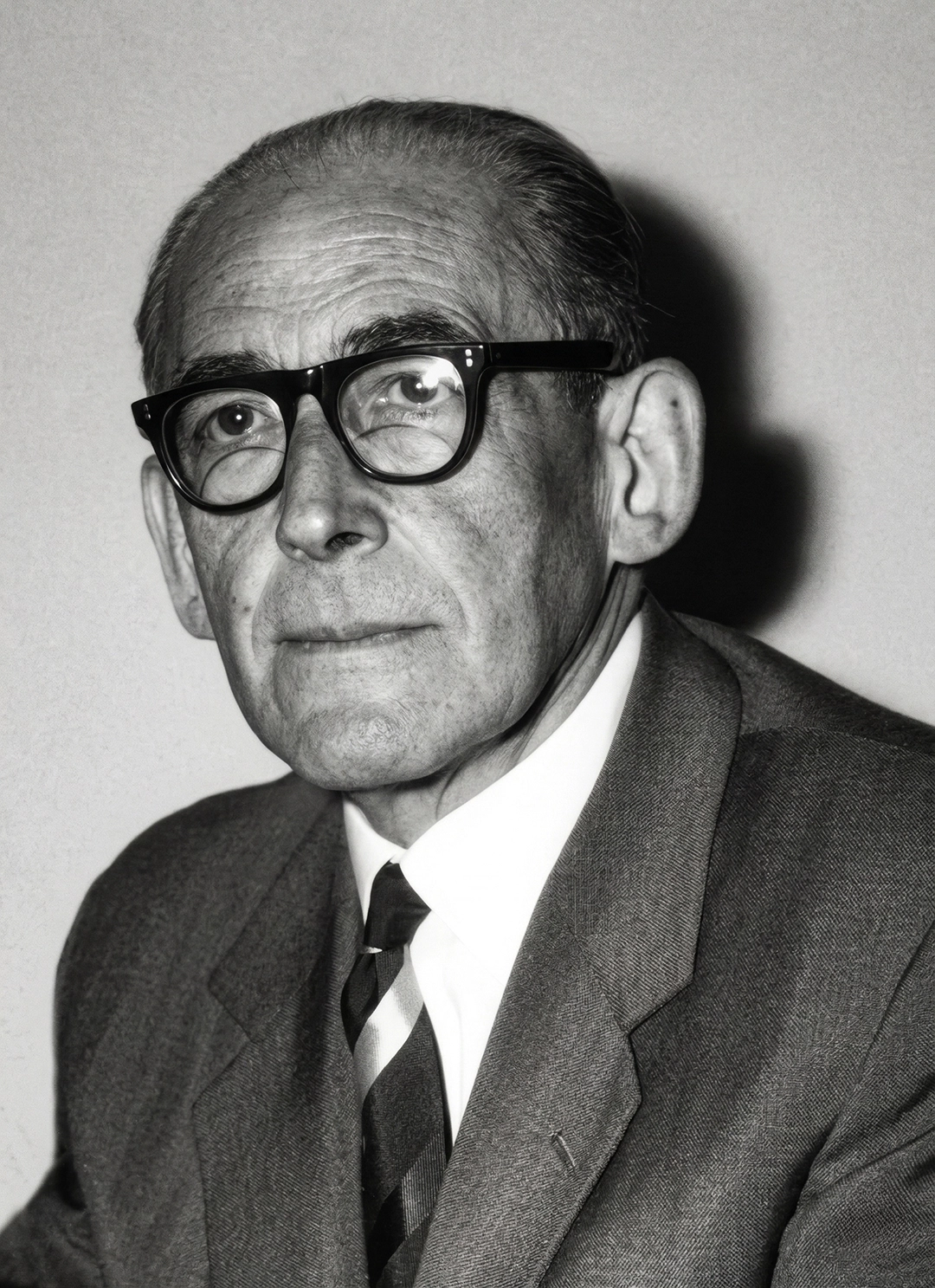
Brzękowski
I have found no evidence that this portrait emerged from a direct interaction between the two, nor even that they were acquainted. One could exhaust, in the Borgesian sense of the term, northern, equatorial, even Muslim-world libraries in pursuit of confirmation. It makes little difference whether this is a tribute or a joke exchanged among those who share complete familiarity. Brzękowski moved actively within circles such as Cahiers d’Art, where Hans Arp, André Masson, and Miró himself converged, and Miró, from the mid-1920s onward, was already fully embedded in the Parisian Surrealist ecosystem. It was there that he developed a language deeply bound to automatism, the oneiric, and symbolic deformation.
I suspect the gesture of covering the eyes with analogous forms will persist until the human being evolves enough to begin seeing directly with the brain.





If you’re a regular reader of this blog and enjoy its content, you might consider contributing to its upkeep. Any amount, no matter how small, will be warmly appreciated
Founded in 2021, Echoes (Notes of Visual Narrative) invites everyone to explore together the visual codes that shape our world—art, photography, design, and advertising in dialogue with society.

Copyright © 2026 r10studio.com. All Rights Reserved. Website Powered by r10studio.com
Cincinnati, Ohio
Comments powered by Talkyard.