
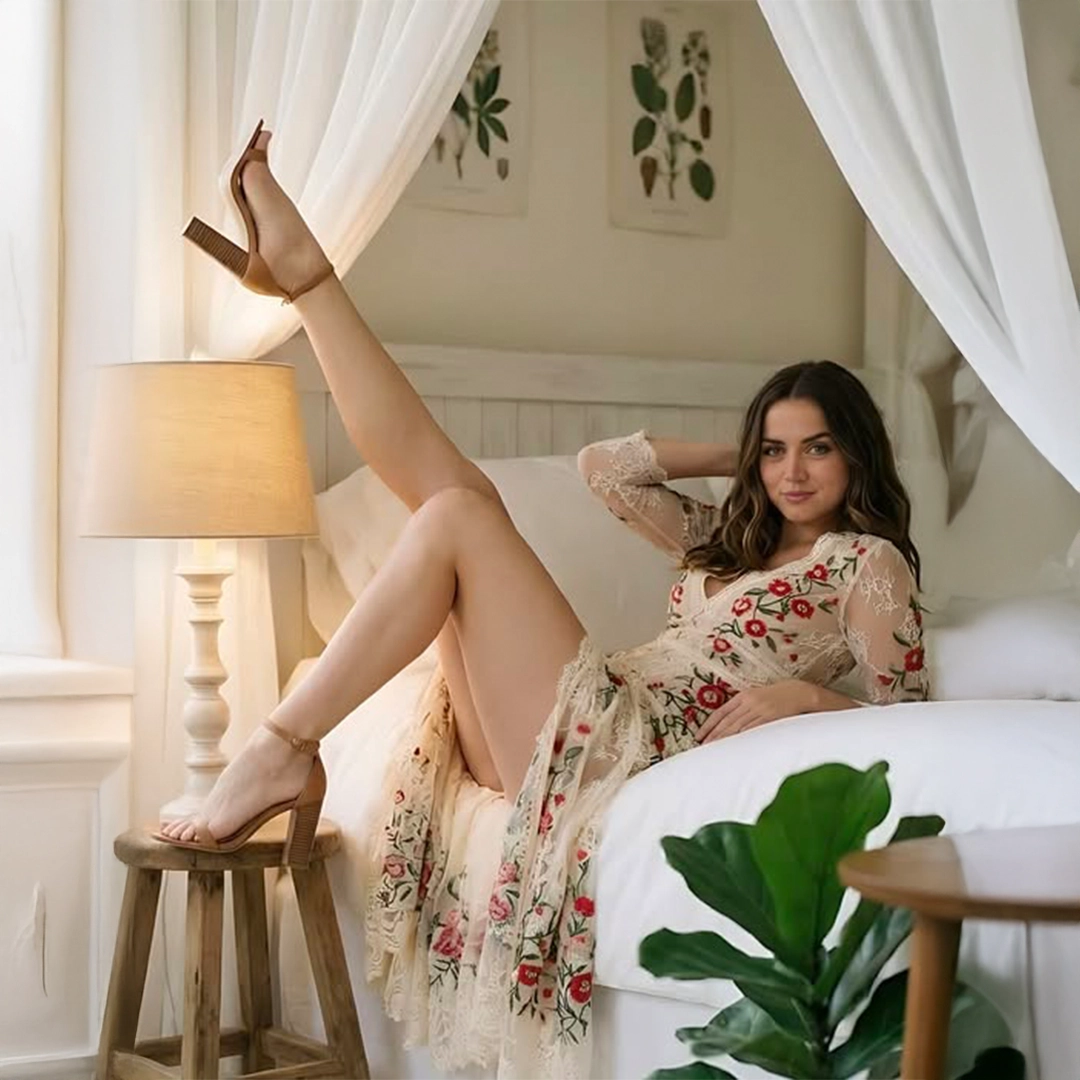
I cannot quite understand how Facebook’s algorithm works. For some reason, it has begun feeding me dozens of images of Ana de Armas. Perhaps because one day I lingered on a photograph of Anya Taylor-Joy; perhaps because I keep an archive—strictly for scientific purposes—of Ava Gardner and Marilyn Monroe; perhaps, in short, because I paused one second too long over a few of her images.
I feel a certain sympathy for her—measured, nothing excessive. I’m glad she appears frequently in films I actually watch and, at the same time—because she is Cuban and there absolutely no one is a prophet except among friends (the rest are idiots)—it seems to me that she is sometimes outmatched by the Anglo actresses she shares the screen with. In short, I have a complicated relationship with her.
But I also find her very beautiful, hardworking, and I am pleased to imagine she has a number of unused bathrooms in her house.
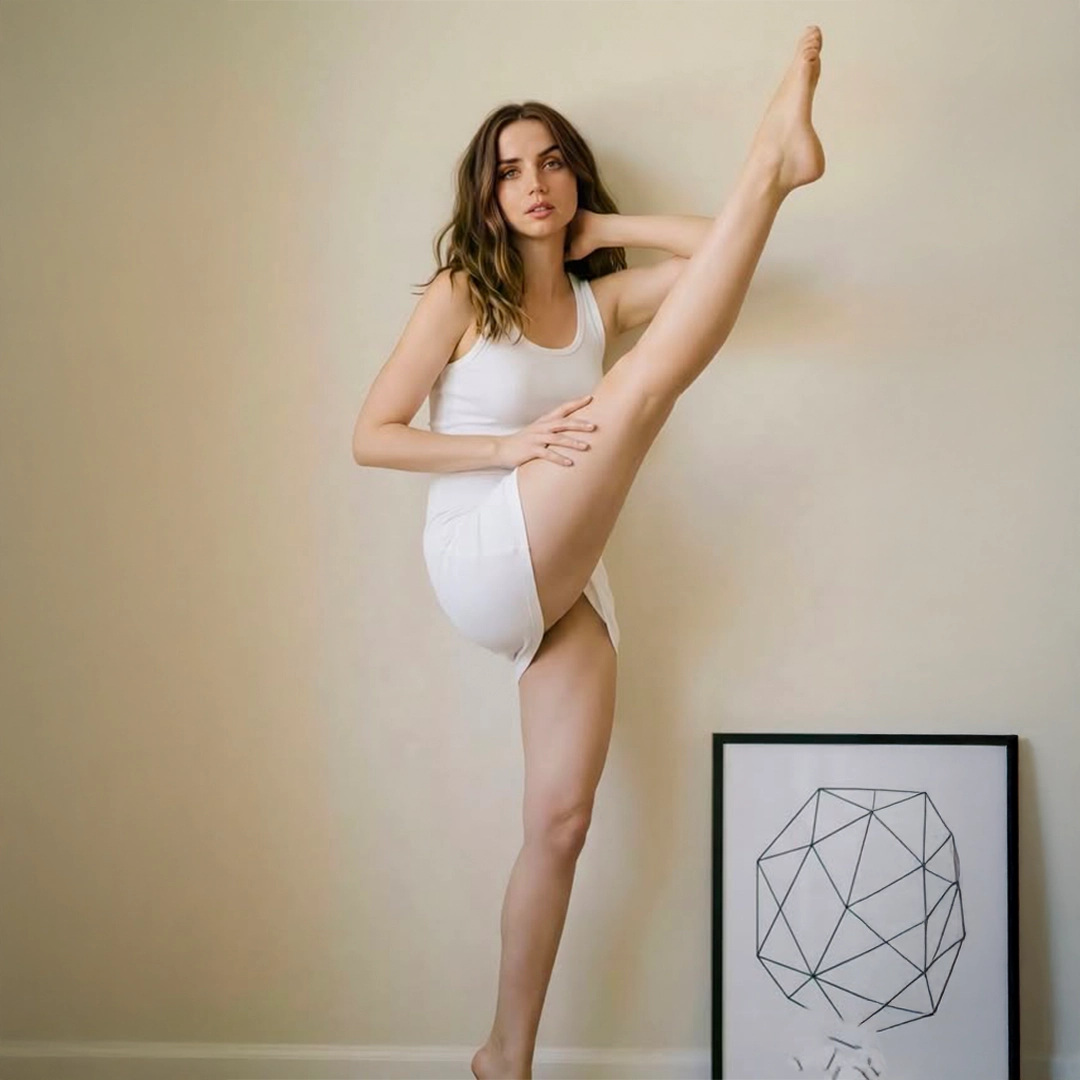
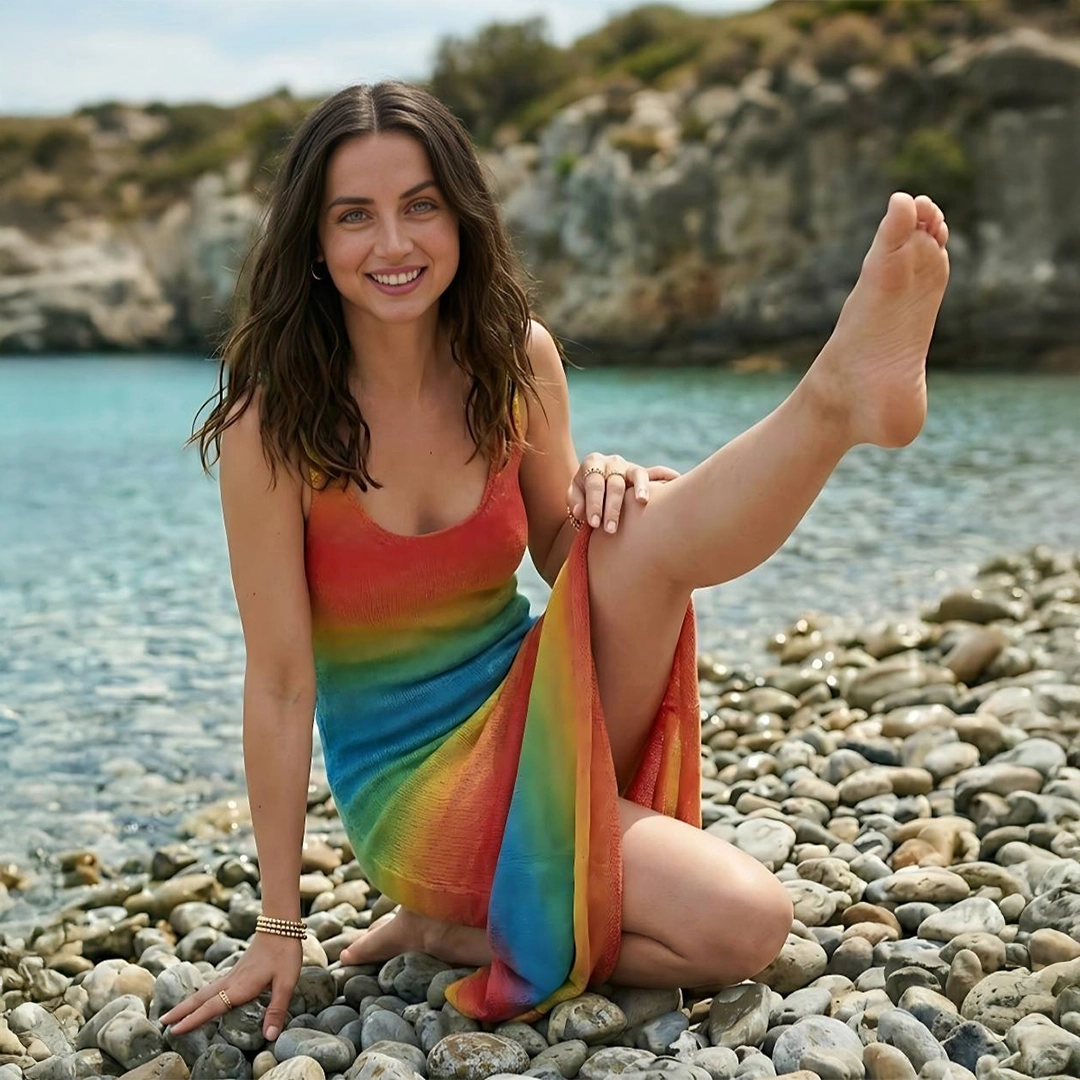
And yet, there is something I cannot resolve. Are these dozens of images raining down on me generated by AI, or are they drawn from reality—from a voluntary pose?
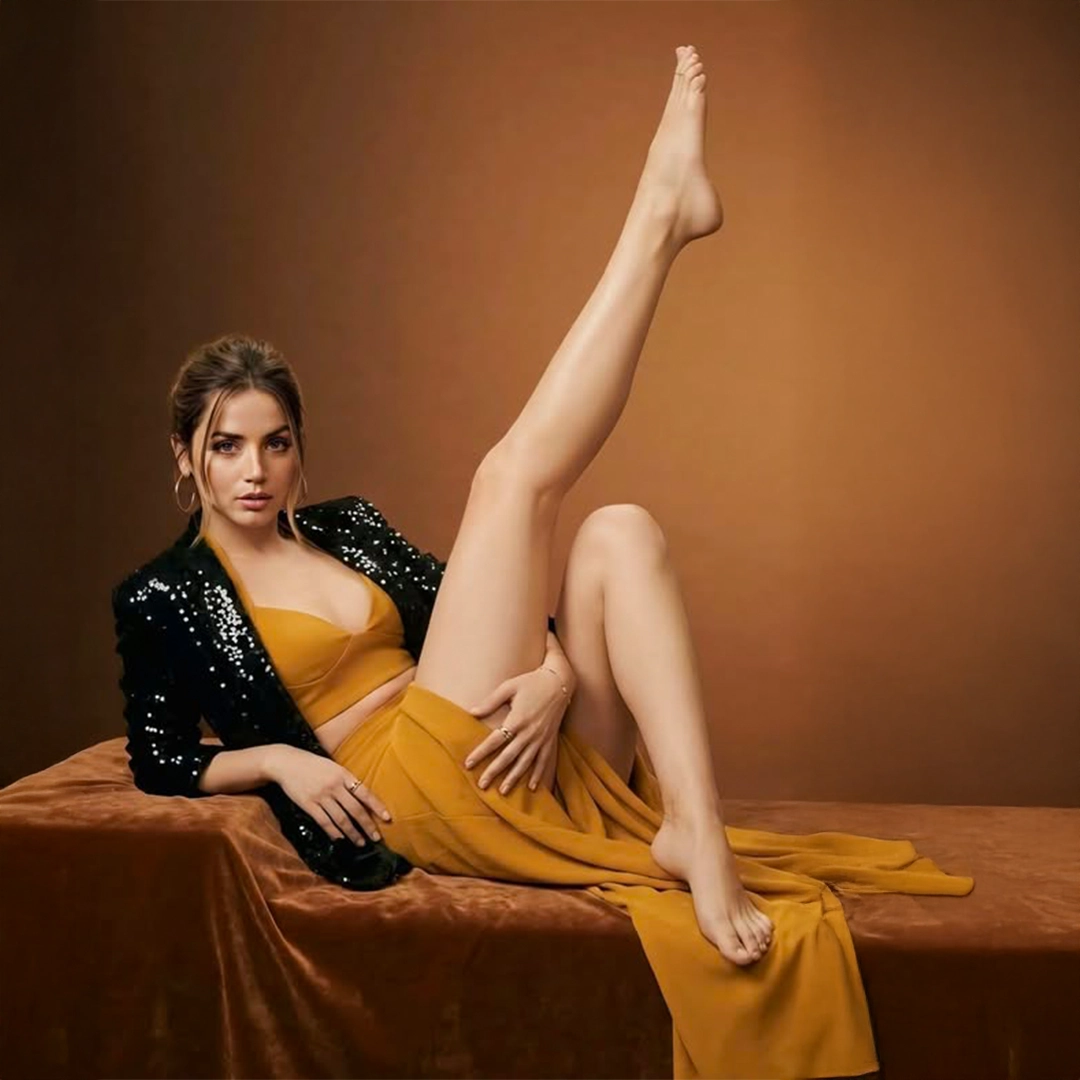
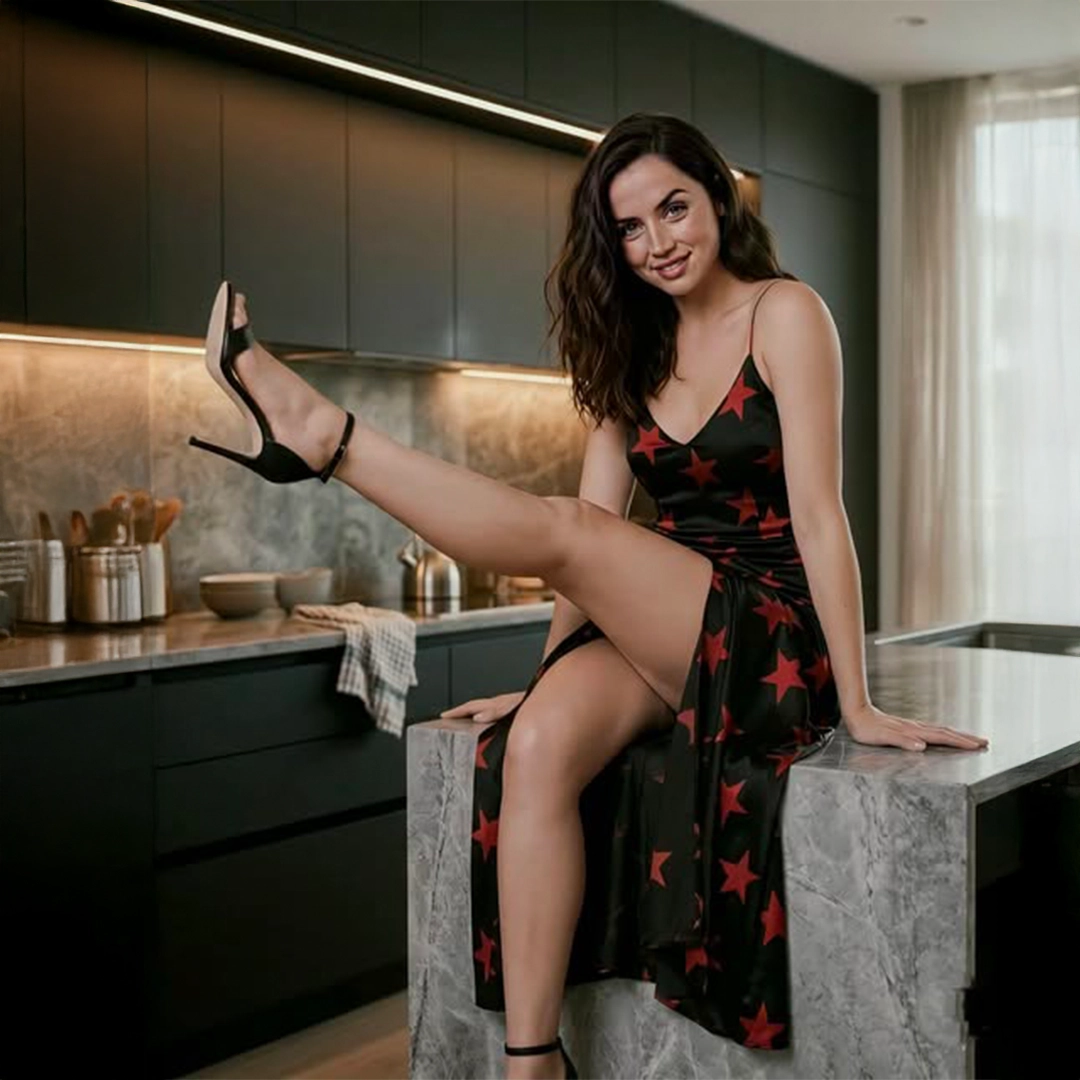
Because there are many—far too many—photographs in which she appears with one leg pointing straight upward. That is not common. Out of the tens of thousands taken of Monroe, very few show her in that position, for instance.
So what is this obsession with raising that pointer? Into what swamp of interpretation am I being dragged?
If you look closely, the raised leg rarely emerges from a body abandoned to its own weight. It is almost always articulated from the position of the actress, who never fully relinquishes the intention of remaining seated. It introduces a dissonance. When we enter that world that initially presents itself as intimate—white sheets, cushions, pillows, everything we will never see in real life—we are confronted by the martial verticality of that lifted leg, which, to make matters worse, terminates in a dangerous three-inch heel. I read in the image that she has just arrived from a party—or is on her way to one—promising that the return will exceed it.
The history of the reclining body is long and suspect. From the horizontal, the female body almost always offers itself to the gaze: relaxed, subdued, alert in its passivity. And then, suddenly, that unexpected mast holds it at a critical point, accumulating tremendous energy—a metastable state in which any singularity will resolve into a kick to the chin.
Assuming no one is thinking about composition in a photograph like this, it is the verticality of that leg that organizes and defines it. It forces the gaze to travel up and down, back and forth, like a yo-yo. It is the accent—the final edit of the gesture.
A recurring factor: the raised leg is often resolved in a shoe, which introduces another semantic variable. From the bed, the couch, the edge of a pool, the entire body speaks of a private space. No one receives guests with a foot raised; no one lifts their foot in the middle of dinner with friends. The shoe is the final link to the public scene. It is the jammed lock, the chastity belt, and thus the space that belongs to all of us—the space of the voyeur, the equator that splits the private from the visible.
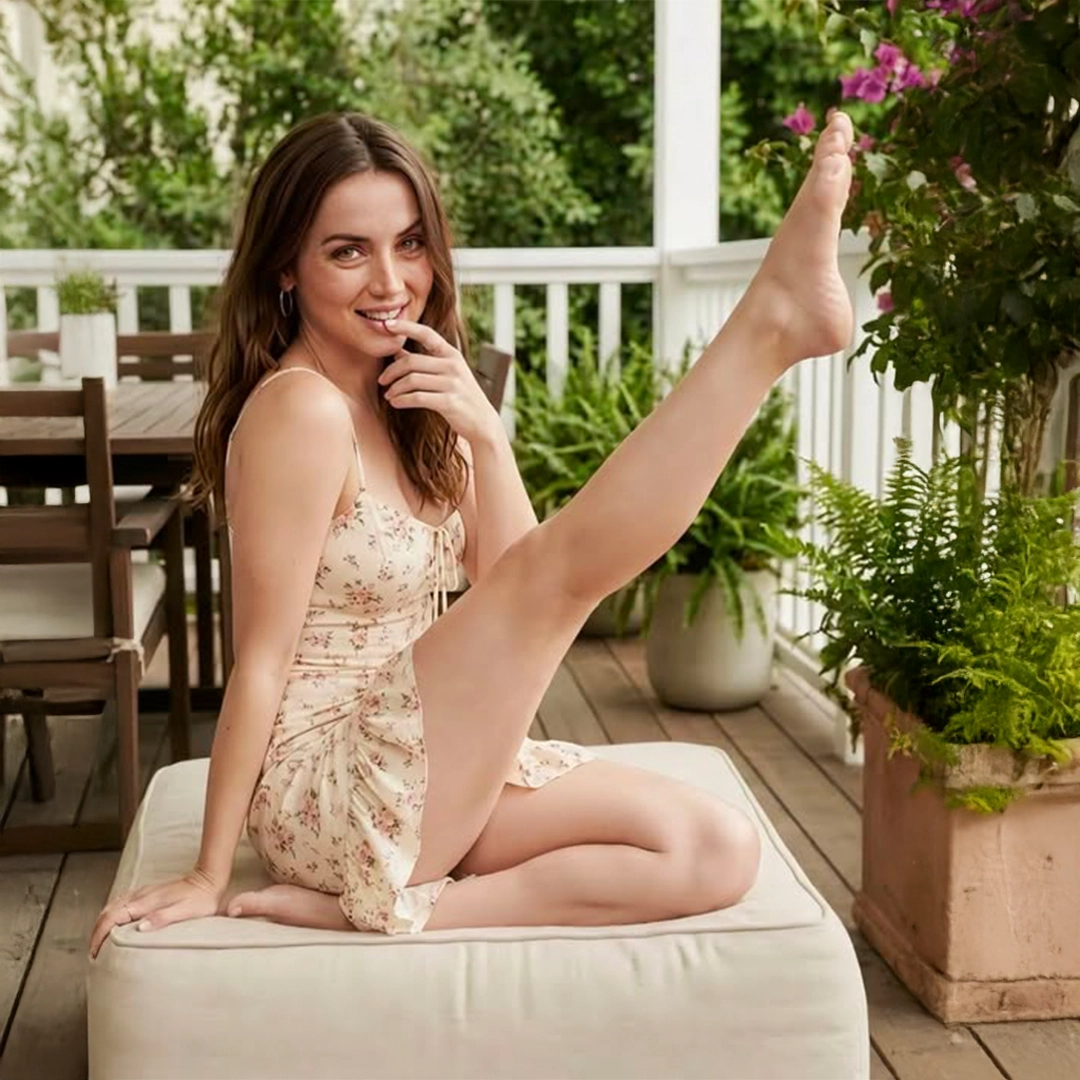
But, as you will see in the following images, the foot also appears bare—yet outside the bedroom, in a public setting. It is the same yes-but-no, with the polarity inverted.
Why does my feed flood with delicious soles, insteps, little feet—feet? Do they detect in me a fetishistic disorder, a paraphilia? Is it, as neuroscience suggests, that the proximity between feet and genitalia in the somatosensory cortex facilitates an unsettling co-activation between the two? Or is it that those innumerable nerve endings—excitable, ticklish, hypersensitive—now exposed to view, cloud my judgment? Did Alexa hear me muttering about foot reflexology—affectionately reformulated as a “nice little massage along the calcaneal–interdigital axis”?
And the final question, for the end: who has decided that these images should exist and circulate massively? AI, Ana’s public relations, herself? It is not natural—tant de French cancan au Moulin Rouge, tant de crampes.
A final lament.
When we can no longer distinguish between the real and what is produced by artificial intelligence, what will we do? Will we accept that reality can no longer compete with artifice? Do you have any idea how much protein, diet, energy, potable water, shampoo a flesh-and-blood Ana de Armas requires? Do you know how long it will take a quantum processor to produce five hundred absolutely perfect copies—vibrant, as every exhibition now insists—mobile, in 3D, of this adorable Cuban?






If you’re a regular reader of this blog and enjoy its content, you might consider contributing to its upkeep. Any amount, no matter how small, will be warmly appreciated
Founded in 2021, Echoes (Notes of Visual Narrative) invites everyone to explore together the visual codes that shape our world—art, photography, design, and advertising in dialogue with society.

Copyright © 2026 r10studio.com. All Rights Reserved. Website Powered by r10studio.com
Cincinnati, Ohio


Comments powered by Talkyard.