
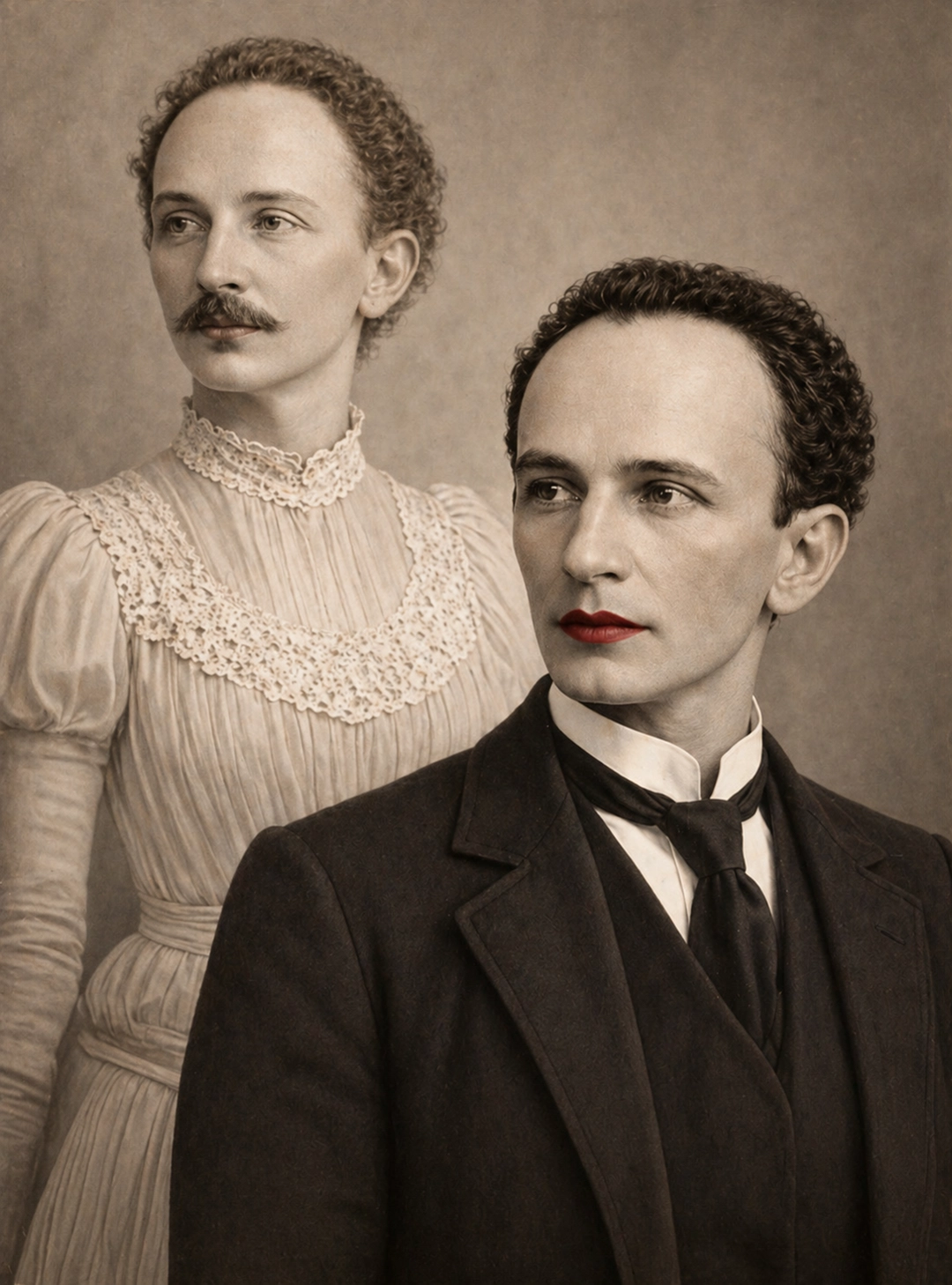
A couple of days ago I was sent a Hypermedia article signed by Jorge Camacho in which he “interprets some little-known phrases by the Cuban writer —referring to José Martí!— with the aim of drawing attention to that dark, invisibilized side of his personality that neither Cuban institutions nor Cuban artists have shown any interest in exploring.”
Camacho assembles a group of illustrations titled My favorite Martí is not so pretty, using an AI application —ChatGPT— to visualize his reading of certain phrases. The program interprets them, as he himself does with poems, turning word into image.
Before writing a single line, I check his biography and realize —not without a certain astonishment, because this is not the kind of publication one can take lightly— that he is a “read and written” man. Professor of Spanish, Comparative Literature, and Latin American Studies at the University of Southern California. His courses span from early colonial literature to contemporary Latin American poetry and the novel. He has held leadership positions as Director of the Spanish Program, Graduate Director of the Comparative Literature Program, and Director of Latin American, Caribbean, and US Latinx Studies at the Walker Institute. His CV is extensive.
From the summit of such a copious résumé, one can throw potatoes and cabbages at passersby. There will always be a luminous reason for doing so. We all also have the right to interpret and “see” others just as they, if fortunate enough to be able to do so, can see and interpret us.
We have been interrogating —with a certain cruelty— almost all relevant figures of our culture, sport, or politics for a long time now. It is fashionable. To reinterpret everything, to erase what has been written, in order to narrate the world in the way we find convenient. This is not a Cuban problem, it is global. The best way to make oneself visible is to climb onto those who are already up there, fold them into the family, bring them down to ground level, ridicule them, and turn them into mass, into people, into neighbors and in-laws.
What more can be said about Martí, a figure claimed by all ideologies, about whom Lezama once said: the great mystery that accompanies us?
When I read his speeches, his prose —less so his poetry— I feel a kind of warm pride. It reassures me that he was born in Cuba, to Spanish parents. Conditions that perhaps weigh more than we imagine. The way I see it, I have no interest in seeing, for instance, a photograph of his rotting skull, of the dust he is today. I would not be interested in seeing him —if some kind of sorcery made it possible— vomiting from a hangover, complaining of a toothache. Shitting, farting.
We all have mothers, fathers, grandparents… loved relatives. Do you know why we are here? Because they fucked, they fornicatingly dissolved themselves in cries and sighs, in whatever acrobatic positions you can imagine. Are we really going to go there… and ask artificial intelligence to make a hardcore video of our profane conception? Do you want to see your holy mothers on all fours, tearing a pillow to shreds with their teeth? I don’t… I am not interested.
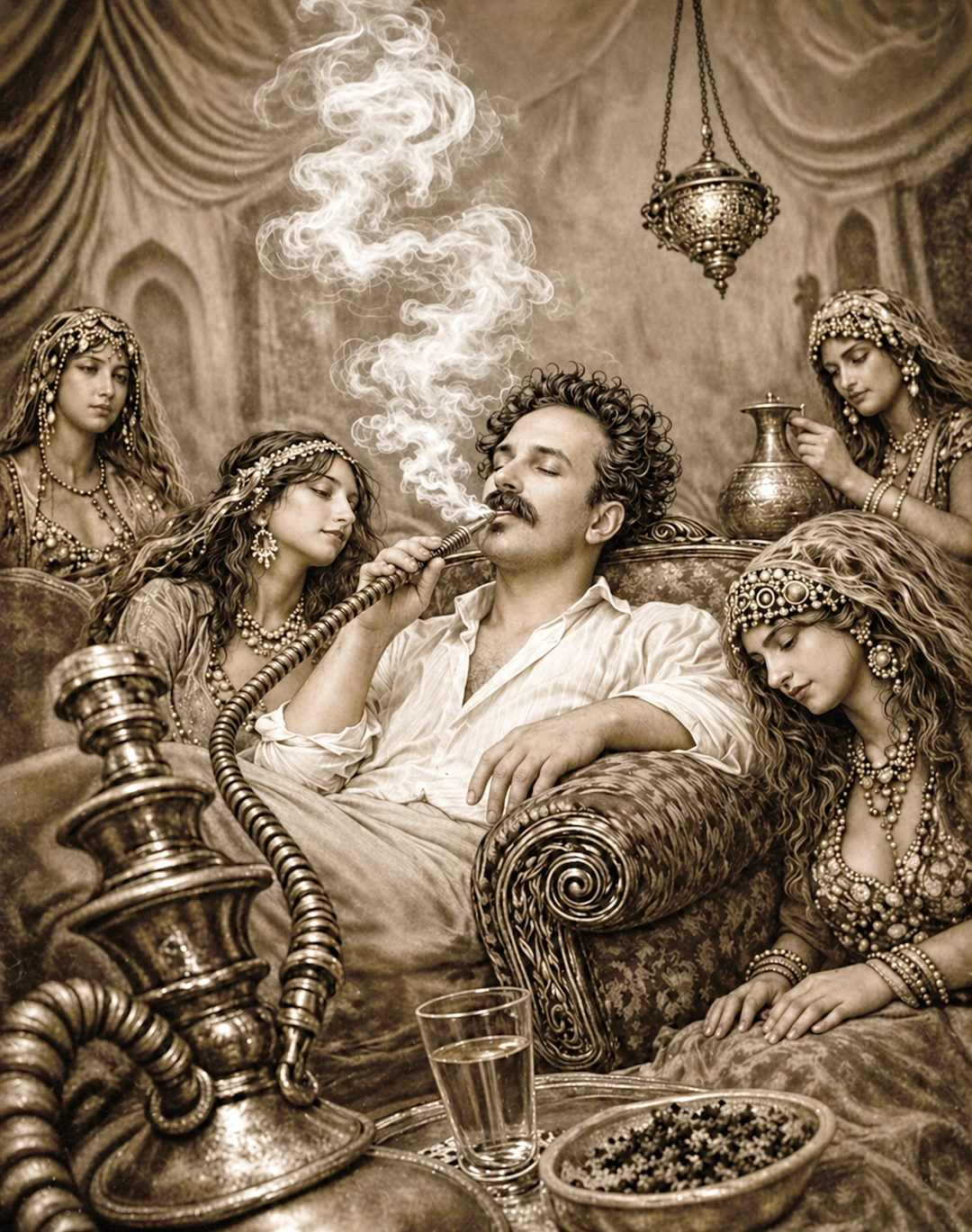
Do I want to see Martí —in a sense a father, the true father of the homeland— in his purely bodily dimension? No. Any of his abject behaviors, his most calamitous somatic manifestations? No. Because I hold him on the shelf of a rather beloved relative.
When I think of what we are today, of that trampled, shit-covered homeland under almost immortal tyrants, I find comfort in thinking of the refined people who passed through here. The Cubans of the nineteenth century, all well dressed, many of them businessmen, Capablanca, Bola de Nieve, Matamoros, those painters, the Lezama Limas, Virgilio… all of them. The elusive Dulce María Loynaz. The less they are handled, the better. Because there is not much left to hold on to. Contemporaneity —not only in Cuba but everywhere— has been dismantling every hero, martyr, singer, painter, or writer it can reach. There are hardly any left who have not been recategorized as abusers, racists, pedophiles, idiots, cretins, communists and anti-communists, fascists, Trumpists or woke.
I prefer not to think about that. Look at me, how old-fashioned I am. Because I am aware that they too rolled and tore themselves apart… on all fours or on two legs they stood. Seen from every possible angle, many of them would look horrifying. Can you imagine macro photographs of their pores… the inside of their ears, their cavities, fillings, adipose nodules? All valid, all inescapable images, but probably unnecessary. I prefer their blurry photos, softened by filters, the ones that conceal their shame and enhance what they were at their best in life.
This Hypermedia article, a space apparently open and plural to any experiment, left a bitter taste in my mouth. The present seems obsessed with the illusory. With gutting everything to see what is inside. Stripping meaning from everything, rewriting it… for what purpose?
I don’t give a damn if Martí once danced in a lace robe before going to bed, doing whatever divine whim dictated. His problem or his solution. One or two photographs are enough for me. And I do not want to go beyond that. Because in them I see him as insondable, his apostolic and condemned destiny.
When I look at cheap news spaces… the ones written for fools, I find two or three every day that simultaneously warn that whatever some scientist has discovered invites us to rewrite history, to rethink everything we once took for granted.
Do you know how many people are not the children of the father who raised them? Hundreds of thousands. Do you really think all of them are desperate to meet their biological father?
The best way to turn a people into a flock of sheep is to shake their system of beliefs, their culture, their memory, and confront them with what modesty had preserved for them. I don’t know how far we are going to keep digging… but there waits the Balrog, lightly sleeping.





If you’re a regular reader of this blog and enjoy its content, you might consider contributing to its upkeep. Any amount, no matter how small, will be warmly appreciated
Founded in 2021, Echoes (Notes of Visual Narrative) invites everyone to explore together the visual codes that shape our world—art, photography, design, and advertising in dialogue with society.

Copyright © 2026 r10studio.com. All Rights Reserved. Website Powered by r10studio.com
Cincinnati, Ohio



Comments powered by Talkyard.