
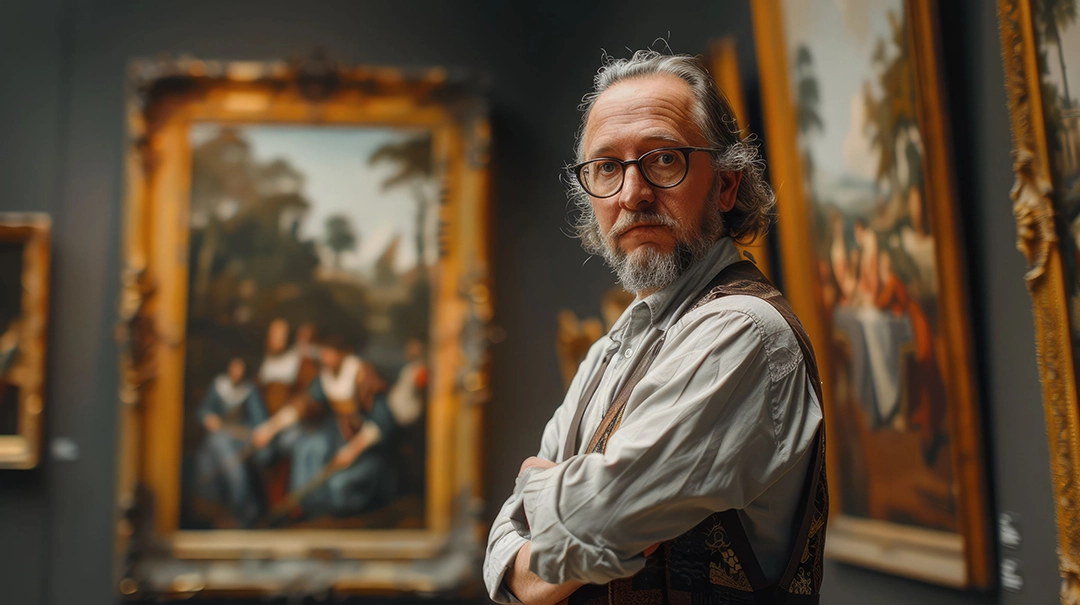
Leafing through the fall issue of Art in America, a brief note caught my attention: the publication’s response to a complaint from an art curator at a prestigious museum, who argued that, however impressive his credentials might appear, his working life was little short of a sentence.
He lamented that his efforts were undervalued in economic terms—given his education and cultural capital—and in relation to the actual impact his opinions had on the institution’s curatorial direction and on the way it chooses to present itself to the public. No less so in the programmatic architecture of its exhibitions.
From the very wording of his grievance—cast in impeccable technical language—it is possible to infer the place his expectations assign him within the museum’s structure of effective authority.
He also protested that the institution’s internal code of ethics prevented him from collaborating with analogous institutions, foundations, galleries, and even with artists themselves: writing reviews and essays, curating exhibitions, appearing in documentaries to speak about them, and so on.
The complainant has no idea how well I understand him. For roughly four years now I have carried a business card stating that I am a curator like him—Chief Curator, no less—albeit, quite possibly, of a more modest space. I have walked the same corridor along which he drags his complaints.
What could I possibly add to his litany of grievances? Nothing. The healthiest course is to accept that the Earth is round, that no one has truly seen an alien, and that when one is halfway across a tightrope, the most sensible thing is to keep one’s mouth shut.
For most curators, the practice has little to do with the autonomy of thought or with that supposed unlimited access to cultural capital. It is, rather, about not exhausting the patience of those who fund the space or manage the budgets—including the intangible ones that, in the end, determine one’s place within the museum ecosystem. Above all, it is about tracing a precise red line—thirty-six points long—from funding to outcomes.
Complaining is not a particularly intelligent option if directors from other institutions have not first approached you to ask whether you are being treated as you deserve. If you cannot clearly see how to keep paying your bills for two or three months from the sofa at home. If you are no longer a young body brimming with energy, fond of extreme sports, if tying your shoelaces is no longer as easy as it once was.
To be a museum curator—not even a major one—allows you to return home with clean hands, even if your conscience arrives somewhat clouded. Like almost everything we have agreed to consider sacred, the museum is increasingly at risk. Art drifts further and further from what we once believed it ought to be, and we are entering a time that my generation, broadly speaking, does not fully understand.
Go home. Make yourself a small cup of coffee. Nibble on some lethal little indulgence. And choose which film, series, or documentary you will watch before switching off your conscience for a few hours.





If you’re a regular reader of this blog and enjoy its content, you might consider contributing to its upkeep. Any amount, no matter how small, will be warmly appreciated
Founded in 2021, Echoes (Notes of Visual Narrative) invites everyone to explore together the visual codes that shape our world—art, photography, design, and advertising in dialogue with society.

Copyright © 2026 r10studio.com. All Rights Reserved. Website Powered by r10studio.com
Cincinnati, Ohio


Comments powered by Talkyard.