
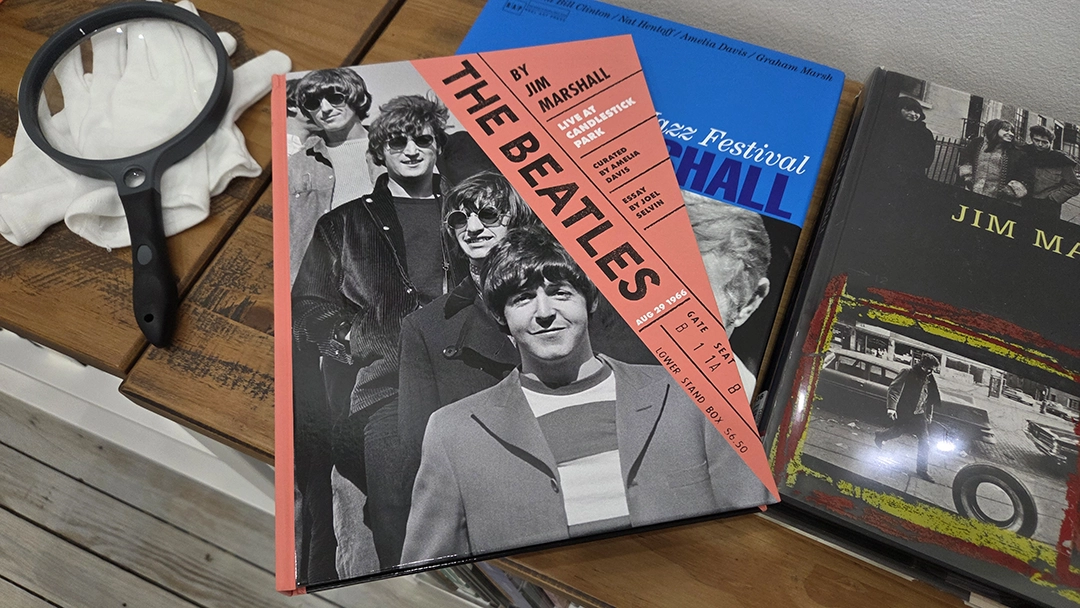
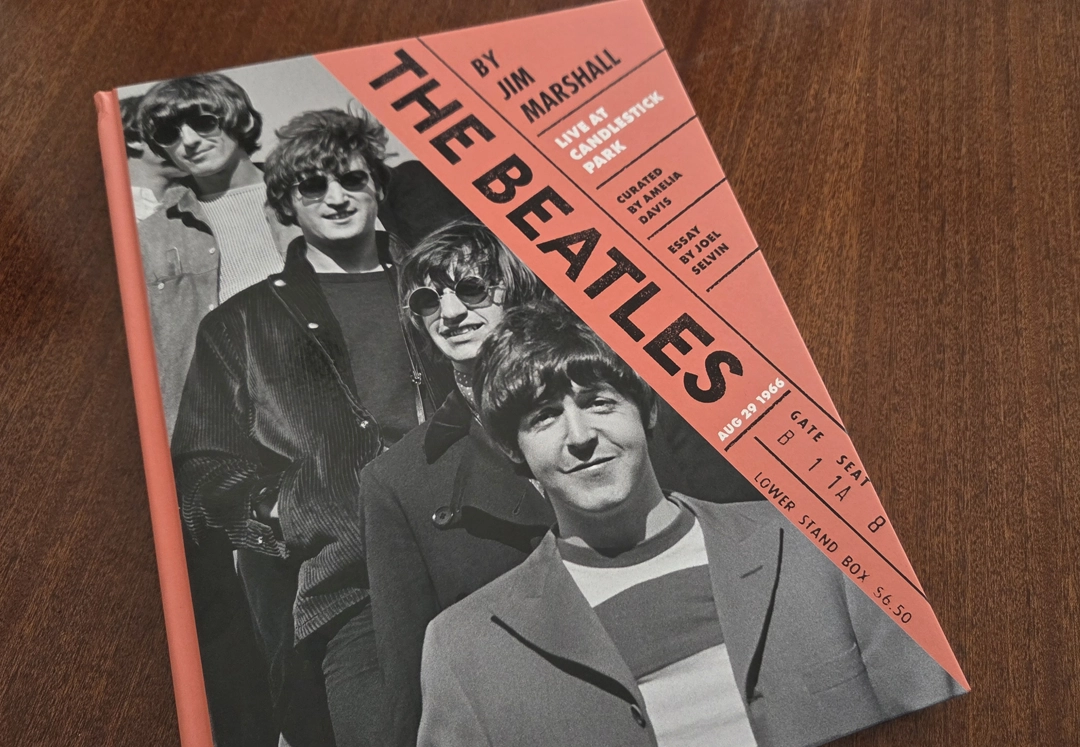
Photographs of the physical book, purchased and inscribed by its compiler, Amelia Davies.
In July, 2026 Annex Gallery presented a selection of Jim Marshall’s photographs documenting episodes and leading figures of the Civil Rights Movement in the United States during the 1960s. Preparing the exhibition and, above all, the research that accompanied it proved enormously enriching for me. It gave me a glimpse into the vast legacy of a photographer I had barely known before and whose work has since become familiar to me and, somehow, dear. Perhaps that is why his name, once almost transparent to my eye, now leaps out at me whenever I come across it in one publication or another.
Amateur Photographer published a review on August 25 of the book The Beatles by Jim Marshall: Live at Candlestick Park 1966. It is a photographic monograph devoted almost entirely to Marshall’s coverage of The Beatles’ final public concert, held at Candlestick Park in San Francisco on August 29, 1966. Marshall was, according to the publisher, the only photographer authorized to work backstage on that singular and magical night.
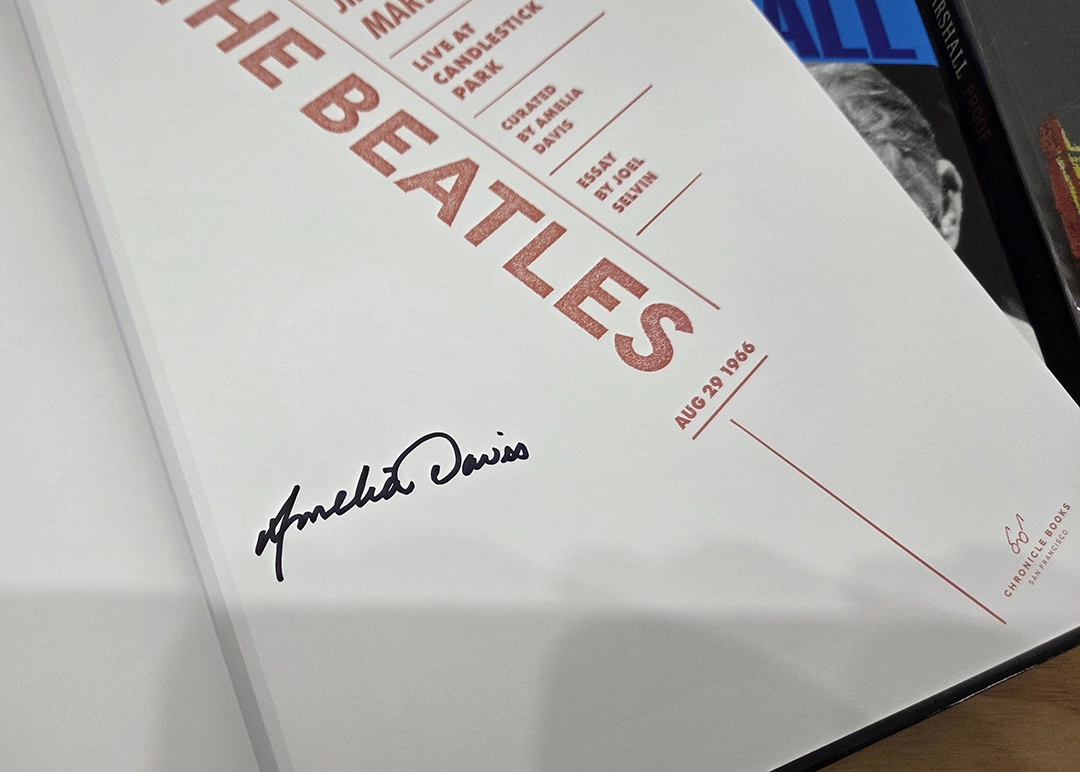
Photographs of the physical book, purchased and inscribed by its compiler, Amelia Davies.
Chronicle Books released the volume in the United States on June 2. It was curated by Amelia Davis, owner of Jim Marshall Photography and custodian of his archive, who is also credited as author and editor. With good reason: the San Francisco Chronicle reports that Davis worked for some twelve years to turn this material into a book.
Its long gestation may have had —opinion, not information— a certain logic, probably having been conceived to appear on the eve of the concert’s 60th anniversary. There may therefore have been, from the very beginning, a deliberately commemorative intention.
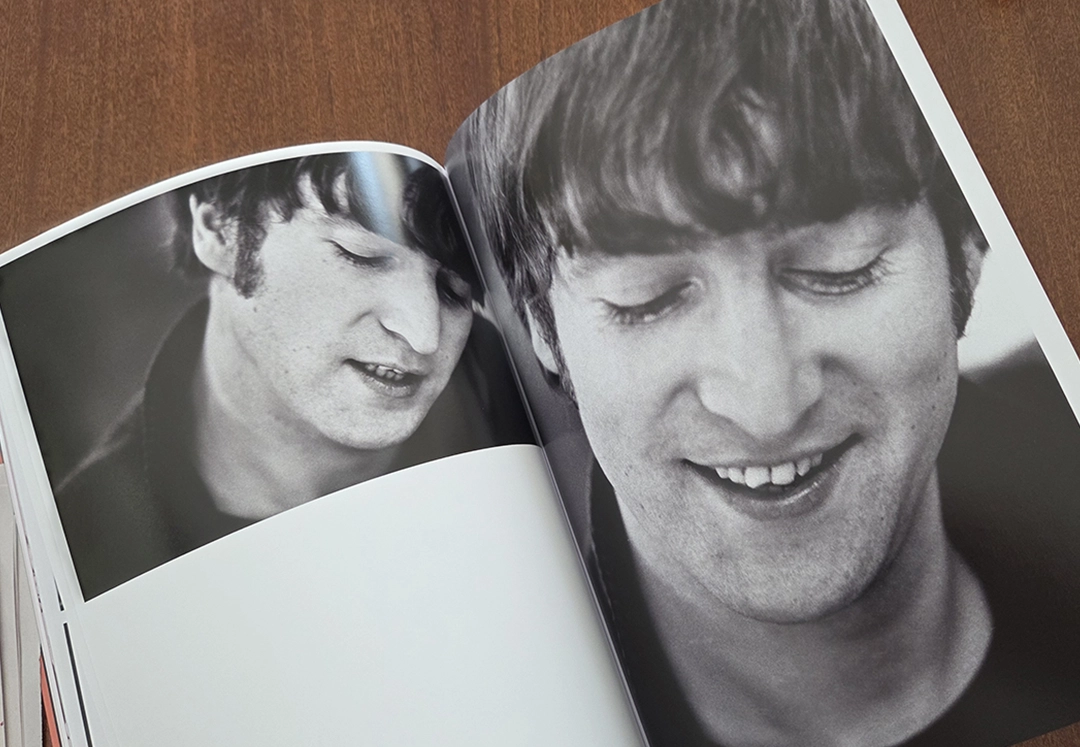
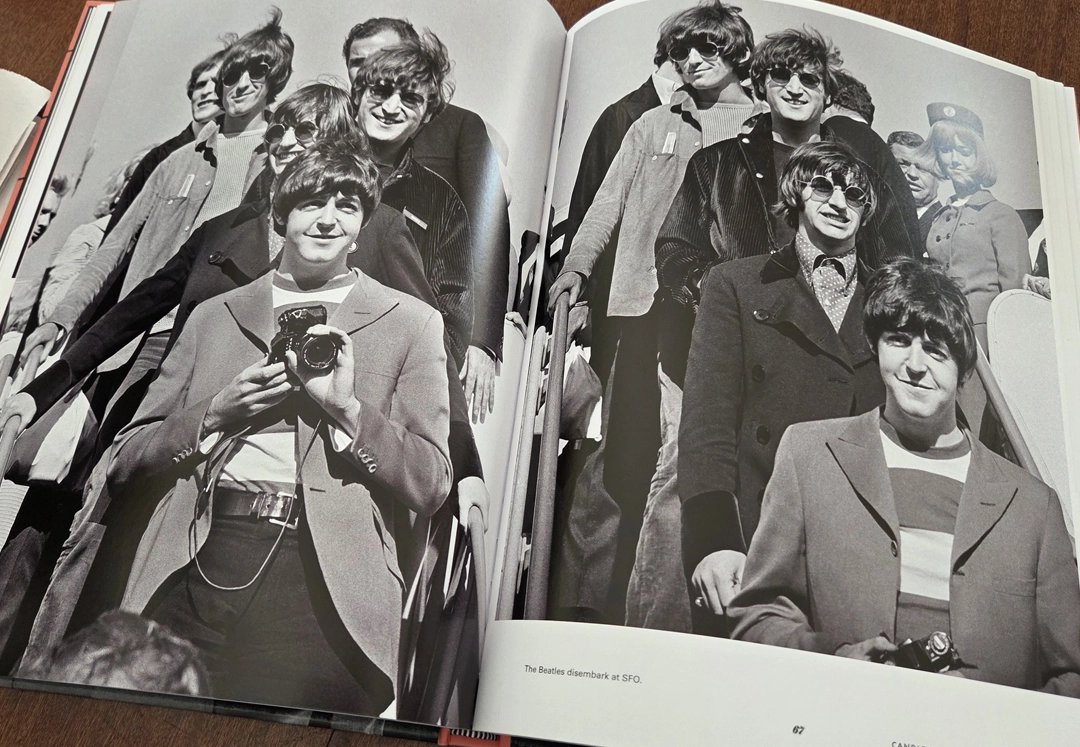
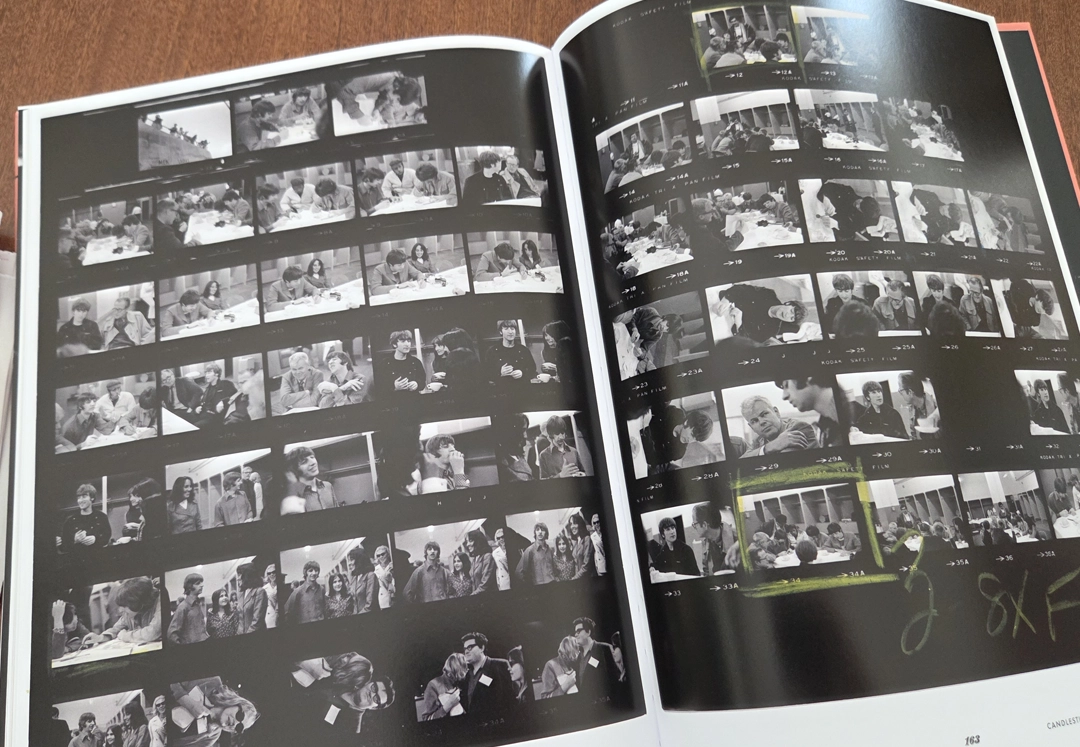
The book brings together more than 150 photographs and contact sheets, approximately half of them previously unpublished. It extends beyond the stage. It includes the Beatles in the dressing room, encounters with the Baez sisters, and other private moments surrounding the concert. That gives it an extraordinary documentary weight, because it allows us to look beyond the performance and see what happened in the hours immediately preceding the close of that chapter.
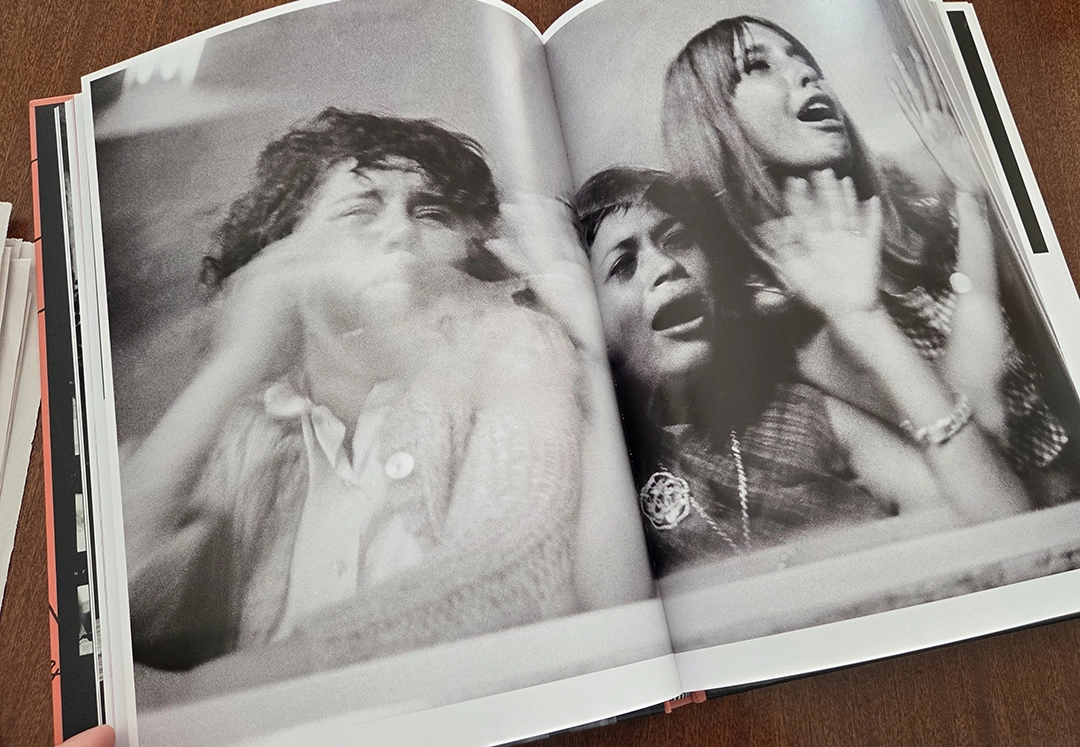
No one imagined at the time that they were witnessing the swan song of the most popular band of all time. The four Beatles talked with journalists, curious onlookers, and admirers. They played a concert lasting barely half an hour amid the inconceivable noise made by their thousands of followers, then left after casting one final glance at the stands.
Marshall gives us graphic evidence through which we can scrutinize their expressions and try to discover whether they were fully aware of their imminent divorce from direct mass adoration. Backstage, Paul smokes a cigarette. Ringo doodles on a matchbox. John Lennon wears the identification badge of a security guard named “Moses.” There are jokes and clowning around. Visitors come and go. What happens while the most famous band in the world waits to give another performance.
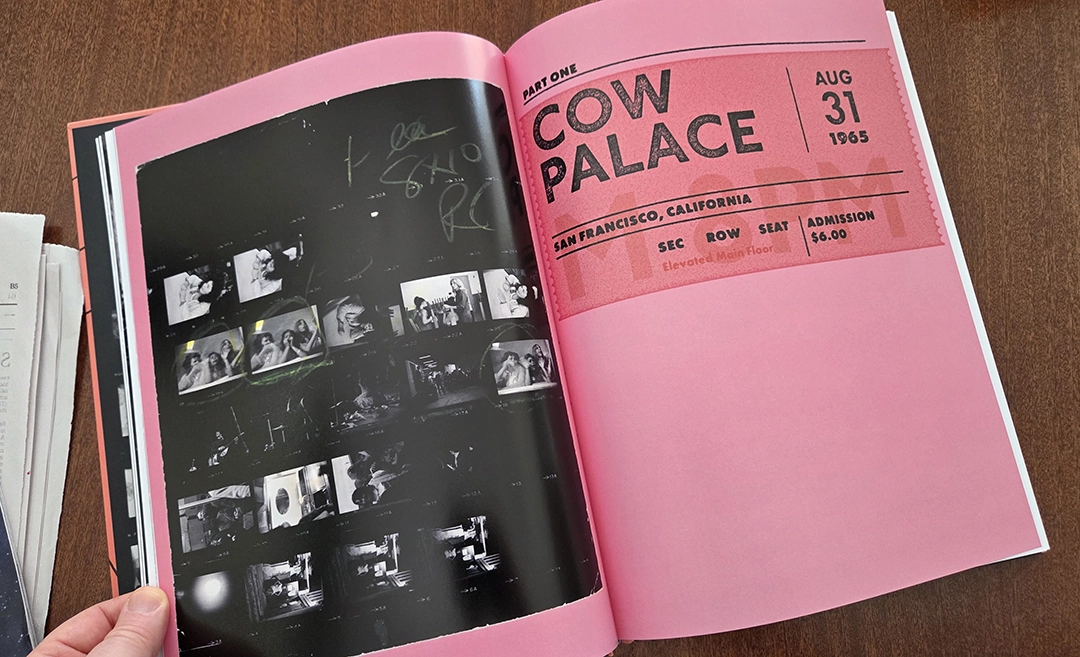
Photographs of the physical book, purchased and inscribed by its compiler, Amelia Davies.
Marshall’s actual closeness to those legends gives his photographs an additional degree of credibility. He enjoyed the kind of trust that allowed him into the inner circle. In fact, the Beatles themselves had asked for him to be there, and he was allowed to move freely between private moments and the public spectacle.
For that reason, the book operates on several levels of authority. It offers admirers that extraordinary glimpse of what was actually happening backstage, candid portraits, and a front-row seat to one of the most consequential moments in the history of modern music.
Its greatest virtue —and what allows it to retain its aroma of freshness— lies in the marginal moments of silence, in spontaneous interactions, trivial conversations, and pauses during which the stars cease, for an instant, to be stars. The inclusion of the contact sheets also helps us understand Marshall’s working methods.
Sixty years later, I see Marshall’s images as almost forensic evidence of those hours when the people waiting in the stands could not imagine that they were facing an exceptional moment. Four young men caught making their way through a hard day’s night? Something more as well.
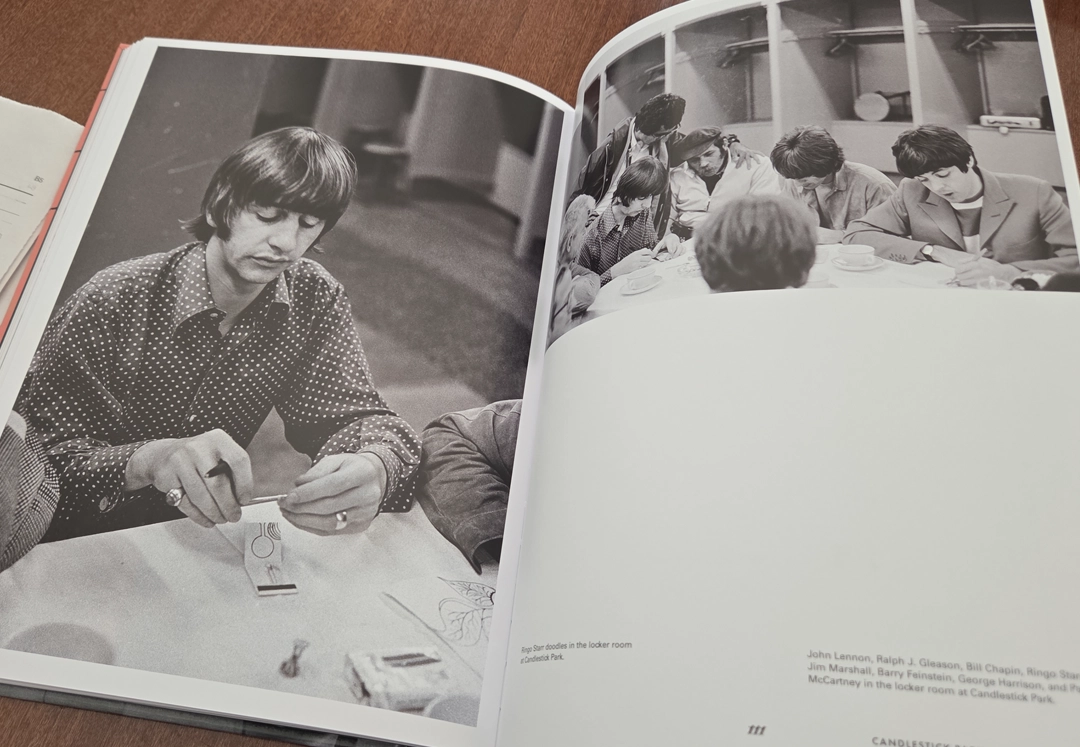
Photographs of the physical book, purchased and inscribed by its compiler, Amelia Davies.





If you’re a regular reader of this blog and enjoy its content, you might consider contributing to its upkeep. Any amount, no matter how small, will be warmly appreciated
Founded in 2021, Echoes (Notes of Visual Narrative) invites everyone to explore together the visual codes that shape our world—art, photography, design, and advertising in dialogue with society.

Copyright © 2026 r10studio.com. All Rights Reserved. Website Powered by r10studio.com
Cincinnati, Ohio


Comments powered by Talkyard.