

Trevor Paglen
It Began as a Military Experiment (detail), 2017
10 inkjet prints | Courtesy of the artist and Metro Pictures, New York
Beyond I.T.I.N.E.R.A.T.I.O.N.S., at The Annex Gallery, The Most Merciful Thing in the World, by renowned American artist Trevor Paglen, was the first exhibition I visited in the current FotoFocus Biennial at its main venue. Open since October 1, it held its official reception only yesterday, on the 3rd, following a performance-lecture by Paglen. This carefully conceived exhibition has been curated by Kevin Moore, Ph.D., Artistic Director and Curator of FotoFocus.
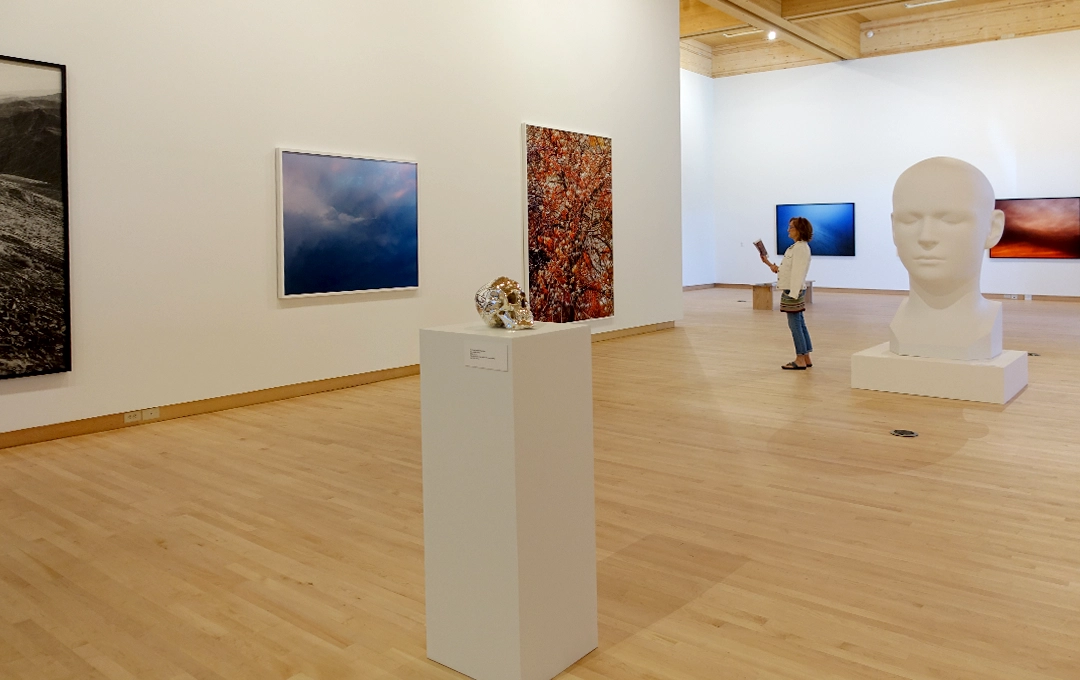
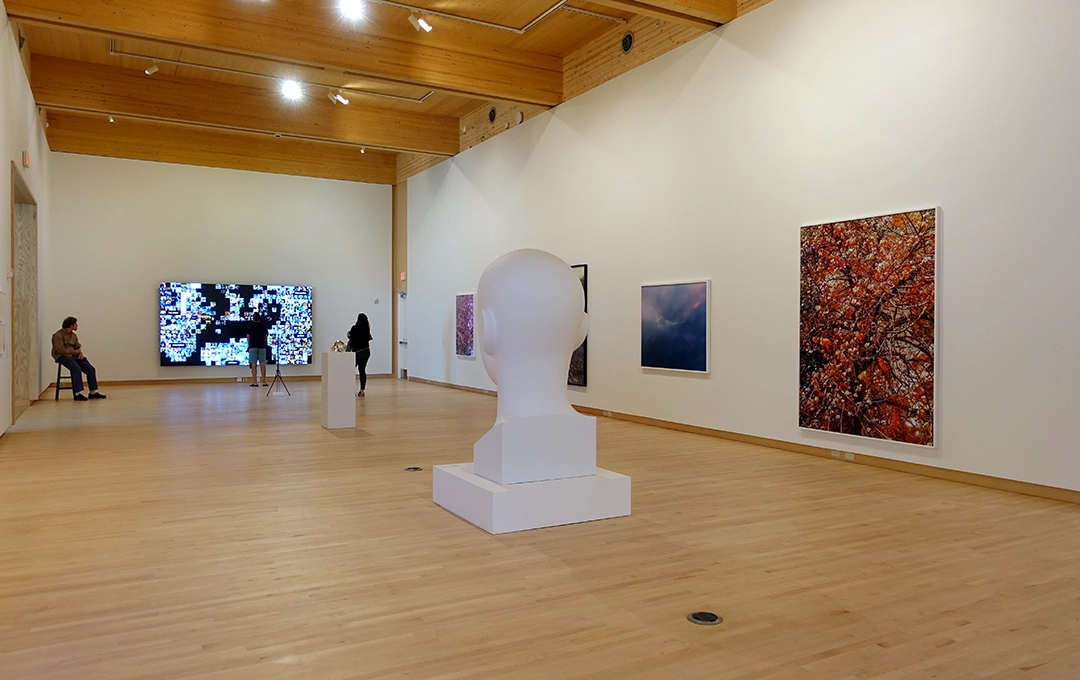
Without this being taken as either sentimentality or reproach, the exhibition begins with a slight advantage. The space receives it with an almost suspicious docility. The FotoFocus Center was conceived so that architecture could heighten the photographic experience without competing for its prominence. It tries to remain at the margins and almost succeeds. Its presence can be sensed throughout the entire visit, steadily, but never uncomfortably. The arrangement of its large galleries, their generous height, the almost tutelary presence of the cross-laminated timber structure, the concentration of natural light in certain circulation areas and its controlled use in the smaller galleries, as well as the possibility of alternating expansive spaces with more contained zones for photography, projection, and digital installations, make it particularly well suited to projects of this kind.
By supporting an intelligent and unencumbered exhibition design —imposing through sheer professional assurance— the building regulates attention, constructs the necessary pauses, and meters both attention and gaze according to the intention and relevance of each space. In this exhibition, it accommodates itself in a singular way to the concept proposed by curator and artist. It gently enforces an optimal mode of perception and guides the eye with intelligence.
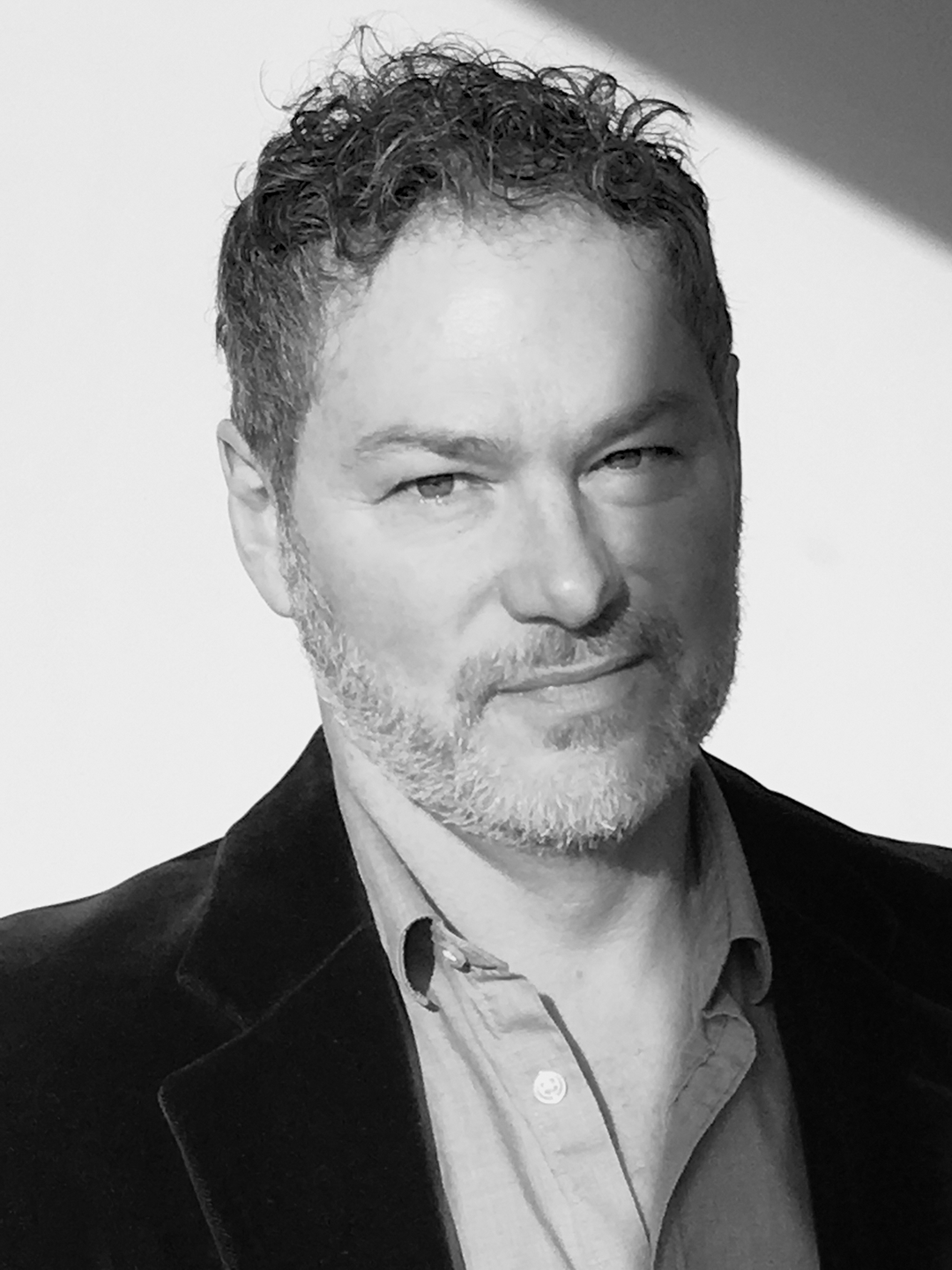
Kevin Moore is an American curator, art historian, and writer specializing in photography, film, video, and contemporary art. He holds a Ph.D. in Art History from Princeton University and has worked at institutions including the Metropolitan Museum of Art and Harvard University’s Fogg Art Museum. Since 2013, he has served as Artistic Director and Curator of FotoFocus in Cincinnati, developing an extensive curatorial practice centered on contemporary visual culture and the history of photography.
From the introductory wall text, Moore proposes that what follows should be read as a contemporary manifestation of the sublime, understood as an aesthetic category and as the ultimate foundation of the exhibition’s curatorial argument. These premises took shape between the seventeenth and eighteenth centuries, with a clear precedent in Longinus and a decisive formulation in Edmund Burke’s A Philosophical Enquiry into the Origin of Our Ideas of the Sublime and Beautiful (1757), before Kant returned to the concept from another philosophical perspective.
Its central idea lies in the experience of what exceeds human scale —immensity, ungraspable power, darkness, insidious violence, indeterminacy— and provokes a mixture of sinister admiration, pleasure, or fear. Beauty rests upon harmony and proportion. The sublime appears when what we perceive becomes too vast, too powerful, or too unnerving to be assimilated within our habitual frameworks of perception, within a single coherent experience.
Caspar David Friedrich’s Wanderer above the Sea of Fog, from 1818, would be my preferred example. A mist-covered, uncontainable landscape that practically subjugates its minute observer. Nature overflowing its bounds. At this stage, the sublime was associated more directly with the natural world. Through the mystery of creation and its purpose, great heights and storms, oceans and the unfathomable blackness of the firmament appeared as evidence of the “sublime” disturbance produced by the comprehension of infinity.
It is the great works of human development —understood here as the structures humanity raised in order to dominate nature— that eventually overtake nature itself, once assumed to be the demiurge, the patient builder. We witness the eruption of a new, industrialized world, ruled by machines, amid the shadows of the metropolis, diminished beneath Brutalist architecture and the peaks of skyscrapers. Today we are only beginning to peer into the depths of a technology that has ceased to be visible, while its power, reach, and resources have become more disproportionate than ever.
Art, or the artist’s gaze, begins to turn toward the virtual social ecosystem, social networks, artificial intelligence, and above all the sordid possibility of living under permanent surveillance. Without fully understanding how, we are certain that highly complex systems —algorithms, to name only one— have begun to hold the strings that turn us into marionettes. From there to the horror of denatured control requires only one step.
How can one avoid thinking of the ancient thesis, also associated with the supernatural, that knowing the true name of an entity amounts to acquiring power over it? In Christian exorcism, the exorcist questions the demon and demands that it reveal its name because naming it makes it possible to identify it, delimit it, and confront it directly. A logic almost juridical, rather than ritual. If the presence remains anonymous, it also remains diffuse. Once named, it becomes fixed within a structure that by itself organizes, classifies, and distributes. With its identity revealed, it can be confronted and expelled by an authority immediately above it within its miserable hierarchy.
That power, then, which still has no fixed contour, as uncontainable as the natural landscape once was, now seeks to know and identify us, to know who we are, what we like, what we hate, in order to bind us, disqualify or qualify us, and seat us at the oars, unconscious, toward whatever course it chooses. And also to prevent those very structures from ever acquiring form within our own consciousness.
To do so, it takes advantage of the persistent human need to protect itself from what it perceives or imagines as unbearable. It invites us to avert our gaze, denies us evidence with which we might judiciously select certain realities and exclude others. This is easy enough because looking and seeing can imply the admission of something unpleasant. Feelings of guilt, fragility, threats we do not wish to bring back into consciousness, classify, or catalogue. Our consciousness, beyond what we are able to police, selects, crops, establishes hierarchies; it makes some things visible and keeps others in shadow. To preserve an agreeable continuity of life. It is natural.
What is unnatural is when the metacognitive capacity of power —or of powers— decides to do the same with us. In its most benign version, it constructs zones of invisibility around violence, surveillance, death, inequality, or collective responsibility, because to see fully obliges us to take a position and accept its consequences. This is why the image can have such a profound relationship with pain. Because it can reveal and wound at the same time; destroy the system of beliefs that keeps us balanced. We need to see in order to know the world and not see it entirely in order to inhabit it.
Perhaps this is why censorship is not altogether pernicious. Or, if it is, it would be precisely because it is almost never excessive enough. Platforms such as Facebook tend to interpose a layer between an image they deem indecent and an idealized viewer they presume to be easy prey to horror. Content they consider violent, disturbing, or sensitive, almost pornographic, is concealed behind a warning that requires an affirmative decision before it can be revealed. It is one of the ways contemporary culture administers the public gaze. Films warn us in much the same way, beyond the age at which we are supposedly able to watch them without risk, about things we once did not even know could be harmful. Flashing lights, smoking, intense sonic or visual sequences, etc.
A good part of what we have accepted as transgressive art goes little further than disabling censorship and self-censorship. That disobedient impulse, in late Classical Greece, was known by the term kynismós. Something similar, though not identical, to what we understand today as cynicism.
This entire matter of censorship and the withholding of information in the name of regulating collective behavior often triggers episodes of paranoia. I would rather not enter into that subject and instead continue with Trevor Paglen’s exhibition, which I prefer to understand through what we “can” and “cannot” observe, through what we are permitted to see and what is denied to us. Through the almost always futile desire to let the other see, to display the blurred fragments that the clever ones have hidden and that we have wrested from those who control the narrative. Along with the exposure of the mechanisms of control, the strategies used to filter content, and the modifications practiced to channel emotional and logical response.
From these points of departure, I believe I can discern two well-developed nuclei. One concerns the capacity of power to observe, identify, classify, and administer bodies, territories, and behaviors. The other concerns what happens when vision itself ceases to belong to us entirely, when machines and algorithms see for us, detect what we fail to see, and produce images generated by a logic and an unnatural will that does not count among its objectives our ability to understand them and extract experience from them.
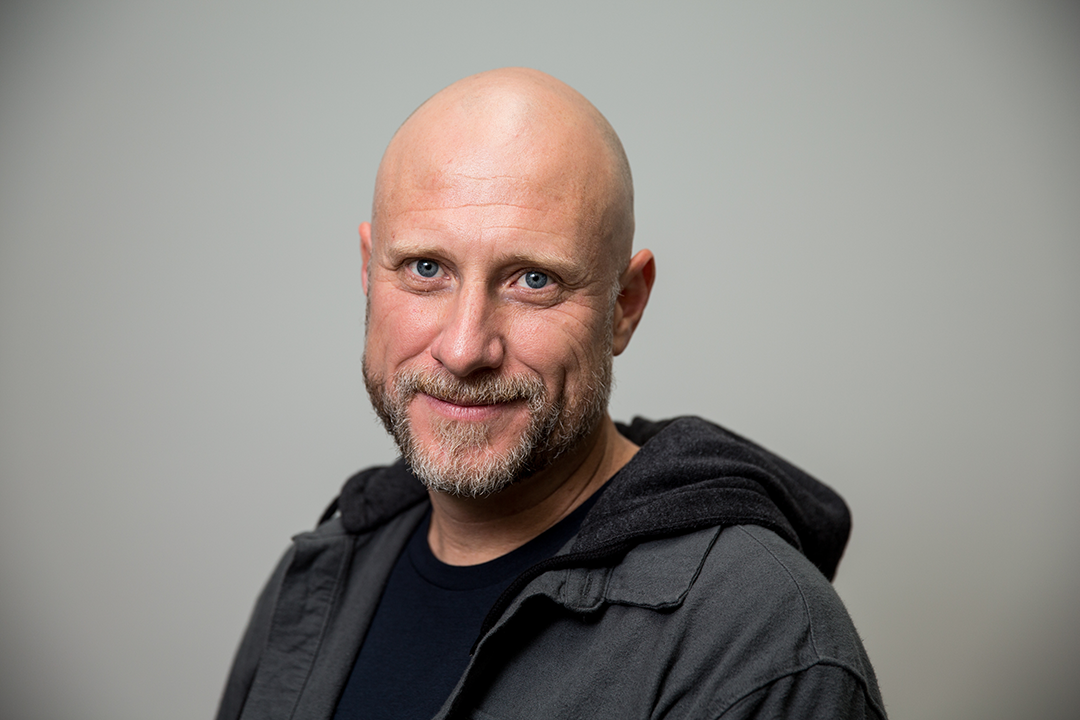
Trevor Paglen. Courtesy of the John D. and Catherine T. MacArthur Foundation.
Identification and Surveillance
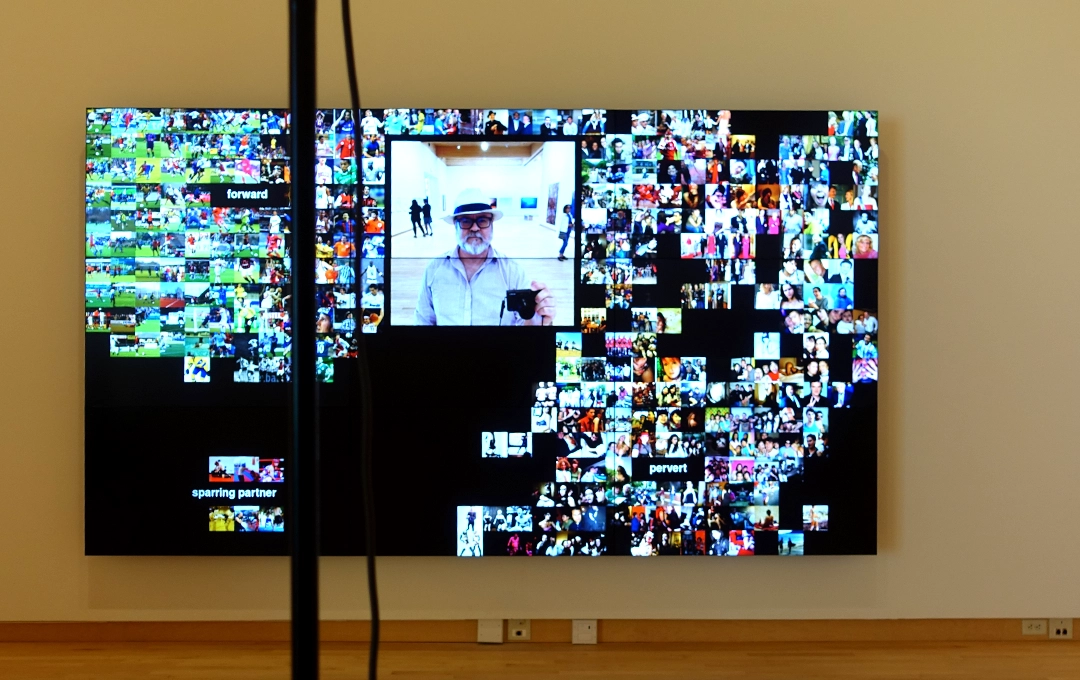
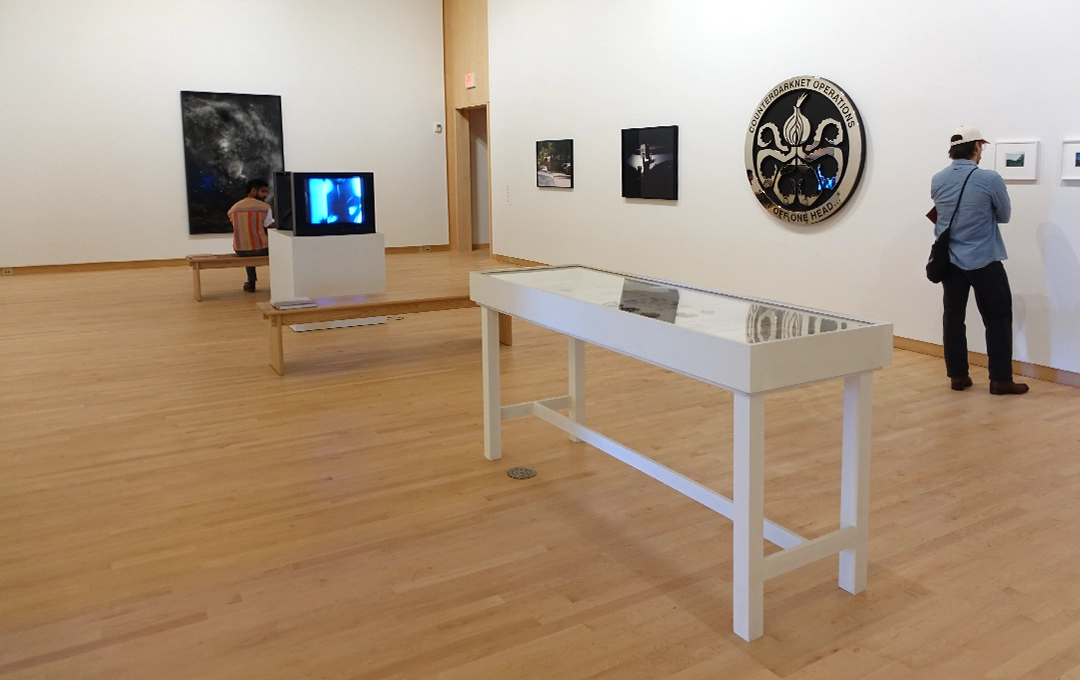
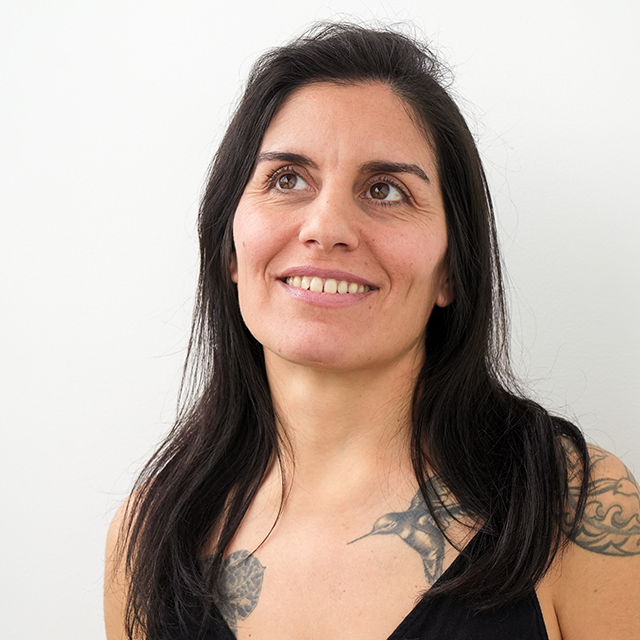
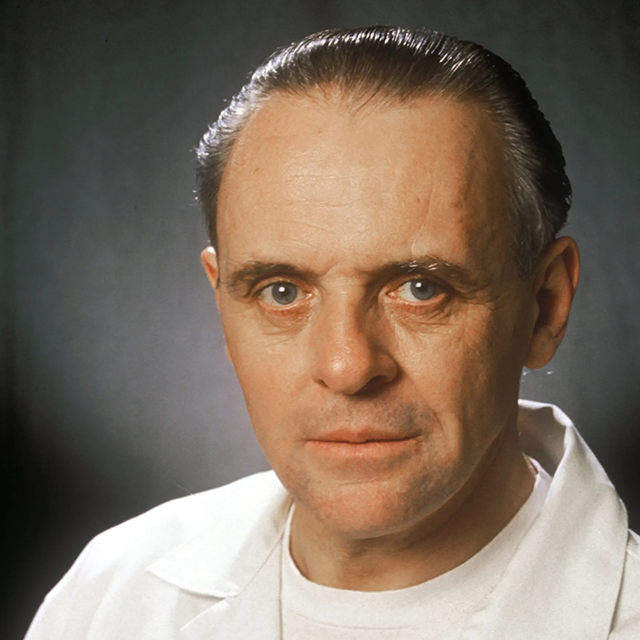
This group brings together works related to facial recognition, algorithmic classification, satellites, military installations, clandestine flights, codes, insignia, and intelligence systems. Series such as It Began as a Military Experiment, Faces of ImageNet, Code Names of the Surveillance State, and Symbology, as well as works such as KEYHOLE 12-3, approach the process from different directions. Faces, bodies, physical spaces, and movements are exposed as pieces of information that can be observed, classified, stored, and used in many ways. At the same time, Paglen exposes the symbology and the mechanisms of deterrence and inducement employed in the administration of power, mechanisms that remain beyond the reach of the broader public. The selection articulates these works in ways that make visible systems designed to operate outside public perception.
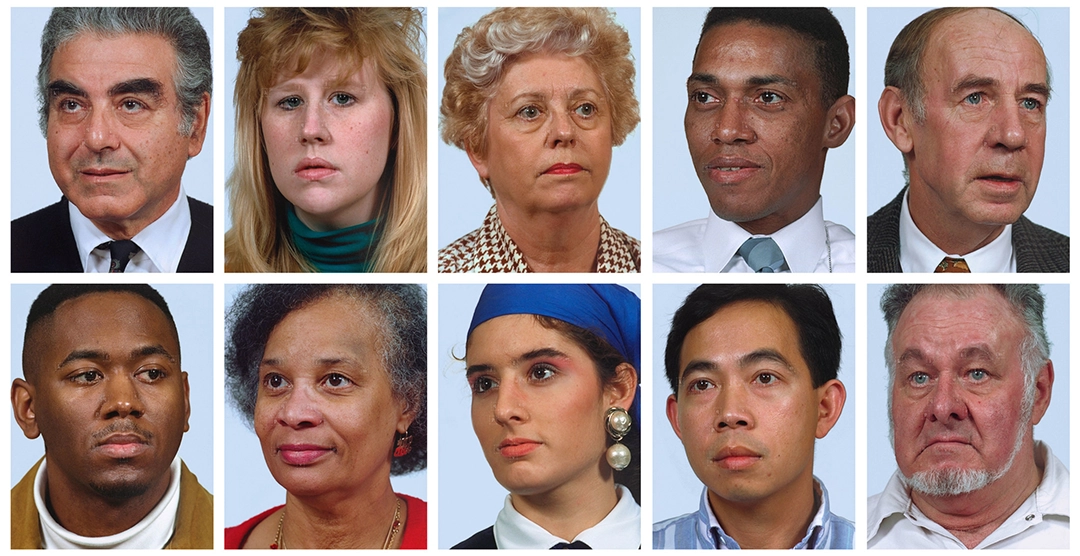
It Began as a Military Experiment, 2017
Set of ten pigment prints | 13⅝ × 10½ in.
https://paglen.studio/2020/04/09/it-began-as-a-military-experiment/
The Unknown Withheld
This group brings together atmospheric images, aerial objects, ambiguous landscapes, and works generated or transformed through computer vision, such as Watershed, Hough Transform, Hough Circles, Bloom, and CLOUD. I understand them as reflections on the reach —or limits— of perception and, beyond that, on what we can or cannot comprehend without an appropriate frame of reference, as well as on what the human eye simply fails to register.
For a long time, we have thought of the image as something meant to be seen and interpreted by a person. Today, a camera can capture a scene, an algorithm analyze it, and a system extract information without human intervention. A facial-recognition program does not perceive a face as we do. It identifies patterns, proportions, and numerical correspondences and can feed decisions that, when produced without transparency, consent, or any possibility of challenge, come into conflict with basic democratic principles, even before we begin to discuss their justice, accuracy, or error. A military system can track a trajectory or detect an object without any need to convert that operation into a human visual experience.
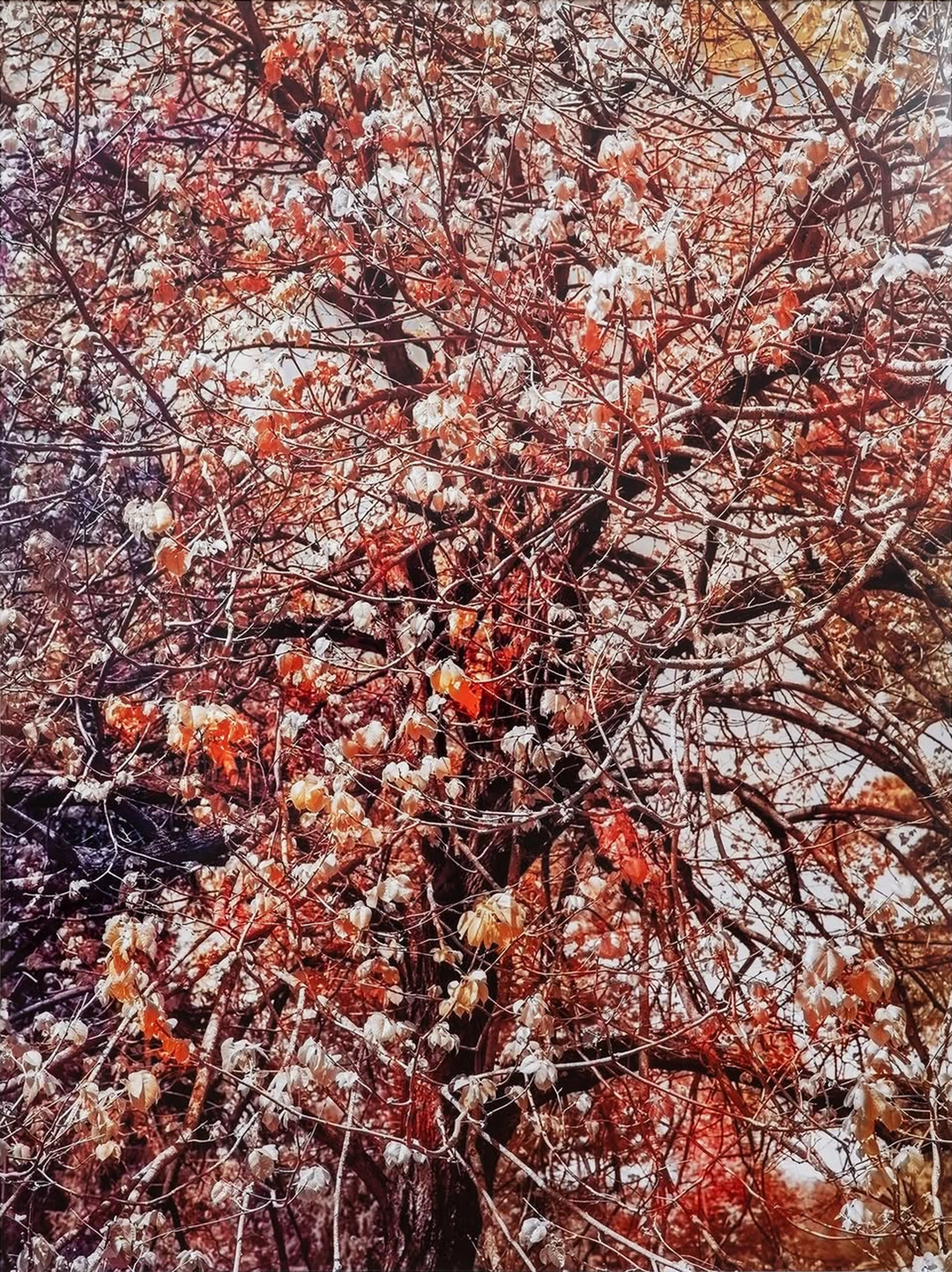
Bloom (#7d5c52), 2020
Dye sublimation print | 92 × 69 inches (image), 93⅛ × 70⅛ × 2 inches (framed)
Edition 1 of 3, plus 1 artist proof. Courtesy of the artist and Pace Gallery
The lightweight, mirrored, faceted structure of PALLADIUM Variation #4 is inspired by a history of objects built by military and intelligence agencies to spoof adversarial sensor systems known as “Electronic Warfare.” A broad field, Electronic Warfare (EW) largely develops technologies that allow for remote influence or control over adversarial sensor systems and hardware, making systems “see” and “do” in prescribed ways.
Applications include remotely disabling rival sensors, making objects appear, disappear, or behave erratically, and conjuring all sorts of digital illusions. A small subset of the field is related to stealth technology, building unusual objects —structures that look like a balloon or basketball to the human eye, but to a radar operator appear as a fleet of bombers or a misbehaving UFO.
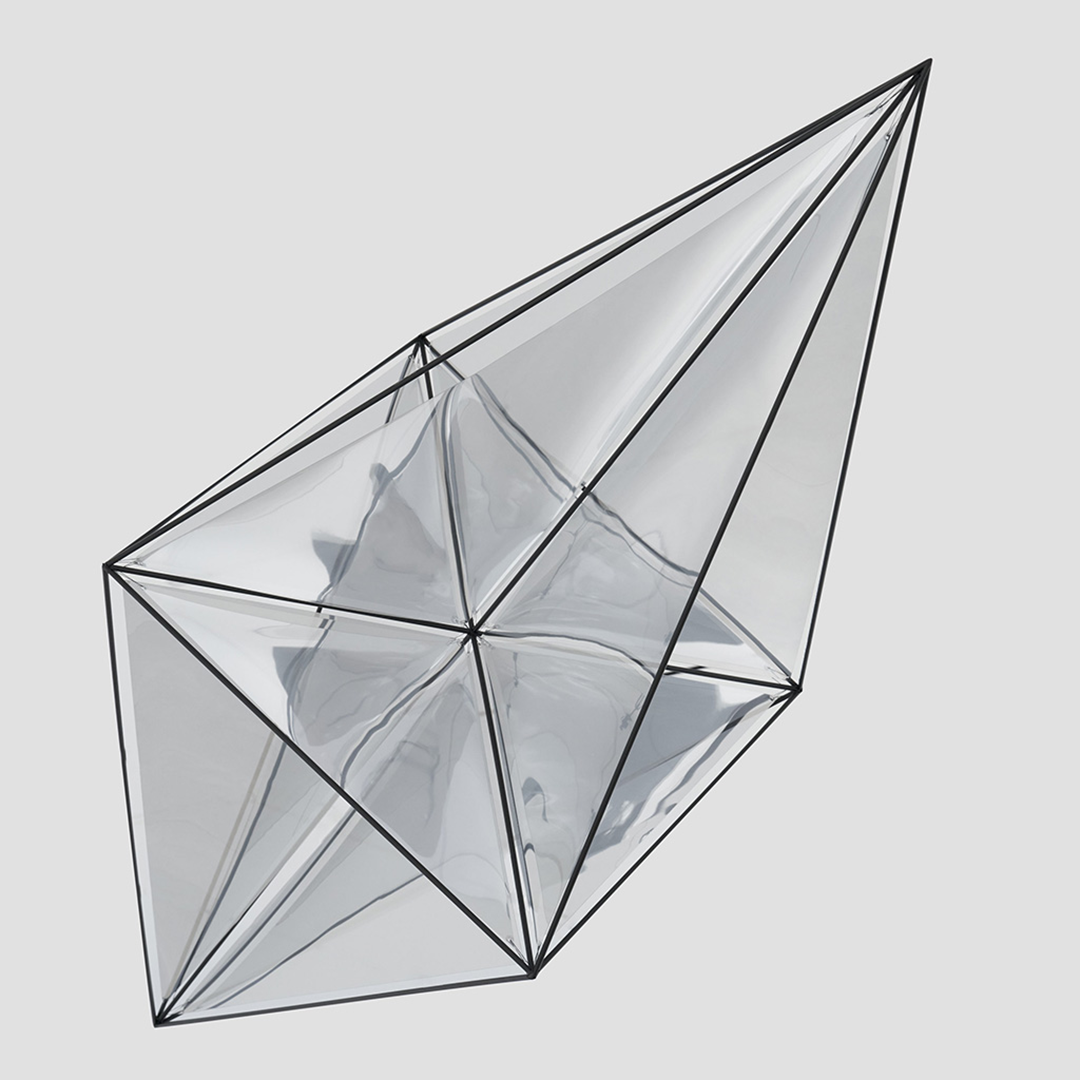
PALLADIUM Variation #4, 2023
Stainless steel, mirror foil | 23⅝ × 70⅞ inches
Edition 1 of 3, plus 1 artist proof. Courtesy of the artist and Pace Gallery
Paglen appears to dismantle the seemingly natural relationship between seeing, interpreting, and knowing. Even with the image before us, nothing guarantees access to the process that produced it, or to what the machine has identified, cross-referenced, or decided.
The problems Trevor Paglen addresses have clear precedents in the history of photography. Since the nineteenth century, the camera has been used to map territories, identify people, and produce administrative, police, and scientific archives. In the twentieth century, artists and theorists such as Allan Sekula questioned the classificatory function of the image. Julia Scher, Jill Magid, and Harun Farocki worked with concepts of surveillance, closed-circuit systems, and the automation of vision. Farocki in particular examined how military and industrial images could operate without the need for a human spectator, anticipating the current expansion of computer vision. Paglen belongs to that genealogy and incorporates contemporary experience and development —satellites, artificial intelligence, facial recognition, vast databases, and automated systems of observation.
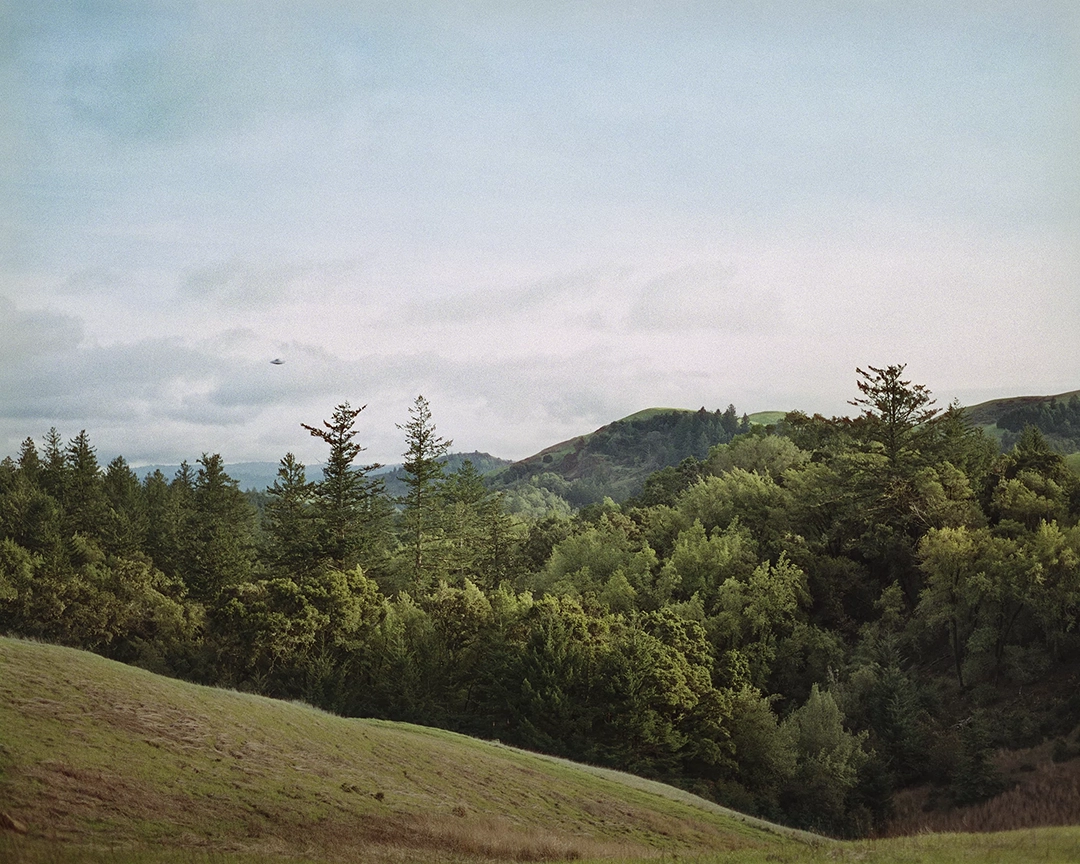
Near Windy Hill (undated), 2024
dye sublimation on aluminum print | 24 × 30 inches (61 cm × 76.2 cm)
Courtesy of Altman Siegel.
It is very important to make clear that Paglen has sustained a long-running practice of observing, tracking, and documenting military infrastructures, surveillance systems, and technologies of vision. He has been concerned with making secret programs, operational networks, databases, and structures outside the public domain visible, working at times with already documented information and at others with clues, traces, or systems whose existence, function, or reach remain partially or deliberately concealed.
What distinguishes Paglen is the way he has brought that research together with landscape, technology, and visual culture within a single practice. His images begin with a prior accumulation of data, locations, tracking, and verification, but move toward an interrogation of the ways in which observation, classification, and the production of knowledge now take place through technological systems. As I see it, his contribution belongs to a long tradition of exposing historical forms of surveillance, while fully incorporating contemporary technology and today’s algorithmic apparatuses, and placing photography within a transformation in which seeing, identifying, and deciding no longer depend exclusively on the human eye.
The Most Merciful Thing in the World will remain on view at the FotoFocus Center through January 23, 2027.
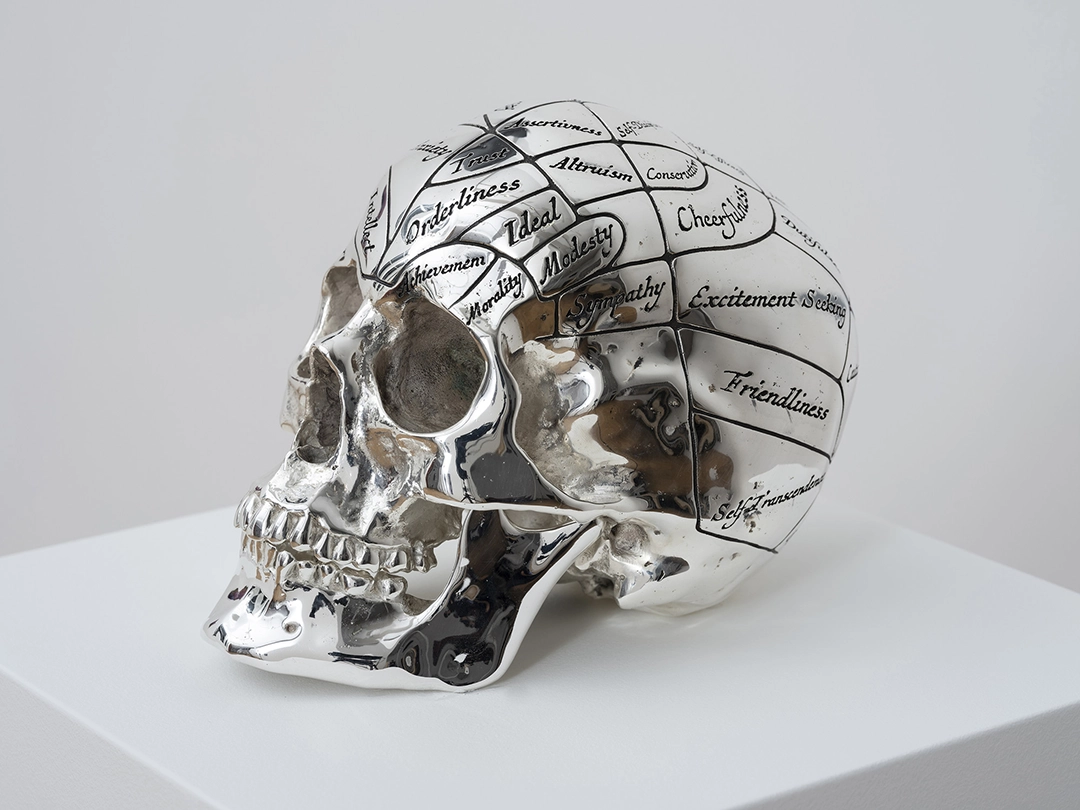
The Model (Personality), 2020
Silver-plated bronze | 7¼ × 7⅛ × 5⅜ inches
Edition 1 of 3. Courtesy of the artist, Jessica Silverman Gallery, and Pace Gallery





If you’re a regular reader of this blog and enjoy its content, you might consider contributing to its upkeep. Any amount, no matter how small, will be warmly appreciated
Founded in 2021, Echoes (Notes of Visual Narrative) invites everyone to explore together the visual codes that shape our world—art, photography, design, and advertising in dialogue with society.

Copyright © 2026 r10studio.com. All Rights Reserved. Website Powered by r10studio.com
Cincinnati, Ohio
Comments powered by Talkyard.