
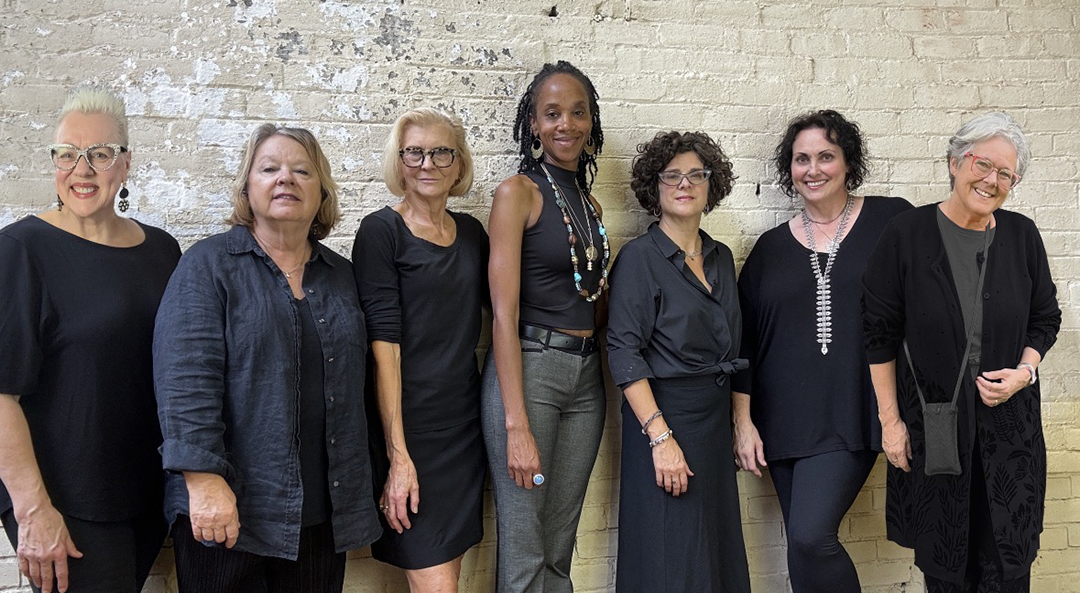
Whenever I take part—as a curator or a viewer—in an exhibition bringing together several artists, seven women in this case, any number of men or any combination of the two sexes, I try to imagine the reasons, the implicit mystique that such a combination requires.
Under This Shared Sky: A Visual Conversation on Unity is the name GALLERY jENSEITS has chosen to bring them together, from October 16 to November 7, 2026, with an artists’ talk on November 1. All live and work in the Cincinnati area. The subtitle attempts to direct us toward unity. An apparently clear motive that, under a sustained gaze, becomes unfathomable. Dialogue, as the force holding them in this provisional orbit. Both deserve thought, because their relationship invites questions about what precedes the encounter and what the encounter produces. Why not consider them slowly—there is nowhere we need to arrive early—to gain a clearer sense of them, or to move beyond an initial argument? Even to arrive at sharper questions.
My first approach was to look for points of convergence between their practices and their trajectories. Shared techniques and materials offered a weak explanation. Large-scale painting, encaustic, ceramics, assemblage, design and installation open paths sufficiently distinct for unity to require another foundation. The city provides a concrete proximity, a space for work and circulation, but sharing it is also insufficient to explain how the exhibition holds together. The feminine has an explicit presence in several of these poetics and occupies different places in the others. Each of these possibilities illuminates part of the encounter and leaves another unresolved.
A conversation with Mary Barr Rhodes added to these questions the perspective of someone involved in conceiving the exhibition, and brought what the works offer to any viewer’s gaze into relation with the reasons and experiences through which they were brought together. Speaking about how this encounter came into being, she explained that the core of the group has been working together for some three years, with a few arrivals and departures. Her invitation grew out of respect for the artists’ work and discipline, and the possibility of their working together. Seven proved a manageable number, capable of offering diversity while allowing communication to run its course. The number, with all the associations it evokes, had a practical reason at the origin of the gathering.
That history changes the starting point. There is a desire to come together, a continuity and a concept to which the artists have devoted time. Unity also belongs to that prior work, to the conversations and decisions through which an exhibition begins to exist long before it occupies the gallery. The differences between the works are part of what the invitation sought to bring into relation.
For Rhodes, interconnectedness can produce compassion. Her explanation begins with the separation she perceives in the world and the desire to bring together human experiences capable of recognizing one another. Belonging occupies a central place in that purpose. She also wants to broaden the reach of the word unity so that each visitor finds some point in the exhibition that speaks to them through their own experience. The diversity of languages offers different ways into that conversation.
Suffering carries a particular weight here. While the exhibition was being prepared, a friend asked her about its presence in a show devoted to unity. The question led her to work on the bond formed between people who suffer together. From this emerged a dark triptych, with large-scale faces, marking a change from the light and joy that dominate much of her recent work. In that process, the circumstances of a woman with cancer living on the streets of Cincinnati came into view. The city thus enters the work through a particular life and the conditions in which that life attempts to sustain itself.
Three other studies incorporate a photograph of her father. As she explained to me, the image allows her to give presence to an ancestral voice that continues to accompany her and to connect it with those moments when nature makes her feel that she belongs to something immense. The ocean, the light, the wind, the stars. The awareness of being a minute part of it all. Unity acquires a dimension here that encompasses the relationship between people, the continuity between generations and the place each occupies in the world.
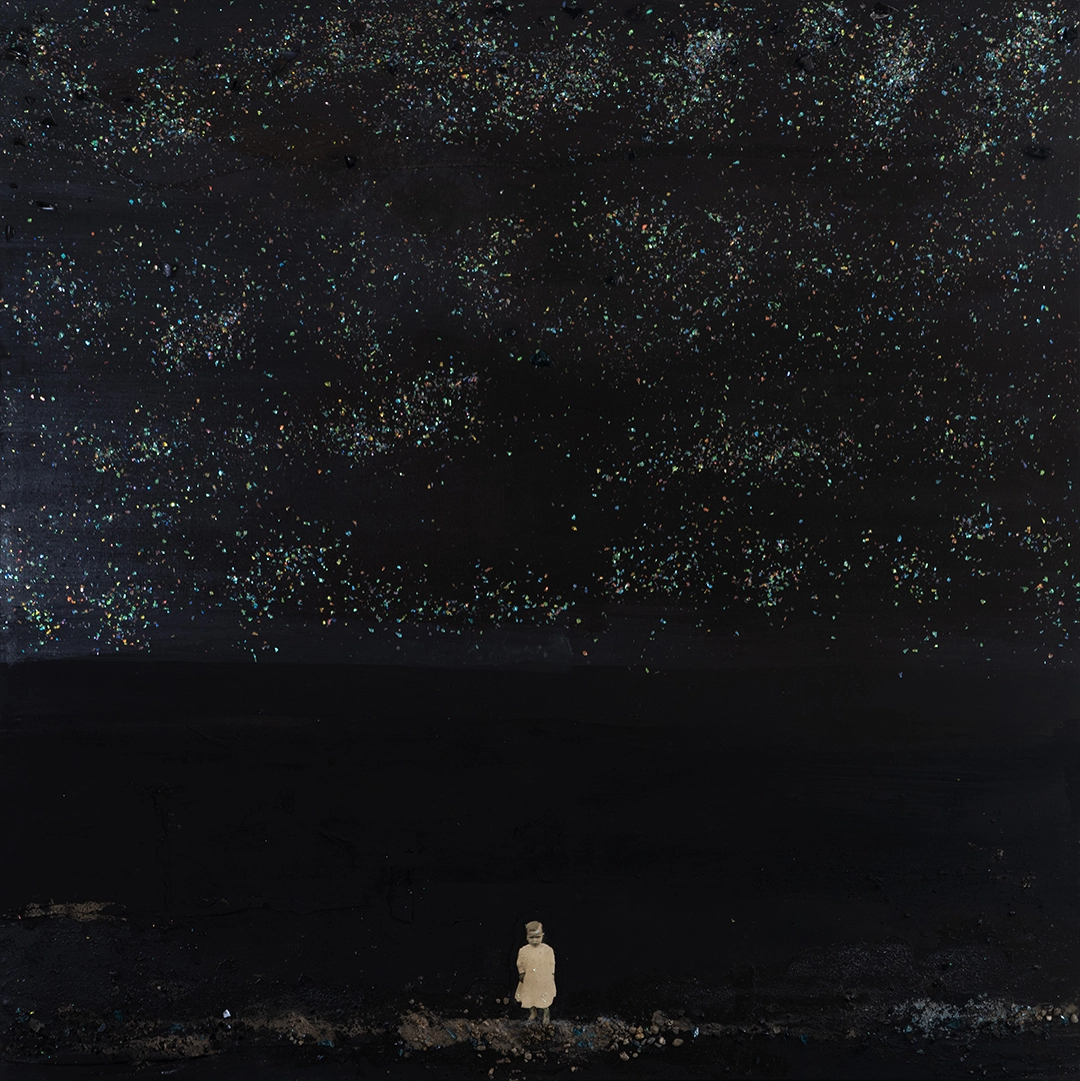
We Are Stardust by Mary Barr Rhodes
As I listened to her, my initial hypothesis found a more precise point of contact. I had begun to think about the vessel, understood broadly as a form that receives, holds or surrounds. The conversation carried that operation toward the desire to belong. Making room for something and finding a place to be can be thought of together. From there I would like to look at the exhibition, conscious that this is my own reading and that its reach will depend on what the works allow it to sustain.
To develop it, I also draw on prior research into their trajectories and on the works I have been able to access, which allow their practices to be considered beyond this exhibition.
Tracy McClorey’s ceramic caves offer a concrete expression of that possibility. Her Keep Caves series is conceived to house memories and meaningful objects. They are small spaces that each person can inhabit with whatever they wish to preserve. The interior accommodates a history of its own. The form receives a content whose importance derives from the relationship someone has with it.
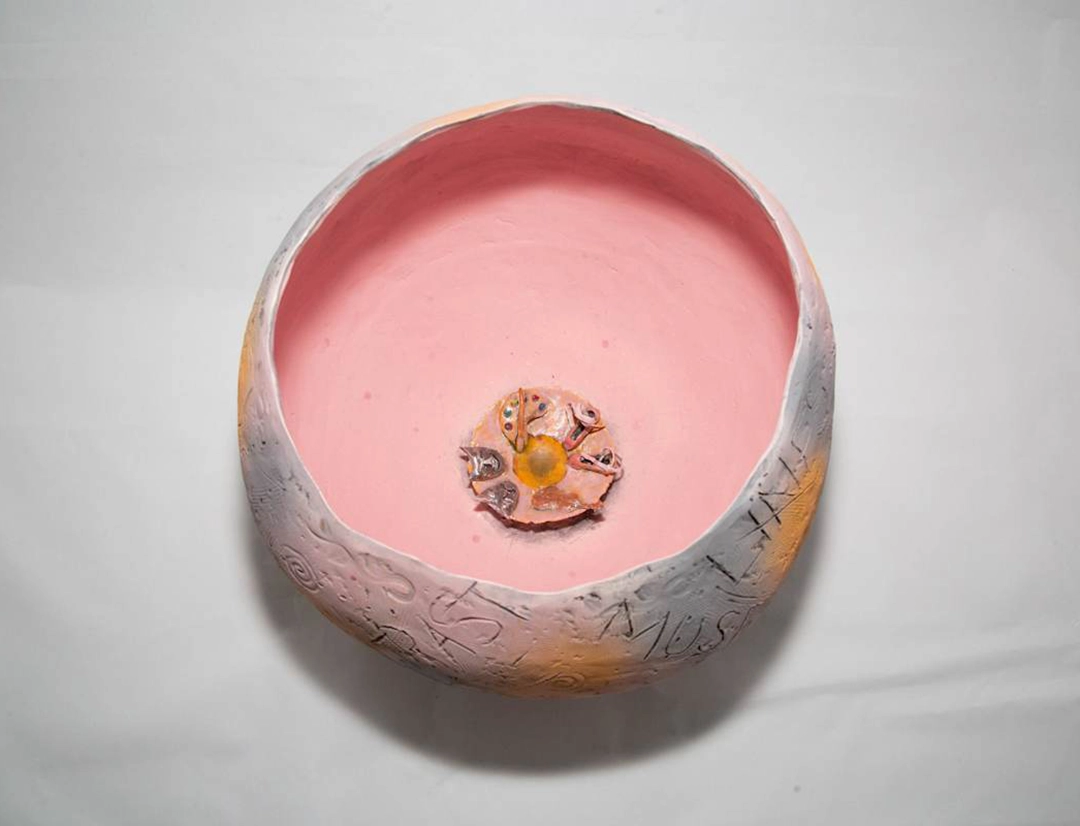
Bowl of Art by Tracey McClorey
In Judith Effa Ford’s work, the altar and assemblage allow another approach. Reclaimed objects, fragments of jewelry and fabrics find an arrangement through which they acquire meaning anew. In Tracy Casagrande Clancy’s work, layers of wax fuse through heat and safeguard the materials incorporated within them. Her references to shelter and the human figure give that material operation a resonance that deserves examination. These are examples through which the idea of the vessel begins to take substance, and through which it can continue to be considered.
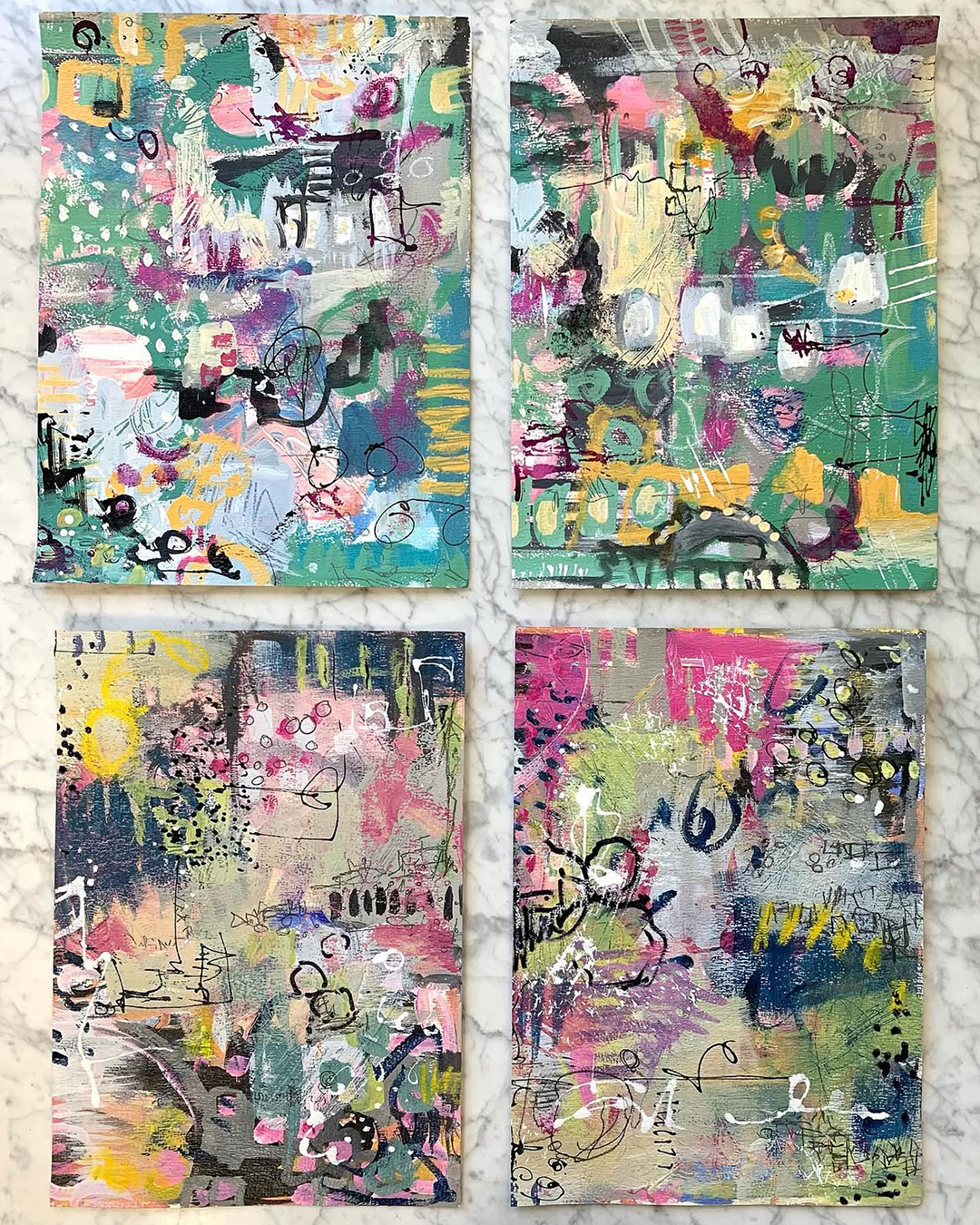
Sky Dreams by Judith Effa Ford
Extending it to all the artists requires restraint. A form that protects a memory, a surface that incorporates emotionally charged fragments and a space that receives the public allow for many relationships, but those relationships will contain differences. The hypothesis remains useful as long as it allows something to be discovered in the works. Its development requires attention to the singularity of each and a choice of the moments in which that relationship becomes perceptible.
The biographies offer another way into the same problem. Several of these artists have worked in education, mental health, bereavement support or human services. Those experiences help us understand the importance they attach to the effect of their work on other people. Receiving, listening, accompanying. They also allow us to ask what remains of those professions when attention shifts toward a form, a material or an image. In each trajectory, the answer will have its own measure.
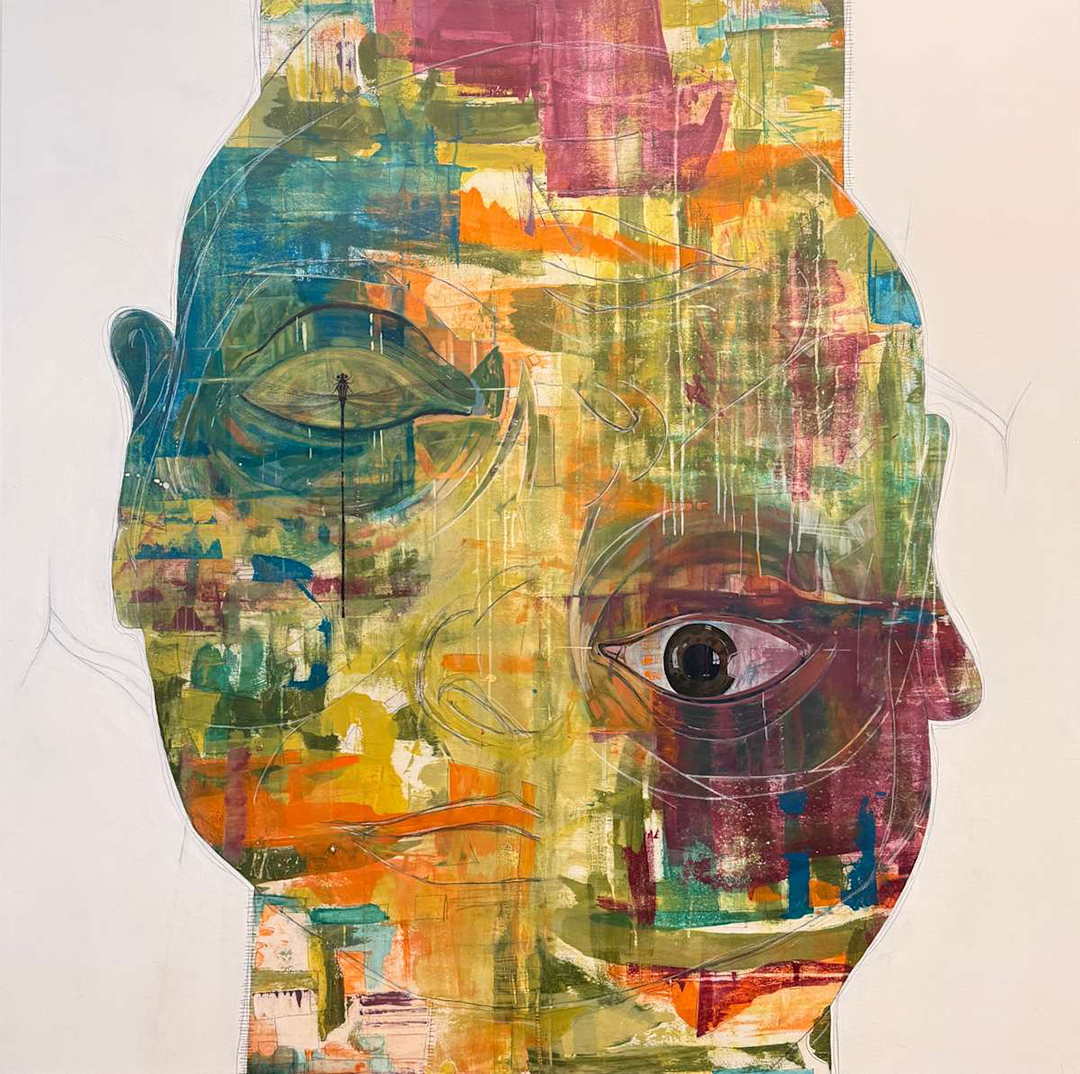
Duality I by Tracy Casagrande Clancy
Loss runs through several of those experiences and reappears in some of their works. Its relationship with care has a particular force, because it compels us to consider how to attend to what a person can barely manage to hold. The vessel can then acquire a symbolic meaning. A form capable of holding memory, of offering pain a place or of making shareable an experience that seemed confined within the person living it. That possibility comes close to what Rhodes describes when she speaks of suffering as a bond.
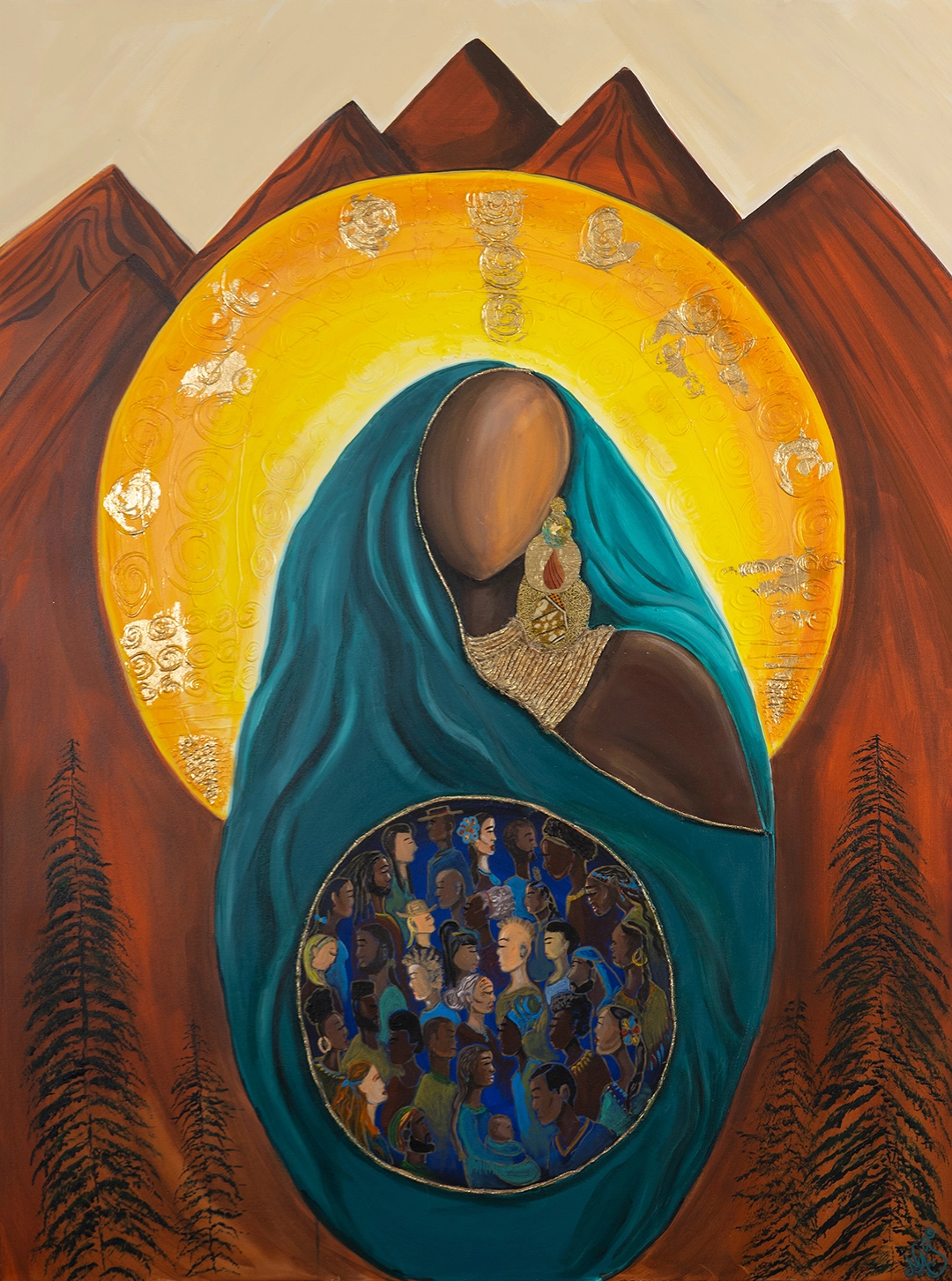
Birthing Unity by Naj-Janice Frierson-Edwards,
Cincinnati can also be understood through that capacity to welcome. Studios, artists’ associations, cultural centers and galleries provide places where a practice finds continuity and a relationship with others. The city enters the exhibition through those conditions of existence and, as Rhodes’s triptych shows, through experiences that elicit an artistic response. Its presence changes scale, from the space that houses a community to the life of a person who needs to be seen.
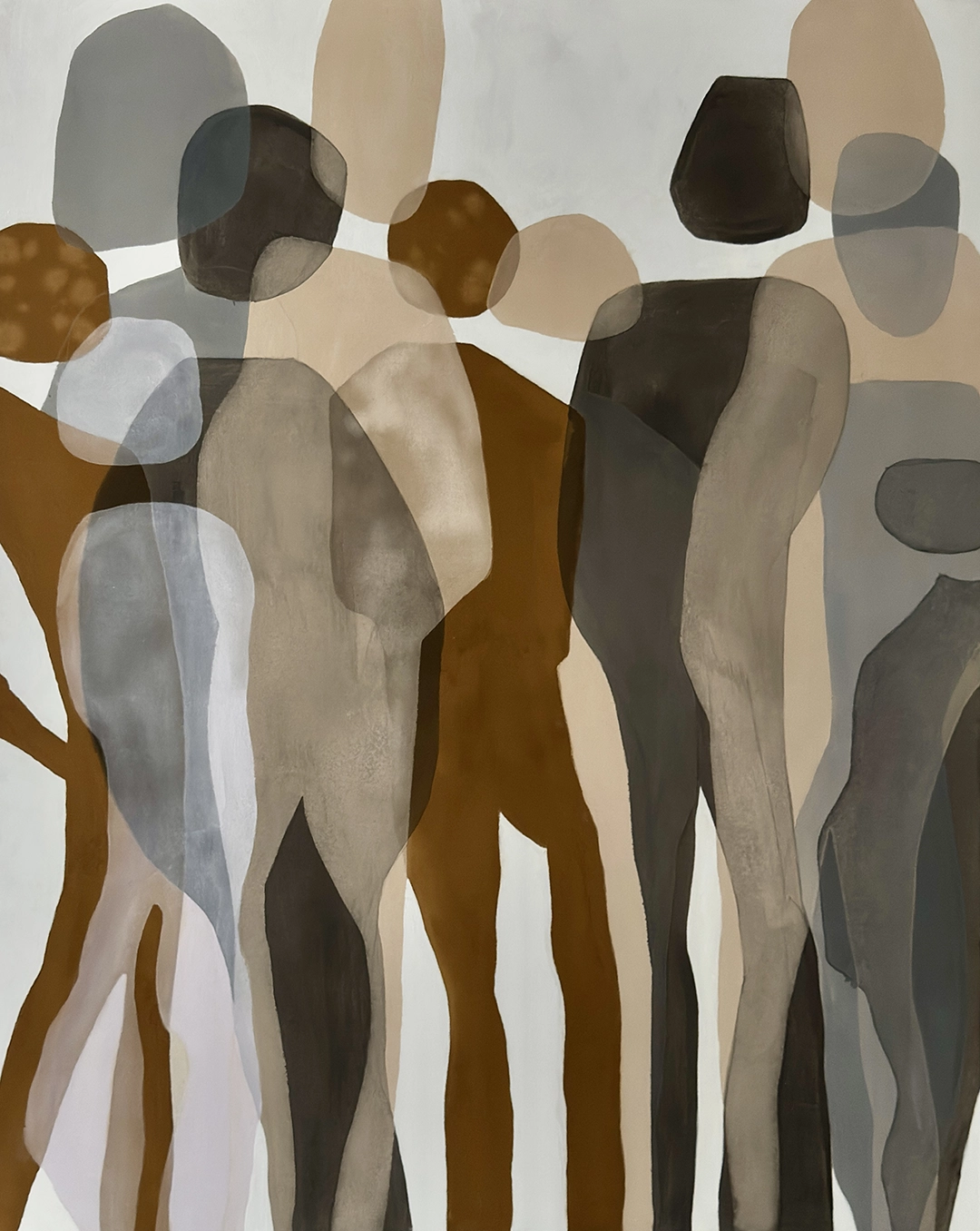
Geometry of Belonging by Carol MacConnell
The unity the exhibition proposes therefore allows a reading through belonging and another through the forms that make it possible. Mary emphasized the desire to broaden the concept and open it to the visitor’s experience. My own path pauses, for the moment, at the capacity to receive, preserve and sustain that I find in some of these works. Both perspectives can accompany one another while leaving room for the one each observer is able to shape.
Before each personal poetics, before particular pieces, I would like to ask myself what they wish to grant protection and shelter to. Also what position is occupied by the person who interacts with them and what kind of relationship is offered. Moving through the exhibition with those questions allows unity to be thought of as a practice that unfolds in ways that are not necessarily unified. But the sky they share, in the title, is immeasurable and can be the place from which those differences recognize one another and find room.
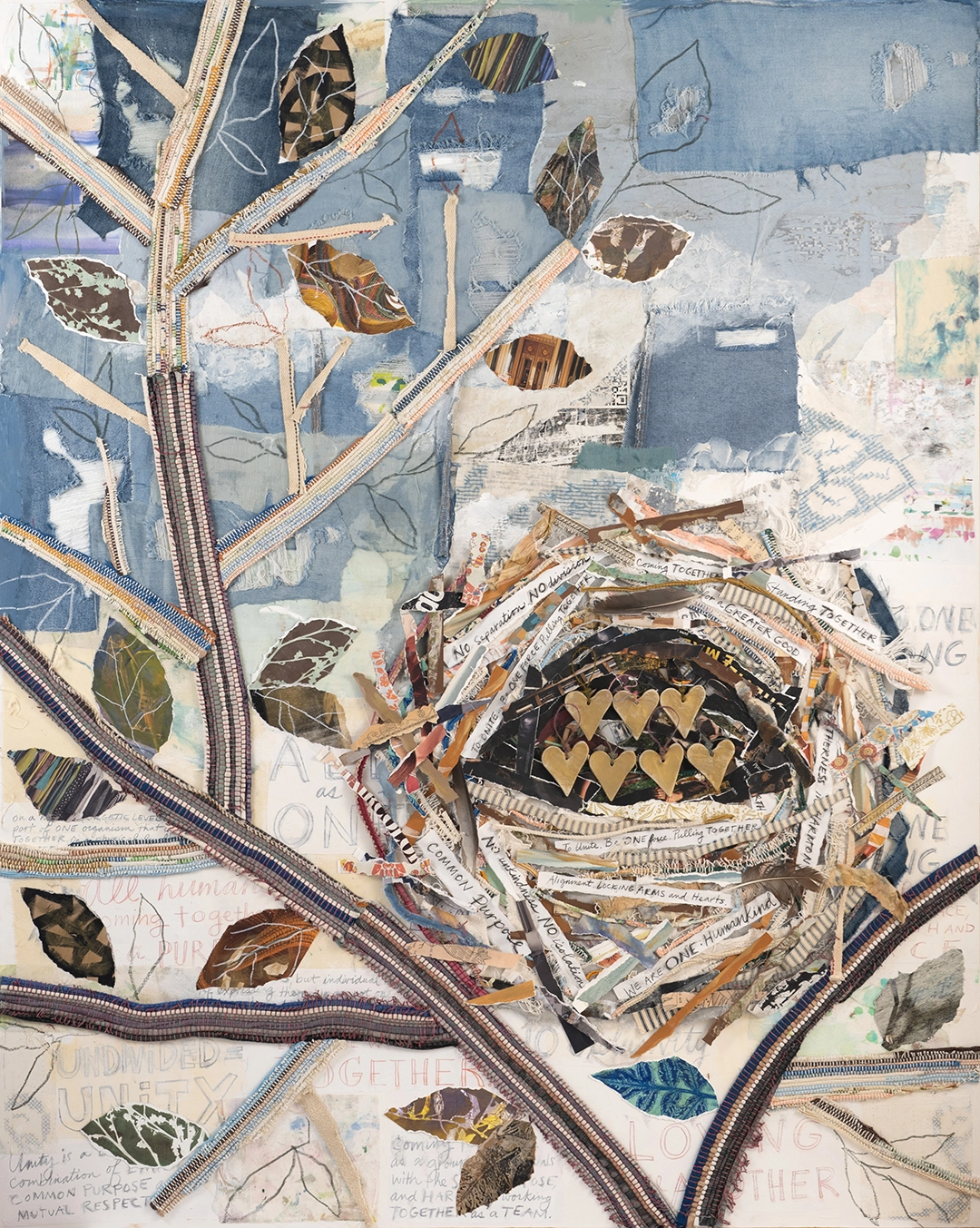
What Holds Us Together by Lori Siebert




If you’re a regular reader of this blog and enjoy its content, you might consider contributing to its upkeep. Any amount, no matter how small, will be warmly appreciated
Founded in 2021, Echoes (Notes of Visual Narrative) invites everyone to explore together the visual codes that shape our world—art, photography, design, and advertising in dialogue with society.

Copyright © 2026 r10studio.com. All Rights Reserved. Website Powered by r10studio.com
Cincinnati, Ohio
Comments powered by Talkyard.