
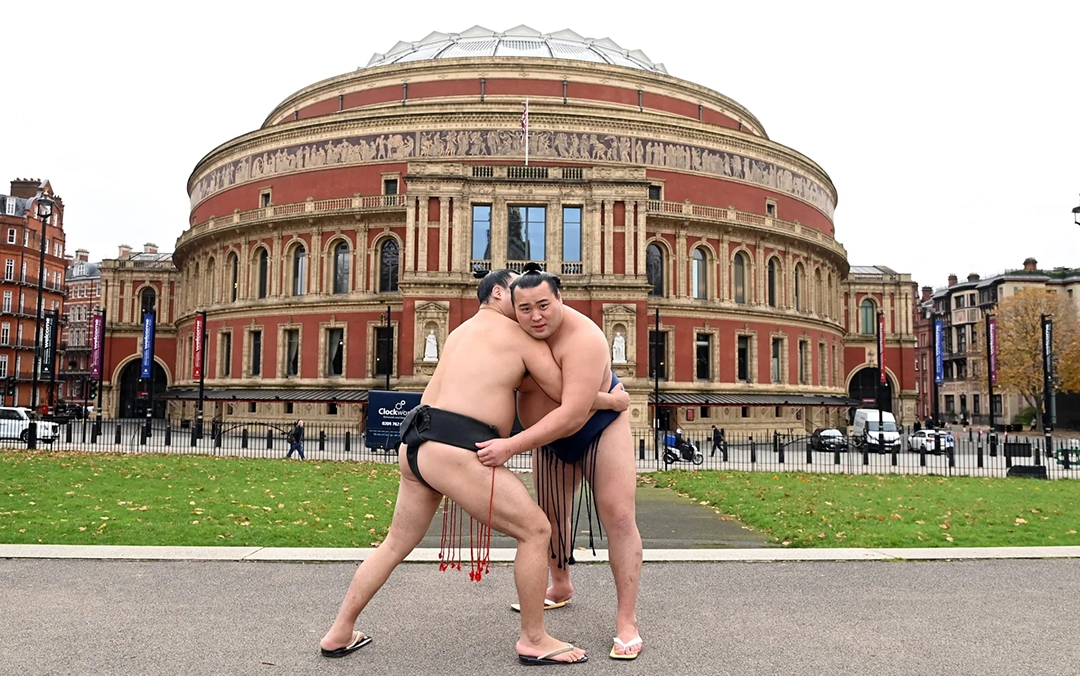
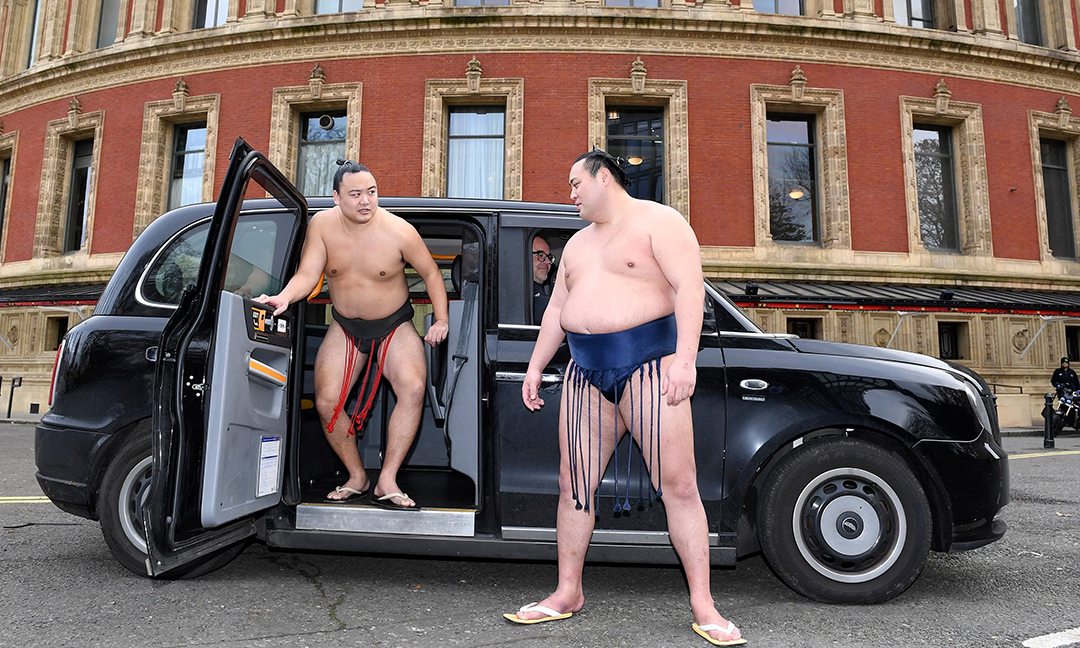
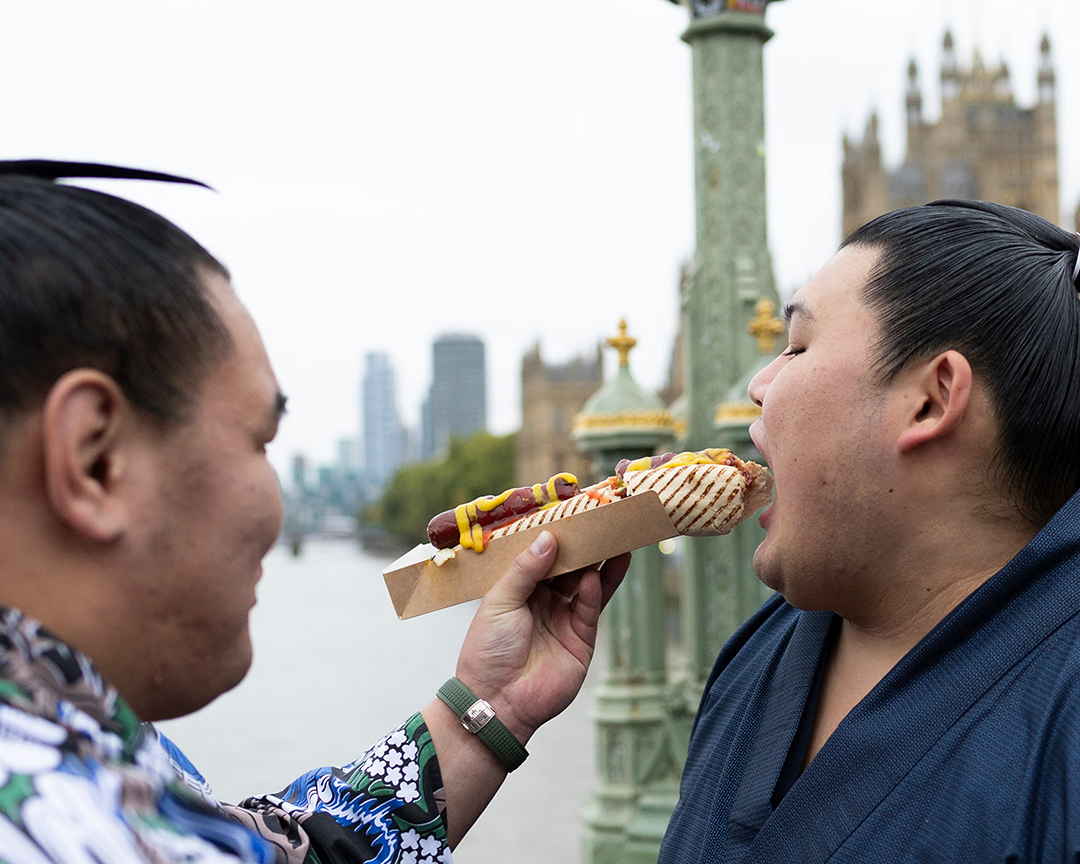
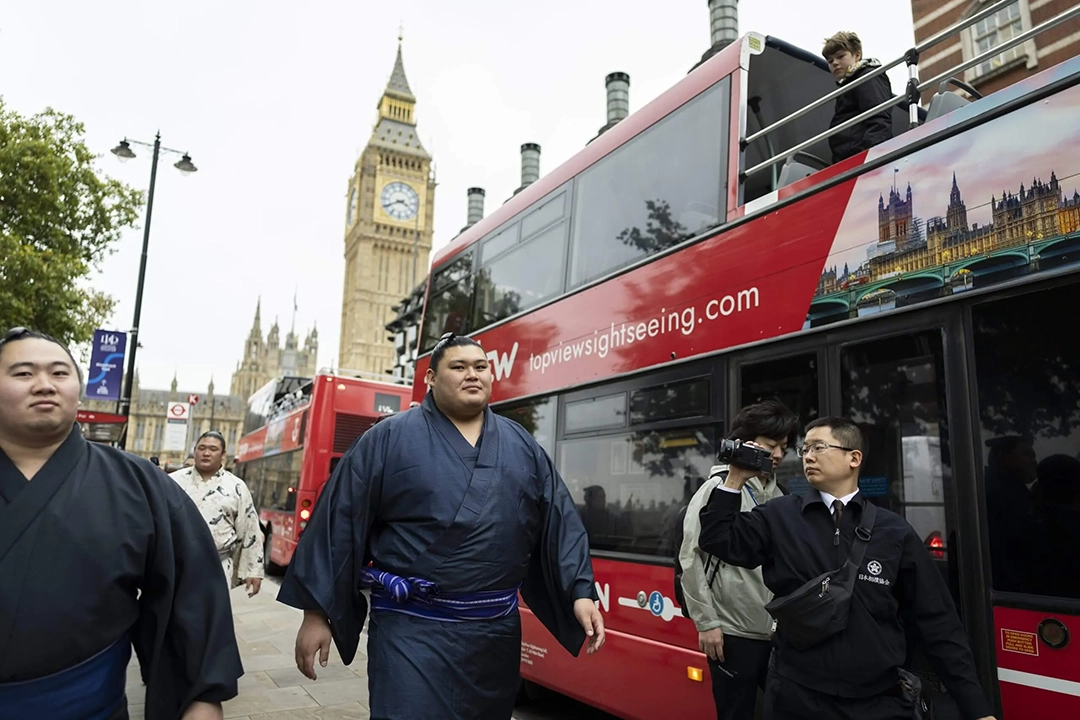
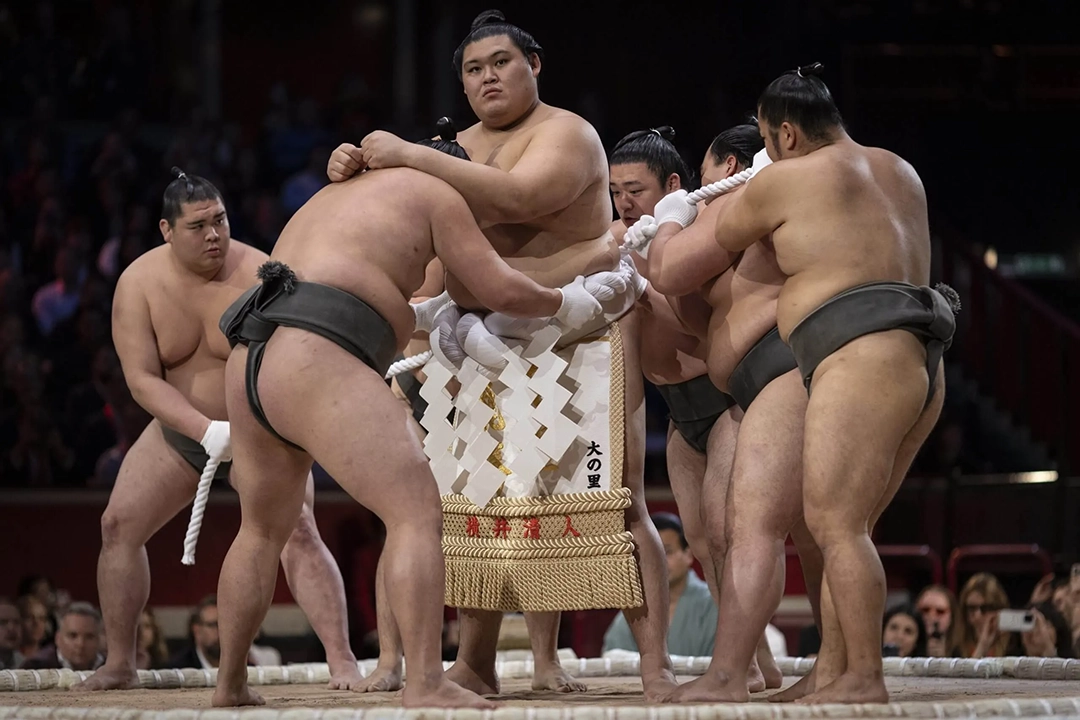
Wrestlers from the Japan Sumo Association (Nihon Sumo Kyokai) pose outside London’s Royal Albert Hall to promote the October 2025 Grand Sumo Tournament.
Photo: Justin Goff/Getty Images.
As a child, one of the things that most impressed me was watching Toshiro Mifune swiftly sheathe his sword after his swift and bloody executions. I cannot know, of course, whether he did it better or worse than his ferocious ancestors, but his smooth, exact movement left no room for doubt. Sheathing the sword is an exercise with a name of its own, like almost everything in Japan: nōtō. It is a deliberate act of precision and elegance. The tip of the katana rises intuitively, sniffs out the saya—the scabbard—finds its opening and slides inside until a click of pleasure consummates the encounter. All this while the severed head is still wondering whose body that is, writhing beside it.

Toshirō Mifune as Sanjūrō Kuwabatake in Yojimbo (1961), directed by Akira Kurosawa. A wandering rōnin who offers his services as a bodyguard in a town dominated by two rival gangs, manipulating their conflict with cunning and lethal skill with the katana.
I was also drawn to the enormous-eyed Japanese princesses who starred in anime films. And when the Japanese women’s volleyball team won bronze at the Los Angeles Olympics, I told my mother I was going to Japan.
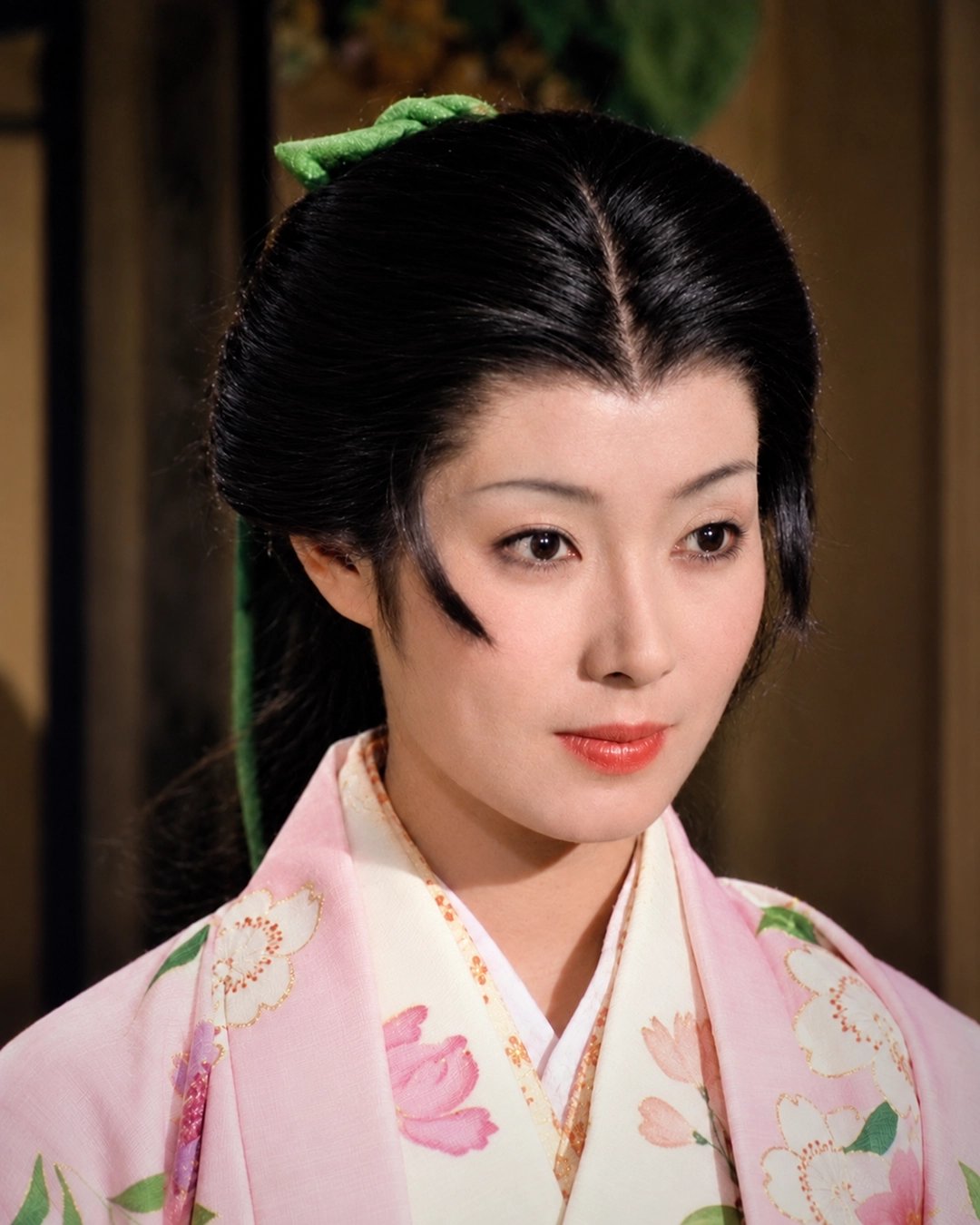
Yōko Shimada as Toda Mariko, Mariko-sama, in the miniseries Shōgun (1980), directed by Jerry London and based on the novel by James Clavell. A Japanese noblewoman who has converted to Christianity, she serves as John Blackthorne’s interpreter and becomes romantically involved with him, their relationship threaded through with her family obligations and her loyalty to Lord Toranaga.
Years later I fell in love with Mariko-sama, the character Yoko Shimada brought to life in 1980 for the first version of Shōgun, simply because she reminded me of a girl I liked to the point of madness.
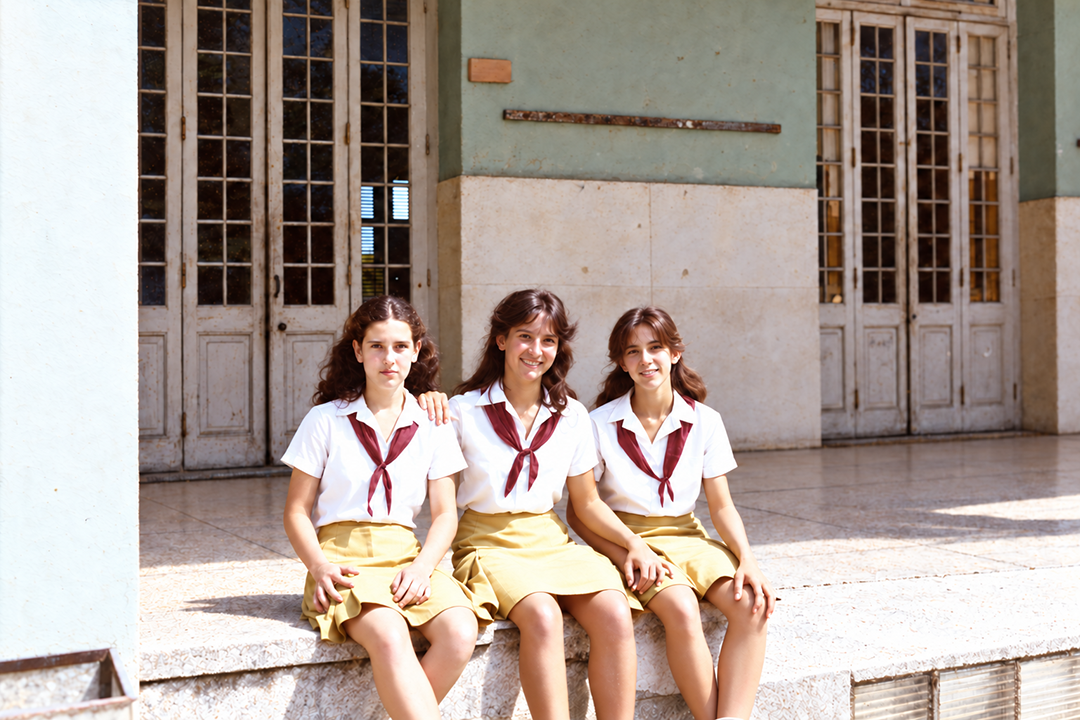
In the early eighties, one of these girls—the one who bore a resemblance to Mariko-sama, though I couldn’t say which one now—plunged me into one of the most persistent bouts of insomnia of my life, into a sphere of cool, Pre-Raphaelite jelly sailing through a sky of diamonds. Youth, divine treasure.
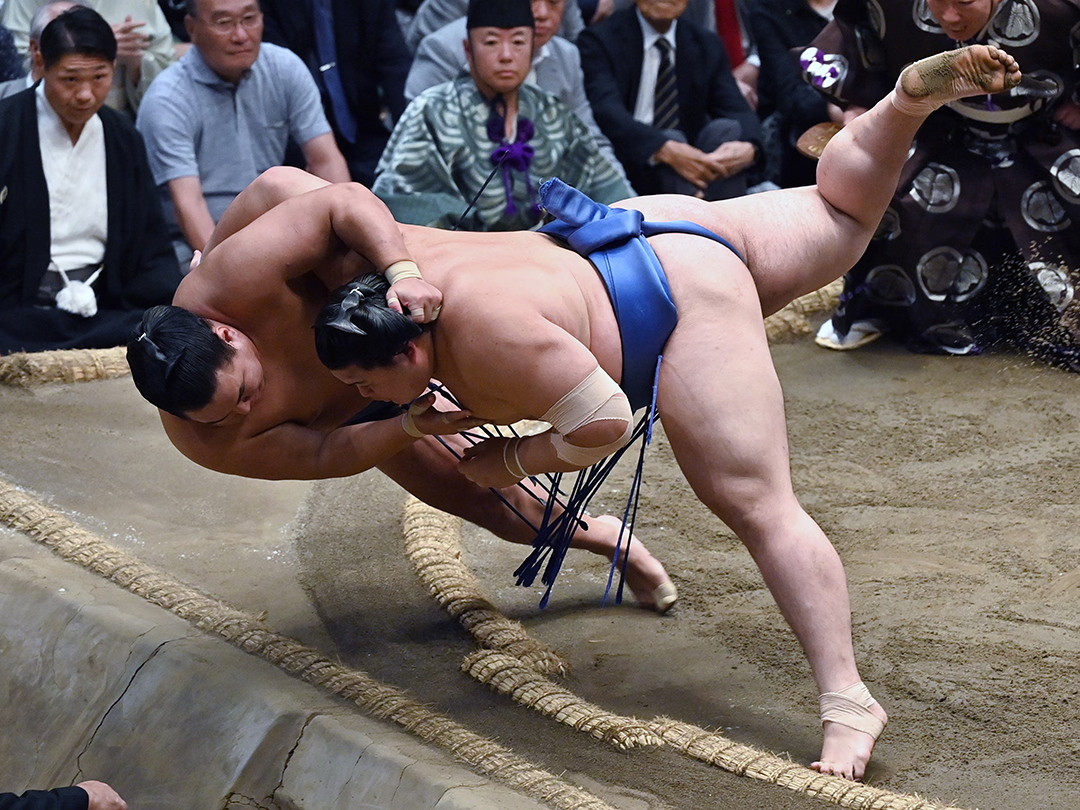
Beyond that, I think of Japan as more of a concept than a country. The list of things I like from there is endless, beginning with the flag. Sumo, however, one of its favourite sports, holds no appeal for me. Perhaps I should make it clear that I like no combat sport. I would not want that to suggest any lack of respect, or that I consider it insignificant. Far from it. Sumo is one of Japan’s oldest and most emblematic traditions, with deep cultural and religious roots reaching back many centuries. For that alone, I would consider studying it with some seriousness. It has been practised for more than 2,000 years, and I have read that it re-enacts the struggle between the gods Takemikazuchi and Takeminakata for control of Ashihara no Nakatsukuni—the Central Land of Reed Plains—the earthly realm that represents mythological Japan. There is much to say about sumo, all of it impressive, but I want to concentrate on the rikishi, its protagonists.
They are sophisticated and exceedingly well-mannered. Decent people, spiritual, cultivated, refined—rather generously proportioned, actually. A sumo wrestler leads the life his discipline demands. They live in quarters known as heya, where they train according to the strictest rules of conduct and hierarchy. To maintain the elephantine weight they need to push the other man, they endlessly consume a scalding, emotional soup called chanko-nabe. From dawn onwards they strain, push and drink soup until they attain the rank of yokozuna, the most prestigious and honourable title. These are wrestlers who live for their favourite tournament, the honbasho, held every two months in Tokyo, Osaka and other equally legendary cities.
How do you imagine a yokozuna sees himself? I cannot know, but others perceive him as a monumental being, almost a heritage asset. A living institution that admits of no degradation. Should he have the misfortune to develop chronic pain, recurring body odour or a raging case of eczema, he will retire of his own accord, out of respect for the title. He is a living god.
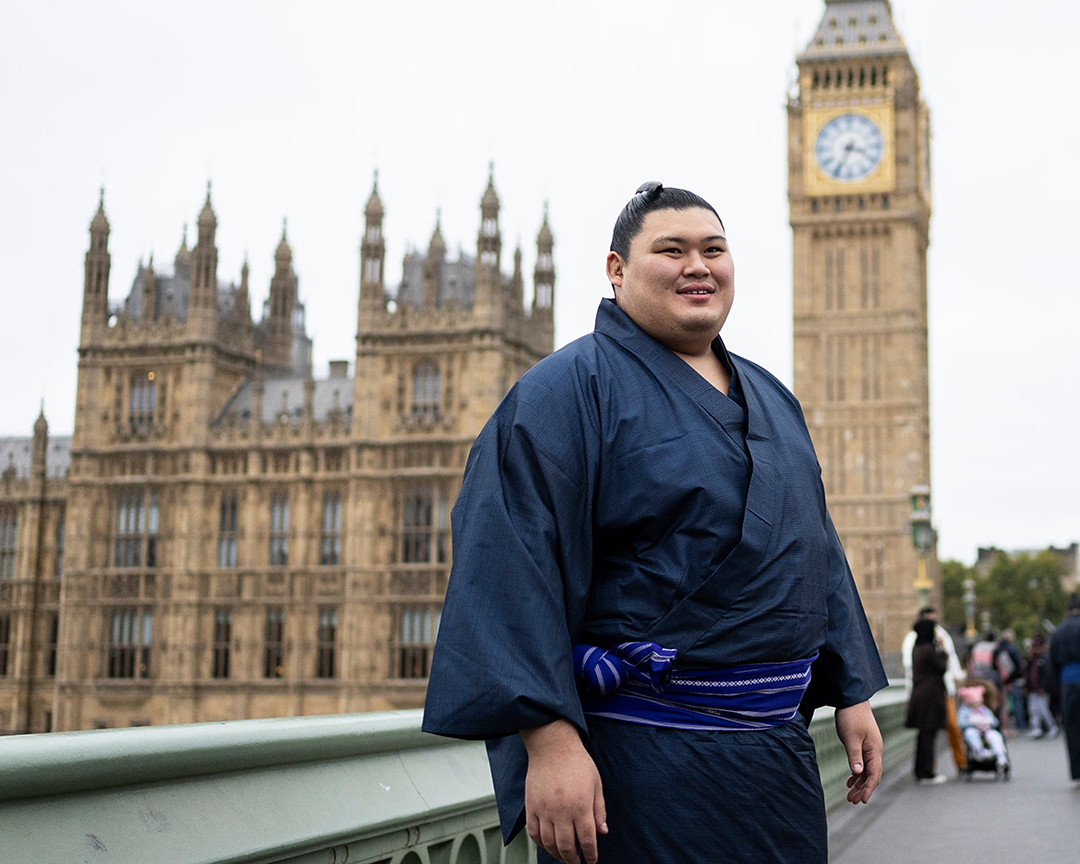
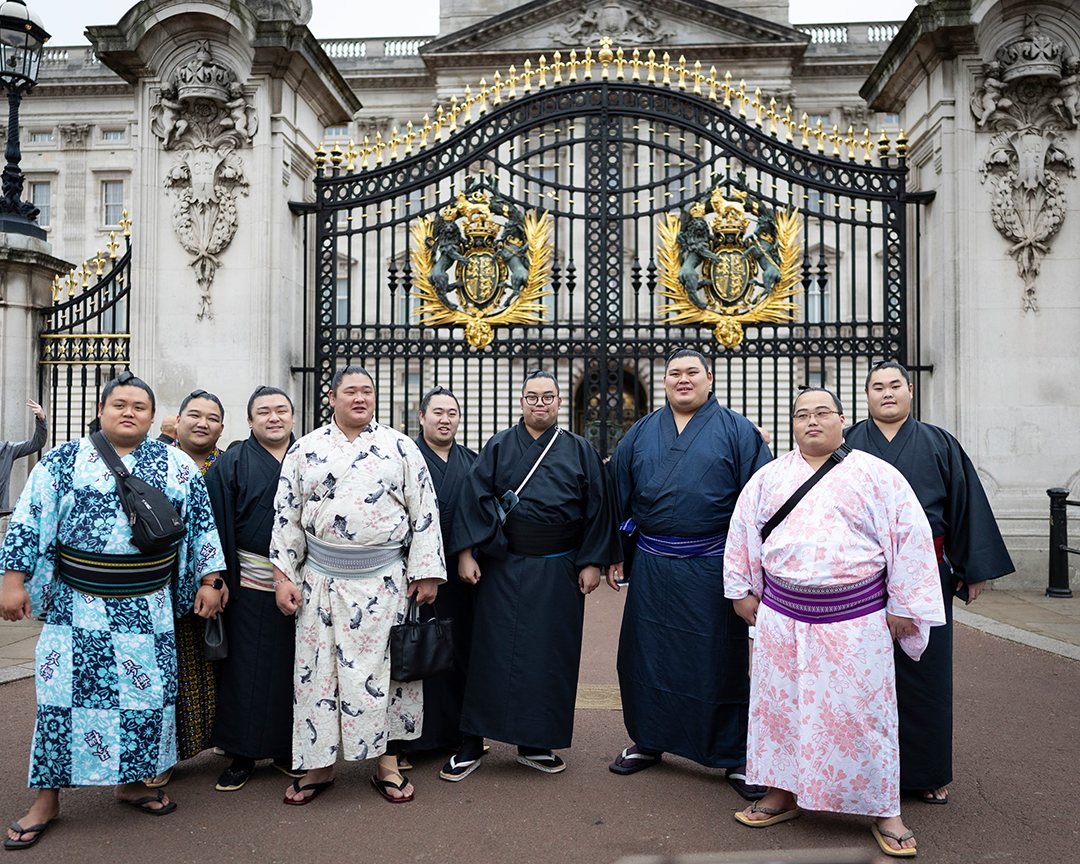
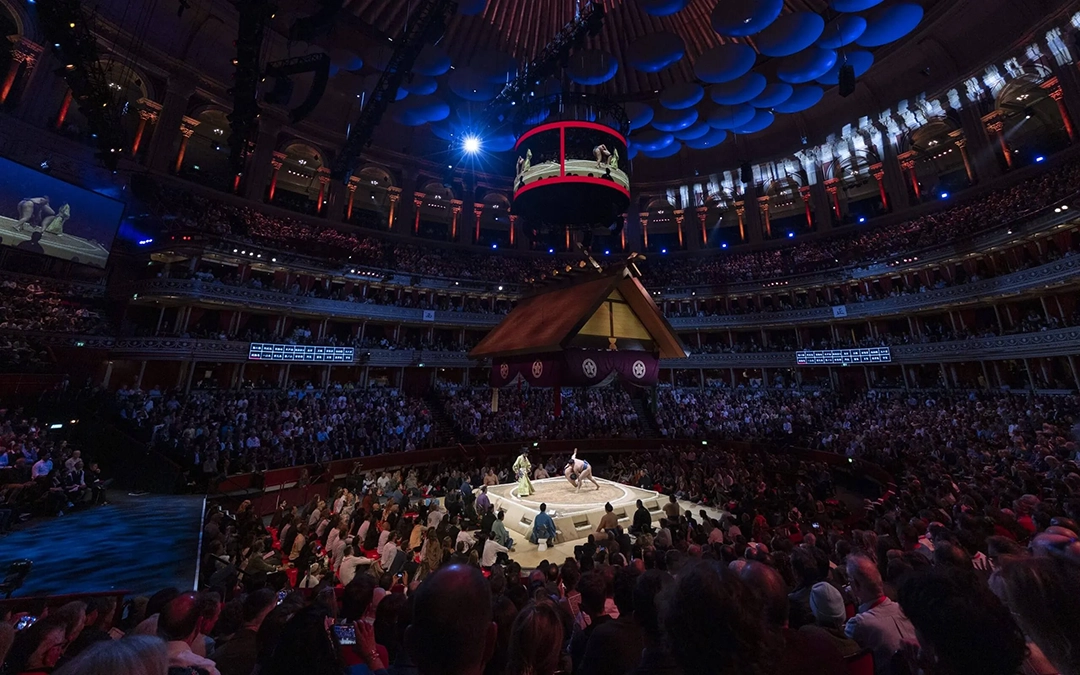
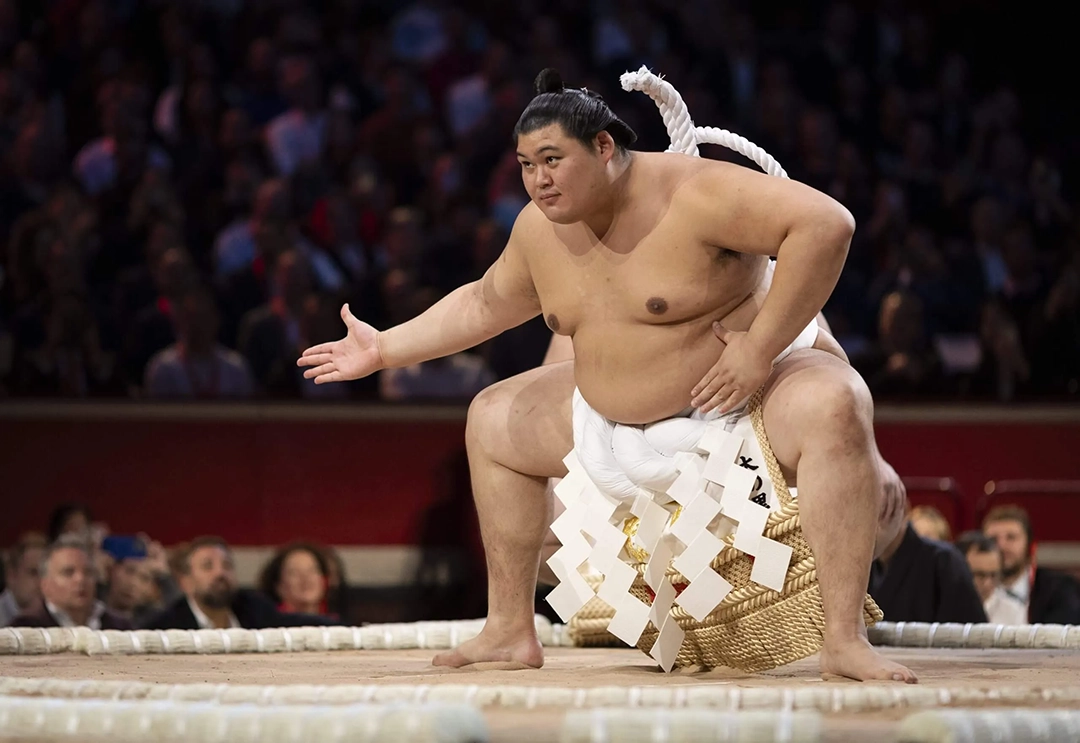
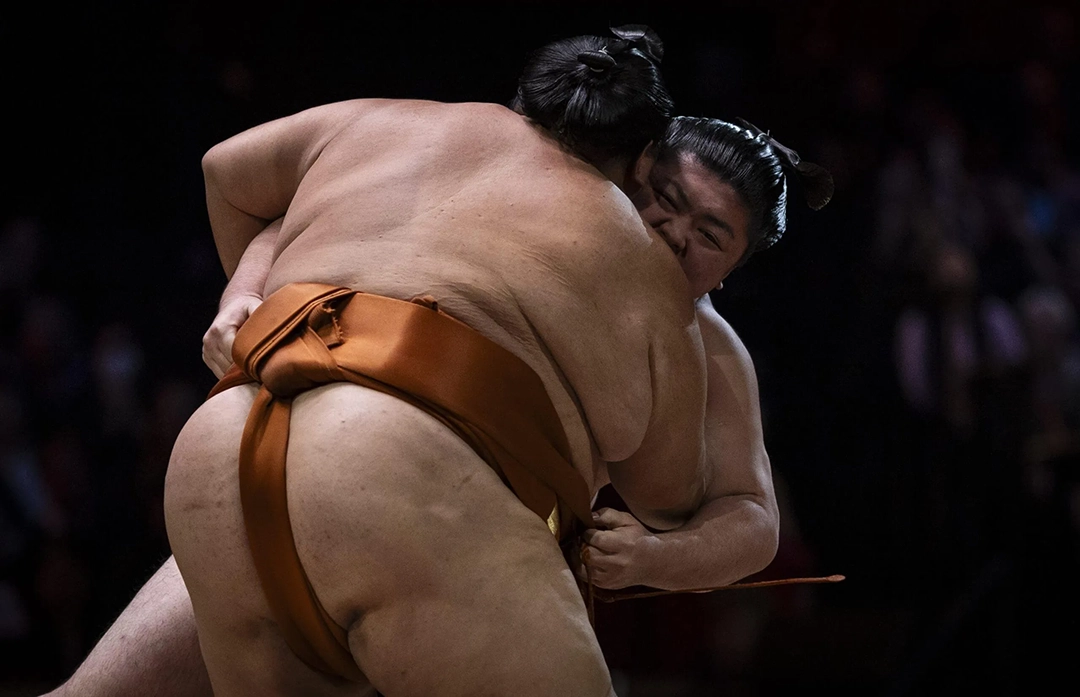
Next year, a professional sumo event will be held outside Japan. It happened once before, in 1991, when the world was far less media-driven. Once again, at London’s Royal Albert Hall, to mark the centenary of the Japan Sumo Association, Nihon Sumo Kyokai. A basho in every respect. To promote the event, the Anglo-Saxons imported, on a returnable basis, a pair of masters whom they subjected to a lengthy outdoor photo shoot, barely covered by their mawashi.
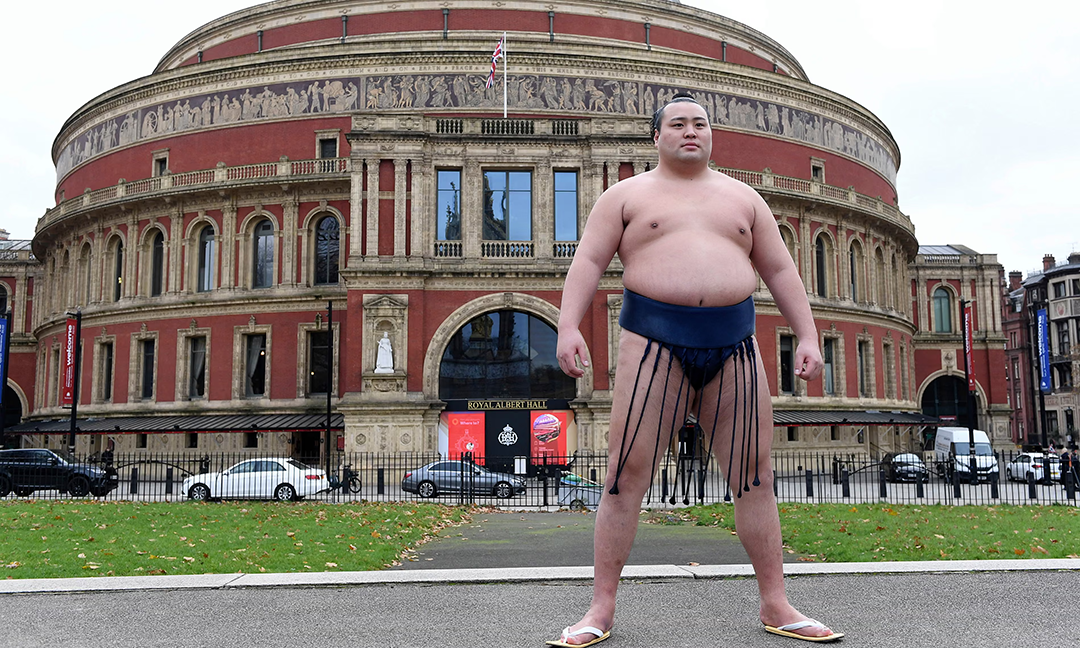
In the photograph we see one of them. He looks into the camera. His expression brings tears to my eyes, and they are not tears of laughter. The rikishi looks at the photographer with such incredulity that it is almost a plea. He endures the humiliation of posing in front of an empty theatre, in full view of dozens upon dozens of casual passers-by. Few will know what it is all about. To most, he is a crazy Chinese man in a loincloth arguing with another over a penny. The rikishi is about to cry. He knows times are hard and funds must be found to buy the ingredients for the mythical soup. Just as the fairs of old exhibited the dwarf, the bearded lady, the fakir, the fattest woman in the world, the thinnest man, the Siamese twins, the savage, the snake charmer... the carnival that this disrespectful world has become exhibits two obese, hairless foreigners grappling ‘out of context’, ‘for’ the Westerner’s delight and, at the end of it all, the ring-ting-ting of coins.
Japan accords each of its traditions profound respect, honours each of its practices with devotion and treats its imperfection with a delicacy as unusual as it is moving. Its practice of kintsugi—the art of repairing broken ceramics with gold—is astonishing precisely because it seeks to highlight the fracture. The West moves in the opposite direction, trivialising everything. It has adopted, in its light, decaffeinated, lactose-free version, some of Japan’s most ancient ceremonies and rituals, reducing them to an almost idle amusement. In this way it imitates the practice of chanoyu—the tea ceremony—ikebana, aikido, shodo—the art of calligraphy—and origami, leaving their soul meowing at the door. Sumo has escaped this treatment; who would think of getting that fat to push another fat man? Not at all, Sir! But sumo is both a sport and a rite deeply rooted in Shinto spirituality. It connects directly with ancient local rituals. I hope it never happens... but gestures such as these can kill what remains, as it stands today, an institution rooted in the heart of Japan. When the institution itself begins to stop taking itself seriously, things are bad. It starts to smell like a circus.
P.S.
1 – When I arrived in the United States, I studied the practice of sumo in some depth for a collectibles project—stamps, among other things—within a larger undertaking intended for the metaverse.
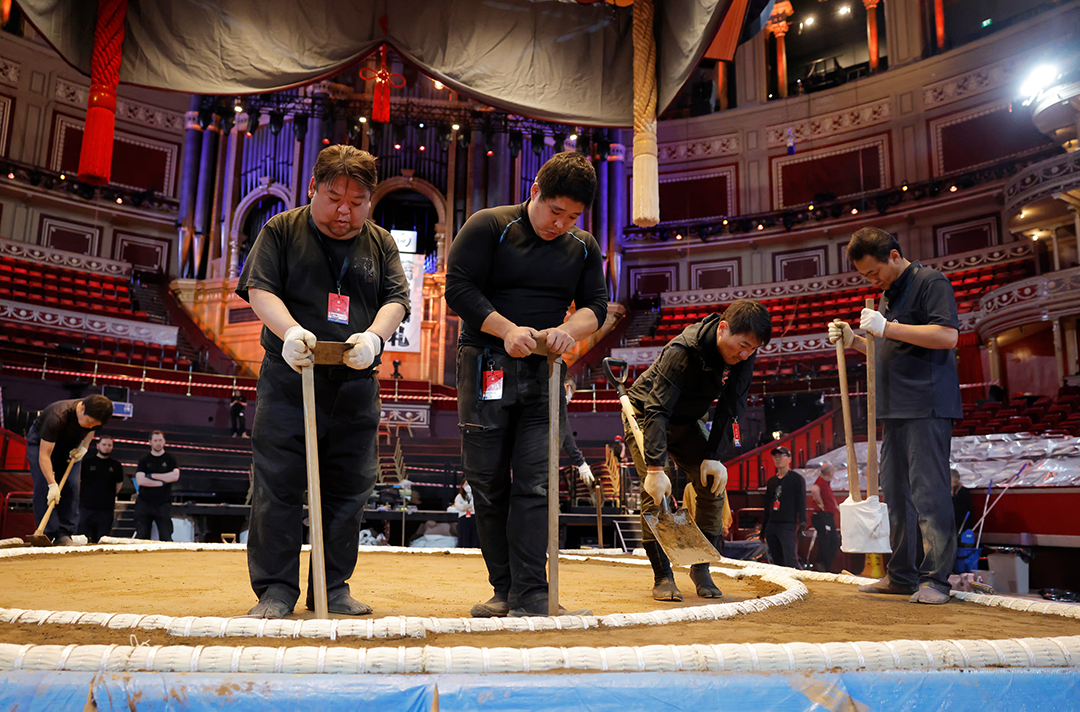
2 – The first tournament, held from October 9 to 13, 1991, was organised as part of the 1991 Japan Festival in the United Kingdom. Meticulous measures were taken to preserve its authenticity, including importing a giant drum and the ceremonial canopy (yokata) from Japan, and constructing the dohyo—the wrestling ring—with a particular clay sourced from a quarry near Heathrow Airport. Japan’s top 40 rikishi—wrestlers—took part, including two yokozuna—grand champions—Asahifuji and Hokutoumi. One of the main attractions was Konishiki, who at the time was the heaviest sumo wrestler in history, weighing 238 kg. The event drew crowds, with tickets for seats closest to the dohyo exceeding £100. The Royal Albert Hall, with a capacity of 5,000, was almost completely full throughout the five days of the tournament. The tournament was a ‘milestone’ in the history of sumo and a significant cultural bridge between Japan and the United Kingdom, allowing British audiences to experience the traditions and rituals of this ancient Japanese sport at close quarters. The quotation marks are mine.




If you’re a regular reader of this blog and enjoy its content, you might consider contributing to its upkeep. Any amount, no matter how small, will be warmly appreciated
Founded in 2021, Echoes (Notes of Visual Narrative) invites everyone to explore together the visual codes that shape our world—art, photography, design, and advertising in dialogue with society.

Copyright © 2026 r10studio.com. All Rights Reserved. Website Powered by r10studio.com
Cincinnati, Ohio


Comments powered by Talkyard.