
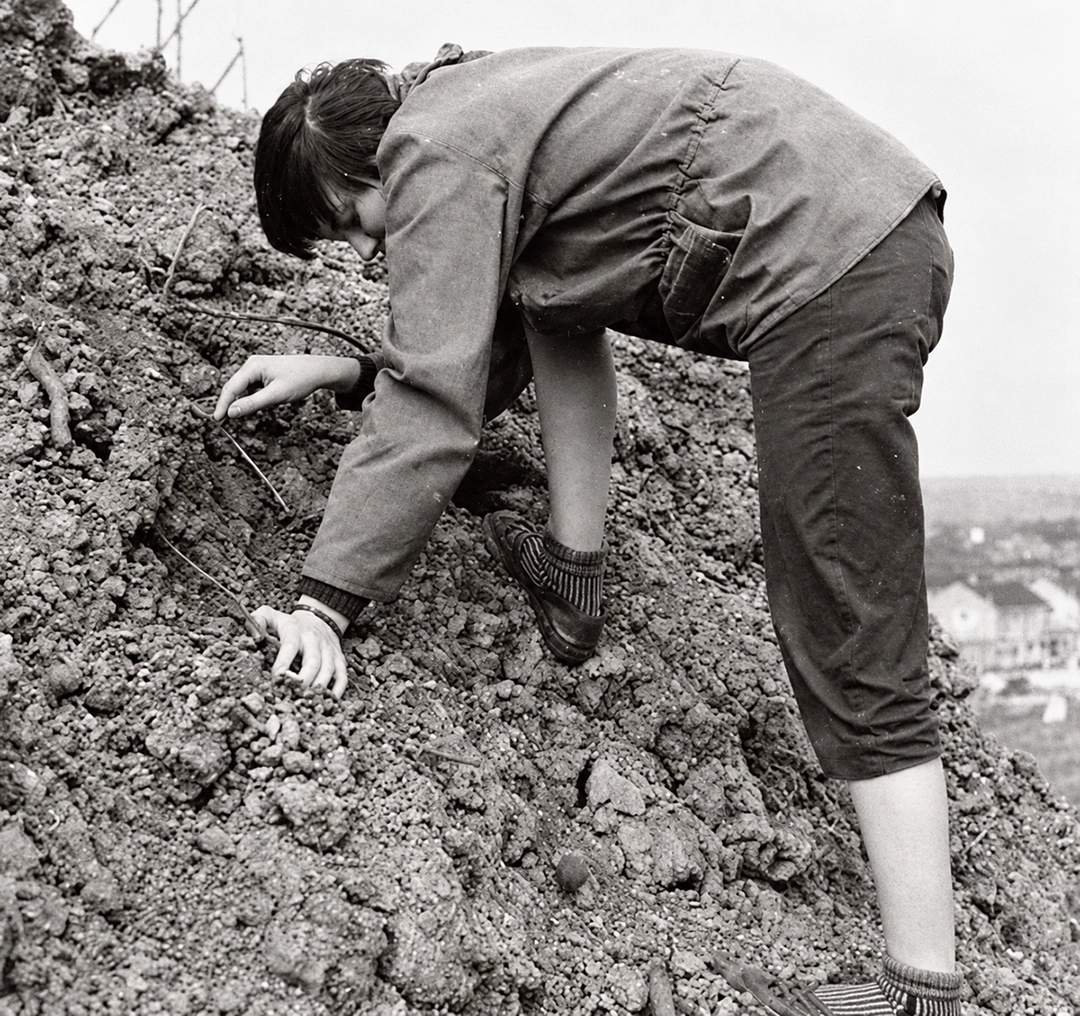
I want to offer my congratulations to the women I want to congratulate with a little-known story. It is the story of Cristina Negus, an English girl in the middle of the twentieth century who, from the time she was very small, felt an enormous attraction to fossils. Tina regularly went to look at them in an abandoned quarry near her home, in Grantham, Lincolnshire. There were piles of ammonites and all kinds of creatures from the Upper Liassic. Years later, when she reached adolescence, she managed to get her parents to take her to Charnwood Forest, where there was another quarry, with older volcanic-ash sediments, from the time when that whole area lay beneath the sea. This was June 1956, just as the United States was detonating atomic bombs every two or three days across the most varied and sundry Pacific atolls, destroying evidence of prehistoric and contemporary animal life.
Tina knew the rocks there predated the Cambrian, and she also knew that precisely for that reason she should find no traces of animal life in them. At that dispiriting moment, the very thick books, the scholars as fat as the books, and all the world’s intelligence maintained that complex, multicellular, perceptible life had begun in the Cambrian and diversified in its famous explosion.
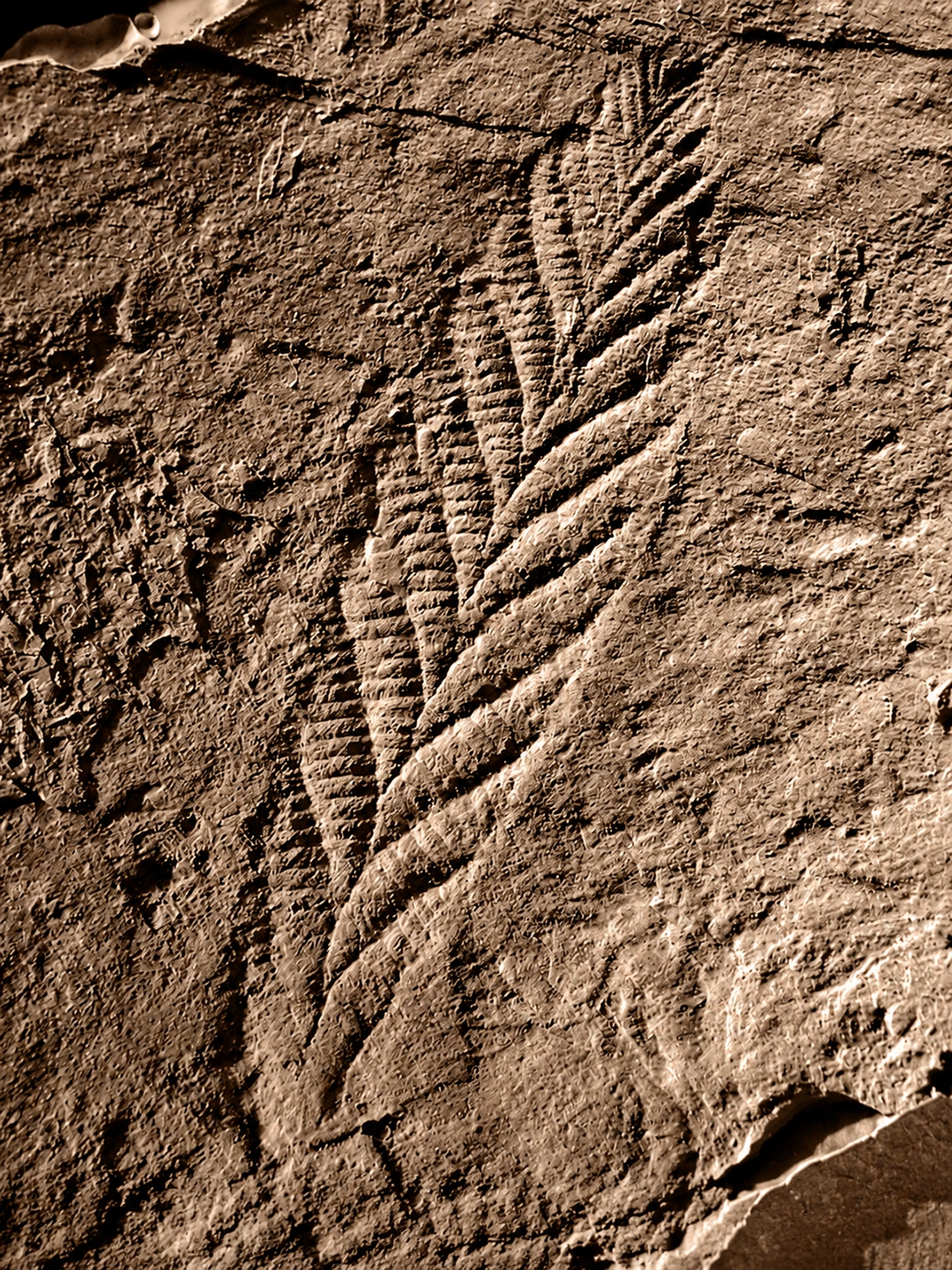
But there, before her eyes, lay a fossil shaped like a garden fern, arrogantly defying the notes in her notebook of momentous discoveries. That formation was not supposed to be there, on rocks so ancient. When this “spongy organism” swayed in the current, anchored to the sea floor, the days lasted 22 hours, the year had 400 days, and Charnwood Forest lay near the South Pole.
Tina ran to tell everyone, and of course nobody paid the slightest attention. She tried to extract the fossil as best she could, but rocks more than 600 million years old are hardly there to let themselves be smashed to pieces with little hammers. For the time being, that was the end of her affair with the fossil.
As luck would have it, not long afterward another teenager, also 15, Roger Mason, stumbled across the phenomenon. The difference was that his family had connections to the very fat scholars at the University of Leicester, and in no time they came, dug up the fossil, and took it away along with all the others they found in that primordial quarry. It was Tina—let that be clear—who discovered what would become known as the Ediacaran biota: piles of strange, very strange creatures, early experiments in organic life, almost all of them failed, which swayed and dragged themselves across coastal seabeds for tens of millions of years, far earlier than anyone had thought.
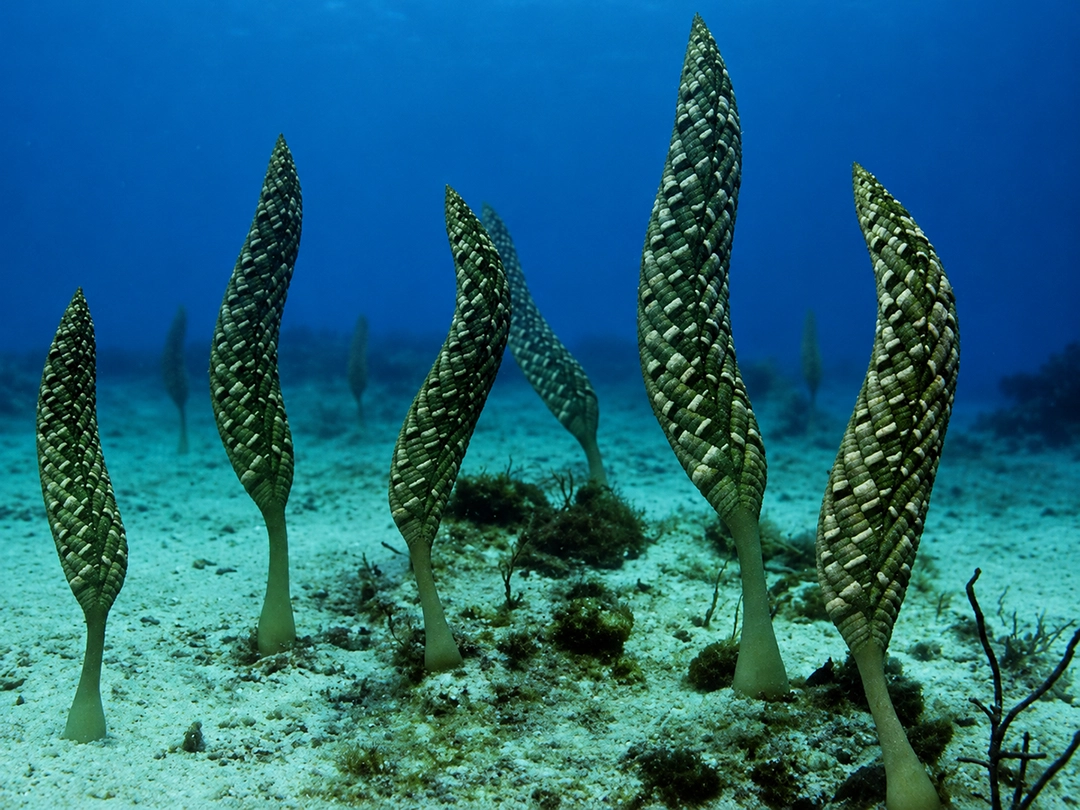
The moral of the story is that this girl is now known, if only a little, because she made a nuisance of herself and pursued her fossil through museums and institutions until she found it at the Oxford University Museum of Natural History. She also graduated in zoology, botany, and geography at Reading, and kept making a ruckus. The famous ones, or the better-known ones, were the fat scholars who posed with the “fresh” fossil, newly cut, on a table. Even the fossil’s name, Charnia masoni, bears the surname of the boy who found it after Tina had already handled it. This story, I have no doubt, is the story of millions of girls who, whatever it was, saw it first, but were busy doing the dishes.





If you’re a regular reader of this blog and enjoy its content, you might consider contributing to its upkeep. Any amount, no matter how small, will be warmly appreciated
Founded in 2021, Echoes (Notes of Visual Narrative) invites everyone to explore together the visual codes that shape our world—art, photography, design, and advertising in dialogue with society.

Copyright © 2026 r10studio.com. All Rights Reserved. Website Powered by r10studio.com
Cincinnati, Ohio

Comments powered by Talkyard.