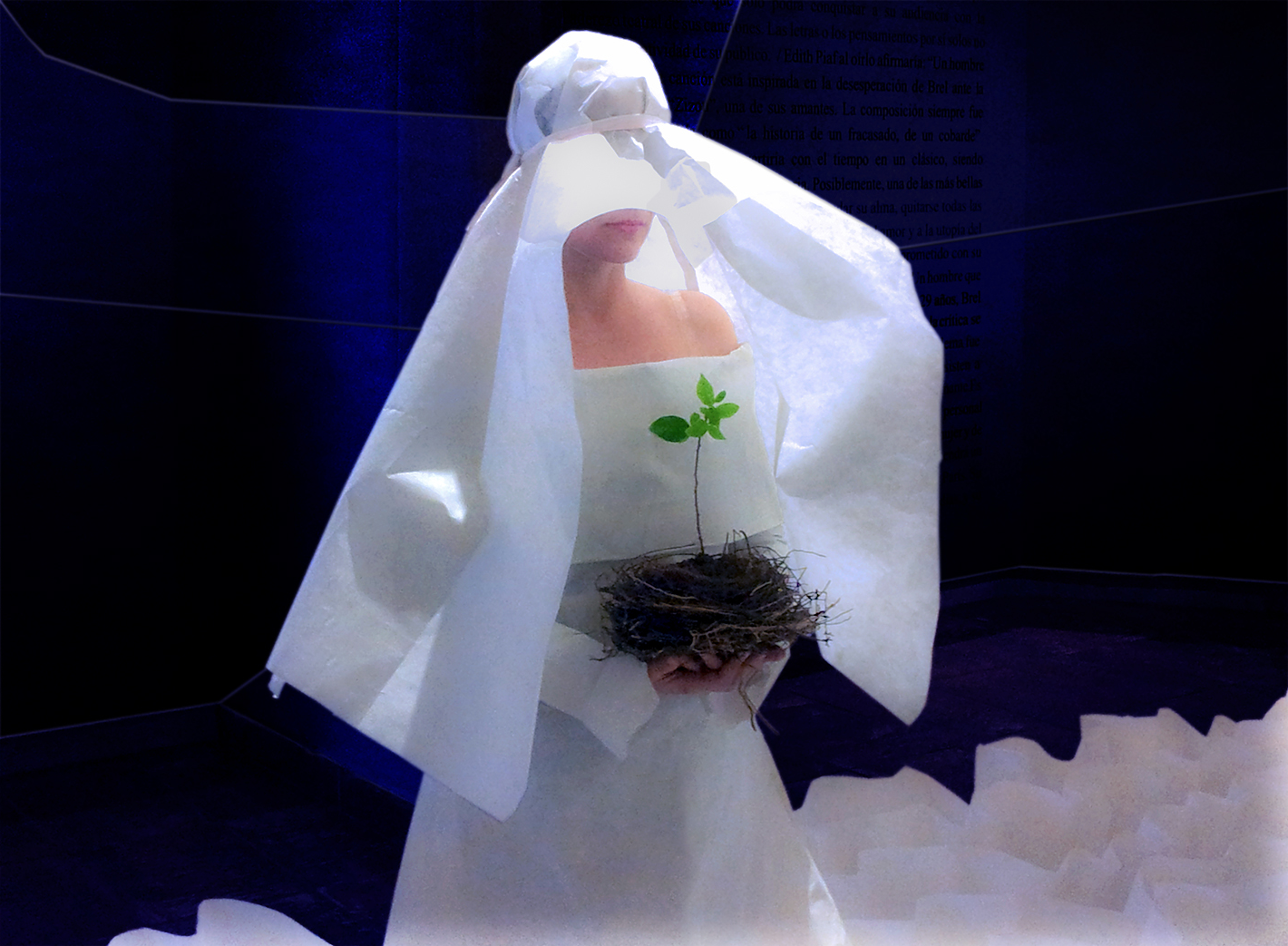
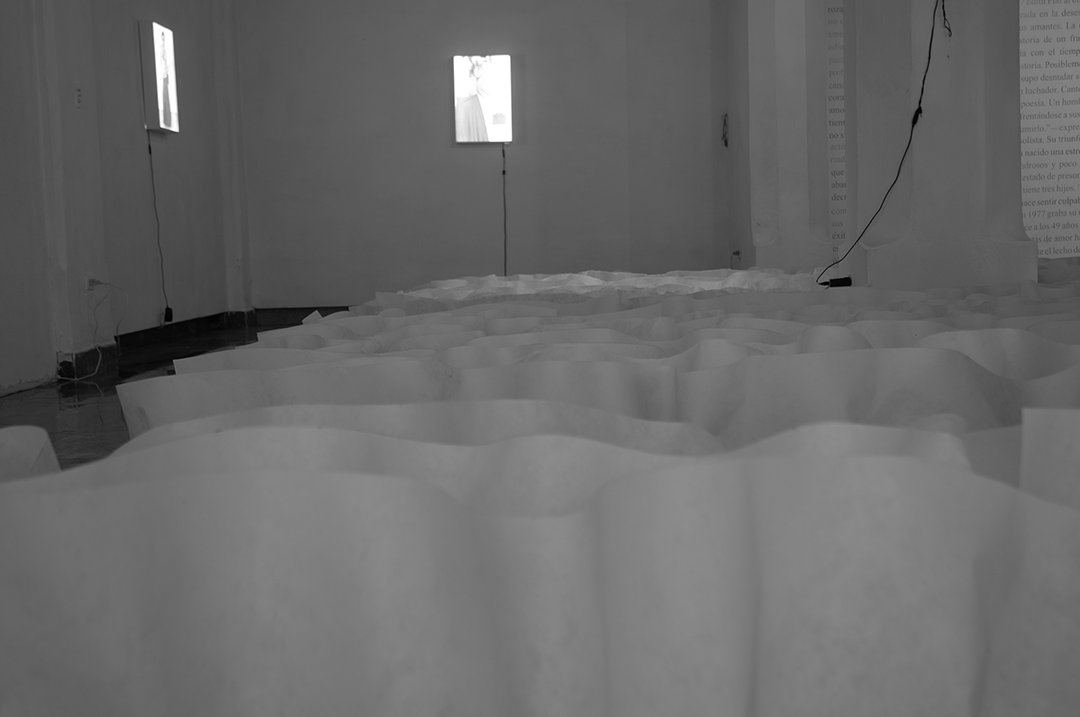
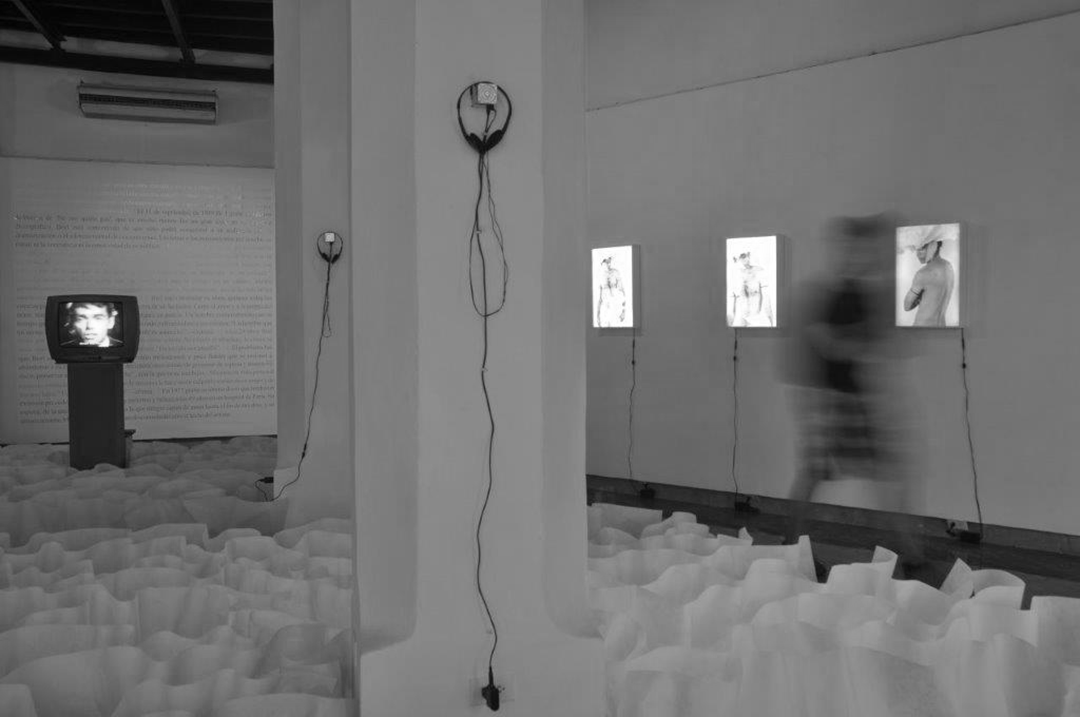
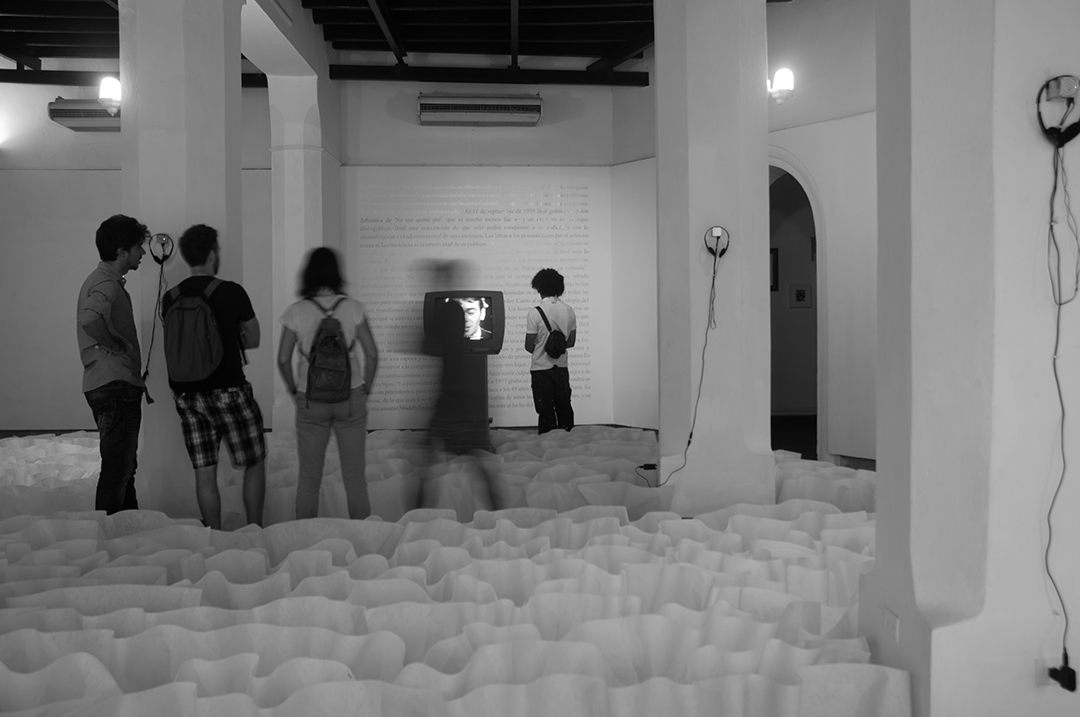
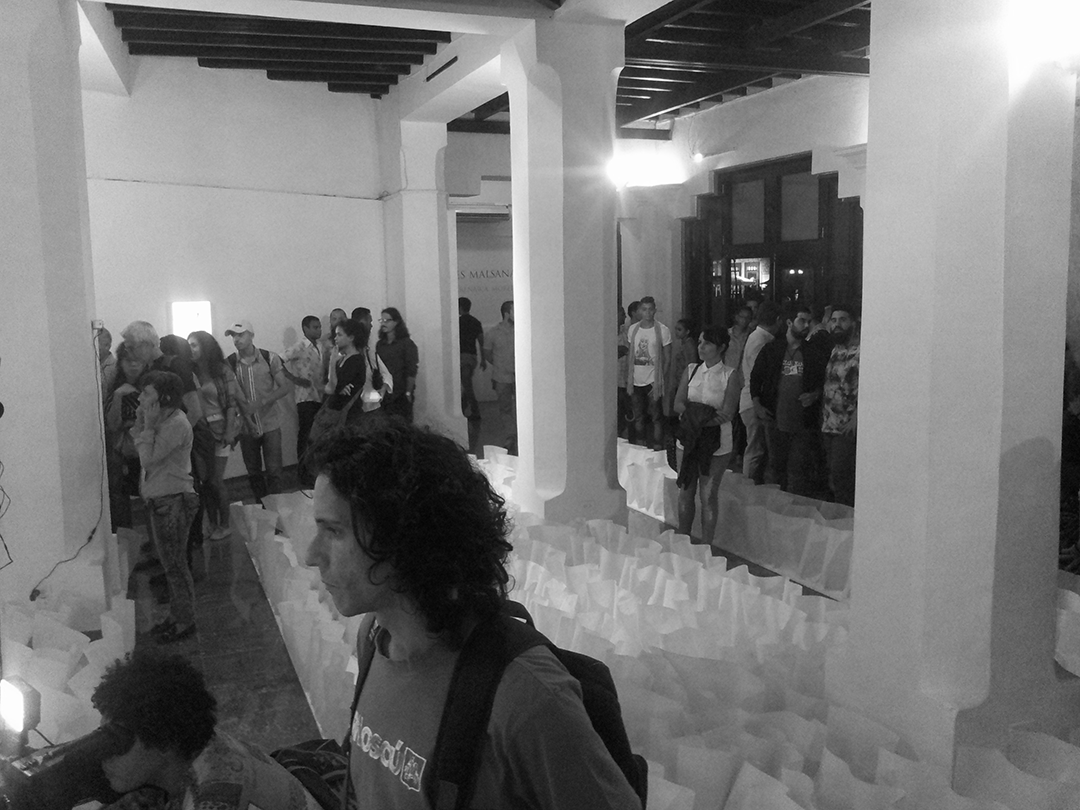
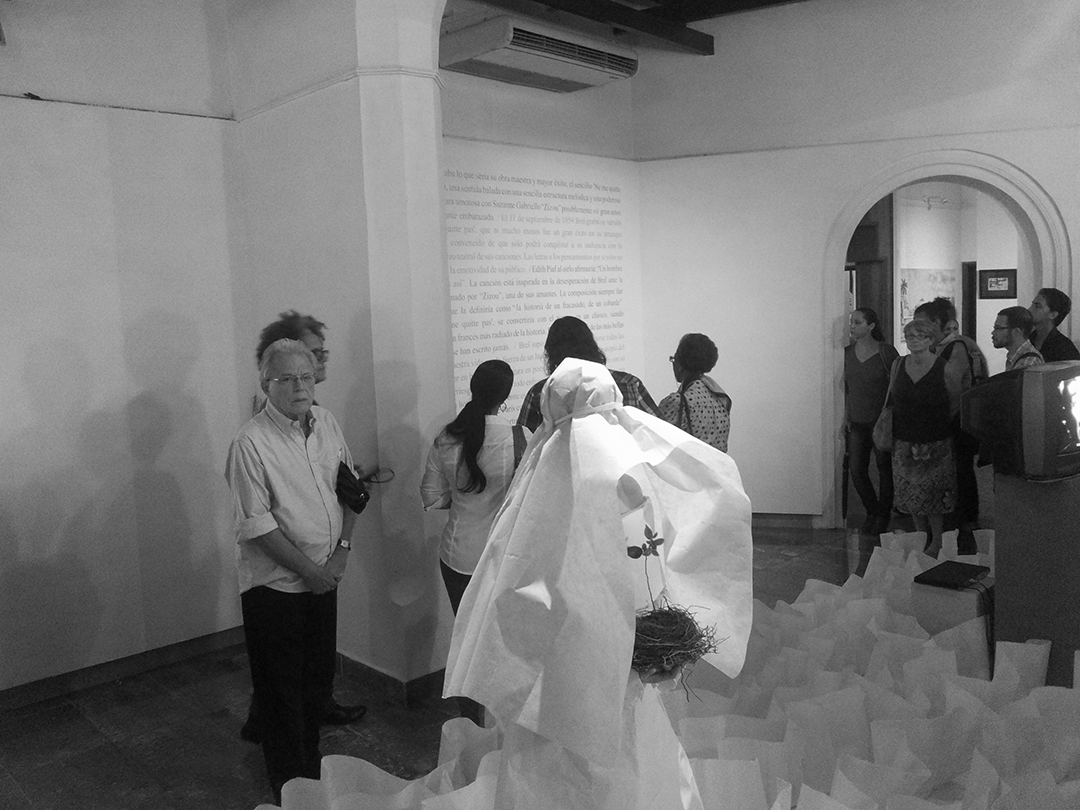
From the Estas flores malsanas (These Morbid Flowers) Series, 2015
Impresión en cajas de luz / Print on light box | 60 × 40 cm
Life moves at a frantic pace. Outside the home. Inside it, too. In that continuous flow, obligations and affections follow one another; man/woman as the center and origin of a centrifugal/centripetal force: to encourage surrender to the spiral that draws one toward its center, or the sudden jolt and progressive thrust that repels, distances.
Both forces are born of and from love. Love in each and every one of its forms: understanding the bond of love between partners, the seemingly unconditional love for a child, the love professed for one’s parents, deciphering the unwritten contract between friends, and the complex tie to that context called homeland.
What is love, and what is its landscape?
I have asked myself these questions more than once. Yes, the persistence of thought trying, through questions, to arrive not so much at an answer as at a consensus. Even if it is (im)pure democracy confined to my own head; the battle with no few demons and doubts disguised as certainties.
Can we understand love as a possible homeland?
I don’t really know. I think then of the Bible, specifically the passage that warns us of the need to be docile, to let ourselves be guided. So, in the face of doubt, I allow myself to read Cirenaica Moreira’s gestures and images again. A woman proclaiming a notion of the world, or a notion of life, her life, our life. Because hers may be ours. A notion of the world articulated, I believe, through a consensus reached after battling her own demons. Our demons. A notion in which love is the vertex. At its center, two forces arise, each devastating in its own way.
Cirenaica again on a stage where forms of beauty erupt, never free of (slight) (everyday) horror. We are speaking of flowers. From the daisy plucked petal by petal while longing for what never comes, to the “flowers of evil” themselves.
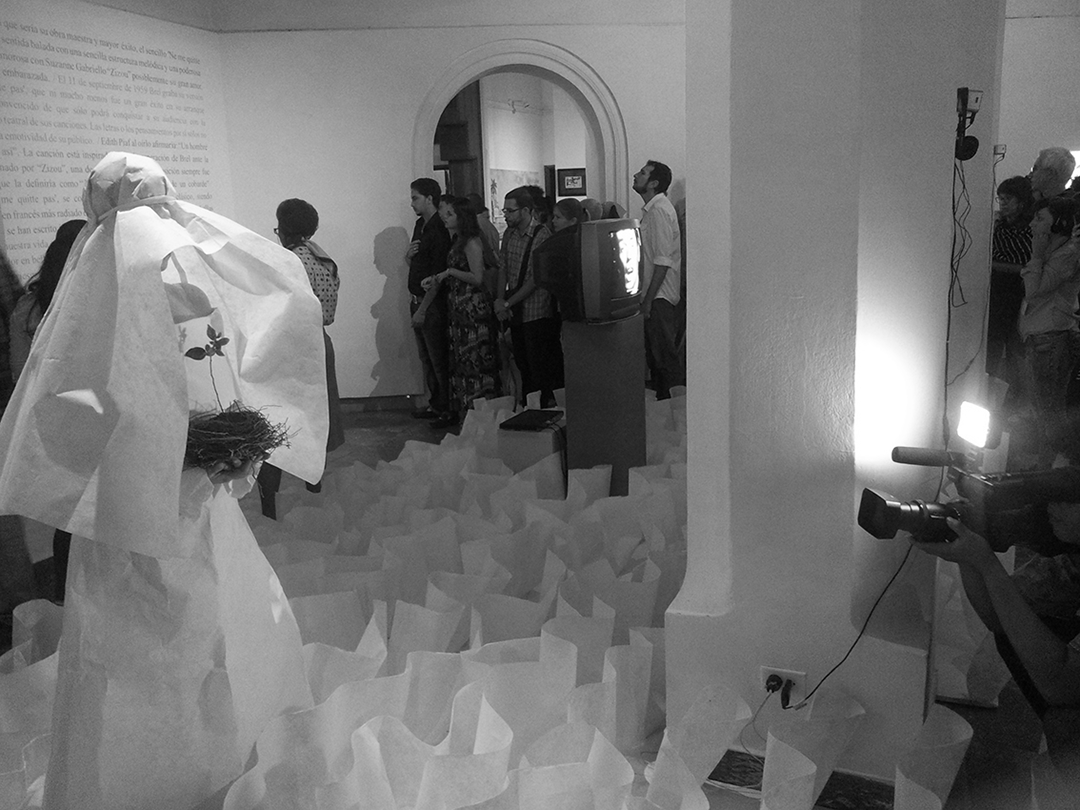
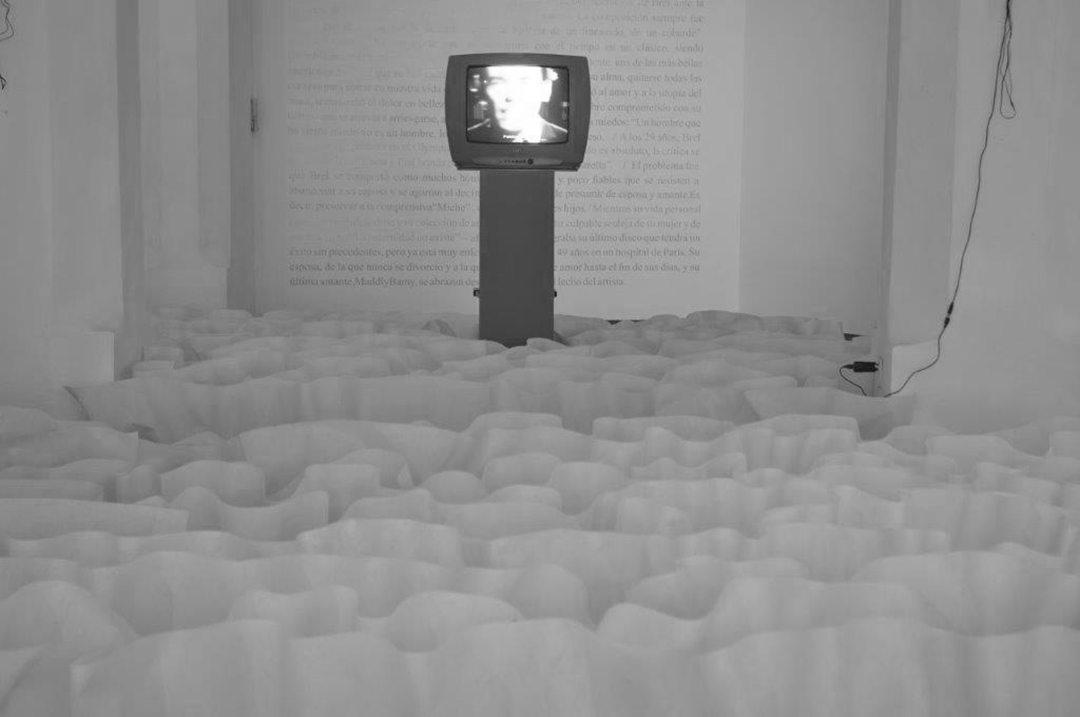
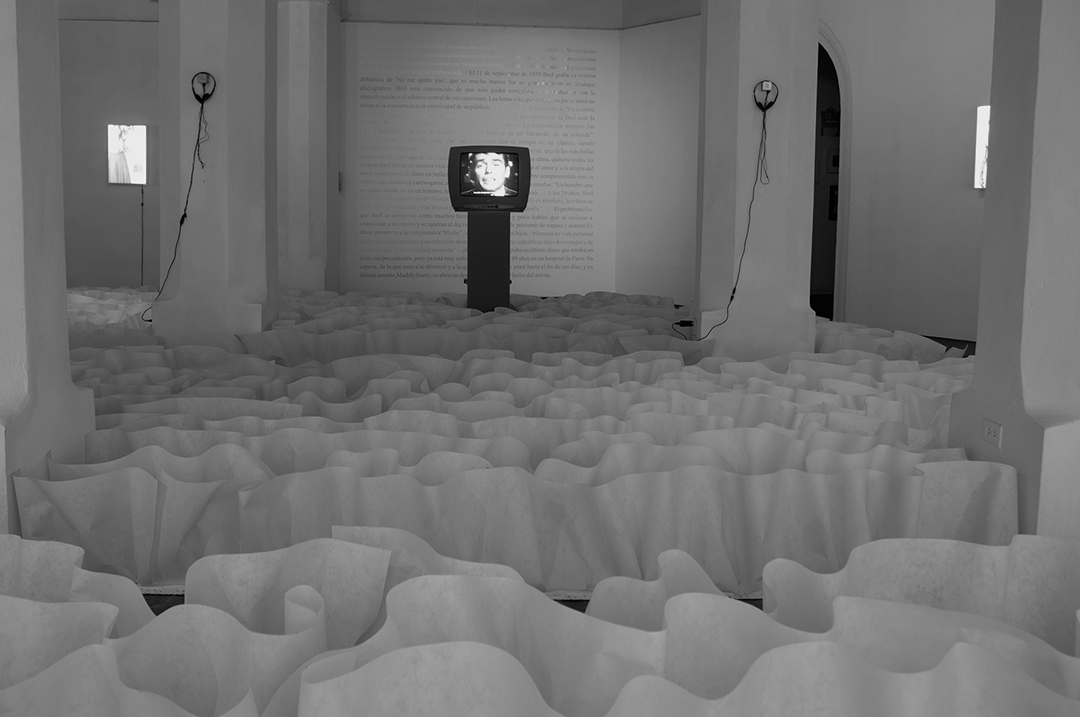
These Morbid Flowers... After the title’s ellipsis, another turn of the screw in the system of association and enunciation of a visual artist trained at the theater academy. Morbid flowers erupting into a complex and violent garden? A story of love, or its undoing, the origin and destination of an exhibition. Jacques Brel. Ne me quitte pas. A man and a woman (amour fou is one face of a coin). A man and a woman (calm love on the obverse or reverse, it makes no difference). The family, or throwing oneself into passion? Living with calm and abandon? Choosing the worst solution in order to make peace with oneself—which means making peace with no one—and then composing a song that tries to win forgiveness while, at the same time, perpetuating a kind of Calvary in the imagination of the family and the lover?
Jacques Brel and Ne me quitte pas as the center of multiple gazes. Approval and censorship.
At what precise point does love begin? At what precise point do desire in all its forms, the fulfillment of that desire, the notion of doing good for another and the enactment of that notion set in motion a mechanism that will only succeed in unleashing pain?
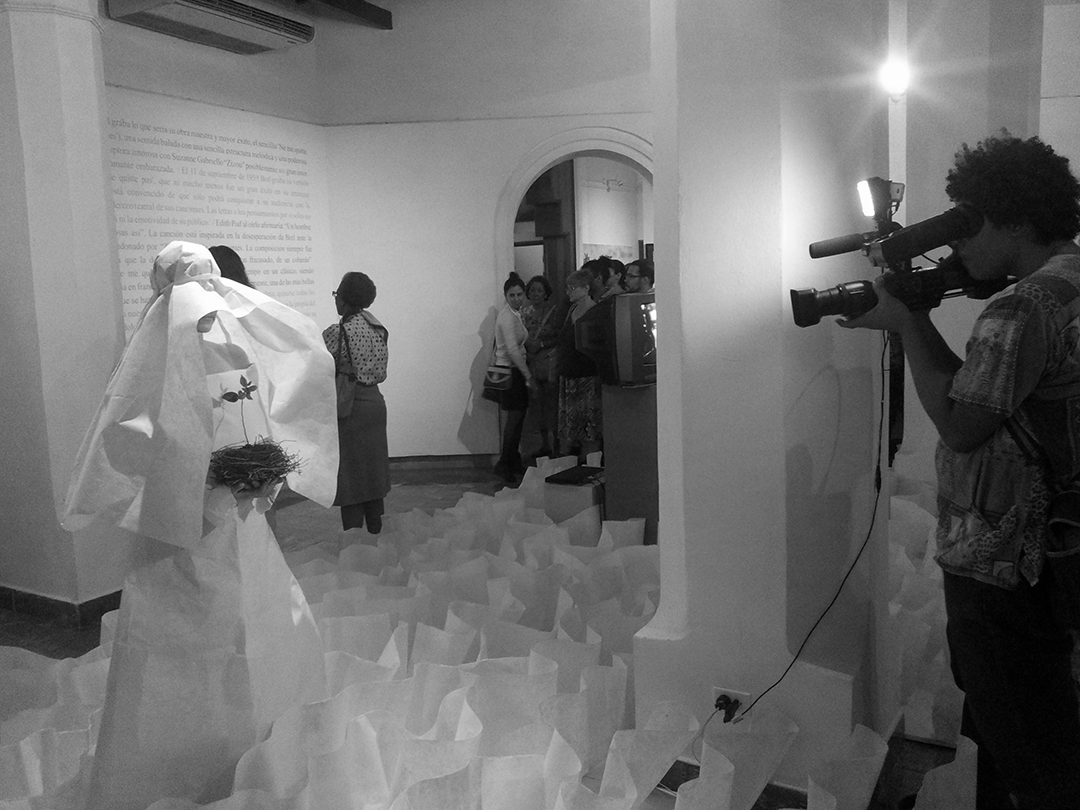
One cannot speak of love without taking its opposite into account. That is what this Cirenaica tells us, or tries to articulate through performance and photographs. Yes, it is the same woman, but with a different face. She is no longer at the center of the photographed stage, where the sacred forms of love continue to unfold, along with the profane ones, and where silence and solitude are the unmistakable symptom of a possible failure of consensus, of a community of affections and interests. Because she returns to performance, and there love returns once more, along with the energy we invest in the act of loving. We have already diluted it. Performance understood as the transfer of that energy to the staged event, and creation as a process laid bare. The actor: vehicle, sacrificial victim. Not an innocent victim, either. Also the perpetrator. She returns to performance, but from a state of total immobility. The procession takes place within.
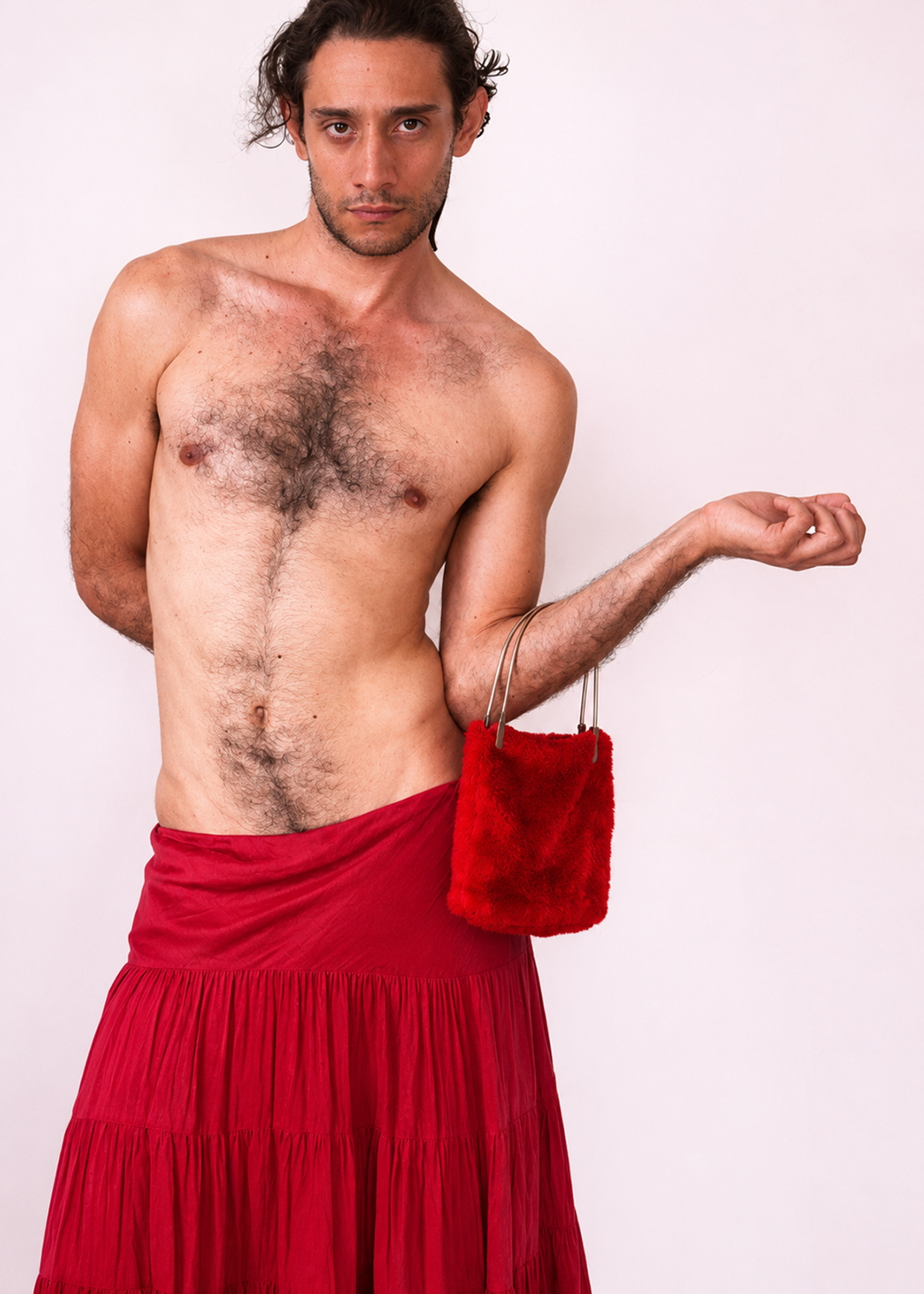
From the Estas flores malsanas (These Morbid Flowers) Series, 2015
Impresión en cajas de luz / Print on light box | 60 × 40 cm
Because the male—the man, the male human being—has once again been placed in the camera’s crosshairs, this time without what we might call the idyllic aura—that subtle settling of accounts, the narration of a “fairy tale” that is no such thing; rather than judging, it dissects a mode, a behavior, a discourse, to reveal ulterior motives. It seems to tell us: nothing lasts forever; you only have to wait. It would seem, too, that this is a lesson.
Ne me quitte pas. The song composed by Jacques Brel. The most covered song of all. Women and men perpetuating, over time, the meanders of a love story with no shortage of secrets, pleasure in its most extreme degree, and no small measure of pain. Ne me quitte pas in the voices of Sting, Edith Piaf, Brel himself, Nina Simone, Maya Matarazzo, each with a different timbre and cadence, because the ways of nurturing, enacting, intensifying—and dynamiting—love are different.
Cirenaica tells us, in this new turn of the screw: “These Morbid Flowers... When, in the light of one and the same story—which I will not say in the shadow—so many visions begin, as many as there are points of view or ways of approaching it: Notions of (im)possible dialogues: When the child betrays—or we feel betrayed in this way—the mother, the father, the friends, the homeland—its power structures—the lover. When, in that sense, the dialogue, for all the talking, does not return except in the form of solitude and silence.”
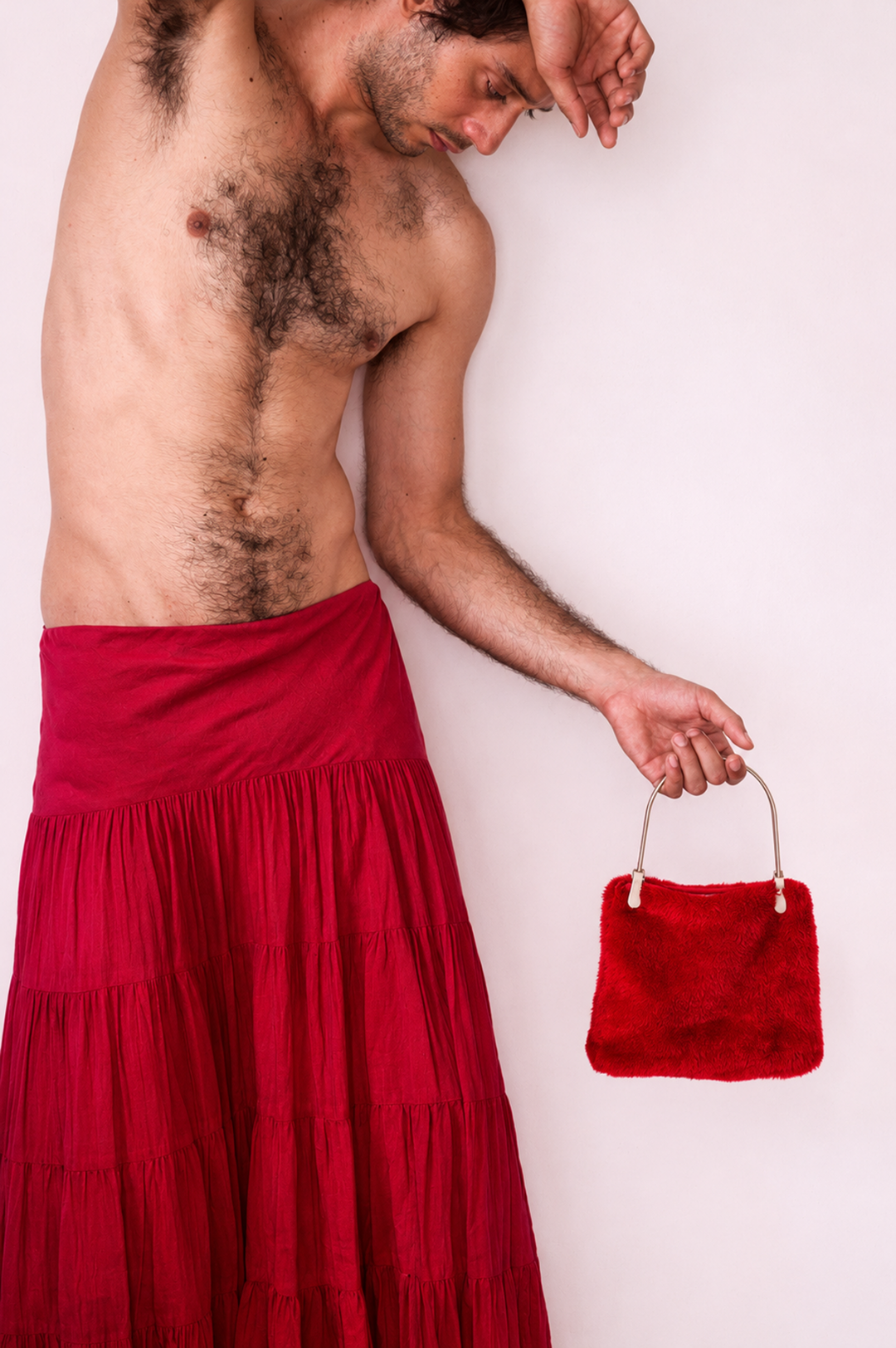
From the Estas flores malsanas (These Morbid Flowers) Series, 2015
Impresión en cajas de luz / Print on light box | 60 × 40 cm
Is love the homeland of man? If it is, what is that homeland like? What laws govern it? What is ethical and moral there; where are the limits? What is the anthem of that place?
Cirenaica seems to whisper to us: “Love, Jacques Brel. ‘Ne me quitte pas’; a pretext.” I think back to the exhibition and imagine a visual essay on solitude and silence, that is, silence and solitude in our noisy, overcrowded existence, right there where so many believe they have company.
How I wish there were a lapse in Cirenaica’s perception of love, and that she had taken lightly the “translation” of that perception through installation, performance, and photography. How I wish it were an opportunistic strategy of positioning, fascination, and market. “Contemporary art under suspicion.”
Yes, the hope of seeing in this body of work a failed notion of love. The need to see error there. To glimpse, among “these morbid flowers,” the possibility—real—of a homeland.
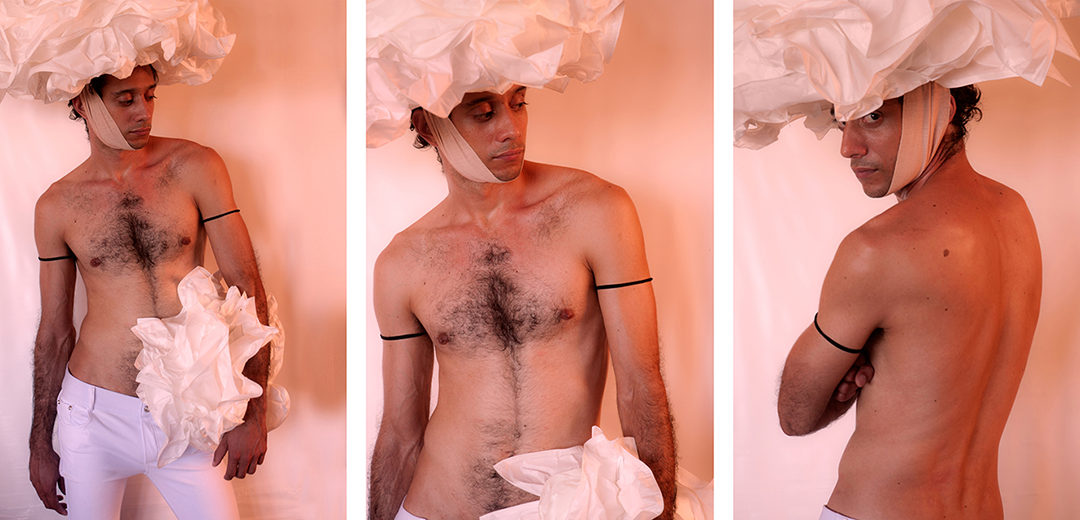
From the Estas flores malsanas (These Morbid Flowers) Series, 2015
Impresión en cajas de luz / Print on light box | 60 × 40 cm





If you’re a regular reader of this blog and enjoy its content, you might consider contributing to its upkeep. Any amount, no matter how small, will be warmly appreciated
Founded in 2021, Echoes (Notes of Visual Narrative) invites everyone to explore together the visual codes that shape our world—art, photography, design, and advertising in dialogue with society.

Copyright © 2026 r10studio.com. All Rights Reserved. Website Powered by r10studio.com
Cincinnati, Ohio