
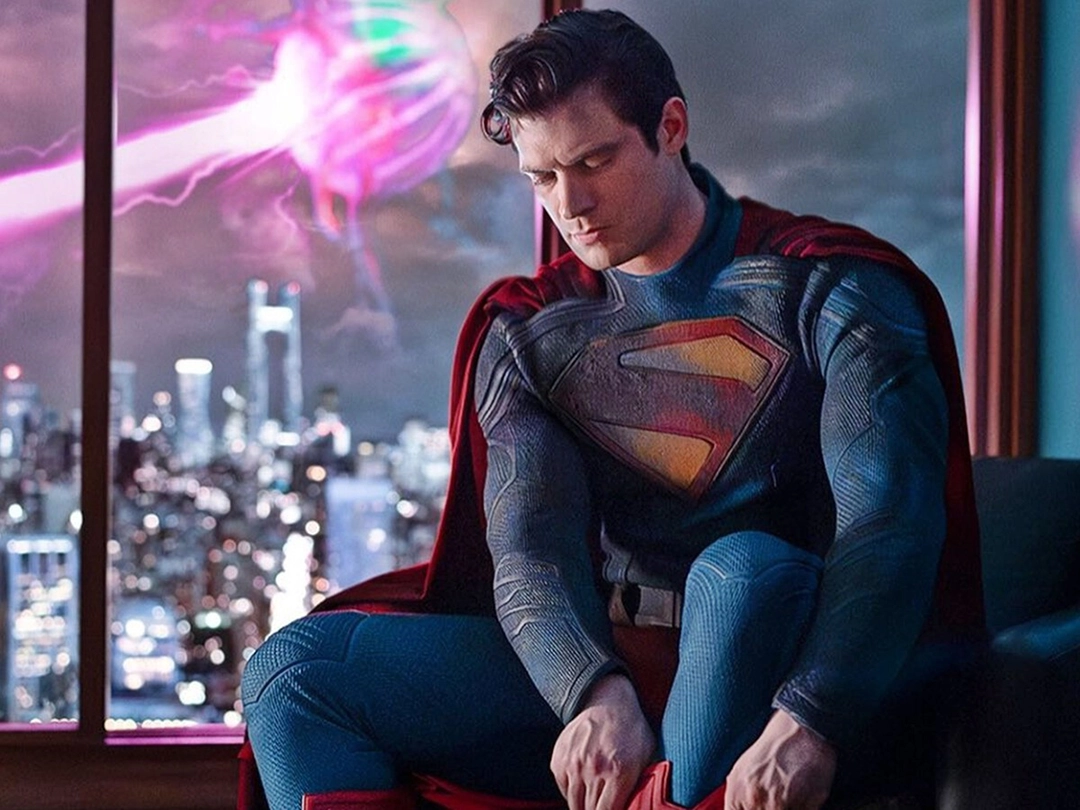
Intentando encontrar algo interesante en las plataformas para una quieta noche de diciembre me detengo en la que me parece la última versión cinematográfica del mítico Superman. Leo que fue escrita y dirigida por James Gunn y estrenada en julio, en el verano pasado. Veo que disfruta de una buena acogida, por parte de la crítica y también del público. Todo un éxito comercial, de hecho, entre las que han presentado al super héroe como protagonista absoluto, la más taquillera, en los Estados Unidos
Su director en una entrevista afirmó que Superman es 'An immigrant that came from other places and populated the country…' Ardió Troya. Ardió X: Disparate woke, 'gran trabajo, izquierdistas... la peor gente del planeta'. Piropos por el estilo. Gunn había provocado antes a Donald Trump y a su infantería y así habló en medio de un verano marcado por las redadas de la agencia de Inmigración y Control de Aduanas (ICE).
Para ser sinceros, casi todos habíamos pasado por alto que Superman es prácticamente —o por completo— un ilegal. Uno de los máximos símbolos morales del país es un inmigrante. Ni siquiera ingresó dentro de los términos de la legalidad vigente. Ni siquiera procedía de unos de esos países de mierda, de los cuáles ya no se puede llegar, sino de Krypton, un planeta de mierda, en plena decadencia y destrucción. Al menos llegó guapo, con ojos azules, que es un atenuante.
Quizá haya un contexto adicional que explique la virulencia de la reacción.
Superman fue concebido por los hijos de dos familias judías inmigrantes. Jerome 'Jerry' Siegel, cuyo padres emigraron de Lituania a Nueva York en 1900, y Joseph 'Joe' Shuster, —los suyos lo hicieron de los Países Bajos a Toronto. Se conocieron en la escuela, aquí mismo, en Ohio, y se dieron cuenta de que tenían algo en común: el resto de los estudiantes se metía con ellos.
Proyectaron en su imaginación una figura que los librara de sus pequeñas tragedias personales. Un norteamericano procedente de otro lugar, que enfrentaría a los abusadores y defendería a los oprimidos. Su identidad alternativa, su personaje mimético —el periodista Clark Kent— sería incluso tímido, poquita cosa, y usaría como el propio Siegel, espejuelos graduados.
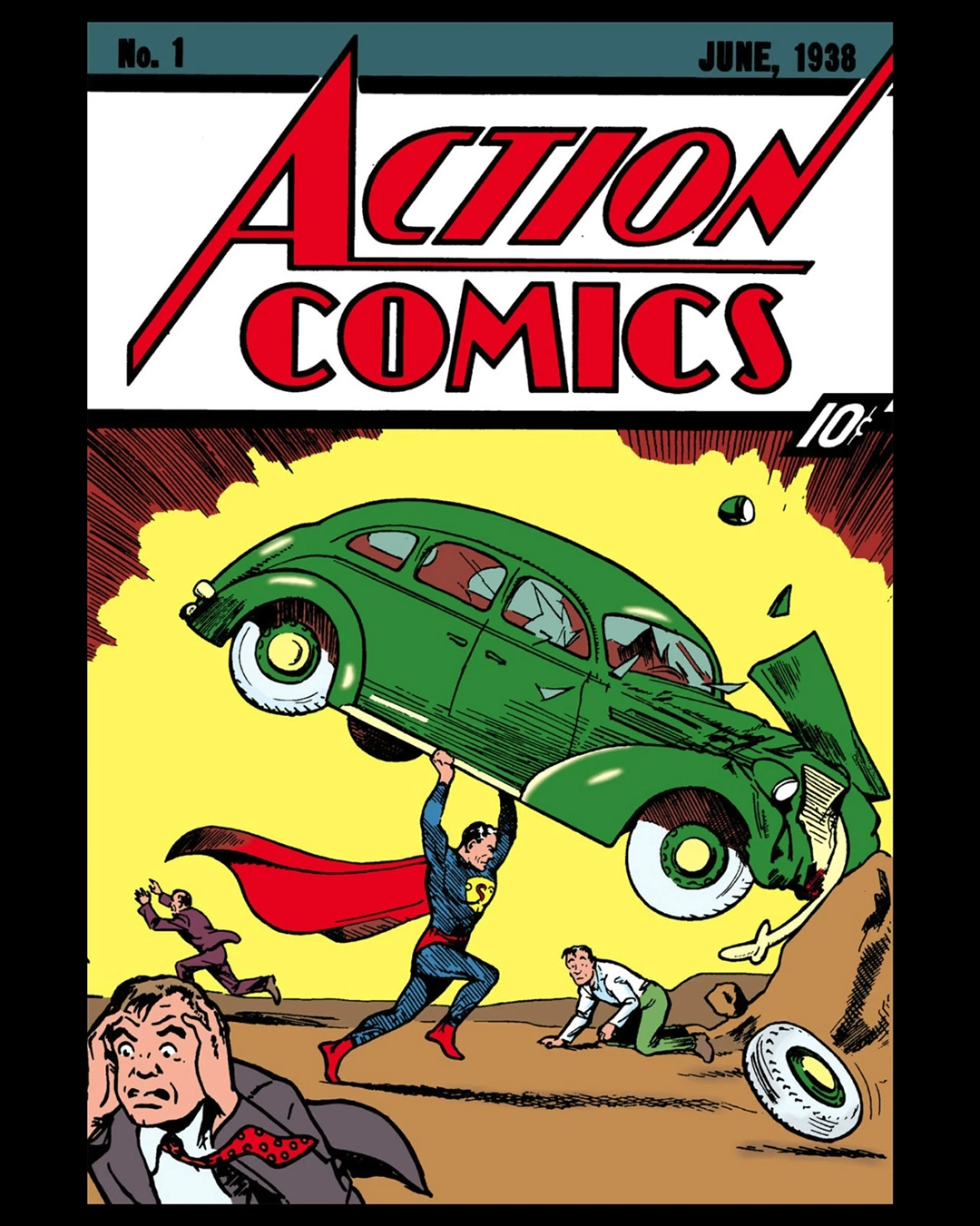
It was impossible to foresee the impact of that first issue of DC’s Action Comics, published on April 18, 1938, with Superman’s arrival. He was not among the earliest heroes of comic books—Doc Savage or John Carter of Mars precede him, for example—but he was the first endowed with supernatural powers, the first super. On that cover he was already smashing a car against a rock while the villains fled in terror. It was a cataclysmic moment that gave birth to an entirely unprecedented cultural modality, one that would weigh as heavily as few others on the collective imagination: the concept of the superhero.
Over time, contradictions arising from his dual nature would only multiply. Because this character embodies, like no other, the paradox of possessing superhuman abilities while deliberately adopting a mask of modesty, clumsiness, and restraint. He is not defined by what he can do, but by what he chooses not to do. As an ideal—formulated time and again as truth, justice, and a vague notion of the common good—he stands on a delicate frontier between universal morality and the specific historical context that shapes him. This is why he has always functioned as a mirror of his time. When social trust in institutions is strong, he is taken as a guarantee. When that trust erodes or collapses, he reveals cracks, contradictions, and suspicions.
This intermittence can be considered essential, because it continually tests his nature. His identity does not depend on a specific territory but on an ethical compass. His coherence resides in adherence to it; once it is lost, all that remains is gratuitous violence and loss of control. He acts with the morality of an earthquake. His relevance does not lie in the accumulation of power, but in a fragile combination of decency, responsibility, and uprootedness. What makes him relevant—and permanently implausible—is that he chooses not to crush a world he could easily dominate.
That is what one of the many Americas that coexist believes to be its moral foundation. There are others that see him as a force to be feared, before which one must kneel—on one knee or both. A broad-shouldered white man, sky-colored eyes, wrapped in a blue-and-red maillot stamped with a logo: an entirely local production for domestic consumption, and from there, for the rest of the planet.
Over time, the cultural ecosystem may have redistributed other superpowers among second- or third-tier heroes. One might even say it is embarrassing that the rest of the communities that make up this ecosystem are underrepresented—yes, for a long time they have been—and that they sprout like mushrooms, overlap, and constantly steal attention that the burly pioneer does not require.
One page of The Definitive History depicts, in its panels, two encounters with President John F. Kennedy, published after his assassination. In one of them, JFK—through the public figure of Superman—learns his secret identity, discovering that he and Clark Kent are one and the same; he gains access to the structural datum of the myth. This does not trouble the superhero in the least: “If I can’t trust the President of the United States,” he smiles, “who can I trust?”
Can you imagine that panel today? Quite possibly another president would rush straight to social media to rant about that Clark Kent—terrible character, purveyor of fake news. And do not rule out a reminder that he is an illegal immigrant who came from a shithole planet, in a disgusting solar system with a dying, pathetic star.





If you’re a regular reader of this blog and enjoy its content, you might consider contributing to its upkeep. Any amount, no matter how small, will be warmly appreciated
Founded in 2021, Echoes (Notes of Visual Narrative) invites everyone to explore together the visual codes that shape our world—art, photography, design, and advertising in dialogue with society.

Copyright © 2026 r10studio.com. All Rights Reserved. Website Powered by r10studio.com
Cincinnati, Ohio


Comments powered by Talkyard.