
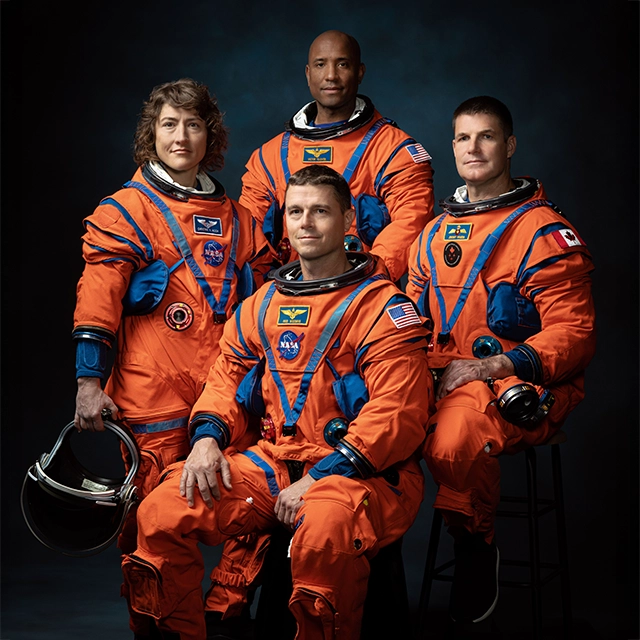
April 10, 2026 marks the long-awaited return to Earth of the astronauts from Artemis II. The mission set out to perform a lunar flyby that reached the Moon’s far side. Reid Wiseman, Christina Koch, Victor Glover, and Jeremy Hansen traveled farther than any human beings in history, a detail irresistible to sensational headlines.

We have previously discussed how a photograph — or an image — can rearticulate the public perception of reality. How it can encapsulate experience, much like a verb does, rendering it transferable, exposable, and legible in a specific way.
Any story is a continuum, difficult to apprehend in its full extension and multidimensionality...
Netflix aired the final episode of Stranger Things on December 31, 2025. It coincided with the closing of an unusual and demoralizing year. A masterstroke. We will remember forever the day the Upside Down arc was sealed, Vecna definitively defeated, and Eleven’s story brought to a close—at every level: her power, and her life in the physical realm...

The British Museum has launched a campaign to secure the Tudor Heart, an ostentatious gold pendant linked to Henry VIII and Catherine of Aragon. Its aim is to prevent the object from falling into private hands and vanishing from public view.
Discovered in Warwickshire in 2019 by a metal-detecting enthusiast, the piece was automatically placed under the provisions of the Treasure Act of 1996...

It is cold in Harbin, a city located in China’s northeastern reaches. It is the capital of Heilongjiang Province, on the banks of the Songhua River. Winters here are long and severe. Nearly three quarters of its territory borders the far—and frozen—Russian Far East.
One of the qualities I most admire in the Chinese people is their practical intelligence. They perform small miracles with whatever lies at hand...

In the field of iconicity—where universal icons gravitate—there are two figures who seduce me in a particular way. Because of their similarities and, above all, because of their irreconcilable differences: Marilyn Monroe and Ava Gardner. Both carry a weight so powerful, so comparable, that they keep the scale in perfect balance.
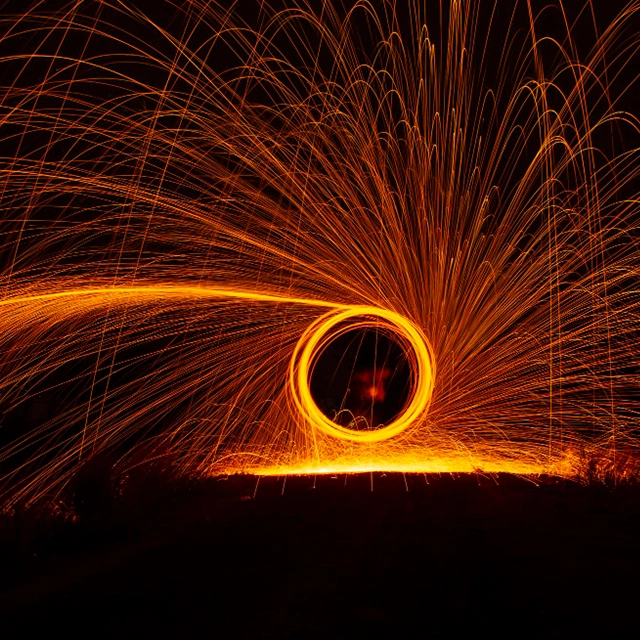
Why share an image that, from an aesthetic standpoint, I find unpleasant? Of all possible complementary color pairings, this is probably the only one I would never use in a design or in a work of artistic intent. Together—yellow-gold and cold violet—they vibrate in an unbearable way, imposing a visual rhetoric saturated with meaning. Perhaps because, over centuries, they have been associated with institutions now perceived as decadent, with a solemnity that fails to justify itself.

It is not the same to watch a cyclone from the window of your house as from an orbital station. They are two entirely different spectacles. When I was a child, it filled me with tremendous excitement. I had eyes only for its ravaging gusts. I did not notice my father sweating as he nailed boards over the windows. That is the distortion produced by perspective. From the distance established by innocence, catastrophe becomes nothing more than a majestic spectacle.

For professional reasons—and for many others—I tend to download and archive magazines devoted to specialized subjects. Among them, a very considerable number are dedicated to photography. The regular ones—that is, those almost always available—number around thirty-five. I suspect that most of them are sponsored by major manufacturers of professional and semi-professional cameras.


If you’re a regular reader of this blog and enjoy its content, you might consider contributing to its upkeep. Any amount, no matter how small, will be warmly appreciated
Founded in 2021, Echoes (Notes of Visual Narrative) invites everyone to explore together the visual codes that shape our world—art, photography, design, and advertising in dialogue with society.

Copyright © 2026 r10studio.com. All Rights Reserved. Website Powered by r10studio.com
Cincinnati, Ohio