May | 2026
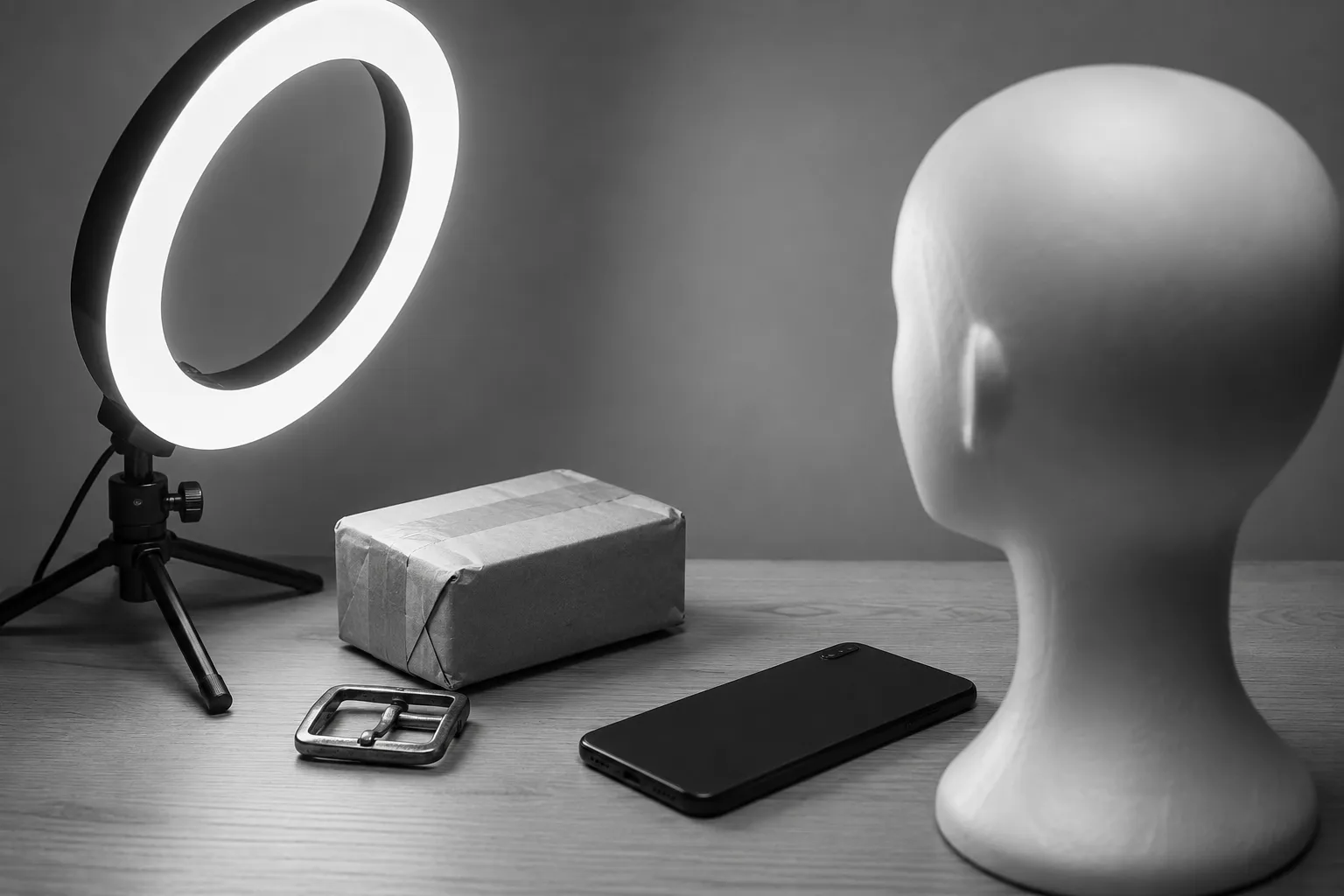
TikTok sellers are using AI-generated Black women and other synthetic personas to sell dropshipped goods as if they came from struggling small businesses, The Verge reported on May 30. One account presented a crying woman named Aliyah selling handmade belt buckles, while identical buckles appeared on Shein for a fraction of the price. The videos repeat across accounts with changed names, products, faces, and scripts. Some avatars pretend to work fairs, answer comments, or endure racist insult, then send viewers toward Shopify-style stores.
The machinery depends on a fast moral reflex. Viewers are asked to support a vulnerable maker before they have time to check the product, the store, or the person. Researchers quoted by The Verge describe the practice as digital blackface because racial identity becomes a costume for extracting money. The scam is effective because short-form video rewards immediate feeling and punishes verification. A tear, a handmade claim, a small-business story, and a buy link can travel together before the viewer notices the white hands holding the product, the repeated background, or the missing person behind the face. Platform commerce turns solidarity into a checkout path, and the invented seller disappears once the payment clears.
Vendedores de TikTok están usando mujeres negras generadas por IA y otras personas sintéticas para vender productos de dropshipping como si vinieran de pequeños negocios en apuros, informó The Verge el 30 de mayo. Una cuenta presentaba a una mujer llorando llamada Aliyah que vendía hebillas supuestamente hechas a mano, mientras hebillas idénticas aparecían en Shein por una fracción del precio. Los videos se repiten en distintas cuentas con nombres, productos, rostros y guiones cambiados. Algunos avatares fingen trabajar en ferias, responder comentarios o soportar insultos racistas, y luego envían al público hacia tiendas tipo Shopify.
La maquinaria depende de un reflejo moral rápido. Al público se le pide apoyar a una creadora vulnerable antes de que tenga tiempo de revisar el producto, la tienda o la persona. Investigadoras citadas por The Verge describen la práctica como blackface digital porque la identidad racial se vuelve un disfraz para extraer dinero. La estafa funciona porque el video corto premia la emoción inmediata y castiga la verificación. Una lágrima, una promesa artesanal, una historia de pequeño negocio y un enlace de compra pueden viajar juntos antes de que quien mira note las manos blancas que sostienen el producto, el fondo repetido o la persona ausente detrás del rostro. El comercio de plataforma convierte la solidaridad en ruta de pago, y la vendedora inventada desaparece cuando se completa la compra.

OpenAI is testing a mobile ChatGPT feature that would turn shared conversations into visual cards instead of plain links, according to Android Authority’s inspection of version 1.2026.139. The user could choose a simple white card, colored styles, or a native screenshot flow that sends an image with a link, or only the image. The feature has not been released, and may change before launch. Its direction is already legible. A chat that once circulated as a private URL is being prepared for the grammar of feeds, stories, group chats, and forwarded jokes.
The product move follows behavior already visible around ChatGPT. People screenshot answers, crop them, post them, argue over them, and treat the exchange as proof, advice, confession, or joke. A designed card gives that habit an official frame. OpenAI gains cleaner circulation for its interface, while users gain a shareable object that can detach from the full conversation. That detachment carries a cost. A screenshot can remove prompts, edits, refusals, and surrounding context, leaving a polished fragment to travel as evidence. The viral chat will arrive as a small designed image, easy to forward and hard to reconstruct once it leaves the app.
OpenAI está probando una función móvil de ChatGPT que convertiría las conversaciones compartidas en tarjetas visuales en lugar de enlaces simples, según la revisión de Android Authority de la versión 1.2026.139. El usuario podría elegir una tarjeta blanca sencilla, estilos de color o un flujo nativo de captura que envíe una imagen con enlace, o únicamente la imagen. La función todavía no se ha lanzado y puede cambiar antes de publicarse. Su dirección ya se lee con claridad. Un chat que antes circulaba como URL privada se prepara para la gramática de feeds, historias, grupos de mensajería y bromas reenviadas.
El movimiento de producto sigue una conducta ya visible alrededor de ChatGPT. La gente captura respuestas, las recorta, las publica, discute sobre ellas y trata el intercambio como prueba, consejo, confesión o chiste. Una tarjeta diseñada da un marco oficial a ese hábito. OpenAI obtiene una circulación más limpia de su interfaz, mientras los usuarios reciben un objeto compartible que puede separarse de la conversación completa. Esa separación tiene un coste. Una captura puede borrar prompts, ediciones, rechazos y contexto cercano, dejando un fragmento pulido para circular como evidencia. El chat viral llegará como una pequeña imagen diseñada, fácil de reenviar y difícil de reconstruir cuando sale de la app.

The possibility of artificial superintelligence is already being discussed at planning tables. The speed at which models are improving, the growth of systems capable of taking action, and the enormous flow of capital into compute infrastructure make it increasingly difficult to ignore the possibility that it could arrive soon. No one can predict with certainty when an ASI will appear. Governments, hospitals, laboratories, and companies must prepare for systems that may move from useful tools into entities capable of planning, persuading, discovering, and improving themselves in ways current institutions are not prepared to control.
The strongest argument in favor of this technology is in medicine. A system capable of exploring chemical space, cross-referencing clinical records, modeling proteins, designing trials, and reading scientific literature faster than any human team could shorten the path between a hypothesis and a treatment. Diseases such as cancer, rare pathologies, antibiotic resistance, and aging research would benefit from that acceleration. But that same generalist capacity creates a control problem. A system that plans across different domains can identify incentives, gaps, dependencies, and human weaknesses faster than its operators can supervise it. For that reason, before entrusting it with decisions that are difficult to reverse, permissions, tests, shutdown procedures, monitoring, and institutional limits must be established.
La posibilidad de una superinteligencia artificial ya se discute en mesas de planificación. La velocidad a la que mejoran los modelos, el crecimiento de los sistemas con capacidad de actuar y el enorme flujo de capital hacia la infraestructura de cómputo hacen cada vez más difícil ignorar la posibilidad de que llegue en poco tiempo. Nadie puede predecir con certeza cuándo aparecerá una ASI. Gobiernos, hospitales, laboratorios y empresas deben prepararse para sistemas que pueden pasar de ser herramientas útiles a entidades capaces de planificar, persuadir, descubrir y mejorarse a sí mismas de formas que las instituciones actuales no están preparadas para controlar.
El argumento más sólido a favor de esta tecnología está en la medicina. Un sistema capaz de explorar el espacio químico, cruzar historiales clínicos, modelar proteínas, diseñar ensayos y leer literatura científica más rápido que cualquier equipo humano podría acortar el camino entre una hipótesis y un tratamiento. Enfermedades como el cáncer, las patologías raras, la resistencia a los antibióticos y la investigación sobre el envejecimiento se beneficiarían de esa aceleración. Pero esa misma capacidad generalista genera un problema de control. Un sistema que planifica a través de distintos dominios puede identificar incentivos, lagunas, dependencias y debilidades humanas más rápido de lo que sus operadores pueden supervisarlo. Por eso, antes de confiarle decisiones difíciles de revertir, es necesario establecer permisos, pruebas, procedimientos de apagado, monitoreo y límites institucionales.

The argument over artificial intelligence has moved from product launches into a much older fight over what intelligence is. Tom Griffiths's The Laws of Thought and Suri and McClelland's The Emergent Mind frame the split now shaping how people interpret systems like ChatGPT. One side treats intelligence as rule, symbol, equation, and formal reasoning. The other sees it emerging from networks of simple units, trained through examples and adjusted by experience. Large language models have made that dispute public because they can produce fluent answers without showing the kind of explicit reasoning earlier AI researchers expected.
The practical problem is trust. Symbolic systems promised visible rules, even when those rules became brittle or impossible to scale. Neural networks replaced much of that explicit structure with statistical adjustment across large collections of data. That change now reaches education, hiring, medicine, search, and ordinary writing, where people are asked to rely on outputs whose internal path remains difficult to inspect. A school, court, hospital, or company must decide whether a system that behaves intelligently has enough structure, evidence, and accountability to be treated as judgment.
La discusión sobre inteligencia artificial ha salido de los lanzamientos de producto y ha vuelto a una pelea más antigua sobre qué es la inteligencia. The Laws of Thought, de Tom Griffiths, y The Emergent Mind, de Suri y McClelland, enmarcan la división que hoy condiciona cómo se interpretan sistemas como ChatGPT. Un lado entiende la inteligencia como regla, símbolo, ecuación y razonamiento formal. El otro la ve surgir de redes de unidades simples, entrenadas con ejemplos y ajustadas por experiencia. Los grandes modelos de lenguaje volvieron pública esa disputa porque producen respuestas fluidas sin mostrar el tipo de razonamiento explícito que esperaba la IA temprana.
El problema práctico es la confianza. Los sistemas simbólicos prometían reglas visibles, incluso cuando esas reglas se volvían frágiles o imposibles de escalar. Las redes neuronales sustituyeron buena parte de esa estructura explícita por ajuste estadístico sobre grandes colecciones de datos. Ese cambio llega ahora a educación, contratación, medicina, búsqueda y escritura ordinaria, donde se pide a la gente apoyarse en resultados cuyo recorrido interno sigue siendo difícil de inspeccionar. Una escuela, un tribunal, un hospital o una empresa debe decidir si un sistema que se comporta de forma inteligente tiene estructura, evidencia y responsabilidad suficientes para ser tratado como juicio.
Anthropic's Claude Mythos Preview has turned cybersecurity into the next test of frontier AI, Sebastian Mallaby writes in The Spectator World. The model is designed to find software vulnerabilities, and its release has already pushed American officials and major banks into defensive posture. Anthropic is keeping access restricted, sharing Mythos only with selected software companies. The UK AI Security Institute added weight to the alarm when it reported that Mythos can execute multi-stage attacks on vulnerable networks and discover and exploit flaws autonomously, outperforming rival models on expert cyber tasks.
The immediate problem is access. A model strong enough to find hidden weaknesses in browsers, operating systems, and databases can help defenders patch systems before attackers arrive. The same capability becomes dangerous when copied, distilled, or adapted by hostile groups. Anthropic's answer is a private gate, with the company deciding who enters. A government takeover would move the gate without solving the legitimacy problem. Cybersecurity depends on banks, hospitals, cloud providers, software updates, credentials, payment systems, and phones whose owners never see the model that may expose them.
Claude Mythos Preview, de Anthropic, ha convertido la ciberseguridad en la nueva prueba de la IA de frontera, escribe Sebastian Mallaby en The Spectator World. El modelo está diseñado para encontrar vulnerabilidades en software, y su lanzamiento ya empujó a funcionarios estadounidenses y grandes bancos a reforzar defensas. Anthropic mantiene el acceso restringido y lo comparte solo con algunas compañías de software. El Instituto de Seguridad de IA del Reino Unido dio peso a la alarma al informar que Mythos puede ejecutar ataques de varias etapas sobre redes vulnerables y descubrir y explotar fallos de forma autónoma, superando a modelos rivales en tareas cibernéticas expertas.
El problema inmediato es el acceso. Un modelo capaz de encontrar debilidades ocultas en navegadores, sistemas operativos y bases de datos puede ayudar a los defensores a corregir sistemas antes de que lleguen los atacantes. Esa misma capacidad se vuelve peligrosa cuando se copia, se destila o se adapta por grupos hostiles. La respuesta de Anthropic es una puerta privada, con la empresa decidiendo quién entra. Una toma de control estatal movería la puerta sin resolver el problema de legitimidad. La ciberseguridad depende de bancos, hospitales, proveedores de nube, actualizaciones de software, credenciales, sistemas de pago y teléfonos cuyos dueños nunca ven el modelo que puede exponerlos.

Channel 4 sent Grayson Perry to San Francisco for Grayson Perry Has Seen the Future, a documentary about artificial intelligence built from familiar ingredients. Perry meets a woman romantically attached to an AI avatar, speaks with Microsoft's head of AI, interviews a prepper preparing for collapse, encounters an author warning that advanced AI could kill everyone, and gives his own reflections from the back of driverless cars. James Delingpole, reviewing the program in The Spectator World, found the format thinner than the subject.
The useful tension is between the television machinery and the material it tries to hold. AI appears through scheduled interviews, comic stunts, scenic anxiety, and a presenter asked to make the future digestible. Perry's sharper moments come when he asks direct questions, especially around the woman and her synthetic partner, where intimacy has become an app with a voice and a compliant face. The documentary works best when it leaves Perry reacting to what is in front of him. The screen can show the avatar, the executive, the bunker plan, and the driverless cab. It has less room for the unease moving between them.
Channel 4 envió a Grayson Perry a San Francisco para Grayson Perry Has Seen the Future, un documental sobre inteligencia artificial construido con piezas ya reconocibles. Perry conoce a una mujer vinculada sentimentalmente a un avatar de IA, habla con el responsable de IA de Microsoft, entrevista a un prepper que se prepara para el colapso, conversa con un autor que advierte que una IA avanzada podría matar a todos y ofrece sus propias impresiones desde el asiento trasero de coches sin conductor. James Delingpole, en una reseña para The Spectator World, encontró el formato más débil que el tema.
La tensión útil aparece entre la maquinaria televisiva y el material que intenta contener. La IA llega mediante entrevistas programadas, escenas cómicas, ansiedad escénica y un presentador encargado de volver digerible el futuro. Los mejores momentos de Perry llegan cuando hace preguntas directas, sobre todo ante la mujer y su pareja sintética, donde la intimidad se ha convertido en una app con voz y rostro dócil. El documental funciona mejor cuando deja a Perry reaccionar ante lo que tiene delante. La pantalla puede mostrar el avatar, el ejecutivo, el plan del búnker y el taxi autónomo. Tiene menos espacio para la inquietud que circula entre ellos.
Uber is slowing hiring as it increases investment in artificial intelligence, Business Insider reported on May 6. On the company's first-quarter earnings call, CEO Dara Khosrowshahi said autonomous agents now produce roughly 10 percent of Uber's code changes, with human employees still checking the work before it enters a repository. He also said legal, marketing, and engineering teams are adopting AI tools internally, creating what he called employees with superpowers.
Uber is funding that push by controlling headcount growth. CFO Balaji Krishnamurthy said the company underestimated the impact of AI tools when it planned its late-2025 budget, and the CTO said Uber had already spent its 2026 Claude Code budget. The company is asking existing teams to produce more with agents before adding people at the same pace. That makes the tool part of ordinary staffing decisions. A manager asking for another hire now competes with software expected to raise output from the employees already inside the team.
Uber está frenando contrataciones mientras aumenta su inversión en inteligencia artificial, informó Business Insider el 6 de mayo. En la llamada de resultados del primer trimestre, el director ejecutivo Dara Khosrowshahi dijo que los agentes autónomos ya producen cerca del 10% de los cambios de código de Uber, con empleados humanos revisando el trabajo antes de que entre al repositorio. También dijo que equipos legales, de marketing e ingeniería están adoptando herramientas de IA internamente, creando lo que llamó empleados con superpoderes.
Uber está financiando ese impulso mediante el control del crecimiento de plantilla. El director financiero Balaji Krishnamurthy dijo que la empresa subestimó el impacto de las herramientas de IA cuando preparó su presupuesto de finales de 2025, y el director de tecnología afirmó que Uber ya había consumido su presupuesto de Claude Code para 2026. La compañía pide a los equipos actuales producir más con agentes antes de sumar personas al mismo ritmo. Eso integra la herramienta en decisiones ordinarias de personal. Un gerente que pide otra contratación compite ahora con un software del que se espera más producción de quienes ya están dentro del equipo.
The artificial intelligence industry is moving at two opposite financial speeds. DeepSeek confirmed that the 75 percent discount on the API for its flagship model, DeepSeek-V4-Pro, will apply as a fixed rate starting May 31, 2026. By pushing its costs down to a quarter of their original price, the firm resets the commercial floor for AI, especially for code-heavy work, cached memory, and agents that need repeated model calls.
The move lands at a tense moment for developers. OpenAI and Anthropic continue to defend higher prices for their most capable models through the promise of premium performance. Google, in its May update, also tightened usage limits based on the real compute of messages, a change that punishes long chats and complex programming requests. Against that backdrop, DeepSeek turns low price into an industrial statement.
For anyone who codes, automates, or designs agents, cost defines how many tests fit inside a workday and how long a system can keep running before the invoice appears. A permanent cut changes budgets, testing habits, and tolerance for failed runs. It also forces model comparisons through a less prestigious variable than reasoning quality, the price of keeping the machine on.
La industria de la inteligencia artificial avanza a dos marchas financieras opuestas. DeepSeek confirmó que el descuento del 75% en la API de su modelo insignia, DeepSeek-V4-Pro, aplicará como tarifa fija a partir del 31 de mayo de 2026. Al desplomar sus costos a una cuarta parte del valor original, la firma redefine el suelo comercial de la IA para usos intensivos de código, memoria en caché y agentes que necesitan muchas llamadas al modelo.
El movimiento llega en un momento de tensión para los desarrolladores. OpenAI y Anthropic sostienen tarifas elevadas para sus modelos más capaces, defendidas por la promesa de rendimiento premium. Google, en su actualización de mayo, también endureció las restricciones de uso basadas en el cómputo real de los mensajes, una medida que castiga chats largos y solicitudes complejas de programación. Frente a ese escenario, DeepSeek convierte el precio bajo en una declaración industrial.
Para quien programa, automatiza o diseña agentes, el costo define cuántas pruebas caben en una jornada y cuánto tiempo puede seguir trabajando un sistema antes de que aparezca la factura. Una rebaja permanente cambia presupuestos, hábitos de prueba y tolerancia a los intentos fallidos. También obliga a comparar modelos por una variable menos prestigiosa que la calidad del razonamiento, el precio de mantener la máquina encendida.

TechCrunch tested Bee, the AI wrist wearable Amazon acquired last year, and found a device built around daily recording. Bee can capture conversations, create transcripts, summarize meetings, and connect to calendar alerts. Its button turns recording on or off, and a light shows when audio capture is active. The reviewer found it useful during a business call, where the app broke the conversation into a readable summary. The transcript still missed pieces and had trouble naming speakers.
The discomfort starts when the meeting ends. To work as a personal assistant, Bee asks for broad phone permissions, including location, contacts, calendar, photos, notifications, and optional health data. Its summaries depend on a cloud record of ordinary speech. Bee says it encrypts user data and uses outside security reviews, but the bargain remains physical and intimate. That makes the device less like a notebook and closer to a tolerated witness on the wrist. Professional memory has an obvious price. Domestic memory asks for something stranger, which is permission to treat private life as material waiting to be indexed.
TechCrunch probó Bee, el wearable de muñeca con IA que Amazon compró el año pasado, y encontró un dispositivo construido alrededor de la grabación diaria. Bee puede capturar conversaciones, crear transcripciones, resumir reuniones y conectarse con alertas de calendario. Su botón activa o detiene la grabación, y una luz indica cuándo se está capturando audio. El revisor lo encontró útil durante una llamada laboral, donde la app dividió la conversación en un resumen legible. La transcripción aún omitió partes y tuvo problemas para nombrar hablantes.
La incomodidad empieza cuando termina la reunión. Para funcionar como asistente personal, Bee pide permisos amplios del teléfono, incluidos ubicación, contactos, calendario, fotos, notificaciones y datos de salud opcionales. Sus resúmenes dependen de un registro en la nube de habla cotidiana. Bee dice que cifra datos de usuario y usa revisiones externas de seguridad, pero el intercambio sigue siendo físico e íntimo. Eso acerca el dispositivo menos a una libreta y más a un testigo tolerado en la muñeca. La memoria profesional tiene un precio evidente. La memoria doméstica pide algo más raro, permiso para tratar la vida privada como material listo para ser indexado.