May | 2026

Google introduced Gemini Omni as a model family that can create video from mixed inputs, beginning with Gemini Omni Flash in the Gemini app, Flow, and YouTube Shorts. The company says users can combine text, images, audio, and video, then edit clips through conversation. The Verge tested the tool with a stuffed animal and with selfie footage, producing clips where a familiar face appeared to eat pasta, sit on a plane, or stand near the Eiffel Tower. Each attempt also burns paid credits, so the fantasy arrives with a meter attached.
The cultural shift is smaller than cinema and closer to a phone gesture. A person can feed the model a private clip, ask for a scene that never happened, and get an image of the self placed inside it. The glitches still matter. Bottles change shape, bodies move oddly, and hair gives away the trick. Yet the labor has changed. Faking presence no longer begins in a studio. It begins with a prompt, a payment plan, and a face already sitting in the camera roll.
Google presentó Gemini Omni como una familia de modelos capaz de crear video desde entradas mixtas, empezando con Gemini Omni Flash en Gemini, Flow y YouTube Shorts. La compañía dice que los usuarios pueden combinar texto, imágenes, audio y video, y después editar clips mediante conversación. The Verge probó la herramienta con un peluche y con video selfie, generando escenas donde un rostro familiar aparecía comiendo pasta, sentado en un avión o cerca de la Torre Eiffel. Cada intento consume créditos pagados, así que la fantasía llega con medidor.
El cambio cultural es más pequeño que el cine y más cercano a un gesto de teléfono. Una persona puede entregar al modelo un clip privado, pedir una escena que nunca ocurrió y recibir una imagen de sí misma colocada dentro de ella. Los fallos todavía pesan. Los objetos cambian de forma, los cuerpos se mueven raro y el pelo delata el truco. Aun así, el trabajo cambió. Fingir presencia ya no empieza en un estudio. Empieza con un prompt, un plan de pago y una cara guardada en el carrete.

Anthropic says Project Glasswing has used Claude Mythos Preview and roughly 50 partners to identify over ten thousand high- or critical-severity software vulnerabilities in its first month. Cloudflare reported 2,000 bugs across critical-path systems. Mozilla tested the model on Firefox and fixed 271 vulnerabilities. Anthropic also says its own scans of open-source projects have surfaced thousands of likely severe flaws, with outside security firms confirming a high share of the inspected cases. The public numbers read like an inventory of debt hidden in routine code.
The strange lesson sits in the queue after discovery. Finding flaws used to be the hard part. Anthropic now describes a different bottleneck, where humans must reproduce findings, contact maintainers, write reports, build fixes, and wait for users to install them. Each ticket needs judgment before it becomes a patch. The machine has made weak code visible at a speed the software world cannot yet absorb. Security becomes a race between exposure and repair, with maintainers standing in the narrow space between a discovered hole and an exploited one.
Anthropic afirma que Project Glasswing usó Claude Mythos Preview y cerca de 50 socios para identificar más de diez mil vulnerabilidades de severidad alta o crítica durante su primer mes. Cloudflare reportó 2.000 bugs en rutas críticas de sus sistemas. Mozilla probó el modelo en Firefox y corrigió 271 vulnerabilidades. Anthropic también dice que sus revisiones de proyectos open source han marcado miles de fallas probablemente severas, con firmas externas de seguridad confirmando una alta proporción de los casos inspeccionados. Las cifras parecen un inventario de deuda escondida en código rutinario.
La lección incómoda aparece después del hallazgo. Encontrar fallas solía ser la parte difícil. Anthropic describe ahora otro cuello de botella, donde equipos humanos deben reproducir resultados, contactar mantenedores, escribir reportes, crear arreglos y esperar a que los usuarios los instalen. Cada ticket exige criterio antes de convertirse en parche. La máquina volvió visible el código débil a una velocidad que el mundo del software todavía no absorbe. La seguridad queda como una carrera entre exposición y reparación, con mantenedores ubicados entre un agujero descubierto y uno explotado.

Google used I/O 2026 to describe the largest change to Search in decades. AI Mode now has Gemini 3.5 Flash as its default model, and Google says the feature has passed one billion monthly users. The search box itself is being rebuilt around AI, with space for longer prompts, suggestions that help shape questions, and inputs that can include text, images, files, videos, and Chrome tabs.
The change moves Search away from the old rhythm of typing keywords, scanning blue links, and opening pages one by one. Users can ask follow-up questions from AI Overviews, keep context across a conversation, and let Search build custom responses in real time. Google also announced information agents that monitor the web for changes, booking agents for local services, and mini-app style tools generated inside Search.
The practical effect is simple. Search is becoming a place where answers, summaries, comparisons, monitoring, and actions happen before the open web gets a visit. For publishers, stores, and services that depend on human clicks, the change hits the entry point. If Google handles the task inside Search, the page becomes background infrastructure.
Google usó I/O 2026 para presentar el mayor cambio en Search en décadas. AI Mode ahora usa Gemini 3.5 Flash como modelo predeterminado, y la compañía afirma que la función ya superó los mil millones de usuarios mensuales. La caja de búsqueda también está siendo rediseñada alrededor de IA, con espacio para consultas más largas, sugerencias que ayudan a formular preguntas y entradas que pueden incluir texto, imágenes, archivos, videos y pestañas de Chrome.
El cambio aleja Search del viejo ritmo de escribir palabras clave, revisar enlaces azules y abrir páginas una por una. Los usuarios podrán hacer preguntas de seguimiento desde AI Overviews, conservar contexto dentro de una conversación y recibir respuestas personalizadas en tiempo real. Google también anunció agentes de información que monitorean la web, agentes para reservas y herramientas tipo mini-app generadas dentro del buscador.
El efecto práctico es sencillo. Search se está convirtiendo en un lugar donde respuestas, resúmenes, comparaciones, seguimiento y acciones ocurren antes de visitar la web abierta. Para medios, tiendas y servicios que dependen del clic humano, el cambio golpea el punto de entrada. Si Google resuelve la tarea dentro del buscador, la página queda como infraestructura de fondo.

OpenAI says an internal reasoning model has disproved a long-running conjecture in discrete geometry, the planar unit distance problem first posed by Paul Erdos in 1946. The question asks how many pairs of points in a plane can sit exactly one unit apart. For decades, square-grid constructions were treated as close to optimal. OpenAI's model found an infinite family of arrangements that beats that expectation.
The announcement lands after a damaging 2025 episode, when OpenAI overstated Erdos-related results that were already known. This time, the company published the proof and companion remarks from outside mathematicians, including Noga Alon, Tim Gowers, Arul Shankar, Jacob Tsimerman, and Thomas Bloom. Their responses give the claim real weight while formal peer review continues, shifting the story from company boast to scrutinized mathematical claim by experts.
The signal is in the technical route. The model linked a planar geometry question to algebraic number theory, using tools far from the original picture of dots and distances. If the proof survives review, it will be a concrete example of AI doing original work inside mathematical research.
OpenAI afirma que un modelo interno de razonamiento refutó una conjetura histórica de geometría discreta, el problema de distancia unitaria en el plano, planteado por Paul Erdos en 1946. La pregunta es cuántos pares de puntos pueden quedar exactamente a una unidad de distancia sobre una superficie plana. Durante décadas, las construcciones en cuadrícula se trataron como una respuesta casi óptima. El modelo encontró una familia infinita de configuraciones que supera esa expectativa.
El anuncio llega después de un episodio incómodo en 2025, cuando OpenAI exageró resultados ligados a problemas de Erdos que ya existían en la literatura. Esta vez, la compañía publicó la demostración y comentarios de matemáticos externos, entre ellos Noga Alon, Tim Gowers, Arul Shankar, Jacob Tsimerman y Thomas Bloom. Ese respaldo da peso real a la afirmación mientras avanza la revisión formal.
La señal está en el camino técnico. El modelo conectó una pregunta geométrica con teoría algebraica de números, usando herramientas alejadas de la imagen inicial de puntos y distancias. Si la prueba resiste la revisión, será una muestra concreta de IA haciendo trabajo original dentro de la investigación matemática.
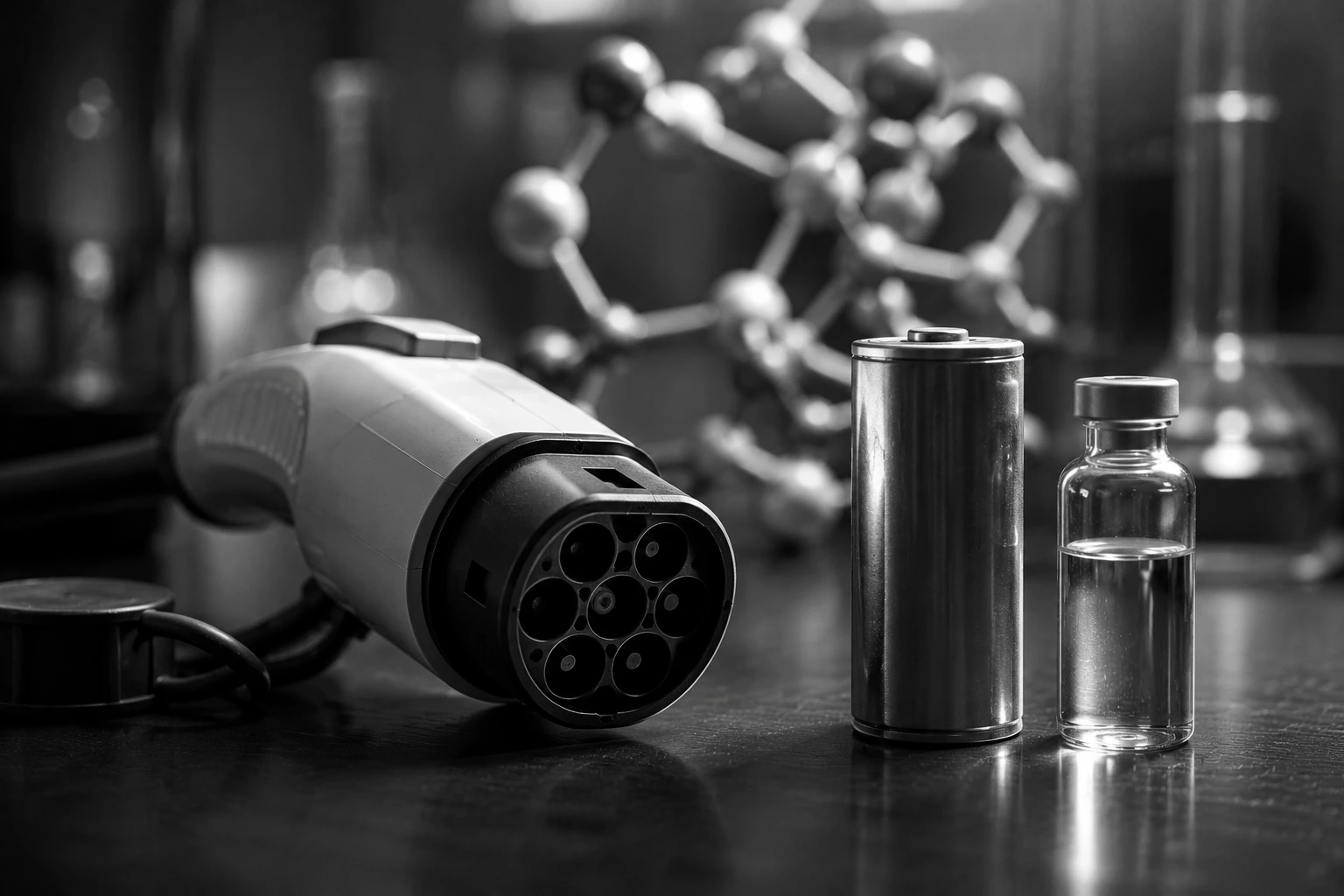
BYD says its Blade Battery 2.0 and FLASH Charging system can bring an electric car from 10 percent to 70 percent in five minutes, and from 10 percent to 97 percent in nine. The company's March technical release describes a 1,500 kW charger, a new ion-transport system, and an electrolyte layer optimized for higher ionic conductivity and faster mobility. Interesting Engineering reported on May 18 that BYD has moved flash charging from laboratory benchmark toward mass-market competition in China, where CATL, Chery, and Tesla are now being pushed to make electric refueling feel as routine as filling a fuel tank.
The decisive detail sits inside the battery, not at the charging station. BYD says the Flash-Flow electrolyte uses AI-driven precision optimization, while earlier reporting on BYD's work with ByteDance Seed described models that screen electrolyte formulations by predicting density, viscosity, and ionic conductivity. Artificial intelligence is entering chemistry as a tool for searching material combinations at speeds conventional trial-and-error cannot match. The singularity debate usually imagines a dramatic break, but this case points to a slower threshold. Machines help discover better materials, those materials improve machines, and the loop shortens the time between scientific search, industrial design, and public infrastructure.
BYD afirma que su Blade Battery 2.0 y su sistema FLASH Charging pueden llevar un auto eléctrico de 10 % a 70 % en cinco minutos, y de 10 % a 97 % en nueve. El comunicado técnico de marzo describe un cargador de 1.500 kW, un nuevo sistema de transporte de iones y una capa de electrolito optimizada para mayor conductividad iónica y movilidad más rápida. Interesting Engineering informó el 18 de mayo que BYD llevó la carga ultrarrápida de referencia de laboratorio a competencia comercial en China, donde CATL, Chery y Tesla ahora deben responder a la presión de hacer que recargar un eléctrico parezca tan rutinario como llenar un tanque.
El detalle decisivo está dentro de la batería, no en la estación de carga. BYD dice que el electrolito Flash-Flow usa optimización de precisión impulsada por IA, mientras reportes previos sobre su trabajo con ByteDance Seed describen modelos capaces de filtrar formulaciones al predecir densidad, viscosidad y conductividad iónica. La inteligencia artificial entra en la química como herramienta para buscar combinaciones materiales a una velocidad que el ensayo y error convencional no puede igualar. El debate sobre la singularidad suele imaginar una ruptura dramática, pero este caso apunta a un umbral más lento. Las máquinas ayudan a descubrir mejores materiales, esos materiales mejoran las máquinas y el ciclo acorta el tiempo entre búsqueda científica, diseño industrial e infraestructura pública.

Senator Adam Schiff announced the Energy Cost Fairness and Reliability Act on May 18, a bill aimed at preventing ordinary electricity customers from absorbing the grid costs of AI data center expansion. The proposal would require large energy-intensive facilities to bring their own power, pay for network upgrades needed to serve them, accept demand flexibility during peak periods, and avoid siphoning electricity from plants already serving the public. It would also direct federal energy officials and national laboratories to study data center demand and reliability risks.
The proposal focuses on who pays when data centers need more electricity and grid capacity. AI services require buildings, cooling systems, transmission lines, backup power, and permission to draw large loads from public infrastructure. Utilities can recover those costs through rate plans, even from customers who never use the service that created the demand. Schiff's bill tries to move those costs back onto the companies requesting the connection. It also treats demand flexibility as a condition of access, so grid operators can reduce power to data centers during peak periods instead of pushing the burden onto households.
El senador Adam Schiff anunció el 18 de mayo la Energy Cost Fairness and Reliability Act, un proyecto de ley orientado a impedir que los clientes eléctricos comunes absorban los costos de red asociados a la expansión de centros de datos para IA. La propuesta exigiría que grandes instalaciones intensivas en energía aporten su propia electricidad, paguen las mejoras de red necesarias para atenderlas, acepten flexibilidad de demanda en horas pico y eviten desviar electricidad de plantas que ya sirven al público. También ordenaría a funcionarios federales de energía y laboratorios nacionales estudiar la demanda de los centros de datos y sus riesgos para la confiabilidad.
La propuesta se centra en quién paga cuando los centros de datos necesitan más electricidad y capacidad de red. Los servicios de IA requieren edificios, sistemas de enfriamiento, líneas de transmisión, energía de respaldo y permiso para extraer grandes cargas de infraestructura pública. Las compañías eléctricas pueden recuperar esos costos mediante planes tarifarios, incluso de clientes que nunca usan el servicio que creó la demanda. El proyecto de Schiff intenta devolver esos costos a las empresas que piden la conexión. También trata la flexibilidad de demanda como condición de acceso, para que los operadores puedan reducir energía a centros de datos en horas pico en lugar de trasladar la carga a los hogares.

Former Google CEO Eric Schmidt was repeatedly booed during a University of Arizona commencement address when his speech turned to artificial intelligence, The Verge reported on May 17. Schmidt acknowledged graduate anxiety about machines, jobs, climate, politics, and a damaged inheritance, then asked the crowd to let him make his point. He later told students that when someone offers a seat on the rocketship, they should get on. The line came from a familiar Silicon Valley script, but the room did not receive it as inspiration.
The setting made the reaction sharper. A commencement speaker is expected to offer graduates a usable picture of the future, and Schmidt offered the language of acceleration to students entering a labor market already shaped by automation, layoffs, and corporate promises about productivity. The boos answered the mismatch between the stage and the pitch. The same industry asking young workers to accept disruption also asks them to treat that disruption as opportunity. In that room, the rocketship line sounded like a demand to applaud a future designed elsewhere.
El exdirector ejecutivo de Google Eric Schmidt fue abucheado varias veces durante un discurso de graduación en la Universidad de Arizona cuando empezó a hablar de inteligencia artificial, informó The Verge el 17 de mayo. Schmidt reconoció la ansiedad de los graduados ante las máquinas, el empleo, el clima, la política y una herencia deteriorada, y luego pidió al público que lo dejara explicar su punto. Más tarde dijo a los estudiantes que, cuando alguien ofrece un asiento en el cohete, uno debe subirse. La frase venía de un guion conocido de Silicon Valley, pero la sala no la recibió como inspiración.
El contexto hizo más fuerte la reacción. Un orador de graduación suele ofrecer a los estudiantes una imagen utilizable del futuro, y Schmidt llevó el lenguaje de la aceleración a jóvenes que entran en un mercado laboral ya marcado por automatización, despidos y promesas corporativas de productividad. Los abucheos respondieron al desajuste entre el escenario y el discurso. La misma industria que pide a los trabajadores aceptar la disrupción también les pide tratar esa disrupción como oportunidad. En esa sala, la frase del cohete sonó como una exigencia de aplaudir un futuro diseñado en otra parte.

Sony tried to clarify how the AI Camera Assistant in its Xperia 1 XIII works after examples of the feature drew ridicule online. The Verge reported on May 16 that Sony says the assistant does not edit photos directly. It reads lighting, depth, and subject, then offers four suggestions for exposure, color, and background blur. Sony also claims the tool can suggest a photogenic angle, though the product video mainly shows advice to zoom in. The newer examples looked cleaner than the first batch, but still produced saturated, flat, overprocessed, or awkward results.
Sony's explanation keeps the feature inside the language of assistance, but the examples show a camera making visible choices about taste. Autofocus, exposure, and stabilization already decide parts of an image before the photographer acts. This tool moves further into composition and preference; it tells the user which version should look better. In the samples Sony released, the recommendations damaged color, contrast, texture, or framing. The feature promises guidance at the exact point where the photographer needs judgment, and the current evidence shows software replacing that judgment with a narrow template.
Sony intentó aclarar cómo funciona el AI Camera Assistant de su Xperia 1 XIII después de que ejemplos de la función recibieran burlas en internet. The Verge informó el 16 de mayo que, según Sony, el asistente no edita las fotos directamente. Lee iluminación, profundidad y sujeto, y luego ofrece cuatro sugerencias sobre exposición, color y desenfoque de fondo. Sony también afirma que la herramienta puede sugerir un ángulo fotogénico, aunque el video del producto muestra sobre todo el consejo de acercar la imagen. Los nuevos ejemplos parecían más limpios que los primeros, pero seguían produciendo resultados saturados, planos, sobreprocesados o torpes.
La explicación de Sony mantiene la función dentro del lenguaje de la asistencia, pero los ejemplos muestran una cámara tomando decisiones visibles sobre el gusto. Enfoque automático, exposición y estabilización ya deciden partes de la imagen antes de que el fotógrafo actúe. Esta herramienta avanza hacia composición y preferencia; le dice al usuario qué versión debería verse mejor. En las muestras publicadas por Sony, las recomendaciones dañaban color, contraste, textura o encuadre. La función promete orientación justo donde el fotógrafo necesita criterio, y la evidencia actual muestra software reemplazando ese criterio por una plantilla estrecha.

YouTube is expanding its AI likeness detection program to all users over 18, The Verge reported on May 15. The tool asks a person to submit a selfie-style scan, then searches YouTube for videos that appear to use that person's face. If it finds a match, the user can request removal under YouTube's privacy policy. The company began with creators, then expanded to politicians, journalists, and entertainment figures. The new step gives ordinary adults access to a system once reserved for public identity.
The change treats the face as something that now requires routine maintenance. A private citizen can become searchable as an image, even without fame, because cheap synthetic video has made imitation easier to produce and harder to notice. The protection also creates a new dependency. To defend a likeness, the user must first give the platform a reference scan and let it watch for copies. YouTube is offering a shield against deepfakes, but the shield works by turning identity into a monitored file. The face enters the database in order to stay itself.
YouTube ampliará su programa de detección de semejanza con IA a todos los usuarios mayores de 18 años, informó The Verge el 15 de mayo. La herramienta pide a la persona enviar un escaneo tipo selfie y luego busca en YouTube videos que parezcan usar su rostro. Si encuentra una coincidencia, el usuario puede solicitar la eliminación bajo la política de privacidad de YouTube. La compañía empezó con creadores, después sumó políticos, periodistas y figuras del entretenimiento. El nuevo paso entrega a adultos comunes un sistema antes reservado para identidades públicas.
El cambio trata el rostro como algo que ahora exige mantenimiento rutinario. Un ciudadano privado puede volverse buscable como imagen, incluso sin fama, porque el video sintético barato facilita la imitación y vuelve más difícil detectarla. La protección también crea una dependencia nueva. Para defender su semejanza, el usuario primero debe entregar a la plataforma una referencia facial y permitirle vigilar posibles copias. YouTube ofrece un escudo contra los deepfakes, pero ese escudo funciona convirtiendo la identidad en un archivo observado. El rostro entra en la base de datos para seguir siendo propio.