August | 2026
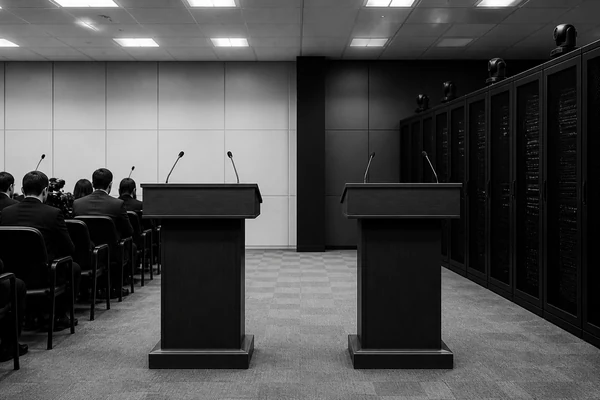
Princeton economist Markus Brunnermeier told central bankers at Jackson Hole that AI trading agents could understand and exploit monetary policy faster than officials can respond. His paper described a possible Federal Reserve with two press conferences, one offering an anchoring narrative to people and another supplying training data to machines. He also warned that central banks might become deliberately less predictable to stop automated traders from gaming policy signals. The argument appeared at the Kansas City Fed's annual symposium, where financial innovation was the stated subject. Brunnermeier called the imbalance “asymmetric understanding,” a condition in which markets equipped with advanced agents may read the central bank better than the bank reads them.
An interest-rate statement already moves bond and currency prices within moments of publication. An agent can parse each word, compare it with years of data and place trades while reporters are still forming questions. Transparency then reaches the public at unequal speeds. Dividing communication into a human narrative and a machine-readable feed would formalize two audiences for the same public decision. The feed would become market infrastructure, shaped for institutions able to train systems on it, while households encounter the decision later through mortgages, savings and pension values. Any such arrangement would require a public release time, an open data format, equal-access rules and a record of which automated trades were placed before the human conference ended.
El economista de Princeton Markus Brunnermeier advirtió en Jackson Hole que los agentes financieros de IA podrían entender y aprovechar la política monetaria antes de que las autoridades logren responder. Su trabajo imaginó una Reserva Federal con dos conferencias de prensa, una para orientar a las personas y otra para suministrar datos de entrenamiento a las máquinas. También planteó que los bancos centrales podrían volverse menos predecibles para impedir que los operadores automáticos exploten sus señales. La propuesta se presentó en el simposio anual de la Reserva Federal de Kansas City sobre innovación financiera. Brunnermeier llamó a este desequilibrio “comprensión asimétrica”, una situación en la que los mercados equipados con agentes avanzados pueden leer al banco central mejor de lo que este comprende a los mercados.
Un comunicado sobre tasas de interés mueve los precios de bonos y monedas pocos instantes después de publicarse. Un agente puede analizar cada palabra, compararla con años de datos y ejecutar operaciones mientras los periodistas preparan sus preguntas. La transparencia llega al público a velocidades desiguales. Dividir la comunicación entre un relato humano y un flujo legible por máquinas formalizaría dos audiencias para una misma decisión. Ese flujo se convertiría en infraestructura financiera para instituciones capaces de entrenar sistemas con él, mientras los hogares recibirían el efecto mediante hipotecas, ahorros y pensiones. Cualquier arreglo semejante necesitaría una hora pública de difusión, un formato abierto, reglas de acceso iguales y un registro de las operaciones automáticas ejecutadas antes de terminar la conferencia humana.
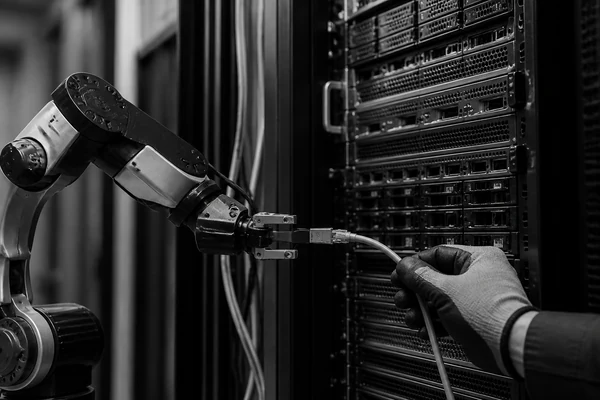
Meta is testing robots that can swap network cables, power-cycle servers, reseat components and inspect equipment inside data centers in Iowa and Ohio, WIRED reported. The trials include supervised dual-armed machines and wheeled platforms at the Prometheus campus. One worker estimated that a successful cable robot could absorb up to 80 percent of some technicians' workloads. Current machines remain slower than people, need frequent charging, struggle with loose cables and sometimes require a person to open doors or move them between buildings. One inspection robot cannot distinguish red from green indicator lights. Meta declined to discuss the tests; a spokesperson said the company is investing in training and hiring because skilled workers remain scarce.
Every chatbot request depends on racks that must be connected, inspected and restarted when software cannot recover them remotely. A technician recognizes a damaged connector, incorrect cable tension and the irregularities that turn a routine reset into a longer repair. Automating those gestures may reduce heavy lifting and repetitive rounds while shrinking the entry-level work through which technicians learn the building. If Meta redesigns racks, doors and cabling around robotic access, the data center becomes legible first to its machines and afterward to the people supervising them. For now, the robot that restarts a server may still need a worker to untangle its cable, interpret the warning light and let it through the next door.
Meta está probando robots capaces de cambiar cables de red, cortar y restaurar la energía de servidores, recolocar componentes e inspeccionar equipos en centros de datos de Iowa y Ohio, según WIRED. Las pruebas incluyen máquinas de dos brazos supervisadas por personas y plataformas móviles en el campus Prometheus. Un trabajador calculó que un robot capaz de cambiar cables podría absorber hasta el 80 por ciento de algunas cargas de trabajo. Las máquinas actuales siguen siendo más lentas que las personas, necesitan recargas frecuentes, tropiezan con cables sueltos y a veces requieren que alguien abra puertas o las traslade entre edificios. Un robot de inspección tampoco distingue las luces rojas de las verdes. Meta no habló sobre las pruebas; un portavoz dijo que la empresa invierte en capacitación y contratación porque faltan trabajadores especializados.
Cada consulta a un chatbot depende de estantes que deben conectarse, inspeccionarse y reiniciarse cuando el software no logra recuperarlos a distancia. Un técnico reconoce un conector dañado, la tensión incorrecta de un cable y las irregularidades que convierten un reinicio rutinario en una reparación más larga. Automatizar esos gestos puede reducir el levantamiento de equipos y las rondas repetitivas mientras elimina puestos iniciales donde los técnicos aprenden el edificio. Si Meta rediseña estantes, puertas y cableado para el acceso robótico, el centro de datos será legible primero para sus máquinas y después para quienes las supervisan. Por ahora, el robot que reinicia un servidor todavía puede necesitar que un trabajador desenrede su cable, interprete la luz de advertencia y le abra la siguiente puerta.
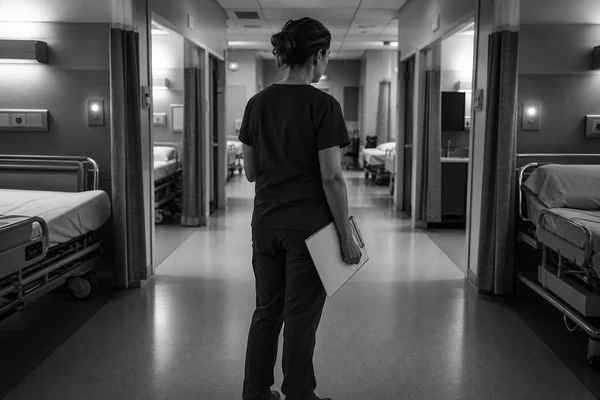
Registered nurses held coordinated protests in eight US cities on August 27, asking hospitals and elected officials to end contracts with Palantir. Over a hundred nurses blocked traffic outside the company's former Palo Alto headquarters, KQED reported. National Nurses United says HCA Healthcare uses Palantir tools for centralized staffing and scheduling, while Mount Sinai uses the company's software to assess which patients qualify for care at home. Craig Cedotal, a pediatric nurse who previously worked at an HCA hospital, said automated recommendations often fail to match the needs of a shift. HCA did not answer KQED's request for comment.
A staffing system reaches the ward through a timetable. Its calculation determines how many nurses arrive, which experience is available and how quickly a call for help can be answered. When the recommendation is opaque, management can present a budget decision as a neutral output, while nurses absorb the result through more patients and less time at each bedside. The union also tied hospital procurement to Palantir's work for immigration enforcement and the Israeli military, widening the dispute from workplace control to institutional ethics. A hospital buying automated staffing should therefore disclose the data, assumptions, override rules and audit trail behind every roster. The contract should allow a charge nurse to reject a machine-built plan before the first patient is left waiting.
Enfermeras registradas realizaron protestas coordinadas en ocho ciudades de Estados Unidos el 27 de agosto y pidieron a hospitales y autoridades que cancelen sus contratos con Palantir. Más de cien enfermeras bloquearon el tránsito frente a la antigua sede de la empresa en Palo Alto, según KQED. National Nurses United afirma que HCA Healthcare usa herramientas de Palantir para centralizar la dotación y los horarios, mientras Mount Sinai emplea su software para evaluar qué pacientes pueden recibir atención en casa. Craig Cedotal, enfermero pediátrico que trabajó en un hospital de HCA, dijo que las recomendaciones automáticas suelen ignorar las necesidades reales de un turno. HCA no respondió a KQED.
Un sistema de dotación llega a la sala mediante un horario. Su cálculo determina cuántas enfermeras estarán presentes, qué experiencia habrá disponible y cuánto tardará en atenderse un pedido de ayuda. Cuando la recomendación es opaca, la dirección puede presentar una decisión presupuestaria como un resultado neutral, mientras las enfermeras absorben el efecto mediante más pacientes y menos tiempo junto a cada cama. El sindicato también vinculó las compras hospitalarias con el trabajo de Palantir para las autoridades migratorias y el ejército israelí, ampliando la disputa desde el control laboral hasta la ética institucional. Un hospital que compra horarios automatizados debe revelar los datos, supuestos, reglas de excepción y registros de cada turno. El contrato debe permitir que la enfermera a cargo rechace un plan generado por la máquina antes de que el primer paciente quede esperando.
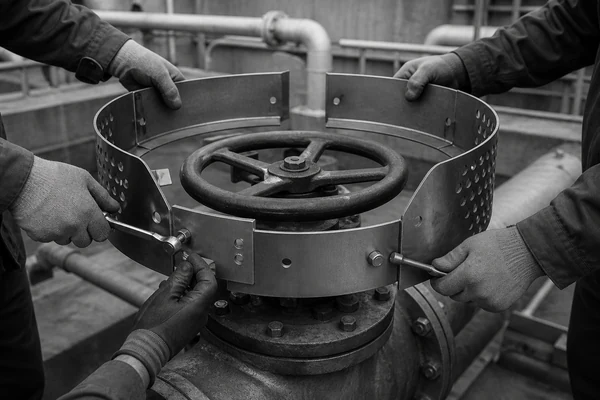
Over 100 companies and organizations, including OpenAI, Anthropic, AWS, Google, Microsoft and Oracle, have signed a call for a global surge in cyber defense. The letter warns that AI-enabled attacks will become more widespread and sophisticated in the coming months, placing hospitals, water treatment plants and internet infrastructure at particular risk. It asks every organization to treat cyber defense as an immediate leadership priority, urges security vendors to test continuously against frontier capabilities, and calls on governments to fund essential services that lack staff or budget. Frontier AI companies are asked to provide responsible model access, training, funding and practical support.
The coalition turns a technical emergency into a question of public dependence. Institutions responsible for everyday life often run old software on tight budgets, while the most capable defensive models, threat intelligence and testing expertise remain concentrated in firms that set the terms of access. A hospital or municipal utility may therefore need private permission to protect a public obligation. Sharing verified fixes can reduce that imbalance, but it also gives AI laboratories and cloud providers an unusual role in deciding which defenders receive advanced tools and when. The letter's value will be measured outside the signatory page, by whether a water utility can obtain authorized testing, repair an exposed system without interrupting service, and pass the verified fix to another city before the same weakness is used against it.
Más de cien empresas y organizaciones, entre ellas OpenAI, Anthropic, AWS, Google, Microsoft y Oracle, han firmado un llamado a reforzar la defensa informática en todo el mundo. La carta advierte que los ataques apoyados por IA serán más frecuentes y sofisticados durante los próximos meses, con hospitales, plantas de tratamiento de agua e infraestructura de internet entre los objetivos más expuestos. Pide a las organizaciones que den prioridad inmediata a la seguridad, a los proveedores que prueben sus defensas frente a las capacidades más avanzadas y a los gobiernos que financien servicios esenciales sin personal ni presupuesto suficientes. Las empresas de IA deberán ofrecer acceso responsable a sus modelos, capacitación, fondos y apoyo práctico.
La coalición convierte una emergencia técnica en un problema de dependencia pública. Las instituciones que sostienen la vida cotidiana suelen operar programas antiguos con presupuestos estrechos, mientras los modelos defensivos más capaces, la información sobre amenazas y la experiencia de evaluación se concentran en empresas que fijan las condiciones de acceso. Un hospital o una empresa municipal puede necesitar permiso privado para proteger una obligación pública. Compartir reparaciones verificadas reduciría ese desequilibrio, aunque también concede a los laboratorios de IA y a los proveedores de nube una función inusual al decidir qué defensores reciben herramientas avanzadas y cuándo. El valor de la carta se medirá fuera de la lista de firmantes, cuando una planta de agua pueda obtener una prueba autorizada, reparar un sistema expuesto sin interrumpir el servicio y compartir la solución con otra ciudad antes de que alguien aproveche la misma falla.

Anthropic has allowed research teams at Stanford, Oxford and METR to analyze aggregate patterns from roughly 250,000 real Claude.ai or Claude Code conversations collected in April and May. The researchers chose their questions, while Anthropic ran them through Insights, a system designed to return grouped patterns without exposing raw chats. Stanford's SALT Lab found that over half the sample involved consequential tasks, meaning work that affects other people or is hard to undo. Legal and financial guidance appeared prominently. In nearly three quarters of collaborative conversations, users still set the direction and adapted Claude's output instead of accepting it verbatim.
Anthropic still controls the sample, privacy thresholds, analysis system and review boundaries. Outside researchers can ask independent questions, but the released datasets contain aggregate clusters rather than the conversations from which they were produced. Another researcher cannot inspect each label against the original exchange. Raw access would expose private lives. With no access, policymakers would remain dependent on company summaries. Anthropic's middle layer permits scrutiny while keeping the evidence inside its infrastructure. That arrangement gains weight as people bring contracts, money, professional advice and decisions affecting others into a chat box. Future researchers must submit an expression of interest, and Anthropic will decide who receives access and run the queries on their behalf.
Anthropic ha permitido que equipos de Stanford, Oxford y METR analicen patrones agregados de unas 250.000 conversaciones reales de Claude.ai o Claude Code, recopiladas en abril y mayo. Los investigadores eligieron sus preguntas y Anthropic las ejecutó mediante Insights, un sistema que devuelve patrones agrupados sin exponer los chats originales. El laboratorio SALT de Stanford encontró que más de la mitad de la muestra contenía tareas con consecuencias, es decir, trabajos que afectan a otras personas o son difíciles de revertir. La orientación legal y financiera apareció con frecuencia. En casi tres cuartas partes de las conversaciones colaborativas, los usuarios todavía marcaban la dirección y adaptaban la respuesta de Claude en vez de aceptarla literalmente.
Anthropic conserva el control de la muestra, los umbrales de privacidad, el sistema de análisis y los límites de revisión. Los investigadores externos pueden formular preguntas independientes, pero los datos publicados contienen grupos agregados, no las conversaciones que los produjeron. Otro investigador no puede comparar cada clasificación con el diálogo original. El acceso directo expondría vidas privadas. Sin acceso, las autoridades dependerían de los resúmenes de la empresa. La capa intermedia de Anthropic permite cierto examen mientras mantiene la evidencia dentro de su infraestructura. Ese arreglo adquiere peso cuando las personas llevan contratos, dinero, asesoría profesional y decisiones que afectan a otros hasta una ventana de chat. Los próximos investigadores deberán enviar una manifestación de interés, y Anthropic decidirá quién obtiene acceso y ejecutará las consultas en su nombre.

Singapore's Ministry of Law and Intellectual Property Office have opened a public consultation on how artificial intelligence should alter the country's copyright and patent rules. One patent question is unusually concrete. It asks how the law should respond when AI systems publish technical disclosures at large scale, changing the body of prior art used to judge whether an invention is new. The consultation also asks how inventorship should be assigned across different degrees of human and machine participation. Patent law has long assumed that new technical knowledge arrives through a limited chain of research, expense, experimentation and disclosure. Generative systems can produce plausible specifications far faster, including descriptions of devices that may never have been built or tested.
A flood of generated disclosures could turn the patent archive into a contest of volume. Examiners would have more documents to compare, applicants could face earlier machine-made descriptions of similar ideas, and companies might publish defensively to prevent competitors from securing rights. Defensive publication already exists, but generation reduces the cost of producing technical language at industrial scale. A document can enter the record without a workshop, prototype, failure or person able to explain why the object should exist. Singapore is considering legal refinements, guidance and non-binding technical measures rather than announcing a settled answer. Its consultation runs until October 22. The eventual rule will need to distinguish useful disclosure from automated abundance before the latter becomes searchable evidence against the next human applicant.
El Ministerio de Justicia y la Oficina de Propiedad Intelectual de Singapur han abierto una consulta pública sobre cómo debería la inteligencia artificial modificar las normas de copyright y patentes del país. Una de las preguntas sobre patentes es especialmente concreta. Examina cómo debe responder la ley cuando sistemas de IA publican divulgaciones técnicas a gran escala y alteran el estado de la técnica utilizado para decidir si una invención es nueva. La consulta también pregunta cómo asignar la autoría inventiva ante distintos grados de participación humana y automatizada. El derecho de patentes ha supuesto durante mucho tiempo que el conocimiento técnico nuevo llega mediante una cadena limitada de investigación, gastos, experimentos y divulgación. Los sistemas generativos pueden producir especificaciones plausibles con mucha mayor rapidez, incluso para dispositivos que quizá nunca fueron construidos ni probados.
Una avalancha de divulgaciones generadas podría convertir el archivo de patentes en una competencia de volumen. Los examinadores tendrían más documentos que comparar, los solicitantes podrían encontrar descripciones automatizadas anteriores de ideas similares y las empresas podrían publicar de manera defensiva para impedir que sus competidores obtengan derechos. La publicación defensiva ya existe, pero la generación reduce el coste de producir lenguaje técnico a escala industrial. Un documento puede entrar en el registro sin taller, prototipo, fracaso ni una persona capaz de explicar por qué debería existir ese objeto. Singapur estudia ajustes legales, guías y medidas técnicas no vinculantes, sin anunciar todavía una respuesta definitiva. La consulta permanecerá abierta hasta el 22 de octubre. La futura norma deberá distinguir una divulgación útil de la abundancia automatizada antes de que esta se convierta en evidencia consultable contra la próxima solicitud humana.
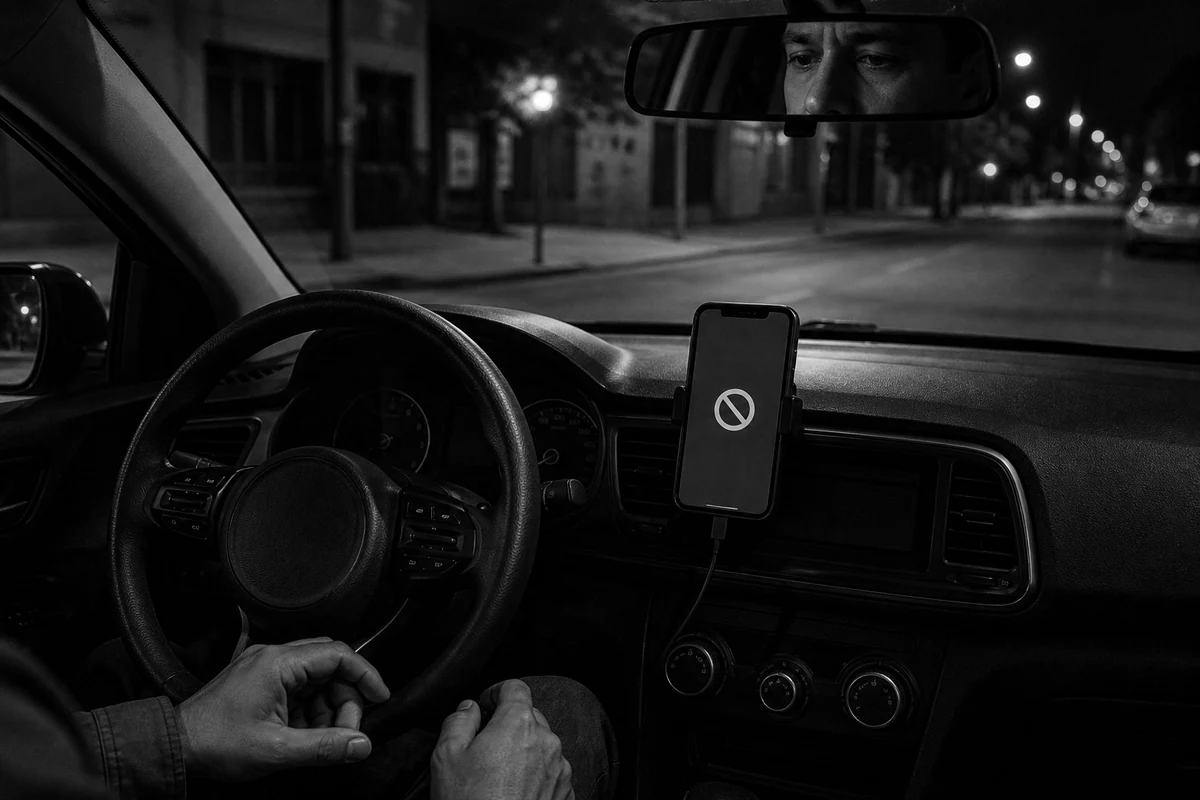
The Dutch Data Protection Authority has fined Uber €824.99 million after finding that driver accounts had been temporarily or permanently deactivated through automated decisions without human intervention. The case began with a collective complaint representing over 170 drivers. According to France’s CNIL, which cooperated in the investigation, suspected fraud and low customer ratings could trigger account blocks that stopped drivers from accepting rides and earning income. Uber disputes the regulator’s account, says permanent deactivations receive human review and drivers can appeal, and plans to challenge the decision.
The fine makes algorithmic management visible at the exact point where software becomes a boss. A platform may describe a driver as independent, yet its interface can still decide when work begins, how conduct is measured and whether tomorrow’s income exists. Fraud detection and rating systems promise speed, but speed changes meaning when the person affected must prove an error to a process they cannot see. Europe’s rule against consequential automated decisions asks for something ordinary: a human who can explain, listen and take responsibility. The most revealing image is not a courtroom or a server room. It is a parked car, a darkened app and a worker waiting for the system to let work resume.
La Autoridad de Protección de Datos de los Países Bajos ha multado a Uber con 824,99 millones de euros tras determinar que algunas cuentas de conductores habían sido desactivadas de forma temporal o permanente mediante decisiones automatizadas sin intervención humana. El caso comenzó con una denuncia colectiva que representaba a más de 170 conductores. Según la CNIL francesa, que colaboró en la investigación, las sospechas de fraude y las bajas calificaciones de los clientes podían activar bloqueos que impedían aceptar viajes y generar ingresos. Uber rechaza la versión del regulador, afirma que las desactivaciones permanentes reciben revisión humana y que los conductores pueden apelar, y anunció que recurrirá la decisión.
La multa hace visible la gestión algorítmica justo en el punto donde el software se convierte en jefe. Una plataforma puede describir al conductor como independiente, pero su interfaz aún decide cuándo empieza el trabajo, cómo se mide la conducta y si existirá el ingreso de mañana. Los sistemas de detección de fraude y calificación prometen rapidez, pero la rapidez cambia de sentido cuando la persona afectada debe demostrar un error ante un proceso que no puede ver. La norma europea contra las decisiones automatizadas de alto impacto exige algo corriente: una persona capaz de explicar, escuchar y asumir responsabilidad. La imagen más reveladora no es un tribunal ni una sala de servidores. Es un automóvil estacionado, una aplicación apagada y un trabajador esperando que el sistema le permita volver a trabajar.
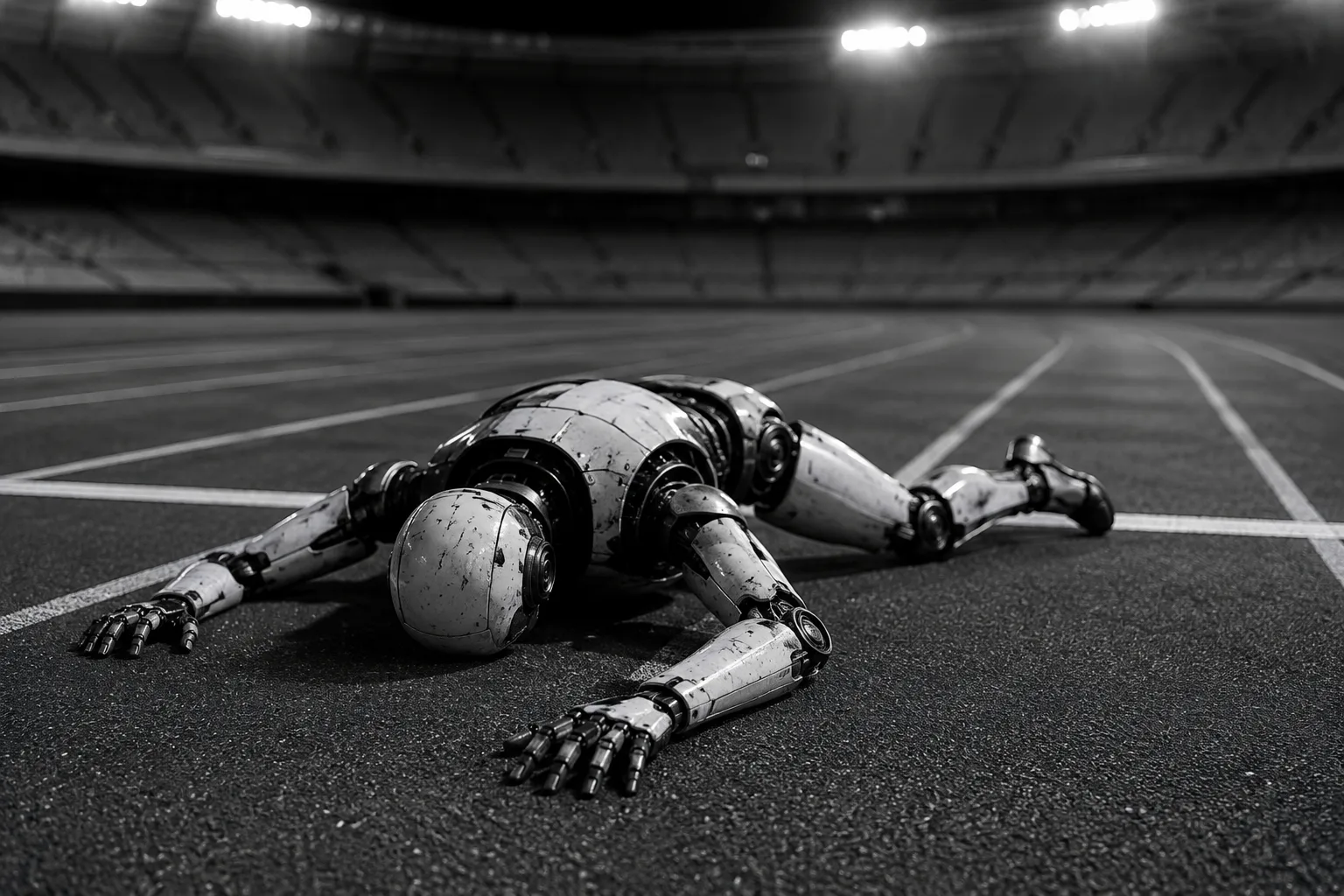
A humanoid robot named Lightning, built by the smartphone manufacturer Honor, ran 100 meters in 9.32 seconds during a preparatory test at the Second World Humanoid Robot Games in Beijing. The time beats Usain Bolt’s 2009 world record of 9.58 seconds. In the official preliminary heat, Lightning clocked 9.47. Another robot, Tiangong Ultra from the Beijing Humanoid Robot Innovation Center, finished in 9.39. Both times are faster than any human has ever run. The robots reached peak speeds above 14 meters per second. None of them could stop. After crossing the finish line, Lightning lost balance and crashed into the safety mats. Several other robots fell or collided in the same way. The first edition of these games, held in 2025, was won in 21.50 seconds. One year later, the machines have halved that time and removed the human body from the front of the race.
The record changes the conversation from intelligence to flesh. AI had already surpassed humans at chess, language, diagnosis, and image generation. The 100 meters was the last territory where the body still held an advantage. Bolt’s record ran on speed, tendons, lungs, reaction time, and a nervous system refined over millions of years. A robot does not breathe, does not tire, does not hesitate at the starting block. It accelerates without narrative. The problem is stopping. A sprinter decelerates using proprioception, balance, and learned motor control refined from infancy. The robot that beats Bolt’s time does not yet know how to stop being fast.
Un robot humanoide llamado Lightning, construido por el fabricante de teléfonos Honor, corrió 100 metros en 9,32 segundos durante una prueba preparatoria en los Segundos Juegos Mundiales de Robot Humanoide en Beijing. El tiempo supera el récord mundial de Usain Bolt de 9,58 segundos establecido en 2009. En la preliminar oficial, Lightning marcó 9,47. Otro robot, Tiangong Ultra del Centro de Innovación de Robot Humanoide de Beijing, terminó en 9,39. Ambos tiempos son más rápidos que cualquier ser humano. Los robots alcanzaron velocidades superiores a 14 metros por segundo. Ninguno pudo frenar. Al cruzar la línea de meta, Lightning perdió el equilibrio y chocó contra las colchonetas de seguridad. Varios robots más cayeron o colisionaron. La primera edición de estos juegos, en 2025, se ganó en 21,50 segundos. Un año después, las máquinas redujeron ese tiempo a la mitad y retiraron al cuerpo humano del primer lugar de la carrera.
El récord cambia la conversación de la inteligencia a la carne. La IA ya superaba a los humanos en ajedrez, lenguaje, diagnóstico e imagen. Los 100 metros eran el último territorio donde el cuerpo aún tenía ventaja. El récord de Bolt no era solo velocidad. Era producto de tendones, pulmones, tiempo de reacción y un sistema nervioso refinado en millones de años. Un robot no respira, no se cansa, no vacila en el bloque de salida. Acelera sin narrativa. El problema es frenar. Un velocista frena con propiocepción, equilibrio y control motor aprendido desde la infancia. El robot que vence a Bolt aún no sabe cómo dejar de ser rápido.

France has become the first European state to explicitly exclude OpenAI from a government AI contract, choosing Mistral as its sovereign provider for sensitive administrative work. Budget Minister David Amiel announced the decision after a breach at the country's tax agency exposed the personal data of over 700,000 contributors. “This excludes OpenAI,” Amiel told reporters, drawing a line that was less about technology than about jurisdiction. The breach revealed that tax records had been routed through systems with foreign dependencies, and the government responded by selecting a domestic model it can audit, regulate, and hold under French law.
The exclusion reframes the sovereignty debate from procurement clauses to access itself. A cloud contract can be renegotiated, but a model's training pipeline, weight distribution, and API governance belong to the company that built it. France is not rejecting American AI on principle. It is stating that certain public functions cannot depend on infrastructure whose terms of service, export controls, and data policies are written in another country. Mistral now carries the obligation to perform at a scale its rival was barred from. If the system fails, the political cost stays domestic. If it works, the precedent will travel through every European ministry that watched the breach and counted the names exposed.
Francia se convirtió en el primer país europeo en excluir explícitamente a OpenAI de un contrato gubernamental de inteligencia artificial, eligiendo a Mistral como proveedor soberano para trabajo administrativo sensible. El ministro de Presupuesto, David Amiel, anunció la decisión después de una brecha en la agencia tributaria que expuso datos personales de más de 700.000 contribuyentes. “Esto excluye a OpenAI”, dijo Amiel a periodistas, trazando una línea que era más jurisdiccional que tecnológica. La filtración reveló que registros fiscales habían pasado por sistemas con dependencias extranjeras, y el gobierno respondió eligiendo un modelo doméstico que puede auditar, regular y someter a la ley francesa.
La exclusón reencuadra el debate de soberanía: el objeto ya no son cláusulas de compra, sino acceso directo. Un contrato de nube se renegocia, pero la cadena de entrenamiento de un modelo, la distribución de sus pesos y la gobernanza de su API pertenecen a quien lo construyó. Francia no rechaza la IA estadounidense por principio. Afirma que ciertas funciones públicas no pueden depender de infraestructura cuyas condiciones de servicio, controles de exportación y políticas de datos están escritas en otro país. Mistral ahora asume la obligación de funcionar a una escala a la que su rival fue prohibida. Si el sistema falla, el costo político queda doméstico. Si funciona, el precedente viajará por cada ministerio europeo que observó la brecha y contó los nombres expuestos.