March | 2026

Yupp is shutting down less than a year after launch despite a $33 million seed round and backing from prominent investors. The service let people submit a prompt, compare answers from hundreds of AI models, and explain which result they preferred. Yupp said 1.3 million users generated millions of preference signals each month, data it hoped model makers would buy. The company concluded that it had not achieved strong enough product-market fit as models improved rapidly and laboratories sought more specialized expert feedback.
The failure marks a change in the value of ordinary human judgment. Yupp treated preference as infrastructure: millions of small decisions about which answer, image, or tone felt better could become a map for training machines. But the market moved toward PhDs, domain specialists, and agentic systems designed for other agents. The general user, once imagined as both beneficiary and teacher of AI, became less commercially distinctive. Yupp’s crowd was real and its data abundant, yet abundance alone did not create a durable customer. The company built a public room where models competed for human approval just as the industry began preparing for machines to evaluate and employ one another. Its closure leaves an uncomfortable question about the companion economy: if human preference is no longer the scarce signal, whose satisfaction will the next generation of systems be optimized to pursue?
Yupp cerrará menos de un año después de su lanzamiento pese a una ronda inicial de 33 millones de dólares y el respaldo de inversores destacados. El servicio permitía enviar una petición, comparar respuestas de cientos de modelos de IA y explicar cuál funcionaba mejor. Yupp afirmó que 1,3 millones de usuarios producían cada mes millones de señales de preferencia que esperaba vender a los desarrolladores. La empresa concluyó que no había alcanzado un ajuste suficiente entre producto y mercado mientras los modelos mejoraban rápidamente y los laboratorios buscaban opiniones de especialistas.
El fracaso marca un cambio en el valor del juicio humano ordinario. Yupp trataba la preferencia como infraestructura: millones de pequeñas decisiones sobre qué respuesta, imagen o tono parecía mejor podían convertirse en un mapa para entrenar máquinas. Pero el mercado avanzó hacia doctores, expertos de dominio y sistemas agentes diseñados para otros agentes. El usuario general, antes imaginado como beneficiario y maestro de la IA, dejó de ser comercialmente distintivo. La multitud de Yupp era real y sus datos abundantes, pero la abundancia no creó un cliente duradero. La empresa construyó una sala pública donde los modelos competían por aprobación humana justo cuando la industria empezaba a preparar máquinas para evaluarse y contratarse entre sí. Su cierre deja una pregunta incómoda: si la preferencia humana ya no es la señal escasa, ¿la satisfacción de quién perseguirá la siguiente generación de sistemas?
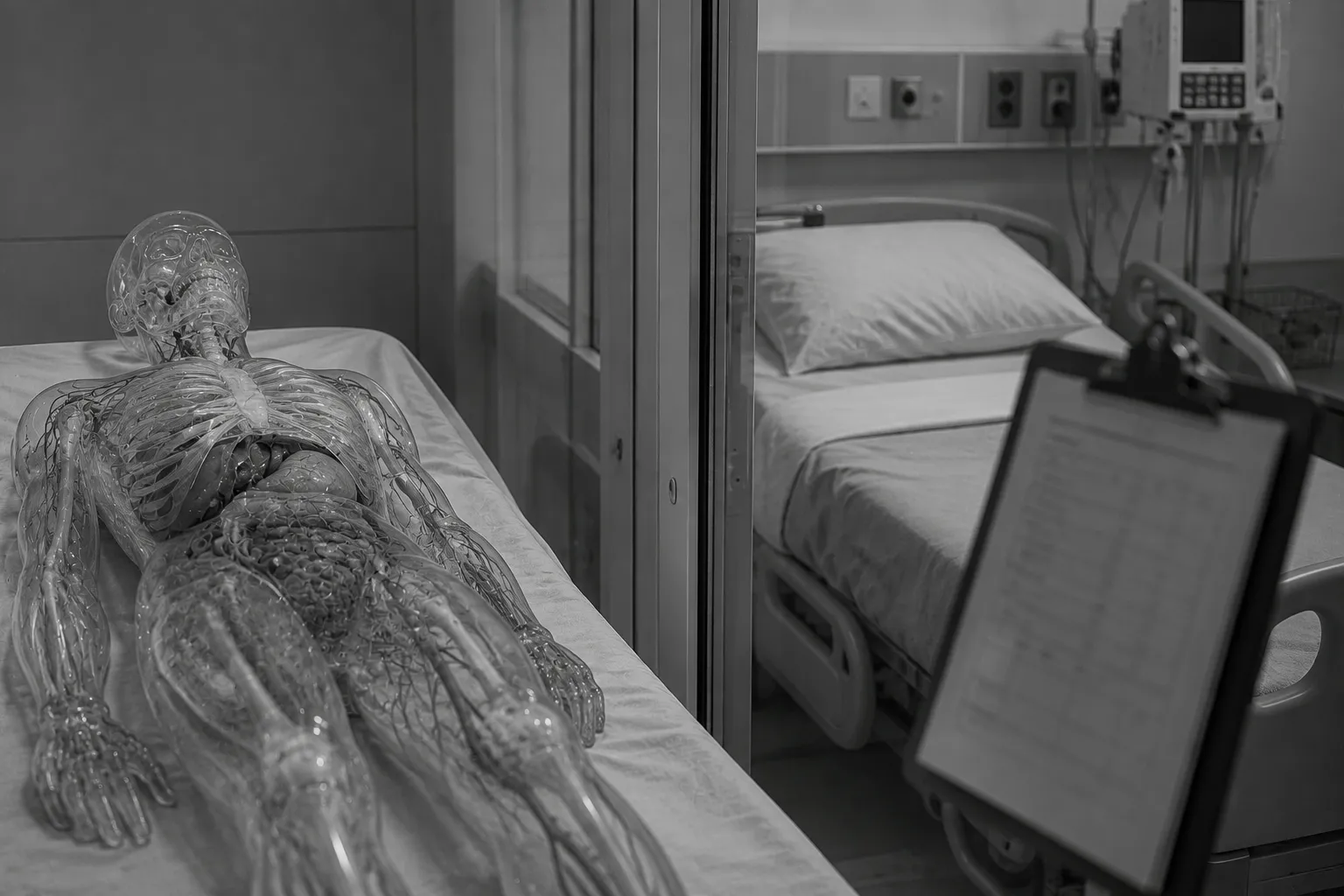
Mantis Biotech is building digital twins of human bodies from medical images, motion capture, biometric sensors, textbooks, training records, and other fragmented sources. Its system uses language models to route and validate the information, then a physics engine to produce synthetic datasets grounded in anatomy and movement. The company says these virtual bodies could help study rare conditions, train surgical robots, predict injuries, and test procedures where real patient data is scarce or ethically difficult to obtain.
A digital twin promises a second patient who can be measured, injured, reset, and observed without pain. That freedom is valuable precisely because medicine cannot experiment casually on a person. It also changes what counts as evidence. The synthetic body is not a neutral copy; it is an argument encoded in assumptions about physics, anatomy, behavior, and the datasets selected to build it. When information is missing, the model must invent a plausible bridge, and rare patients may be represented by the very generalizations the technology is supposed to overcome. Mantis proposes that virtual humans can protect privacy while widening research. The responsibility is to preserve the boundary between simulation and testimony. A digital twin can reveal a possibility, but the living patient remains the one whose body can contradict the model.
Mantis Biotech está construyendo gemelos digitales del cuerpo humano a partir de imágenes médicas, captura de movimiento, sensores biométricos, libros, registros de entrenamiento y otras fuentes fragmentadas. Su sistema emplea modelos de lenguaje para dirigir y validar la información y luego utiliza un motor físico para producir datos sintéticos apoyados en anatomía y movimiento. La empresa sostiene que estos cuerpos virtuales podrían ayudar a estudiar enfermedades raras, entrenar robots quirúrgicos, predecir lesiones y probar procedimientos cuando los datos reales son escasos o difíciles de obtener por razones éticas.
Un gemelo digital promete un segundo paciente que puede medirse, lesionarse, reiniciarse y observarse sin dolor. Esa libertad resulta valiosa precisamente porque la medicina no puede experimentar de manera informal sobre una persona. También cambia lo que cuenta como evidencia. El cuerpo sintético no es una copia neutral; es un argumento codificado mediante supuestos sobre física, anatomía, conducta y los datos elegidos para construirlo. Cuando falta información, el modelo debe inventar un puente verosímil, y los pacientes poco comunes pueden quedar representados por las mismas generalizaciones que la tecnología intenta superar. Mantis propone proteger la privacidad y ampliar la investigación mediante humanos virtuales. La responsabilidad consiste en conservar la frontera entre simulación y testimonio. El gemelo puede revelar una posibilidad, pero el paciente vivo sigue siendo quien puede contradecir al modelo con su cuerpo.

Waymo now provides about 500,000 paid robotaxi rides each week, but its growing fleet has exposed a less automated layer of the service. TechCrunch documented at least six incidents in which first responders had to enter and manually move disabled vehicles. In Austin, an officer responding to a mass shooting was diverted to clear a Waymo from the route. The company has roadside assistance and remote support, yet unusual street conditions can still transfer the final physical task to public workers.
The invisible driver is therefore not absent. It has been distributed across software, remote operators, maintenance teams, police officers, firefighters, road design, and the patience of everyone waiting behind a stalled car. Autonomy looks complete when a trip proceeds normally because this supporting labor remains outside the passenger’s frame. Failure makes the arrangement visible. A private mobility service can collect the fare while the city absorbs part of the cost of exceptions, especially when an immobilized machine becomes an obstacle during an emergency. As more companies deploy robotaxis, the question is no longer whether a vehicle can drive most routes without a person at the wheel. It is who must arrive when it cannot, how quickly they can take control, and whether emergency services should become the roadside crew for an industry built around removing the driver.
Waymo ya ofrece unas 500.000 carreras pagadas en robotaxi cada semana, pero el crecimiento de su flota ha revelado una capa menos automática del servicio. TechCrunch documentó al menos seis incidentes en los que equipos de emergencia tuvieron que entrar y mover manualmente vehículos inmovilizados. En Austin, un policía que respondía a un tiroteo masivo fue desviado para retirar un Waymo de la ruta. La empresa dispone de asistencia vial y soporte remoto, pero las condiciones inusuales de la calle todavía pueden trasladar la tarea física final a trabajadores públicos.
El conductor invisible no ha desaparecido. Se ha distribuido entre software, operadores remotos, equipos de mantenimiento, policías, bomberos, diseño urbano y la paciencia de quienes esperan detrás de un coche detenido. La autonomía parece completa cuando el viaje transcurre con normalidad porque ese trabajo de apoyo queda fuera del encuadre del pasajero. El fallo vuelve visible el sistema. Un servicio privado puede cobrar la tarifa mientras la ciudad absorbe parte del coste de las excepciones, especialmente cuando una máquina bloqueada se convierte en obstáculo durante una emergencia. Con más empresas desplegando robotaxis, la pregunta ya no es si el vehículo recorre la mayoría de las rutas sin alguien al volante. Es quién debe llegar cuando no puede, cuánto tarda en asumir el control y si los servicios de emergencia deben convertirse en asistencia vial de una industria construida alrededor de eliminar al conductor.

Bluesky introduced Attie, a separate AI application that lets people create custom social feeds by describing what they want in natural language. Built on the open AT Protocol and powered by Anthropic’s Claude, the private beta can use a person’s activity across compatible apps to suggest posts and assemble algorithms without requiring code. Bluesky says the longer-term goal is to let users build tools and even social applications on top of the same open network.
Attie reframes recommendation as something a person can author rather than silently receive. The dominant platforms use opaque algorithms to maximize attention, leaving users to infer why a post appeared and what behavior will alter the feed. A conversational builder makes those choices more legible: ask for local art without political arguments, narrow a subject, or construct a public stream for others. Yet the curator is still mediated by another model that interprets the request and decides which signals count. Control does not become absolute; it moves into a negotiation conducted through language. The important change is architectural. Because the feed can travel across an open protocol, it is less tightly bound to a single company’s interface. Attie imagines AI not as the voice filling the network, but as a tool for arranging the human voices already there.
Bluesky presentó Attie, una aplicación de IA independiente que permite crear flujos sociales personalizados describiendo en lenguaje natural lo que se desea ver. Construida sobre el protocolo abierto AT Protocol y basada en Claude de Anthropic, la beta privada puede usar la actividad de una persona en aplicaciones compatibles para sugerir publicaciones y construir algoritmos sin exigir programación. El objetivo a largo plazo es que los usuarios creen herramientas e incluso aplicaciones sociales sobre la misma red abierta.
Attie replantea la recomendación como algo que una persona puede escribir en lugar de recibir en silencio. Las grandes plataformas emplean algoritmos opacos para maximizar la atención, obligando al usuario a adivinar por qué apareció una publicación y qué conducta modificará el flujo. Un constructor conversacional vuelve esas decisiones más legibles: pedir arte local sin discusiones políticas, limitar un tema o diseñar una selección pública para otros. Sin embargo, el curador sigue mediado por otro modelo que interpreta la petición y decide qué señales importan. El control no se vuelve absoluto; se transforma en una negociación realizada mediante lenguaje. El cambio importante es arquitectónico. Como el flujo puede circular por un protocolo abierto, queda menos atado a la interfaz de una sola empresa. Attie imagina la IA no como la voz que llena la red, sino como herramienta para ordenar las voces humanas que ya están allí.

OpenAI indefinitely paused plans for an erotic or adult mode in ChatGPT after months of delays and criticism from safety advocates, advisers, and some employees. The feature had been presented as a way to treat verified adults like adults, but it raised unresolved questions about emotional dependency, age assurance, coercion, and the overlap between sexual conversation and users in crisis. Its cancellation arrived alongside the retreat from Instant Checkout and the closure of the Sora social app.
The abandoned mode reveals a tension in the chatbot as a universal interface. A system designed to answer every kind of request eventually encounters desires that cannot be handled as ordinary content categories. Intimacy asks the product to perform consent, privacy, personality, and care without possessing any of them. Restriction, meanwhile, turns the company into an invisible author of acceptable fantasy. OpenAI’s pause does not remove erotic AI from the market; smaller services already sell companions with fewer boundaries. It does show where a general-purpose platform sees more liability than strategic value. The company is concentrating on coders and business users, moving away from experiments in synthetic entertainment and commerce. Desire was invited into the roadmap as another feature, then cancelled when it became clear that the conversation would also require governance, accountability, and a definition of harm.
OpenAI suspendió indefinidamente sus planes para crear un modo erótico o adulto en ChatGPT después de meses de retrasos y críticas de especialistas en seguridad, asesores y algunos empleados. La función se había presentado como una manera de tratar a los adultos verificados como adultos, pero dejaba preguntas sin resolver sobre dependencia emocional, verificación de edad, coerción y la relación entre conversaciones sexuales y usuarios en crisis. Su cancelación coincidió con el retroceso de Instant Checkout y el cierre de la aplicación social Sora.
El modo abandonado revela una tensión del chatbot entendido como interfaz universal. Un sistema diseñado para responder a cualquier petición termina encontrando deseos que no pueden gestionarse como una categoría ordinaria de contenido. La intimidad exige que el producto represente consentimiento, privacidad, personalidad y cuidado sin poseer ninguno de ellos. La restricción, por otro lado, convierte a la empresa en autora invisible de la fantasía aceptable. La pausa no elimina la IA erótica del mercado; servicios más pequeños ya venden acompañantes con menos límites. Sí muestra dónde una plataforma general percibe más riesgo que valor estratégico. OpenAI concentra su atención en programadores y empresas y se aleja de experimentos de entretenimiento y comercio sintéticos. El deseo entró en la hoja de ruta como otra función y salió cuando quedó claro que también exigía gobierno, responsabilidad y una definición del daño.

Wikipedia’s editors voted 40 to 2 for a policy prohibiting large language models from generating or rewriting article content. The rule does not ban every use of AI. Contributors may accept basic copyediting suggestions on their own writing after human review, provided the system adds no new information. The distinction protects a volunteer encyclopedia whose authority depends on traceable sources, negotiated wording, and editors who can be challenged when a claim is unsupported.
The policy arrives at a paradoxical moment. AI companies train systems on Wikipedia, while those same systems can now produce plausible entries that threaten the conditions under which the encyclopedia remains trustworthy. Generated prose is inexpensive, patient, and difficult to distinguish at scale, but it can smooth uncertainty into confidence and detach statements from the sources that supposedly sustain them. Wikipedia’s response treats writing as an accountable process rather than the final arrangement of sentences. A citation must have been read; an interpretation must belong to someone willing to defend it. The human edit carries accountability beyond a stylistic preference. It is a line of responsibility inside a knowledge system increasingly consumed by machines. The encyclopedia may use automation around its margins, but it refuses to let fluent synthesis replace the social work through which facts become public.
Los editores de Wikipedia aprobaron por 40 votos contra 2 una política que prohíbe utilizar grandes modelos de lenguaje para generar o reescribir el contenido de los artículos. La norma no impide todo uso de IA. Los colaboradores pueden aceptar correcciones básicas sobre sus propios textos después de una revisión humana, siempre que el sistema no introduzca información nueva. La diferencia protege una enciclopedia voluntaria cuya autoridad depende de fuentes rastreables, redacción negociada y editores a quienes se puede cuestionar cuando una afirmación carece de respaldo.
La política llega en un momento paradójico. Las empresas de IA entrenan sus sistemas con Wikipedia, mientras esos mismos sistemas ya pueden producir entradas verosímiles que amenazan las condiciones que mantienen confiable a la enciclopedia. La prosa generada es barata, paciente y difícil de distinguir a gran escala, pero puede convertir la incertidumbre en seguridad y separar afirmaciones de las fuentes que supuestamente las sostienen. La respuesta de Wikipedia entiende la escritura no como la disposición final de frases, sino como un proceso responsable. Una cita debe haber sido leída y una interpretación debe pertenecer a alguien dispuesto a defenderla. La edición humana es una línea de responsabilidad dentro de un sistema de conocimiento consumido cada vez más por máquinas. La enciclopedia acepta automatización en sus márgenes, pero rechaza que la síntesis fluida sustituya el trabajo social que convierte los hechos en algo público.
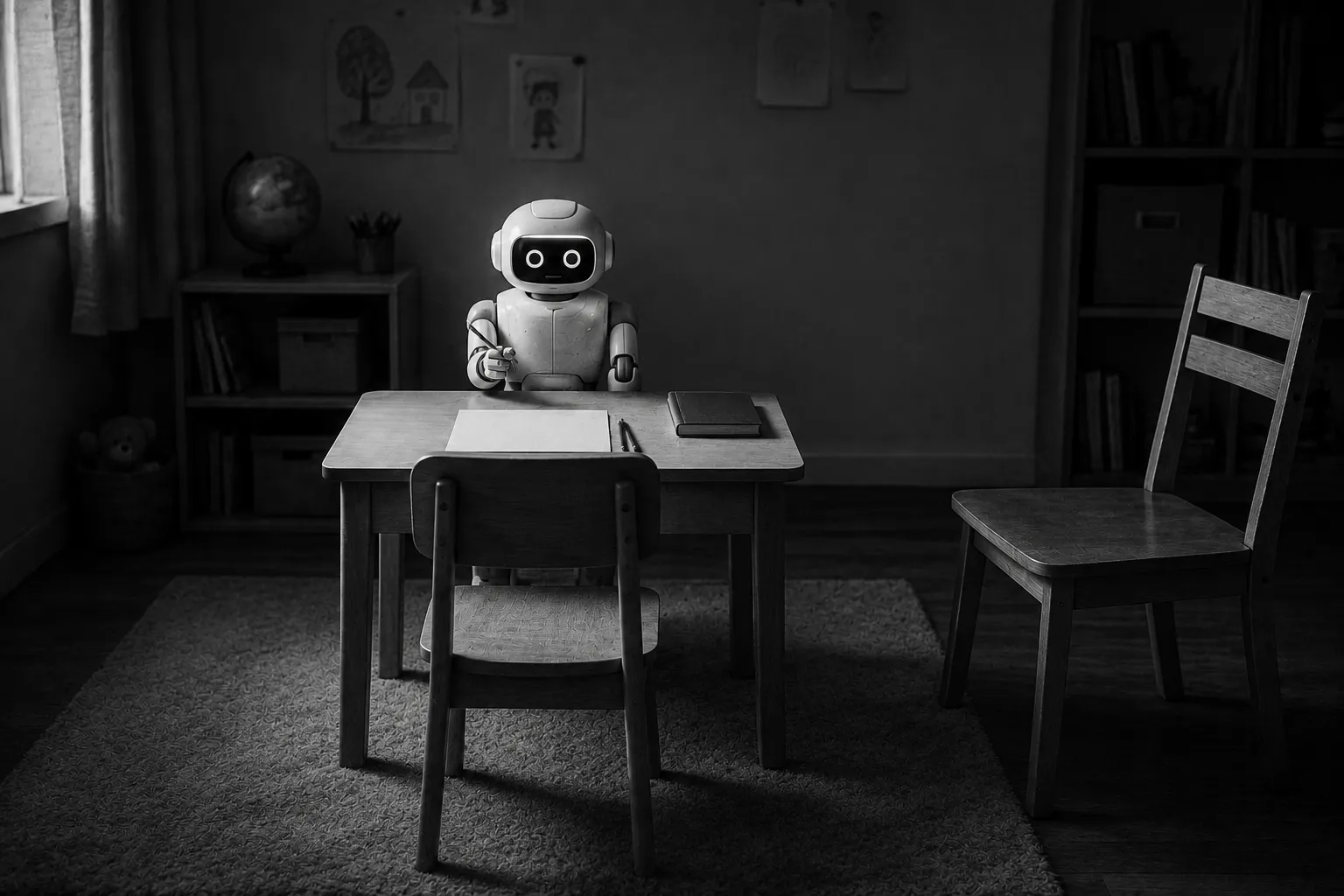
At a White House summit on educational technology, Melania Trump appeared beside a Figure AI humanoid and asked the audience to imagine a robot educator called Plato. The proposed tutor would bring literature, science, art, mathematics, history, and philosophy into the home while adapting to each child and remaining permanently patient. The demonstration was aspirational rather than a description of current robotics, but it joined a growing political and commercial enthusiasm for schools where AI handles more instruction.
The mechanical tutor is compelling because it promises to remove the limits that make education difficult: fatigue, uneven access, scarce specialists, and the fixed pace of a classroom. Those limits are also where teaching becomes a relationship. Patience has meaning when another person chooses to offer it; adaptation involves judgment about a child’s silence, confidence, family, and needs. A robot can present the entire archive while knowing none of the life into which that archive must enter. The image of Plato at home therefore shifts education from a public institution toward a private service delivered by hardware and maintained by a company. Whether machines can explain algebra is secondary to who defines the lesson, observes the child, stores the interaction, and remains accountable when the always-available teacher is wrong.
Durante una cumbre de tecnología educativa en la Casa Blanca, Melania Trump apareció junto a un humanoide de Figure AI y pidió imaginar un robot educador llamado Platón. El tutor propuesto llevaría literatura, ciencia, arte, matemáticas, historia y filosofía al hogar, adaptándose a cada niño y manteniéndose siempre paciente. La demostración era una aspiración y no una descripción de la robótica actual, pero se sumó al creciente entusiasmo político y comercial por escuelas donde la IA asume una parte mayor de la enseñanza.
El tutor mecánico resulta atractivo porque promete eliminar los límites que dificultan la educación: cansancio, acceso desigual, escasez de especialistas y el ritmo fijo del aula. Esos límites también son el lugar donde enseñar se convierte en una relación. La paciencia tiene significado cuando otra persona decide ofrecerla; la adaptación exige interpretar el silencio, la confianza, la familia y las necesidades de un niño. Un robot puede presentar el archivo completo sin conocer la vida en la que debe entrar ese archivo. La imagen de Platón en casa desplaza así la educación desde una institución pública hacia un servicio privado entregado por una máquina y mantenido por una empresa. La pregunta no es si puede explicar álgebra, sino quién define la lección, observa al menor, almacena la interacción y responde cuando el maestro siempre disponible se equivoca.

OpenAI announced that it would close the Sora social app only six months after launching it as an AI-first answer to TikTok. The underlying Sora 2 generation model remains available, but the feed built entirely from synthetic videos failed to sustain its early attention. Appfigures estimated that monthly downloads fell from about 3.3 million in November to 1.1 million in February. The app also carried persistent disputes over deepfakes, public figures, copyrighted characters, and a licensing arrangement with Disney that disappeared with the product.
Sora tested a cultural proposition larger than video generation: whether people wanted to inhabit a social network where every performance could be requested and no recorded event needed to have occurred. The answer was not a complete rejection of synthetic media. Generated clips continue to circulate elsewhere, mixed into feeds whose human origins make the artificial ones more disruptive. What failed was the closed studio, a place where surprise had no stable relationship to reality. Without that contrast, technical wonder became repetition. The shutdown separates the model from the community imagined around it. OpenAI can preserve the engine behind a paywall while abandoning the public square it was meant to fill. The artificial performers remain available; the audience assembled to watch only them has left.
OpenAI anunció el cierre de la aplicación social Sora apenas seis meses después de lanzarla como una respuesta de IA a TikTok. El modelo generativo Sora 2 seguirá disponible, pero el flujo compuesto enteramente por videos sintéticos no mantuvo la atención inicial. Appfigures calculó que las descargas mensuales cayeron de unos 3,3 millones en noviembre a 1,1 millones en febrero. La aplicación también acumuló conflictos por falsificaciones de personas, figuras públicas, personajes protegidos y un acuerdo de licencia con Disney que desapareció junto con el producto.
Sora puso a prueba una propuesta cultural mayor que la generación de video: si la gente quería habitar una red social donde cualquier actuación pudiera solicitarse y ningún acontecimiento grabado tuviera que haber ocurrido. El resultado no fue un rechazo completo de los medios sintéticos. Los clips generados siguen circulando en otras plataformas, mezclados con publicaciones cuyo origen humano vuelve más perturbadoras las artificiales. Lo que fracasó fue el estudio cerrado, un lugar donde la sorpresa no mantenía una relación estable con la realidad. Sin ese contraste, el asombro técnico se convirtió en repetición. El cierre separa el modelo de la comunidad imaginada a su alrededor. OpenAI conserva el motor detrás de una suscripción mientras abandona la plaza pública que pretendía llenar. Los actores artificiales permanecen disponibles; el público reunido para ver solo a ellos se ha marchado.

Apple is reportedly preparing to place search advertising inside Maps, allowing businesses to bid for prominent positions when people look for restaurants, bars, or stores. The ads could arrive in the iOS app during the summer. Google has long monetized local intent this way, but Apple Maps has cultivated a different promise: navigation attached to the company’s language of privacy, restraint, and integrated service rather than an obvious advertising marketplace.
A map appears to describe the world, yet every search result already decides which part of the world becomes visible first. Paid placement makes that decision tradable. The nearest cafe and the highest bidder may occupy the same screen, distinguished by a small label at the moment a traveler is most ready to act. The interface and the meaning of orientation change together. A route becomes a sales opportunity, and geography acquires a price for moving upward in the list. Apple can argue that advertising helps users discover relevant places and supports local businesses. The deeper question is whether a tool trusted to guide movement can sell priority without changing the trust invested in its directions. Once the map accepts bids, commercial influence is no longer around the destination. It becomes part of how the destination is found.
Apple estaría preparando la incorporación de publicidad en las búsquedas de Maps, permitiendo que los negocios pujen por posiciones destacadas cuando alguien busque restaurantes, bares o tiendas. Los anuncios podrían llegar a la aplicación de iOS durante el verano. Google lleva años monetizando esta intención local, pero Apple Maps ha cultivado una promesa distinta: navegación asociada al lenguaje de privacidad, contención y servicio integrado de la empresa, en lugar de un mercado publicitario evidente.
Un mapa parece describir el mundo, aunque cada resultado ya decide qué parte del mundo se vuelve visible primero. La colocación pagada convierte esa decisión en algo negociable. El café más cercano y el mejor postor pueden ocupar la misma pantalla, separados por una pequeña etiqueta justo cuando el viajero está más dispuesto a actuar. No cambia solo la interfaz, sino el significado de orientarse. Una ruta se vuelve oportunidad de venta y la geografía adquiere un precio para ascender en la lista. Apple puede sostener que los anuncios ayudan a descubrir lugares relevantes y apoyan a negocios locales. La cuestión profunda es si una herramienta en la que confiamos para movernos puede vender prioridad sin alterar la confianza depositada en sus indicaciones. Cuando el mapa acepta pujas, la influencia comercial pasa a formar parte del modo en que encontramos el destino.