January | 2026
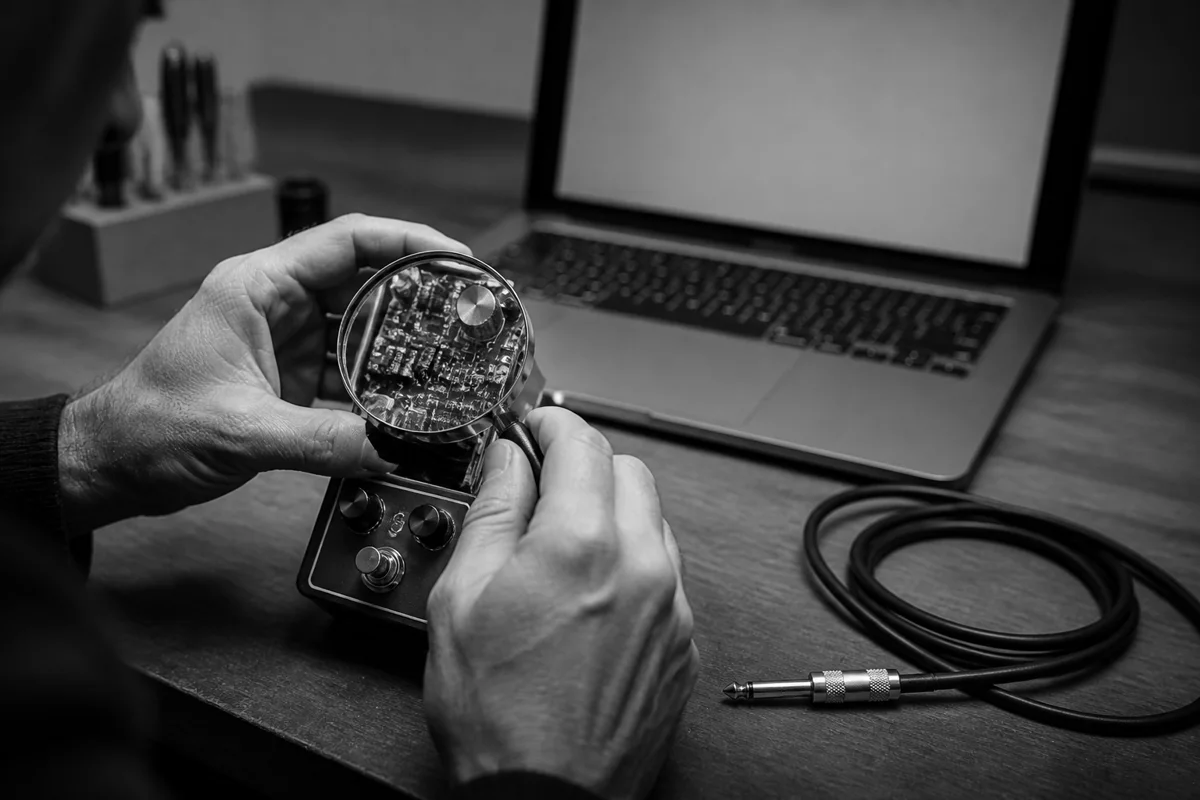
Linus Torvalds used Google's Antigravity coding assistant to build a Python audio visualizer for AudioNoise, his hobby project involving guitar pedals and random digital effects. The creator of Linux admitted that he knew little Python and let the model produce the tool after abandoning his usual search-and-copy routine. His experiment followed an earlier qualification. He was comfortable with so-called vibe coding when the result was kept away from work that carries serious consequences. A small visualizer for a personal electronics project met that boundary.
The episode has been celebrated as permission from one of programming's highest authorities. His authority, however, comes from knowing where the shortcut ends. Torvalds can inspect behavior, recognize a limited task, discard a bad result, and keep generated Python far from the kernel that runs servers and machines around the world. A beginner using the same assistant sees fluent code without the decades of judgment that make the experiment modest. Vibe coding sells the pleasure of obtaining software before acquiring the knowledge needed to evaluate it. In Torvalds's hands, the model fills a gap inside an already disciplined practice. The public lesson will be less careful if his name becomes an endorsement detached from the workbench, the guitar pedal, and the decision that this particular program was allowed to fail.
Linus Torvalds usó el asistente de programación Antigravity de Google para crear un visualizador de audio en Python para AudioNoise, su proyecto personal de pedales de guitarra y efectos digitales aleatorios. El creador de Linux admitió que sabía poco de Python y dejó que el modelo produjera la herramienta después de abandonar su rutina de buscar y copiar ejemplos. El experimento respetaba una condición que había formulado antes. Aceptaba el llamado vibe coding siempre que el resultado quedara lejos de cualquier trabajo con consecuencias serias. Un pequeño visualizador para un proyecto casero cumplía ese límite.
El episodio ha circulado como permiso concedido por una de las mayores autoridades de la programación. Su autoridad proviene precisamente de saber dónde termina el atajo. Torvalds puede revisar el comportamiento, reconocer una tarea limitada, desechar un mal resultado y mantener el Python generado lejos del núcleo que ejecuta servidores y máquinas en todo el mundo. Un principiante ve código fluido sin las décadas de criterio que vuelven modesto el experimento. El vibe coding vende el placer de obtener software antes de adquirir el conocimiento para evaluarlo. En manos de Torvalds, el modelo llena un vacío dentro de una práctica disciplinada. La enseñanza pública será menos cuidadosa si su nombre queda separado del banco de trabajo, el pedal de guitarra y la decisión de permitir que este programa pudiera fallar.

Hupo, a Singapore startup backed by Meta, has grown after pivoting from mental wellness into AI sales coaching for banks, insurers, and financial services firms, TechCrunch reported on January 12th. The company began as Ami, a platform about pressure, habits, and behavior change. Its current product listens to sales conversations, trains on financial products and common objections, and gives workers coaching inside regulated sales environments where managers cannot sit in on every call.
The sales therapist moves the vocabulary of care into the machinery of persuasion. Resilience, confidence, feedback, and performance once belonged to training rooms, sports psychology, and the softer edges of corporate wellness. Hupo places those words beside insurance scripts, banking products, compliance rules, and targets. The worker is helped, but the help is aimed at conversion. A hesitant employee receives guidance at the moment of pressure, while the institution receives a more consistent voice speaking to the customer. The old wellness platform asked how a person handles stress. The new coaching system asks how that stress can be shaped into a better close.
Hupo, una startup de Singapur respaldada por Meta, creció después de pasar del bienestar mental al entrenamiento de ventas con IA para bancos, aseguradoras y firmas de servicios financieros, informó TechCrunch el 12 de enero. La empresa comenzó como Ami, una plataforma sobre presión, hábitos y cambio de conducta. Su producto actual escucha conversaciones de ventas, se entrena con productos financieros y objeciones frecuentes, y ofrece guía a trabajadores dentro de entornos regulados donde los gerentes no pueden presenciar cada llamada.
El terapeuta de ventas desplaza el vocabulario del cuidado hacia la maquinaria de la persuasión. Resiliencia, confianza, retroalimentación y rendimiento pertenecían a salas de formación, psicología deportiva y zonas blandas del bienestar corporativo. Hupo coloca esas palabras junto a guiones de seguros, productos bancarios, reglas de cumplimiento y metas. El trabajador recibe ayuda, pero esa ayuda apunta a la conversión. Un empleado inseguro recibe guía en el momento de presión, mientras la institución recibe una voz más consistente frente al cliente. La vieja plataforma de bienestar preguntaba cómo una persona maneja el estrés. El nuevo sistema de entrenamiento pregunta cómo ese estrés puede moldearse para cerrar mejor.

Google introduced the Universal Commerce Protocol, an open standard designed to let AI shopping agents move through product discovery, checkout, and customer service across different retailers. Shopify, Etsy, Wayfair, Target, and Walmart helped develop it. Google plans to use the protocol in Search's AI Mode and Gemini, where eligible shoppers in the United States will be able to buy from retailers without leaving the conversation. Payment and shipping details can pass from a saved wallet into the transaction while brands offer discounts during the recommendation itself.
The protocol gives conversation a cash register. A shopper can describe a room, a budget, and a habit, then receive a product and complete the purchase inside the same answer. Search once exposed a row of links whose differences could be compared. The agent reduces that field to a recommendation shaped by merchant data, advertising offers, wallet access, and rules written into the protocol. Convenience depends on how quietly those interests are combined. Retailers gain a route into the answer, Google retains the interface, and the customer contributes enough personal detail to make the suggestion feel unusually apt. The final click may disappear, but consent still has to occur somewhere. It will be buried in the moment when a helpful sentence becomes an order confirmation.
Google presentó Universal Commerce Protocol, un estándar abierto para que los agentes de compra con IA recorran la búsqueda de productos, el pago y la atención al cliente en comercios distintos. Shopify, Etsy, Wayfair, Target y Walmart participaron en su desarrollo. Google planea usarlo en el modo IA de Search y en Gemini, donde los compradores elegibles de Estados Unidos podrán comprar sin salir de la conversación. Los datos de pago y envío pasarán desde una billetera guardada mientras las marcas ofrecen descuentos dentro de la propia recomendación.
El protocolo instala una caja registradora en la conversación. Una persona puede describir una habitación, un presupuesto y una costumbre, recibir un producto y completar la compra dentro de la misma respuesta. Antes, la búsqueda mostraba una fila de enlaces cuyas diferencias podían compararse. El agente reduce ese campo a una recomendación moldeada por datos del comercio, ofertas publicitarias, acceso a la billetera y reglas incluidas en el protocolo. La comodidad depende de que esos intereses se mezclen con discreción. Los comercios entran en la respuesta, Google conserva la interfaz y el cliente aporta detalles personales suficientes para que la sugerencia parezca exacta. El clic final puede desaparecer, pero el consentimiento tendrá que ocurrir en algún sitio, quizá dentro del instante en que una frase servicial se convierte en confirmación de compra.

Larian Studios said it would not use generative AI for concept art or writing, The Verge reported around the studio's January 9th Reddit AMA after the success of Baldur's Gate 3. The statement matters because game production is under pressure from tools that promise cheaper drafts, faster assets, and endless variations. Larian did not reject software as such. It drew a line around the parts of the game where voice, image, character, and world-building carry the signature of human labor.
The refused shortcut has become a public credential. In a field where publishers can hide automation inside pipelines, a studio's promise of human authorship now works like a mark of origin. Players may never see the internal documents that prove it, but they understand the difference between a world assembled from convenient averages and one argued over by writers, artists, designers, actors, and editors. That difference is economic as much as aesthetic. Refusing generative art and writing means accepting slower labor, higher costs, and fewer disposable variants. It also tells the audience where to place credit when a character speaks, a quest turns, or a fictional city feels made rather than filled.
Larian Studios dijo que no usará IA generativa para arte conceptual ni escritura, informó The Verge alrededor del AMA de Reddit del estudio el 9 de enero, después del éxito de Baldur's Gate 3. La declaración importa porque la producción de videojuegos está bajo presión de herramientas que prometen borradores más baratos, activos más rápidos y variaciones infinitas. Larian no rechazó el software como tal. Trazó una línea alrededor de las partes del juego donde voz, imagen, personaje y construcción de mundo llevan la firma del trabajo humano.
El atajo rechazado se convirtió en credencial pública. En un campo donde las editoras pueden esconder automatización dentro de pipelines, la promesa de autoría humana de un estudio funciona ahora como marca de origen. Los jugadores quizá nunca vean los documentos internos que lo prueban, pero entienden la diferencia entre un mundo armado con promedios convenientes y uno discutido por escritores, artistas, diseñadores, actores y editores. Esa diferencia es económica tanto como estética. Rechazar arte y escritura generativos significa aceptar trabajo más lento, costos más altos y menos variantes desechables. También le dice al público dónde colocar el crédito cuando un personaje habla, una misión gira o una ciudad ficticia se siente hecha en lugar de rellenada.
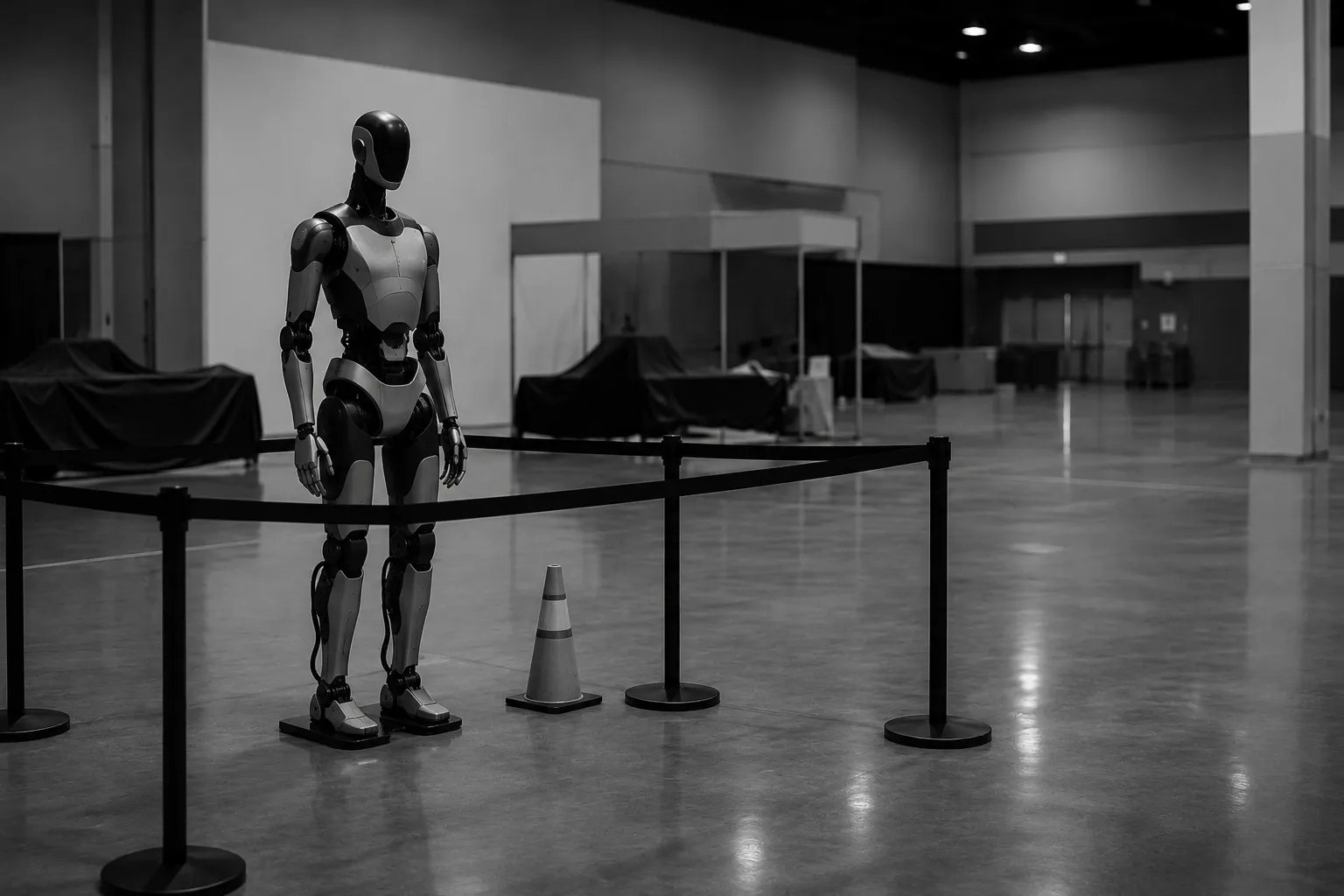
AI collectibles appeared across CES as companies tried to turn figurines, desk toys, and licensed characters into objects that can speak, remember preferences, and respond to owners, The Verge reported on January 9th. Products such as Buddyo and Heymates framed the collectible as an interactive companion rather than a static ornament. The pitch borrows from Funko Pops, Amiibo, smart speakers, and companion chatbots, then compresses them into a small figure meant to sit on a shelf and answer back.
The speaking object changes the strange contract of collecting. A figurine used to ask for display, care, scarcity, and recognition from other fans. Its silence was part of its dignity. Adding AI gives the object a service layer and gives the company a way to keep charging after the purchase. The collector no longer owns only a character likeness. He owns a device with firmware, accounts, updates, permissions, possible subscriptions, and a voice shaped by licensing rules. Fandom becomes easier to monetize because affection now has an interface. The shelf item can greet, prompt, flatter, and collect small signals from the room where it once merely gathered dust.
Los coleccionables con IA aparecieron por todo CES mientras varias compañías intentaban convertir figuritas, juguetes de escritorio y personajes licenciados en objetos capaces de hablar, recordar preferencias y responder a sus dueños, informó The Verge el 9 de enero. Productos como Buddyo y Heymates presentaron el coleccionable como compañero interactivo en lugar de adorno estático. La propuesta toma elementos de Funko Pops, Amiibo, bocinas inteligentes y chatbots companion, y los comprime en una figura pequeña destinada a sentarse en un estante y contestar.
El objeto que habla cambia el contrato extraño del coleccionismo. Una figura solía pedir exhibición, cuidado, rareza y reconocimiento de otros fans. Su silencio era parte de su dignidad. Agregar IA le da al objeto una capa de servicio y le da a la empresa una forma de seguir cobrando después de la compra. El coleccionista ya no posee solo la apariencia de un personaje. Posee un dispositivo con firmware, cuentas, actualizaciones, permisos, posibles suscripciones y una voz moldeada por reglas de licencia. El fandom se vuelve más fácil de monetizar porque el afecto ahora tiene interfaz. El objeto del estante puede saludar, sugerir, halagar y recoger pequeñas señales de la habitación donde antes solo acumulaba polvo.

The European Commission ordered X to retain documents related to Grok through the end of 2026 as regulators examined the chatbot's ability to generate nonconsensual undressing images, The Verge reported on January 8th, citing Reuters. The same week, UK officials and American lawmakers pressed Apple, Google, and X over the feature and its availability through app stores. The scandal is no longer confined to a model's output. It has become a chain of distribution, custody, logs, screenshots, and corporate responsibility.
The undressing bot exposes the old weakness of platform moderation in a sharper form. Harm can now be produced inside the product, by a user who needs no editing skill and by a system marketed as entertainment or assistance. The victim may never touch the tool, yet the tool uses her image as material. Regulators understand why document retention matters. A synthetic violation leaves traces in prompts, safety filters, moderation queues, app updates, internal warnings, and decisions to keep the feature alive. The image may be fake. The administrative trail around it is real, and it points back to companies that approved the room where the fake body was made.
La Comisión Europea ordenó a X conservar documentos relacionados con Grok hasta finales de 2026 mientras los reguladores examinan la capacidad del chatbot para generar imágenes de desnudez no consentida, informó The Verge el 8 de enero al citar a Reuters. Esa misma semana, funcionarios británicos y legisladores estadounidenses presionaron a Apple, Google y X por la función y por su disponibilidad en tiendas de aplicaciones. El escándalo ya no queda confinado a la salida de un modelo. Se volvió una cadena de distribución, custodia, logs, capturas de pantalla y responsabilidad corporativa.
El bot que desnuda expone la vieja debilidad de la moderación de plataformas en una forma más aguda. El daño puede producirse ahora dentro del producto, por un usuario sin habilidad de edición y por un sistema vendido como entretenimiento o asistencia. La víctima quizá nunca toca la herramienta, pero la herramienta usa su imagen como material. Los reguladores entienden por qué importa conservar documentos. Una violación sintética deja huellas en prompts, filtros de seguridad, colas de moderación, actualizaciones de app, advertencias internas y decisiones para mantener viva la función. La imagen puede ser falsa. El rastro administrativo que la rodea es real y vuelve hacia las empresas que aprobaron la sala donde se fabricó el cuerpo falso.

OpenAI launched ChatGPT Health on January 7th, The Verge reported, encouraging users to connect medical records while warning that the product is not intended for diagnosis or treatment. The service can organize records, explain lab results, prepare questions for doctors, and store health context inside a familiar chat interface. OpenAI also introduced healthcare products for clinical organizations, with templates for discharge summaries, patient instructions, and evidence review. The company is entering medicine through two doors at once: the consumer account and the institutional workflow.
The health account turns medical memory into something portable, conversational, and unusually tempting. A patient who has struggled with portals, PDFs, lab codes, and specialist notes can now ask a system to translate the archive into usable language. That relief has a price. The body becomes another data source waiting to be synchronized, summarized, and kept ready for the next prompt. The interface may say it is not a doctor, but it sits beside the appointment, rehearses the questions, stores the history, and prepares the patient to speak. Medicine does not enter the chatbot as a theory. It arrives as allergies, scans, discharge instructions, and the small panic of an unread result.
OpenAI lanzó ChatGPT Health el 7 de enero, informó The Verge, alentando a los usuarios a conectar expedientes médicos mientras advierte que el producto no está destinado al diagnóstico ni al tratamiento. El servicio puede organizar registros, explicar resultados de laboratorio, preparar preguntas para médicos y guardar contexto de salud dentro de una interfaz de chat familiar. OpenAI también presentó productos sanitarios para organizaciones clínicas, con plantillas para resúmenes de alta, instrucciones para pacientes y revisión de evidencia. La compañía entra en la medicina por dos puertas a la vez: la cuenta del consumidor y el flujo institucional.
La cuenta de salud convierte la memoria médica en algo portátil, conversacional y tentador. Un paciente que ha peleado con portales, PDFs, códigos de laboratorio y notas de especialistas puede pedirle ahora a un sistema que traduzca el archivo a lenguaje útil. Ese alivio tiene precio. El cuerpo se vuelve otra fuente de datos esperando ser sincronizada, resumida y mantenida lista para el siguiente prompt. La interfaz puede decir que no es un médico, pero se sienta junto a la cita, ensaya preguntas, guarda la historia y prepara al paciente para hablar. La medicina no entra al chatbot como teoría. Llega como alergias, escaneos, instrucciones de alta y el pequeño pánico de un resultado sin leer.

A viral Reddit confession about a food delivery app exploiting drivers turned out to be AI-generated, TechCrunch reported on January 6th. The post claimed to come from a drunk developer using public library Wi-Fi to expose company fraud. It reached Reddit's front page, gathered more than 87,000 upvotes, and spread to X with millions of impressions. When Platformer journalist Casey Newton tried to verify the source, the supposed whistleblower sent a fake employee badge and an 18-page internal document describing a driver desperation score. The evidence collapsed under scrutiny.
The false whistleblower is a new figure in the economy of outrage. The story worked because it resembled real abuse. Delivery platforms have been sued over tips, wages, and opaque algorithms, so the fake confession arrived with the right moral shape. Generative tools lowered the cost of producing supporting material: a badge, a technical document, a plausible voice, a scene of nervous exposure. Verification still mattered, but it arrived after the public had already rehearsed belief. The hoax did not need to persuade everyone forever. It only needed to borrow credibility long enough for anger to circulate as fact.
Una confesión viral en Reddit sobre una app de delivery que explotaba a sus conductores resultó generada con IA, informó TechCrunch el 6 de enero. La publicación decía venir de un desarrollador borracho que usaba el Wi-Fi de una biblioteca pública para denunciar fraude corporativo. Llegó a la portada de Reddit, reunió más de 87.000 votos positivos y se extendió a X con millones de impresiones. Cuando el periodista Casey Newton, de Platformer, intentó verificar la fuente, el supuesto denunciante envió una credencial falsa de empleado y un documento interno de 18 páginas que describía un puntaje de desesperación para conductores. La evidencia se derrumbó bajo escrutinio.
El falso denunciante es una figura nueva en la economía de la indignación. La historia funcionó porque se parecía al abuso real. Las plataformas de delivery han enfrentado demandas por propinas, salarios y algoritmos opacos, así que la confesión falsa llegó con la forma moral adecuada. Las herramientas generativas bajaron el costo de producir material de apoyo: una credencial, un documento técnico, una voz plausible, una escena de exposición nerviosa. La verificación seguía importando, pero llegó después de que el público ya había ensayado la creencia. El engaño no necesitaba convencer a todos para siempre. Solo necesitaba tomar prestada credibilidad el tiempo suficiente para que la rabia circulara como hecho.
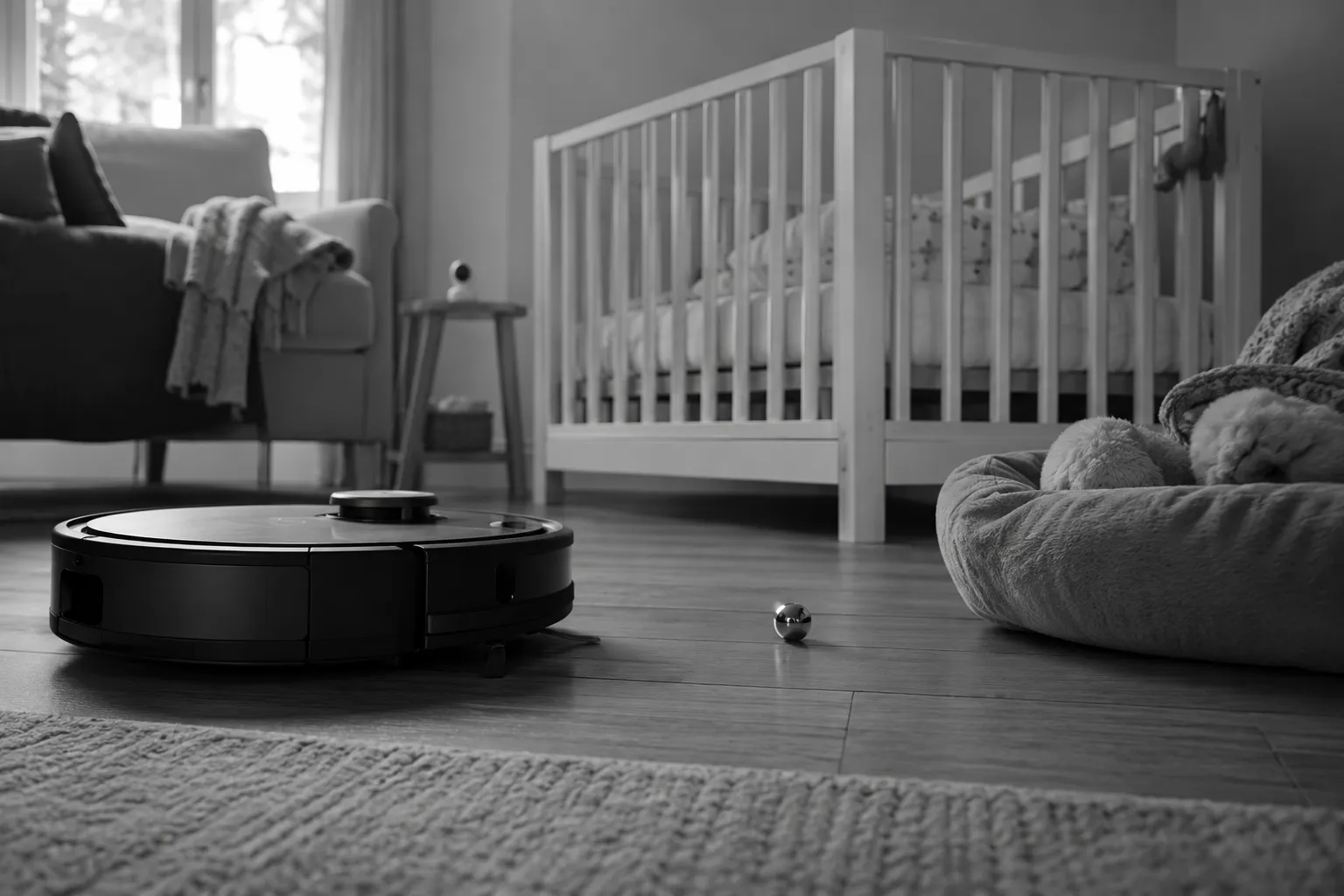
Narwal introduced robot vacuums with AI features that can monitor pets, recognize misplaced toys, switch to quiet mode near a crib, and identify valuable objects such as jewelry, TechCrunch reported on January 5th. The company's Flow 2 uses two 1080p cameras and object-recognition models to map a home. It first tries to identify objects locally, then sends data to the cloud when it cannot find a match. The product is sold as cleaning equipment, but its new pitch depends on watching the domestic floor as a field of signs.
The domestic sensor enters the house low to the ground. It sees what falls, what moves, what rests, and what the family forgot to pick up. That position is useful because the home is full of small emergencies: a pet out of place, a toy near a crib, a ring under a table, dirt that needs a second pass. It is also intimate because those details form a household biography. The vacuum learns the crib's location, the pet's corner, the difference between clutter and value, and the route between them. Assistance arrives as classification. The room is cleaned, but it is also translated into zones, objects, habits, and alerts.
Narwal presentó aspiradoras robot con funciones de IA capaces de monitorear mascotas, reconocer juguetes fuera de lugar, activar modo silencioso cerca de una cuna e identificar objetos valiosos como joyas, informó TechCrunch el 5 de enero. El Flow 2 de la compañía usa dos cámaras 1080p y modelos de reconocimiento de objetos para mapear una casa. Primero intenta identificar objetos de forma local y luego envía datos a la nube cuando no encuentra coincidencia. El producto se vende como equipo de limpieza, pero su nueva promesa depende de mirar el piso doméstico como un campo de señales.
El sensor doméstico entra a la casa pegado al suelo. Ve lo que cae, lo que se mueve, lo que descansa y lo que la familia olvidó recoger. Esa posición es útil porque el hogar está lleno de pequeñas emergencias: una mascota fuera de lugar, un juguete cerca de una cuna, un anillo bajo una mesa, suciedad que exige una segunda pasada. También es íntima porque esos detalles forman una biografía doméstica. La aspiradora aprende la ubicación de la cuna, el rincón de la mascota, la diferencia entre desorden y valor, y la ruta entre ellos. La asistencia llega como clasificación. La habitación queda limpia, pero también traducida en zonas, objetos, hábitos y alertas.