Why not ask the patient?
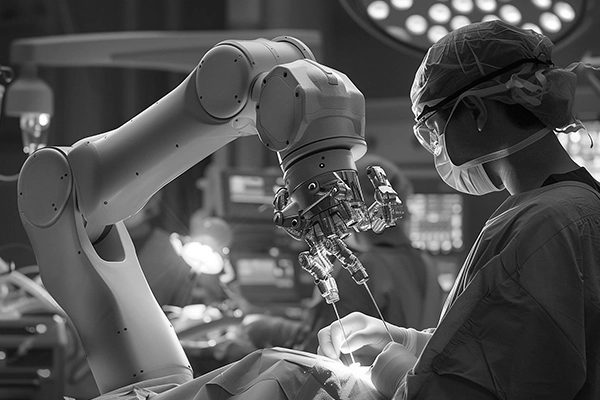
Matt McLeod’s surgery was a success. An augmented reality visor gave surgeons a three-dimensional, precise view of his spine, making the procedure far easier. The use of AI in the operating room marks a paradigm shift in medical practice. The Xvision Spine system will allow more exact, less invasive interventions, guiding screw placement, monitoring oxygen, and locating instruments in real time. It has been approved after positive clinical trials. Soon we may see robots suturing intestines with a literal pulse of steel or detecting residual cancer in the brain. Such breakthroughs blur the boundary of how far machines may be allowed to replace physicians. In any case, they will strengthen the physician’s role and help in making better decisions under pressure.
Although the results inspire enthusiasm, they also provoke unease among skeptics who question the degree of autonomy given to machines. We are approaching an inflection point that compels us to reconsider whether medical knowledge will remain the exclusive domain of humans or shift toward a hybrid entanglement with technology. Should that occur, it will bring ethical, epistemological, and practical consequences. A stethoscope extends the senses and allows the ear to hear what it otherwise could not. AI, by contrast, analyzes thousands of medical records and suggests a diagnosis. It ceases to be a mere tool and instead participates in the genesis of knowledge, redefining the role of human judgment in clinical practice.
¿Por qué no le preguntan al enfermo?
La operación de Matt McLeod fue un éxito. Un visor de realidad aumentada ofreció a los cirujanos una visión tridimensional de su columna vertebral. Fue mucho más fácil. El uso de la IA en el quirófano marca un cambio de paradigma en la práctica médica. El sistema Xvision Spine permitirá intervenciones exactas, menos invasivas, guiando la colocación de tornillos, monitoreando el oxígeno e localizando los instrumentos en tiempo real. Han sido aprobados tras ensayos clínicos positivos. Veremos robots suturar intestinos con un pulso de acero literal o detectar cáncer residual en el cerebro. Estas irrupciones vuelven difuso el límite de hasta dónde se permitirá a la máquina sustituir al médico. En todo caso, potenciarán su labor y lo ayudarán a tomar mejores decisiones bajo presión.
Aunque los resultados generan entusiasmo, provocan recelo en muchos escépticos que cuestionan el nivel de autonomía de la máquina. Nos acercamos a un punto de inflexión que obliga a repensar si el conocimiento médico seguirá siendo patrimonio exclusivo de los humanos o pasará a un entramado híbrido con la tecnología. De ocurrir, traerá consecuencias éticas, epistemológicas y prácticas. Un estetoscopio, extiende los sentidos y permite oír lo que el oído no capta. La IA analiza miles de historiales y sugiere un diagnóstico. Deja de ser una herramienta para participar en la génesis del conocimiento, redefiniendo el papel del juicio humano en la práctica clínica.









