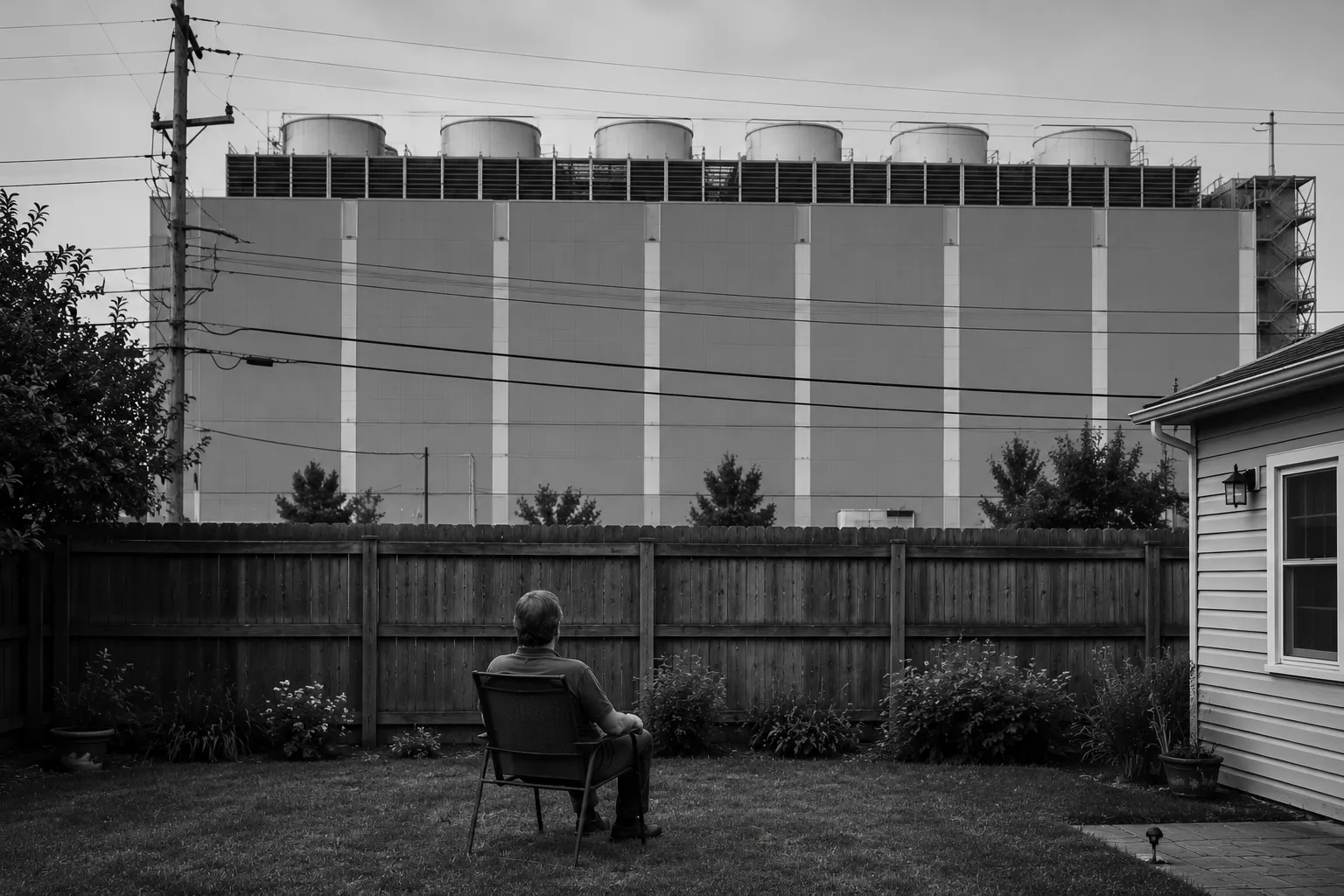
The Unwanted Neighbor
Americans are growing wary of the data centers arriving near their homes. A Harvard and MIT poll of 1,000 people found 40 percent supported a local facility and 32 percent opposed one, with an e-commerce warehouse drawing greater acceptance. Two-thirds worried that a data center would raise regional electricity prices. A separate Quinnipiac survey of 1,397 adults found a harsher result, with 65 percent opposing an AI data center in their community and 24 percent supporting it.
The warehouse comparison strips away the polished language surrounding AI infrastructure. A fulfillment center brings trucks, traffic, and difficult jobs, but residents can see the exchange being proposed. Data centers occupy enormous buildings, consume electricity and water, and employ relatively few people after construction. Their product leaves through cables, while neighbors remain with cooling equipment, transmission demands, tax agreements, and possible pressure on utility bills. Promises of innovation have little force at a zoning meeting when the permanent payroll is small and households suspect they will subsidize industrial power use. The backlash turns cloud computing into a local argument over land and rates. Companies seeking new sites will have to persuade elected officials and utility customers who can identify the building behind the service and calculate what it adds to the monthly bill.
El vecino indeseado
La población estadounidense mira con creciente recelo los centros de datos que llegan cerca de sus casas. Una encuesta de Harvard y MIT realizada a 1.000 personas encontró un 40 por ciento de apoyo a una instalación local y un 32 por ciento de rechazo, mientras un almacén de comercio electrónico obtenía mayor aceptación. Dos tercios temían que el centro elevara el precio regional de la electricidad. Otra encuesta de Quinnipiac entre 1.397 adultos registró un resultado más duro, con un 65 por ciento en contra de construir un centro de IA en su comunidad y un 24 por ciento a favor.
La comparación con el almacén elimina el lenguaje pulido que rodea a la infraestructura de IA. Un centro logístico trae camiones, tráfico y empleos difíciles, pero la población puede ver el intercambio propuesto. Los centros de datos ocupan edificios enormes, consumen electricidad y agua, y mantienen pocos puestos cuando termina la construcción. Su producto sale por cables, mientras el vecindario conserva los equipos de refrigeración, la demanda sobre la red, los acuerdos fiscales y la posible presión sobre las facturas. Las promesas de innovación pesan poco en una reunión municipal cuando la nómina permanente es reducida y los hogares sospechan que financiarán el consumo industrial. La disputa devuelve la nube al suelo y obliga a las empresas a convencer a autoridades y clientes eléctricos capaces de calcular cuánto añade el edificio al recibo mensual.









