The Stamped Skill
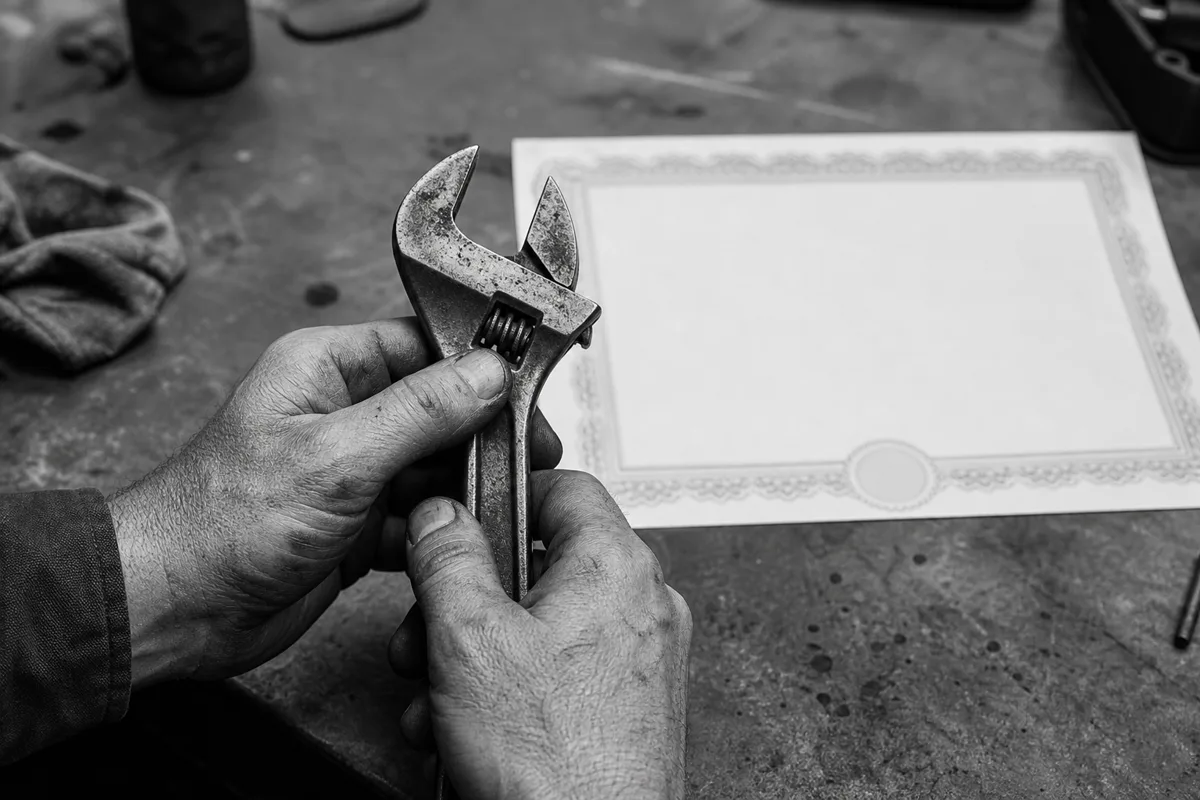
State licenses may become a practical shelter from AI-driven job disruption, business writer Gene Marks argued on December 14th. Electricians, nurses, plumbers, therapists, surveyors, and many other workers must complete training, pass exams, and remain accountable to a public authority before they can practice. Software can assist their paperwork or diagnosis, yet it cannot independently claim the license, enter a home under its own responsibility, sign an inspection, or answer a disciplinary complaint. The credential ties knowledge to a named person and a jurisdiction.
Licensing also reveals where automation meets the physical and legal world. A chatbot can describe a repair while a licensed electrician still touches the wire, checks the panel, and carries liability if the work fails. The protection is imperfect. Professions can use licensing to restrict entry, preserve high fees, or exclude capable workers who cannot afford the required education. Even so, the stamped credential gives labor a form that platforms cannot absorb quietly. It defines who may act, who must be insured, and who can be sanctioned. As companies promise systems that perform expert work, licensed occupations retain a stubborn institutional advantage. The final decision still needs a signature attached to a person whose name can be found on a public register.
La destreza certificada
Las licencias estatales pueden convertirse en un refugio práctico frente a la alteración laboral causada por la IA, sostuvo el escritor de negocios Gene Marks el 14 de diciembre. Electricistas, enfermeras, plomeros, terapeutas, topógrafos y muchos otros trabajadores deben completar formación, aprobar exámenes y responder ante una autoridad pública antes de ejercer. El software puede ayudar con documentos o diagnósticos, pero no puede reclamar por sí mismo una licencia, entrar en una casa bajo responsabilidad propia, firmar una inspección ni contestar una queja disciplinaria. La credencial vincula el conocimiento con una persona identificable y una jurisdicción.
Las licencias también muestran dónde la automatización encuentra el mundo físico y legal. Un chatbot puede describir una reparación mientras un electricista autorizado toca el cable, revisa el tablero y carga con la responsabilidad si el trabajo falla. La protección es imperfecta. Algunas profesiones usan licencias para restringir el ingreso, conservar tarifas elevadas o excluir a trabajadores capaces que no pueden pagar la educación exigida. Aun así, la credencial sellada da al trabajo una forma que las plataformas no pueden absorber en silencio. Define quién puede actuar, quién debe estar asegurado y quién puede recibir sanciones. Cuando las empresas prometen sistemas capaces de realizar tareas expertas, la decisión final todavía requiere una firma ligada a una persona cuyo nombre figura en un registro público.









