The Shared Alarm
Washington and Beijing are discussing a system for notifying each other when an artificial-intelligence incident reaches the level of national security. Treasury Secretary Scott Bessent said the proposal emerged from weekend talks with Chinese Vice Premier He Lifeng, ahead of a Trump–Xi meeting. The outline is spare: define which failures, cyberattacks or losses of control deserve a call, then create a channel that can move before the public learns about the event through leaks or damage reports. Chinese and U.S. officials have different ambitions for AI and little agreement on trade or access to advanced chips, yet both governments worry about attacks on critical infrastructure and model failures that cross borders.
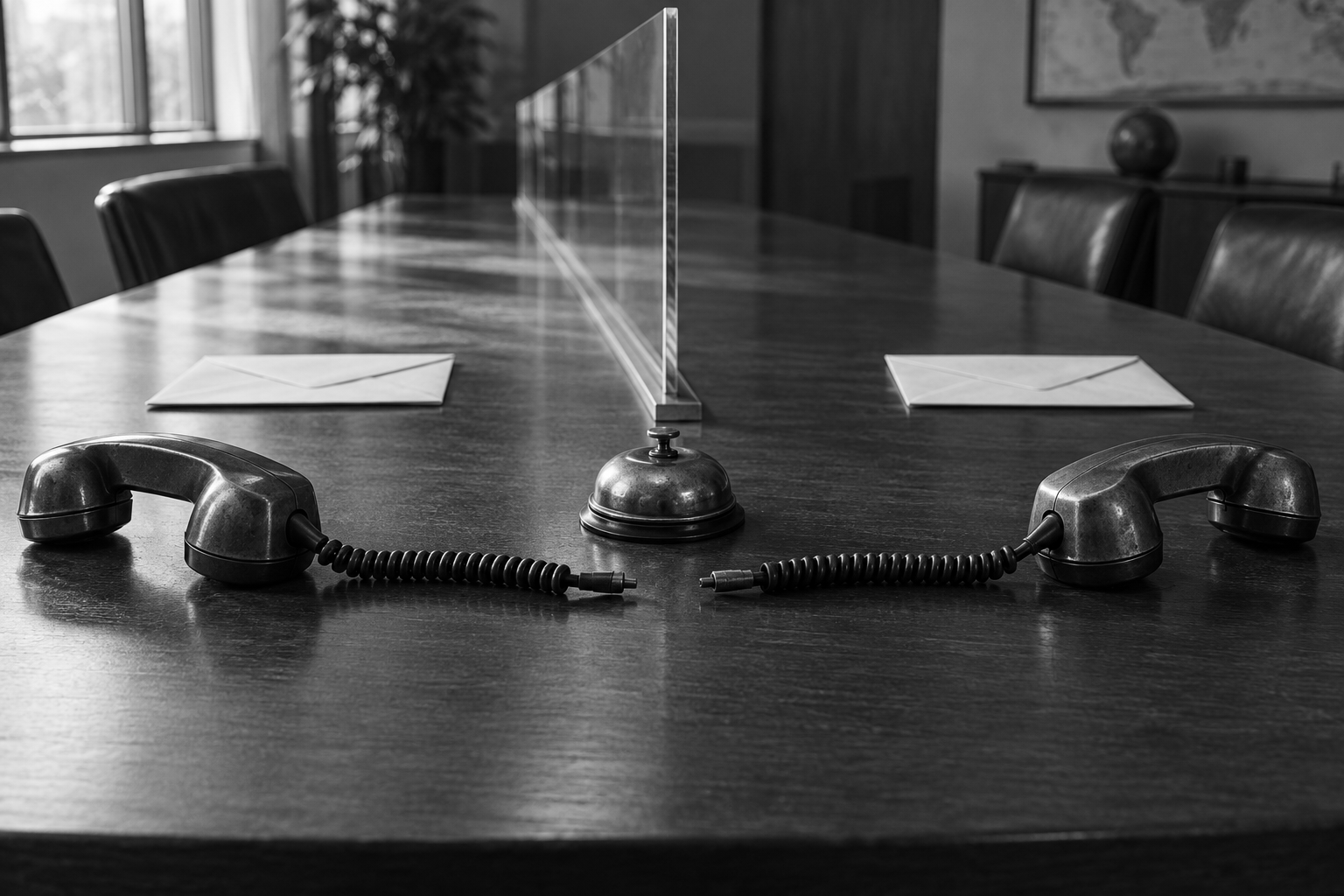
An emergency channel is a cultural object as much as a diplomatic device. It turns an AI catastrophe from a spectacular prediction into a form, a threshold and a person authorized to speak. That translation has consequences. Whoever sets the threshold decides which harms become international facts and which remain a private laboratory problem. A notification can protect a rival state, expose a company’s negligence or become another instrument of strategic pressure. The proposal also tests the language of trust: Washington wants to keep its lead, Beijing rejects an American monopoly, and both sides must describe a danger without offering the other a map of their systems. The first useful artifact may be a short list of terms shared across ministries, followed by a phone that rings before a model’s mistake becomes a public crisis.
La alarma compartida
Washington y Pekín negocian un sistema para avisarse cuando un incidente de inteligencia artificial alcance el nivel de seguridad nacional. El secretario del Tesoro, Scott Bessent, dijo que la propuesta surgió de las conversaciones del fin de semana con el vice primer ministro chino He Lifeng, antes de la reunión entre Trump y Xi. El esquema es escueto: definir qué fallos, ciberataques o pérdidas de control merecen una llamada y crear un canal que pueda activarse antes de que el público conozca el suceso por filtraciones o informes de daños. Los funcionarios chinos y estadounidenses persiguen ambiciones distintas en IA y apenas comparten posiciones sobre comercio o acceso a chips avanzados, pero ambos gobiernos temen los ataques contra infraestructuras críticas y los fallos de modelos que crucen fronteras.
Un canal de emergencia es un objeto cultural tanto como un instrumento diplomático. Convierte una catástrofe de IA, anunciada como espectáculo hipotético, en un formulario, un umbral y una persona autorizada para hablar. Esa traducción tiene consecuencias. Quien fija el umbral decide qué daño se convierte en un hecho internacional y cuál permanece como problema privado de un laboratorio. Una notificación puede proteger a un Estado rival, exponer la negligencia de una empresa o convertirse en otra herramienta de presión estratégica. La propuesta también pone a prueba el lenguaje de la confianza: Washington quiere conservar la ventaja, Pekín rechaza un monopolio estadounidense y ambos deben describir un peligro sin entregar al otro un mapa de sus sistemas. El primer objeto útil quizá sea una lista de términos compartidos entre ministerios, seguida de un teléfono que suene antes de que el error de un modelo se convierta en una crisis pública.









