The Second Patient
Mantis Biotech is building digital twins of human bodies from medical images, motion capture, biometric sensors, textbooks, training records, and other fragmented sources. Its system uses language models to route and validate the information, then a physics engine to produce synthetic datasets grounded in anatomy and movement. The company says these virtual bodies could help study rare conditions, train surgical robots, predict injuries, and test procedures where real patient data is scarce or ethically difficult to obtain.
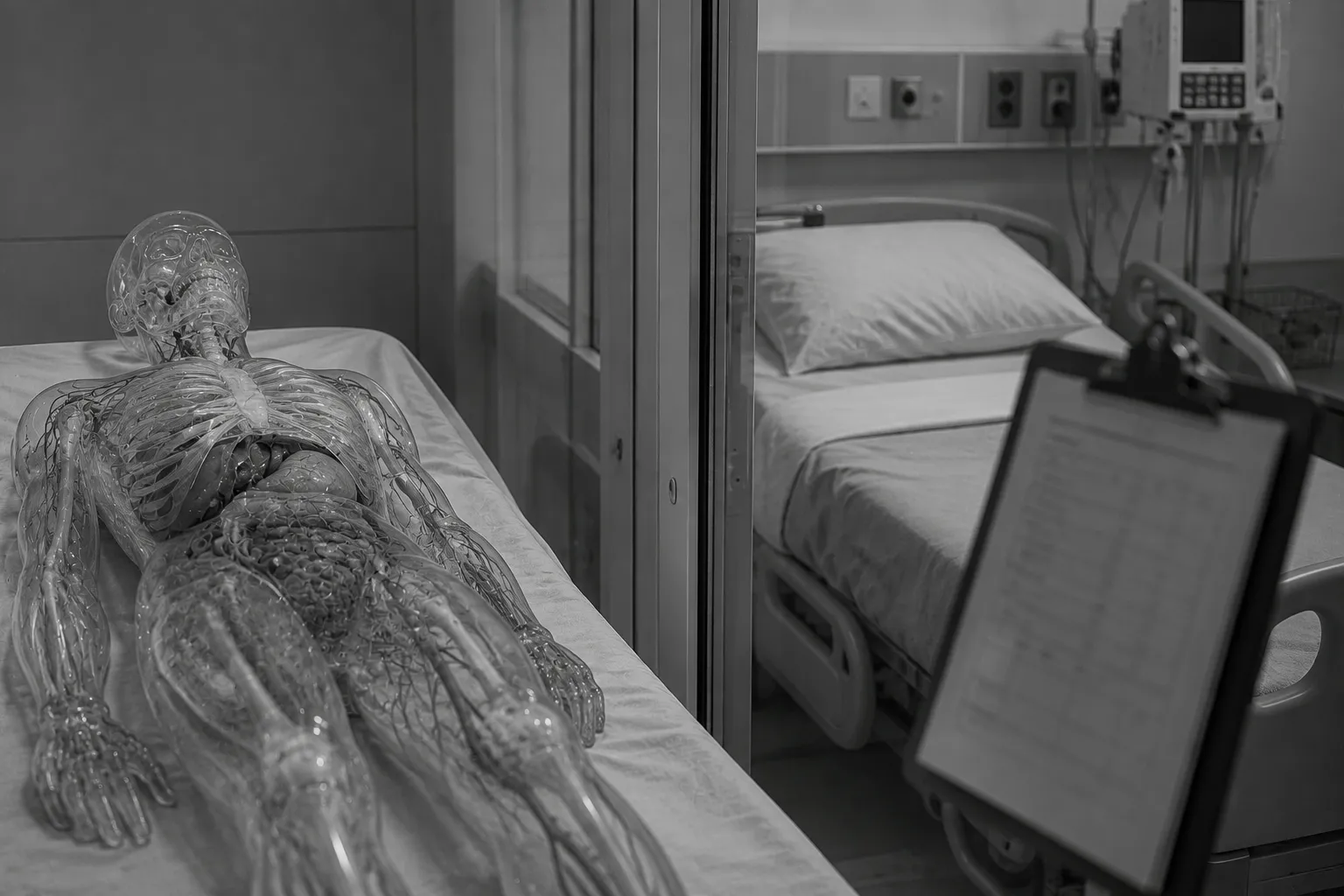
A digital twin promises a second patient who can be measured, injured, reset, and observed without pain. That freedom is valuable precisely because medicine cannot experiment casually on a person. It also changes what counts as evidence. The synthetic body is not a neutral copy; it is an argument encoded in assumptions about physics, anatomy, behavior, and the datasets selected to build it. When information is missing, the model must invent a plausible bridge, and rare patients may be represented by the very generalizations the technology is supposed to overcome. Mantis proposes that virtual humans can protect privacy while widening research. The responsibility is to preserve the boundary between simulation and testimony. A digital twin can reveal a possibility, but the living patient remains the one whose body can contradict the model.
El segundo paciente
Mantis Biotech está construyendo gemelos digitales del cuerpo humano a partir de imágenes médicas, captura de movimiento, sensores biométricos, libros, registros de entrenamiento y otras fuentes fragmentadas. Su sistema emplea modelos de lenguaje para dirigir y validar la información y luego utiliza un motor físico para producir datos sintéticos apoyados en anatomía y movimiento. La empresa sostiene que estos cuerpos virtuales podrían ayudar a estudiar enfermedades raras, entrenar robots quirúrgicos, predecir lesiones y probar procedimientos cuando los datos reales son escasos o difíciles de obtener por razones éticas.
Un gemelo digital promete un segundo paciente que puede medirse, lesionarse, reiniciarse y observarse sin dolor. Esa libertad resulta valiosa precisamente porque la medicina no puede experimentar de manera informal sobre una persona. También cambia lo que cuenta como evidencia. El cuerpo sintético no es una copia neutral; es un argumento codificado mediante supuestos sobre física, anatomía, conducta y los datos elegidos para construirlo. Cuando falta información, el modelo debe inventar un puente verosímil, y los pacientes poco comunes pueden quedar representados por las mismas generalizaciones que la tecnología intenta superar. Mantis propone proteger la privacidad y ampliar la investigación mediante humanos virtuales. La responsabilidad consiste en conservar la frontera entre simulación y testimonio. El gemelo puede revelar una posibilidad, pero el paciente vivo sigue siendo quien puede contradecir al modelo con su cuerpo.









