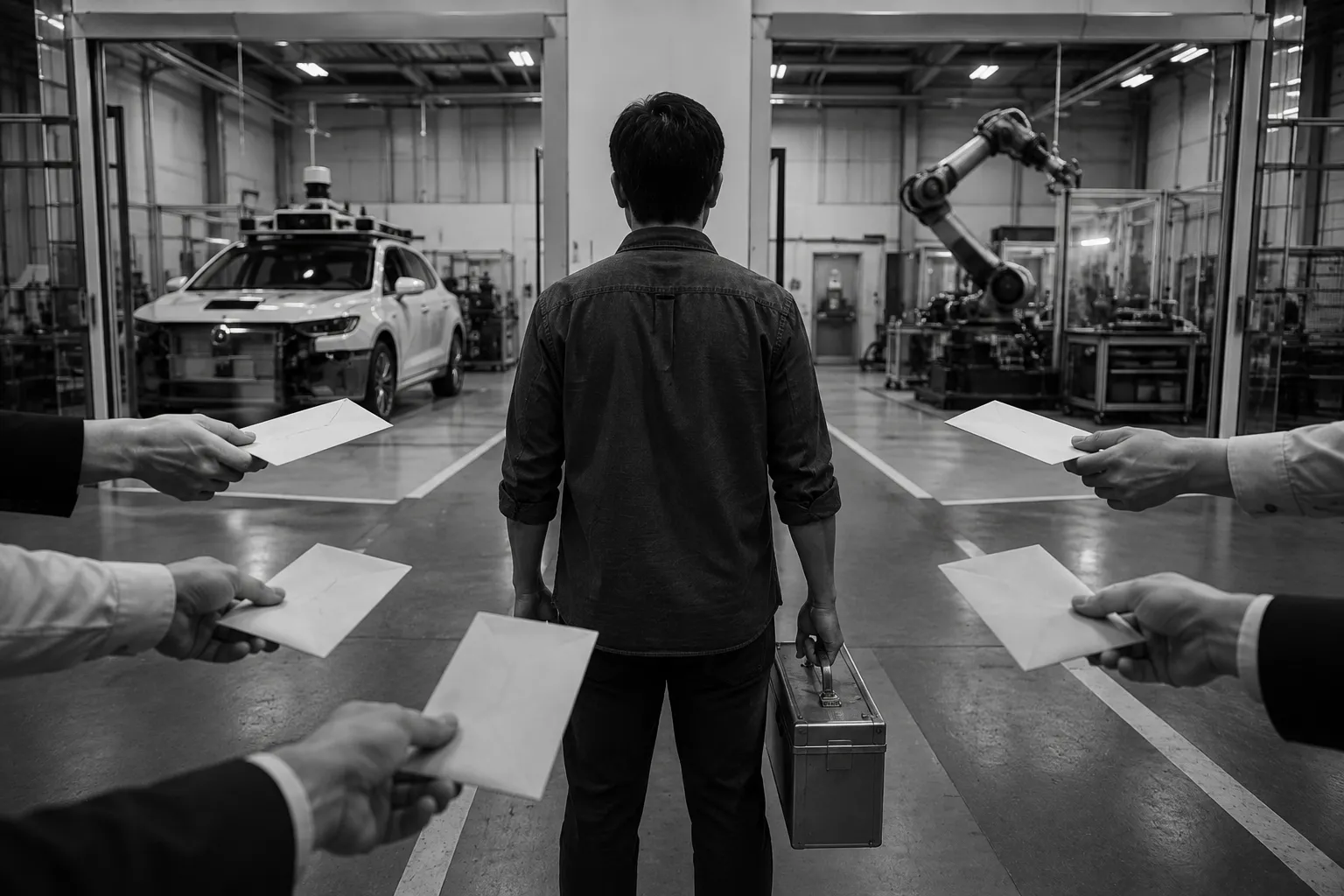
The Scarce Engineer
Robotics and defense companies are recruiting engineers from self-driving truck and robotaxi teams, according to industry sources who spoke with TechCrunch. Those sources put base salaries for some sought-after roles between $300,000 and $500,000, before equity and benefits. The desired workers combine classical robotics with AI and know how to integrate software into physical equipment. Their experience can transfer from autonomous vehicles to humanoid and industrial robots, forklifts, construction machinery, mining systems and agricultural equipment. Founders told the publication that defense technology startups are offering especially generous compensation, while automotive companies and smaller autonomous-vehicle firms face pressure to raise pay or lose staff.
The bidding war gives a price to knowledge acquired through years of making machines perceive streets, predict movement and act through hardware. That price also directs technical labor toward the institutions with the deepest budgets. Defense employers can turn public procurement into salaries that many transport startups cannot match, while automakers risk losing people after investing heavily in automated driving. The migration carries a political choice inside an employment offer. Skills developed around civilian mobility can be reassigned to industrial systems or defense projects without changing the engineer's core craft. A larger base salary for one worker can leave a startup with a longer hiring cycle and a thinner runway. The next autonomous-vehicle budget may therefore contain fewer test miles and a much larger line for retaining one engineer.
El ingeniero escaso
Empresas de robótica y defensa están contratando ingenieros procedentes de equipos de camiones autónomos y robotaxis, según fuentes del sector consultadas por TechCrunch. Esas fuentes sitúan los salarios base de ciertos puestos muy demandados entre 300.000 y 500.000 dólares, antes de acciones y beneficios. Los perfiles buscados combinan robótica clásica e IA y saben integrar software en equipos físicos. Su experiencia puede trasladarse desde los vehículos autónomos hacia robots humanoides e industriales, carretillas elevadoras y maquinaria de construcción, minería o agricultura. Varios fundadores dijeron a la publicación que las startups de tecnología militar ofrecen remuneraciones especialmente generosas, mientras las automotrices y las pequeñas empresas de conducción autónoma afrontan presiones para subir salarios o perder personal.
La puja asigna un precio al conocimiento acumulado durante años de enseñar a las máquinas a percibir calles, anticipar movimientos y actuar mediante componentes físicos. Ese precio también dirige el trabajo técnico hacia las instituciones con presupuestos mayores. Las empresas de defensa pueden convertir la contratación pública en salarios que muchas startups de transporte difícilmente igualan, mientras los fabricantes de automóviles arriesgan personal después de invertir en conducción automatizada. La migración encierra una decisión política dentro de una oferta laboral. Capacidades desarrolladas para la movilidad civil pueden pasar a sistemas industriales o proyectos militares sin alterar el oficio central del ingeniero. Un sueldo mayor para el trabajador puede dejar a la startup con una contratación más lenta y menos meses de caja. El próximo presupuesto de un vehículo autónomo puede incluir menos kilómetros de prueba y una partida mucho mayor para retener a una sola persona.









