The Quantified Tell
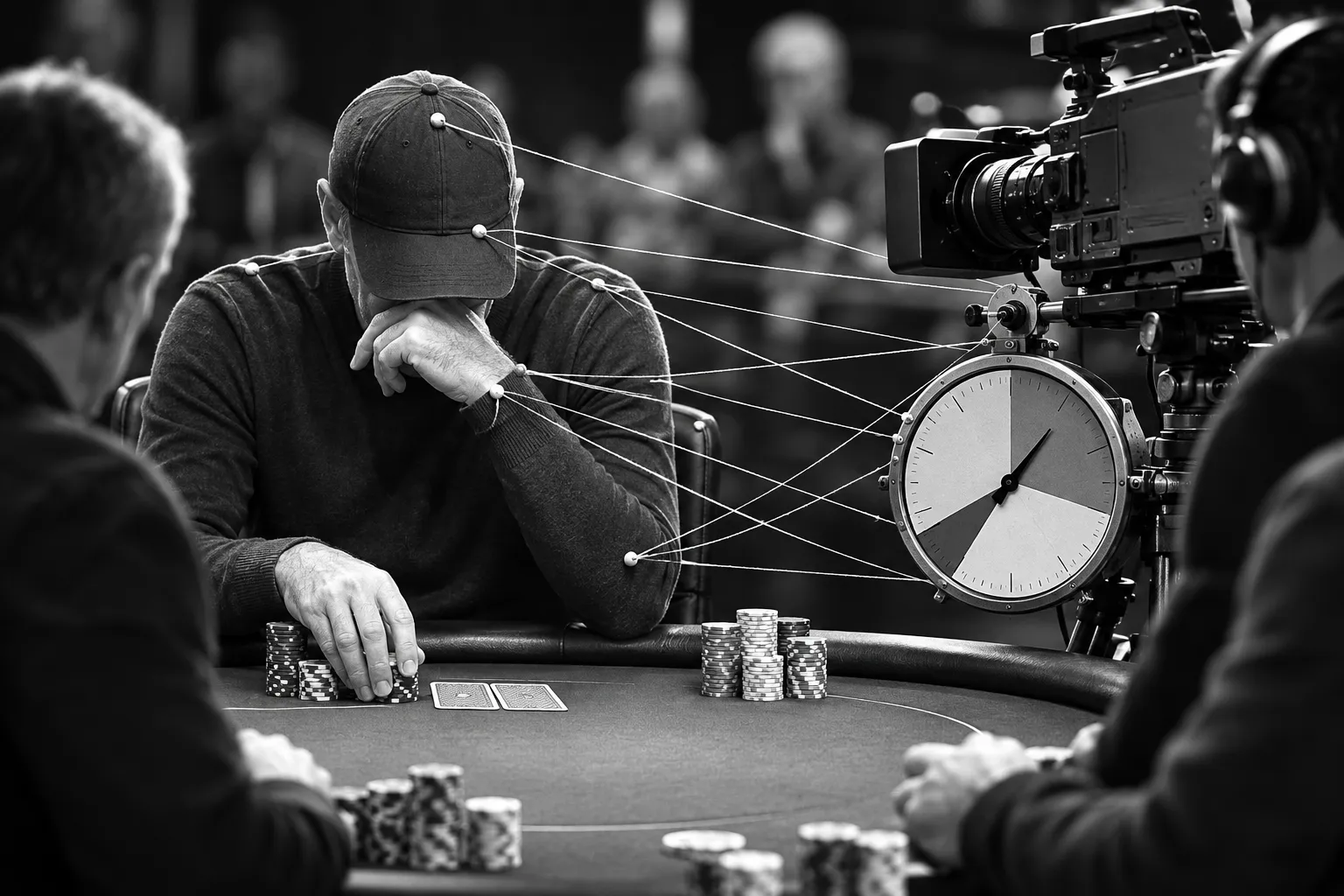
During ESPN's July broadcast of the 2026 WSOP Main Event, Luke Geel's system displayed movement metrics beside players. WIRED identifies Geel as an AI engineer for the US Air Force, with no report of institutional sponsorship or endorsement. Inputs covered eye movement, blinking, posture, chip handling and hand fidgeting, generating estimates of hand categories, including possible bluffs. Outputs remained estimates, never established detections of bluffing, lying, intention or hand strength. Footage came from three televised tables within a field over 9,000 entrants, leaving uneven records. Finalist Michael Gagliano doubted the streams held actionable information. Geel reported mixed blind-test results on other competitions. Omaha Productions withheld the system from the final table.
For each hand, software matched movement with outcomes, added associations to a database, then fed ESPN's overlay live readouts and a hand strength model chart estimating categories such as made hands and bluffs. This sequence presents provisional correlation with the graphic finish of a score. Shaun Deeb, twice WSOP Player of the Year, called the feature a swing and a miss, noting cameras omit physical tells involving breathing and pulse. Posture may register nerves or the stakes, allowing one motion to accompany different cards. Viewers receive the chart before inspecting its sample and may read graphic polish as knowledge. On screen, a player's fidget reaches a camera, returns as a chart, and enters the viewer's judgment as an estimate.
El indicio cuantificado
En julio, ESPN emitió el Main Event 2026 con un sistema de Luke Geel que mostró métricas en pantalla. WIRED presenta a Geel como ingeniero de IA para la Fuerza Aérea estadounidense, sin atribuirle aval. Las entradas incluían movimiento ocular, parpadeo, postura, manejo de fichas y movimiento nervioso de manos. Los resultados eran estimaciones de jugadas, incluido un farol, nunca detecciones establecidas de faroles, mentiras, intención o fuerza de mano. Las imágenes venían de tres mesas televisadas en un torneo de más de 9.000 participantes, dejando muestras desiguales. Michael Gagliano dudó de su utilidad. Geel informó de pruebas ciegas con resultados mixtos. Omaha Productions confirmó su ausencia de la mesa final.
En cada mano, el software asociaba movimientos con resultados en una base por jugador y enviaba a ESPN lecturas en directo y un gráfico que estimaba categorías como mano hecha y farol. Una correlación provisional adquiría así aspecto de puntuación. Shaun Deeb, dos veces Jugador del Año, llamó fallido al intento y recordó que las cámaras pierden indicios de respiración y pulso. Una postura puede registrar nervios o presión de las apuestas, asociando un movimiento con cartas diferentes. El público recibe el gráfico antes de examinar la muestra y puede confundir pulcritud visual con conocimiento. En pantalla, el movimiento del jugador llega a la cámara, vuelve como gráfico y entra como estimación en el juicio de quien mira.









