The Last Turk
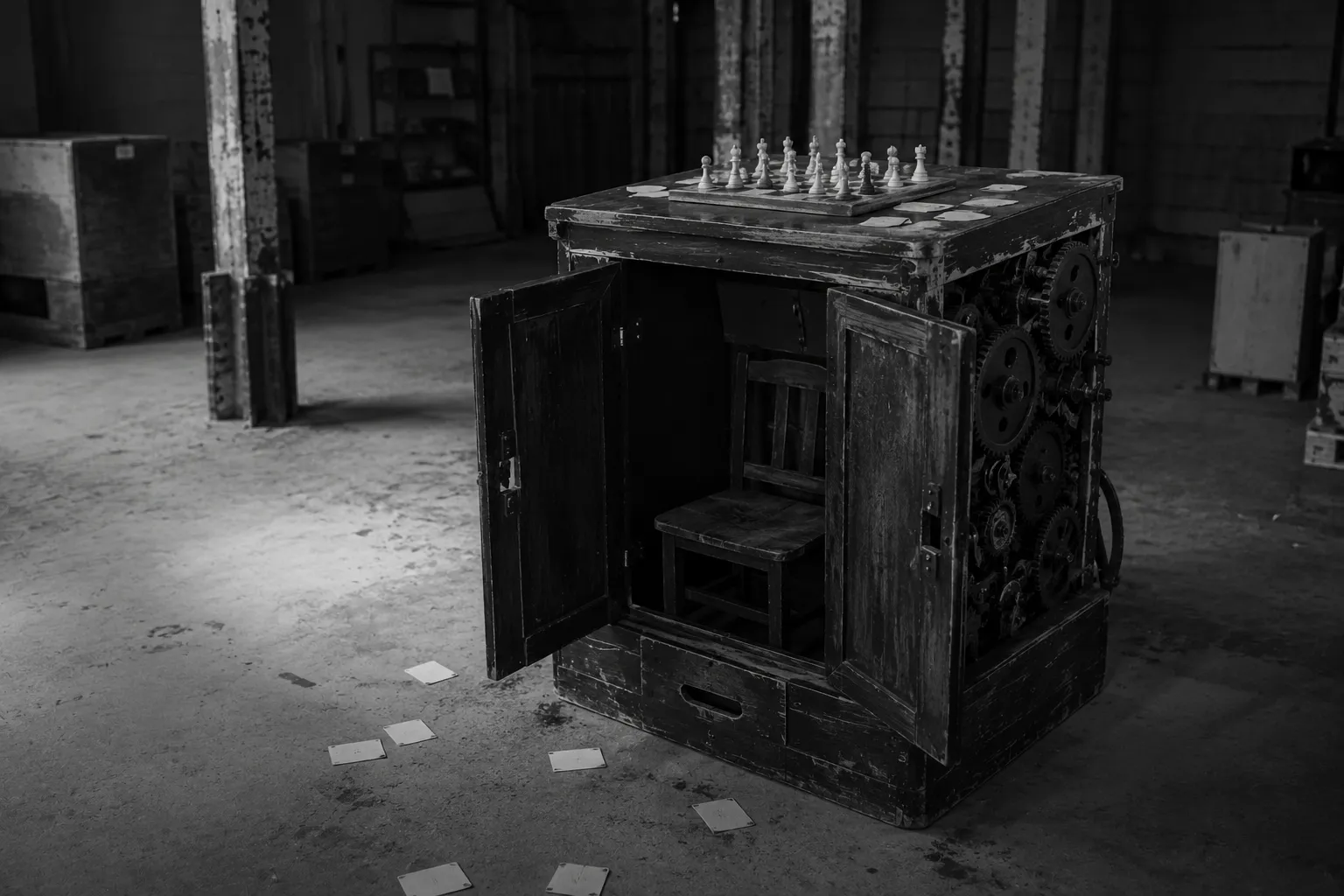
Amazon will close Mechanical Turk to new customers on July 30th, TechCrunch reported, leaving existing users inside a service that AWS says will receive security and availability work but no new features. The crowdsourcing marketplace opened in 2005 as a place where people performed small tasks that software could not yet handle, including labeling images, reading sentiment, passing CAPTCHA challenges, and checking scraps of data for a few cents at a time. Later it was folded into the training economy as a source of annotation for neural networks. Its name was already a confession. The eighteenth-century Mechanical Turk pretended to be a chess-playing machine while a human being hid inside the cabinet.
The closure has the shape of a quiet labor obituary. For years, the platform helped companies sell automation while paying dispersed workers to supply the missing perception, judgment, and patience. Then the loop bent back on itself. Studies found that some workers used large language models to complete tasks meant to produce human-labeled data, turning the crowd into another surface for machine output. The old bargain became harder to defend. If the human is paid too little to be trusted, and the model is used to imitate the human, the dataset loses its last modest claim to being grounded in labor. Amazon is keeping the lights on for current customers. The cabinet door is closing for everyone else.
El último turco
Amazon cerrará Mechanical Turk a nuevos clientes el 30 de julio, informó TechCrunch, y dejará a los usuarios existentes dentro de un servicio que AWS mantendrá con mejoras de seguridad y disponibilidad, pero sin funciones nuevas. El mercado de trabajo colectivo abrió en 2005 como un lugar donde personas realizaban tareas pequeñas que el software todavía no podía resolver, como etiquetar imágenes, leer sentimiento, superar pruebas CAPTCHA y revisar fragmentos de datos por unos centavos. Después fue incorporado a la economía del entrenamiento como fuente de anotación para redes neuronales. Su nombre ya era una confesión. El Mechanical Turk del siglo XVIII fingía ser una máquina capaz de jugar ajedrez mientras un ser humano se escondía dentro del gabinete.
El cierre tiene la forma de un obituario laboral discreto. Durante años, la plataforma ayudó a empresas a vender automatización mientras pagaba a trabajadores dispersos para aportar la percepción, el juicio y la paciencia que faltaban. Luego el circuito se dobló sobre sí mismo. Algunos estudios encontraron que parte de esos trabajadores usaba modelos de lenguaje para completar tareas destinadas a producir datos etiquetados por humanos, convirtiendo a la multitud en otra superficie de salida maquínica. El viejo acuerdo se volvió difícil de defender. Si al humano se le paga demasiado poco para confiar en él y el modelo se usa para imitarlo, el conjunto de datos pierde su última pretensión modesta de estar anclado en trabajo. Amazon mantiene encendidas las luces para los clientes actuales. Para los demás, la puerta del gabinete se está cerrando.









