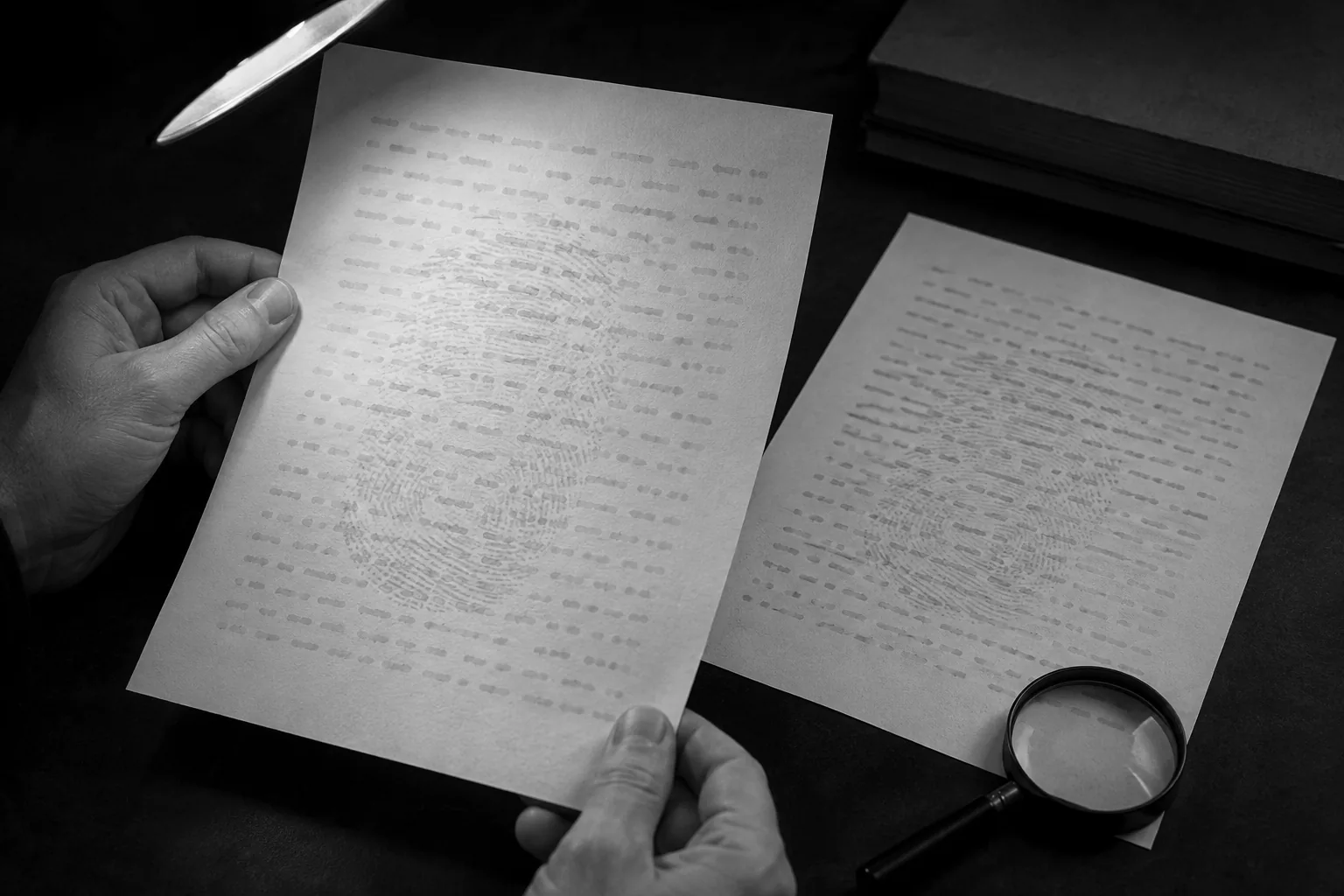
The Invisible Watermark
Anthropic says future Claude models will place an invisible, machine-readable watermark directly into generated text. The commitment responds to European transparency rules effective August 2. New models will carry the mark from release, while existing models will follow. Anthropic says it will operate at model level across Claude, Claude Code, its API and access through outside cloud providers. The watermark is woven into the wording without changing its visible meaning or readability. It should travel through copying and may survive some editing. Supported generated files will instead carry digitally signed provenance metadata, including the C2PA standard where applicable.
The reader will see ordinary prose while a compatible detector examines its statistical construction. This creates a record of origin that can follow a paragraph beyond Claude's interface, but Anthropic has not disclosed the method, the amount of editing that removes the mark or a public detection tool. Those details are promised in future technical documentation. File metadata presents another weakness because platforms can strip it during ordinary uploads. Anthropic also warns that missing evidence proves little. A text without a detectable mark could still come from an AI system, an older Claude model or an edited response. Before a school, publisher or platform treats detection as evidence, it will need the detector version, its error rate, the model covered and the threshold used on the disputed passage.
La marca de agua invisible
Anthropic afirma que futuros modelos Claude incorporarán una marca invisible y legible por máquinas en el texto generado. El compromiso responde a reglas europeas vigentes desde el 2 de agosto. Los modelos nuevos nacerán con la marca. Los actuales la recibirán después. Funcionará en el modelo a través de Claude, Claude Code, su API y proveedores externos. La marca se integra en las palabras sin cambiar su significado o lectura. Viajará al copiar y podría resistir ciertas ediciones. Los archivos compatibles llevarán metadatos de procedencia firmados digitalmente, incluido el estándar C2PA cuando corresponda.
El lector verá prosa corriente mientras un detector compatible examina su construcción estadística. Así, el registro de origen puede acompañar un párrafo fuera de la interfaz de Claude. Anthropic todavía no ha explicado el método, cuánta edición elimina la marca ni cómo funcionará el detector público. Esos detalles aparecerán en documentos técnicos futuros. Los metadatos de archivos tienen otra debilidad porque las plataformas pueden eliminarlos durante una carga normal. Anthropic también advierte que la falta de evidencia demuestra poco. Un texto sin marca detectable todavía podría proceder de otro sistema, un modelo Claude antiguo o una respuesta editada. Antes de usar la detección como prueba, una escuela, editorial o plataforma necesitará conocer la versión del detector, su tasa de error, el modelo cubierto y el umbral aplicado al pasaje discutido.









