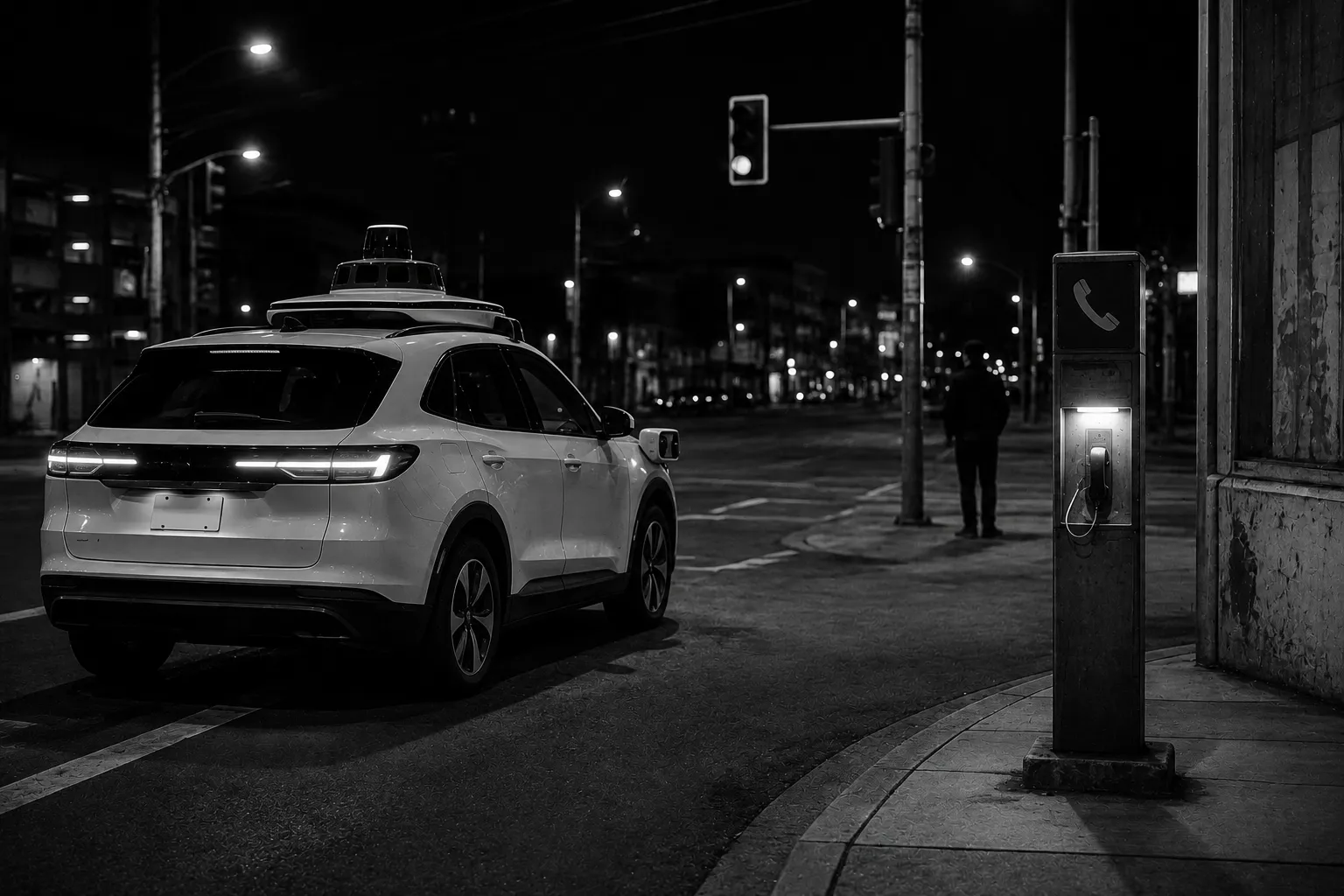
The Invisible Driver
Waymo now provides about 500,000 paid robotaxi rides each week, but its growing fleet has exposed a less automated layer of the service. TechCrunch documented at least six incidents in which first responders had to enter and manually move disabled vehicles. In Austin, an officer responding to a mass shooting was diverted to clear a Waymo from the route. The company has roadside assistance and remote support, yet unusual street conditions can still transfer the final physical task to public workers.
The invisible driver is therefore not absent. It has been distributed across software, remote operators, maintenance teams, police officers, firefighters, road design, and the patience of everyone waiting behind a stalled car. Autonomy looks complete when a trip proceeds normally because this supporting labor remains outside the passenger’s frame. Failure makes the arrangement visible. A private mobility service can collect the fare while the city absorbs part of the cost of exceptions, especially when an immobilized machine becomes an obstacle during an emergency. As more companies deploy robotaxis, the question is no longer whether a vehicle can drive most routes without a person at the wheel. It is who must arrive when it cannot, how quickly they can take control, and whether emergency services should become the roadside crew for an industry built around removing the driver.
El conductor invisible
Waymo ya ofrece unas 500.000 carreras pagadas en robotaxi cada semana, pero el crecimiento de su flota ha revelado una capa menos automática del servicio. TechCrunch documentó al menos seis incidentes en los que equipos de emergencia tuvieron que entrar y mover manualmente vehículos inmovilizados. En Austin, un policía que respondía a un tiroteo masivo fue desviado para retirar un Waymo de la ruta. La empresa dispone de asistencia vial y soporte remoto, pero las condiciones inusuales de la calle todavía pueden trasladar la tarea física final a trabajadores públicos.
El conductor invisible no ha desaparecido. Se ha distribuido entre software, operadores remotos, equipos de mantenimiento, policías, bomberos, diseño urbano y la paciencia de quienes esperan detrás de un coche detenido. La autonomía parece completa cuando el viaje transcurre con normalidad porque ese trabajo de apoyo queda fuera del encuadre del pasajero. El fallo vuelve visible el sistema. Un servicio privado puede cobrar la tarifa mientras la ciudad absorbe parte del coste de las excepciones, especialmente cuando una máquina bloqueada se convierte en obstáculo durante una emergencia. Con más empresas desplegando robotaxis, la pregunta ya no es si el vehículo recorre la mayoría de las rutas sin alguien al volante. Es quién debe llegar cuando no puede, cuánto tarda en asumir el control y si los servicios de emergencia deben convertirse en asistencia vial de una industria construida alrededor de eliminar al conductor.









