The Interview Without a Listener
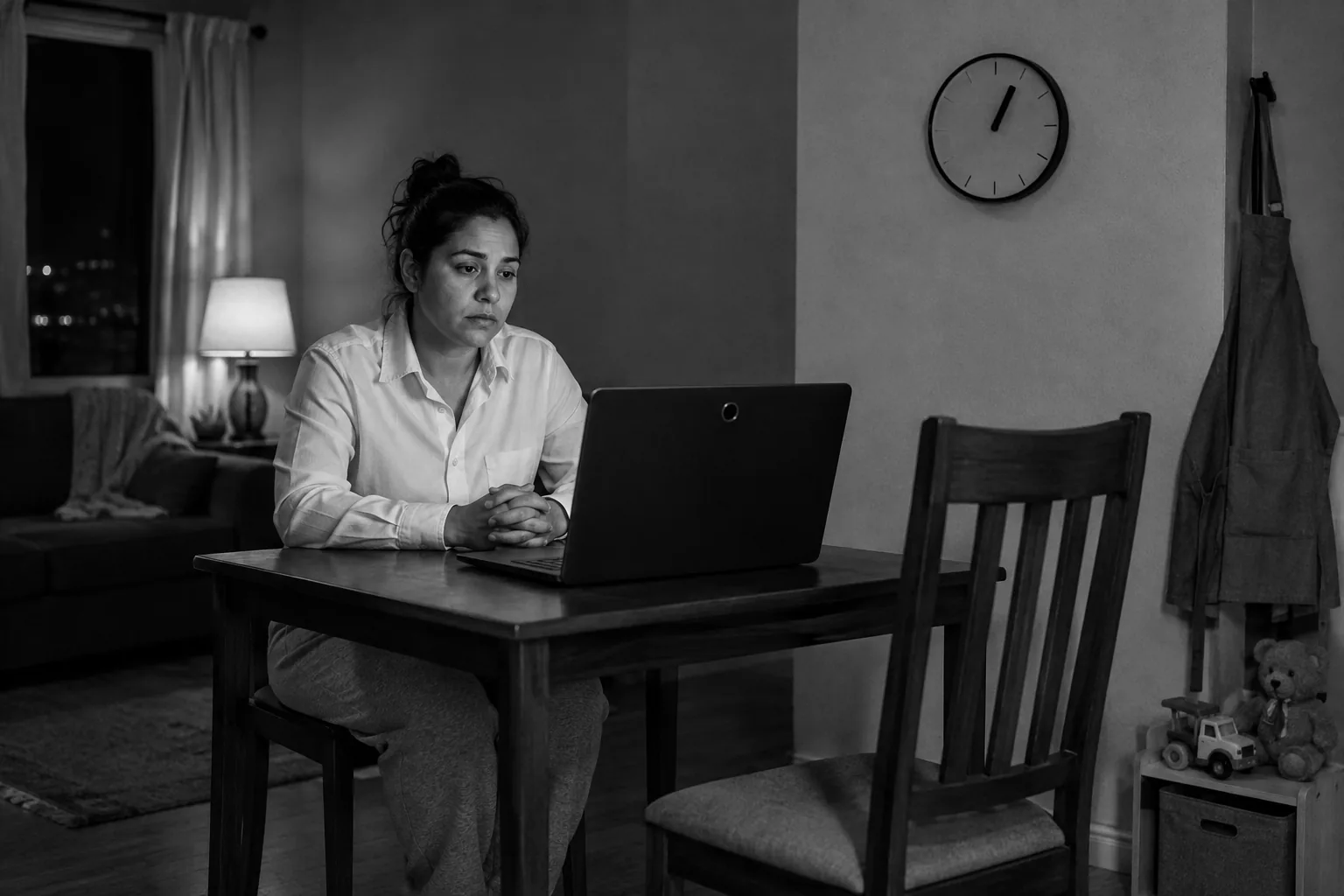
In January, Atlanta publicist Tim Millard expected a human interview for a media relations job. Instead, an email sent him to a recorded interview. At 9:30 p.m., he tidied his living room, opened his laptop and answered onscreen questions. He had 30 seconds to prepare and two minutes to respond. An automated rejection arrived in March. WIRED reports growing use of automated late-night interviews. Ribbon says 24 percent of interviews occur between 10 p.m. and 2 a.m., rising to 35 percent among manufacturing clients. Greenhouse places its nighttime share around 15 to 20 percent. The availability can help parents, hourly workers and employees unable to interview during the day.
The convenience transfers the interview into the applicant's private hours. An employer defines a rubric, software analyzes the recorded answers, assigns a score and sends the result with the footage to a recruiter. Many recordings may never be watched. Criteria can include technical qualifications or a sales applicant's enthusiasm. The candidate performs professional attention for a listener who is absent and may remain so. A Greenhouse survey found that 38 percent of American candidates had withdrawn rather than complete an AI interview; another 12 percent said they would withdraw if one were required. Millard turned his job search into a one-man stage show and remains unemployed. His first encounter with that employer ended with a score and an automated email.
La entrevista sin oyente
En enero, el publicista Tim Millard esperaba una entrevista humana para un empleo en Atlanta. Un correo lo dirigió a una grabación. A las nueve y media, ordenó su sala y respondió preguntas ante el portátil. Tuvo 30 segundos para prepararse y dos minutos para responder. El rechazo automático llegó en marzo. WIRED informa del crecimiento de estas entrevistas nocturnas. Ribbon afirma que el 24 por ciento ocurre entre las diez de la noche y las dos de la madrugada, y el 35 por ciento entre clientes industriales. Greenhouse sitúa su proporción nocturna entre el 15 y el 20 por ciento. El horario ayuda a padres y trabajadores que no pueden entrevistarse de día.
La comodidad ocupa el tiempo privado del candidato. El empleador define una rúbrica. El software analiza las respuestas, puntúa y envía el resultado y el video a un reclutador. Muchas grabaciones quizá nunca sean vistas. Los criterios incluyen capacidades técnicas o entusiasmo comercial. El candidato actúa ante un oyente ausente. Según Greenhouse, el 38 por ciento de los candidatos estadounidenses había abandonado un proceso antes de la entrevista automática. Otro 12 por ciento se retiraría si fuera obligatoria. Millard convirtió su búsqueda laboral en un espectáculo unipersonal y sigue desempleado. Su primer encuentro con aquella empresa terminó mediante una puntuación y un correo automático.









