The Filmed Shift
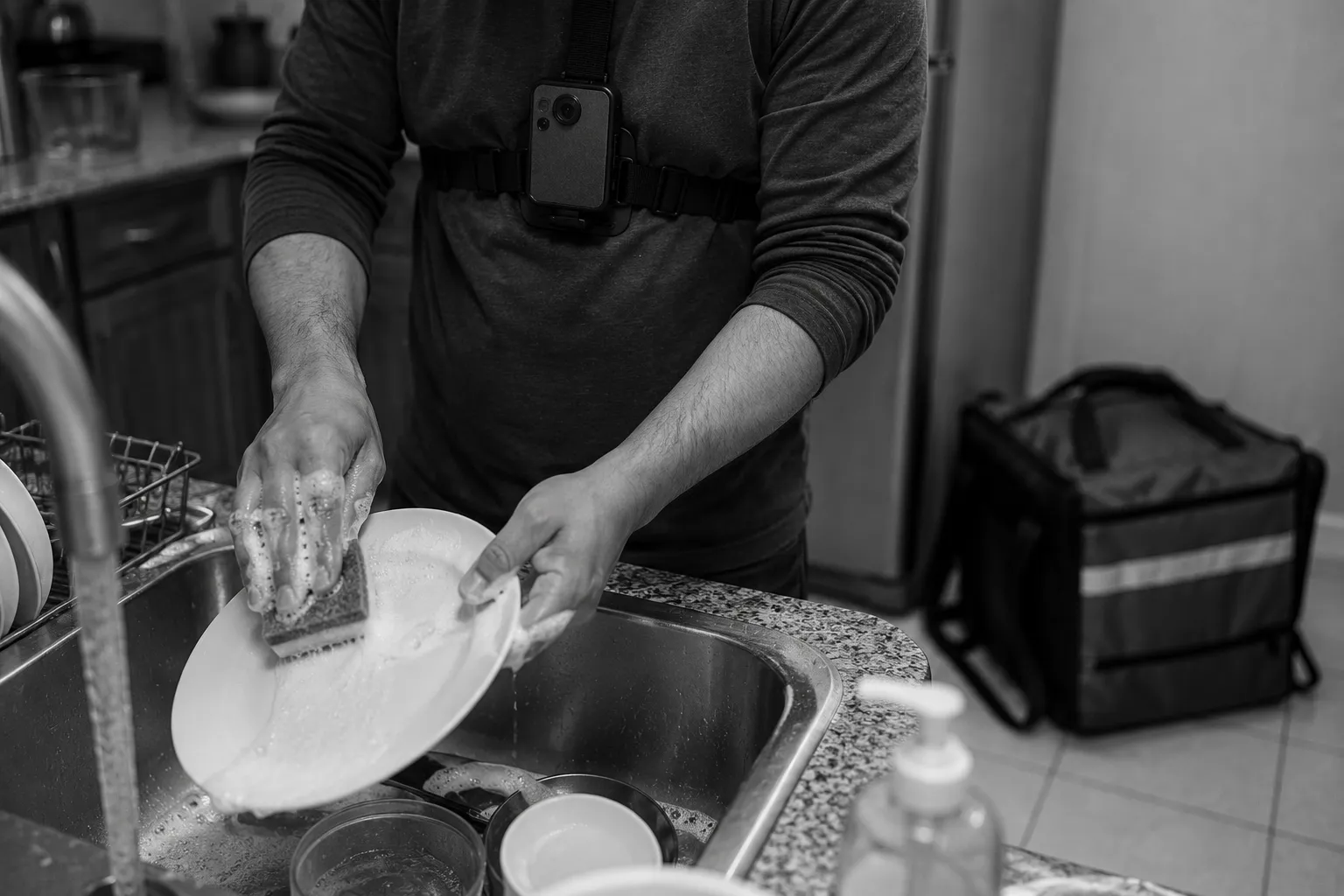
DoorDash is launching Tasks, an app that pays delivery couriers to film ordinary activities and record speech for AI and robotics training. One assignment asks a worker wearing a body camera to film washing dishes, holding each clean plate in view. The courier’s route through the city becomes a route through the physical world, collecting gestures that models cannot learn from polished demonstrations alone.
The arrangement extends platform labor into data production. A worker who already supplies location, timing, and delivery evidence can now sell images of hands, kitchens, entrances, and accents. DoorDash calls this flexible income, and the payment is shown before the assignment begins. The language of choice is real, but the bargaining position remains shaped by a platform that decides which tasks exist and what they are worth. Ordinary labor becomes training material through a short contract and a phone camera. The future robot may learn to wash a plate from footage made by someone paid to deliver food, while the worker’s own body remains outside the story of the machine being taught.
The Filmed Shift
DoorDash lanza Tasks, una aplicación que paga a los repartidores por filmar actividades cotidianas y grabar voces para entrenar sistemas de IA y robótica. Una de las tareas pide a un trabajador con cámara corporal que grabe cómo lava platos y mantenga cada plato limpio dentro del encuadre. La ruta del repartidor por la ciudad se convierte también en una ruta por el mundo físico, recogiendo gestos que los modelos no pueden aprender de demostraciones pulidas.
El acuerdo extiende el trabajo de plataforma hacia la producción de datos. Un trabajador que ya entrega ubicación, horarios y pruebas de reparto puede vender imágenes de manos, cocinas, entradas y acentos. DoorDash lo llama ingreso flexible y muestra el pago antes de empezar. La posibilidad de elegir es real, pero la posición de negociación sigue marcada por una plataforma que decide qué tareas existen y cuánto valen. El trabajo cotidiano se transforma en material de entrenamiento mediante un contrato breve y la cámara del teléfono. El robot del futuro puede aprender a lavar un plato con imágenes grabadas por alguien contratado para repartir comida, mientras el cuerpo de ese trabajador queda fuera de la historia de la máquina que está aprendiendo.









