The Driverless Memorial
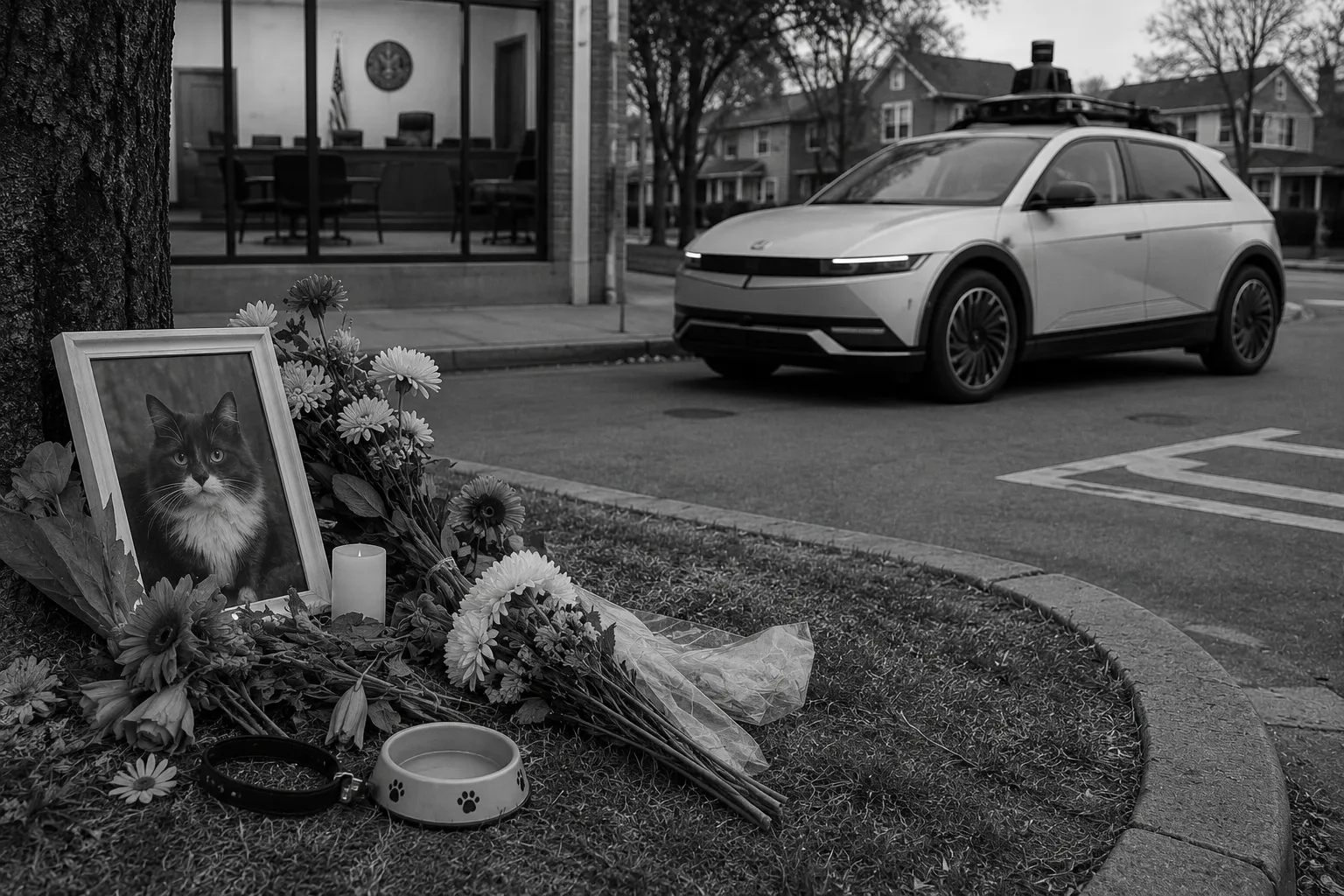
On October 27, a Waymo robotaxi struck and killed Kit Kat, a bodega cat known in San Francisco's Mission District. TechCrunch reported the case on November 16, drawing on New York Times coverage published the previous day. Residents placed flowers and signs at a curbside memorial, while other signs pointed to deaths caused by human drivers. Waymo said the cat “darted under our vehicle as it was pulling away” and offered sympathy to his owner and the community. The company's account describes a sudden movement at low speed. The available reporting does not establish further details about the vehicle's detection or braking.
Supervisor Jackie Fielder cited Kit Kat while supporting a city resolution asking California to let local voters decide whether driverless cars may operate in their neighborhoods. Her argument concerned accountability at the scene. A human driver can stop, identify themselves, speak to witnesses, and be investigated as an individual. An autonomous fleet routes those demands through corporate statements, vehicle data, police procedure, and state regulation. That arrangement may still produce evidence, but it changes whom neighbors can confront and which government can answer them. San Francisco currently cannot settle the operating question by neighborhood vote. Grief entered the jurisdictional dispute through flowers at the curb and a proposed resolution before the Board of Supervisors.
El memorial sin conductor
El 27 de octubre, un robotaxi de Waymo atropelló y mató a Kit Kat, un gato de bodega conocido en el Distrito de la Misión de San Francisco. TechCrunch informó del caso el 16 de noviembre. Los vecinos dejaron flores y carteles en un memorial, mientras otros letreros recordaban las muertes causadas por conductores humanos. Waymo afirmó que el gato «se lanzó debajo de nuestro vehículo cuando este comenzaba a avanzar» y expresó sus condolencias a quien lo cuidaba y a la comunidad. La información disponible no aporta más detalles sobre la detección ni el frenado.
La supervisora Jackie Fielder mencionó a Kit Kat al defender una resolución municipal que pide a California permitir que el electorado local decida si los vehículos sin conductor pueden operar en sus barrios. Quien conduce puede detenerse, identificarse, hablar con testigos y responder a una investigación individual. Una flota autónoma canaliza esas exigencias mediante comunicados corporativos, datos del vehículo, procedimientos policiales y regulación estatal. Ese dispositivo puede producir pruebas, pero cambia a quién pueden interpelar los vecinos y qué gobierno debe responder. San Francisco carece hoy de autoridad para resolver la operación mediante una votación barrial. El duelo entró en la disputa jurisdiccional mediante las flores de la acera y una resolución propuesta ante la Junta de Supervisores.









