The Clumsy Hand
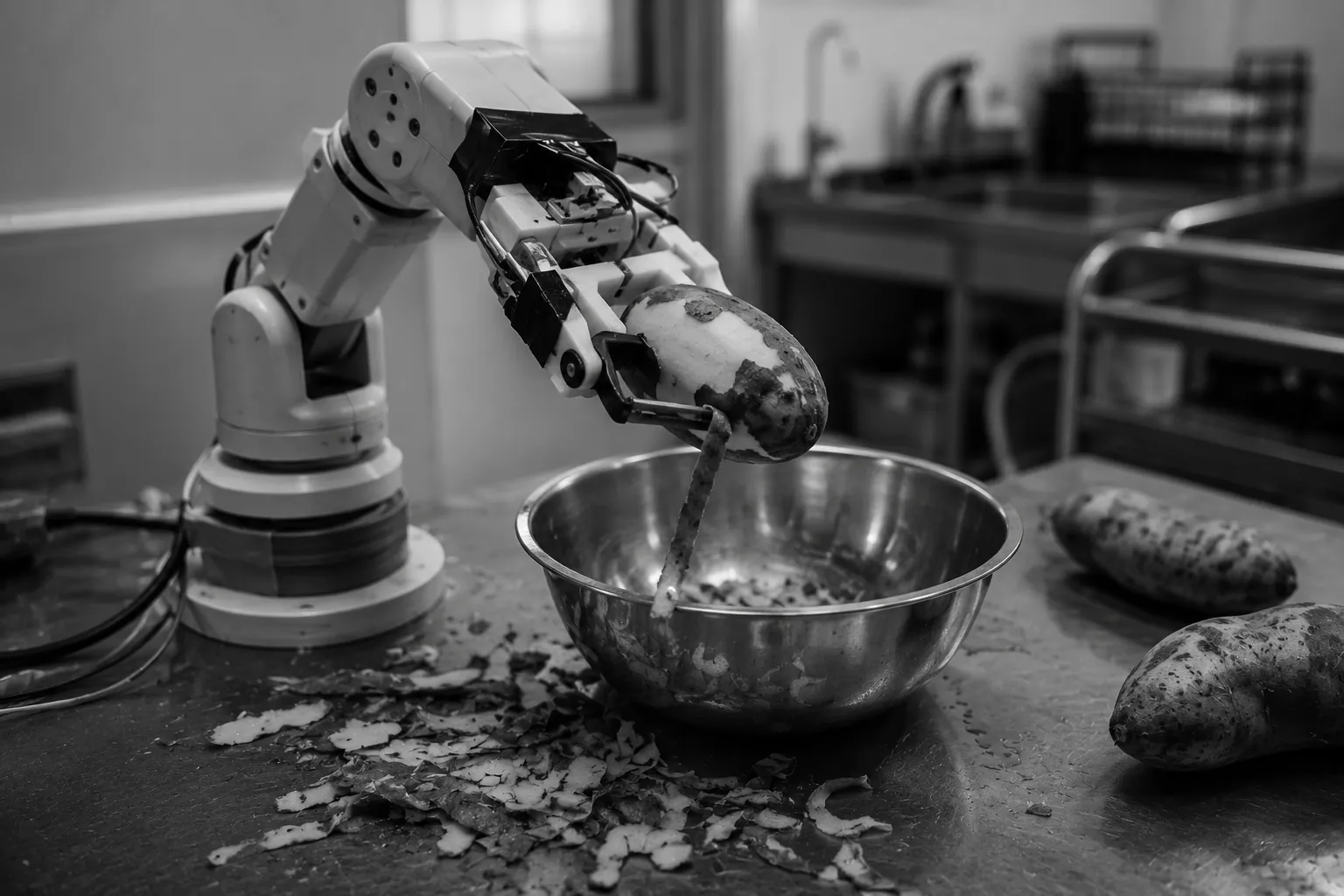
Physical Intelligence is building general-purpose robotic foundation models through a loop of data collection, training, and real-world testing, TechCrunch reported on January 30th. In the company's San Francisco space, off-the-shelf robotic arms practice folding pants, turning shirts inside out, peeling vegetables, and using a test kitchen as training ground. The startup has raised more than $1 billion, spends heavily on compute, and has avoided giving investors a firm commercialization timeline while testing systems with partners in logistics, grocery, and food production.
The clumsy hand is the honest image of robotic intelligence. Software can appear brilliant in language because language tolerates polish, omission, and speed. A kitchen does not. A zucchini slips, fabric folds badly, hardware breaks, and a task that looks trivial becomes a lesson in force, grip, angle, friction, and recovery. Physical Intelligence is betting that general robotic skill will emerge from enough bodies, environments, and failures. The wager is expensive because physical knowledge resists theatrical demos. A model cannot merely describe peeling. It has to hold the vegetable, lose it, adjust pressure, collect the shaving, and try again while investors wait for a machine that can finally touch the world without pretending it understands it.
La mano torpe
Physical Intelligence construye modelos fundacionales robóticos de propósito general mediante un ciclo de recolección de datos, entrenamiento y pruebas en el mundo real, informó TechCrunch el 30 de enero. En el espacio de la empresa en San Francisco, brazos robóticos comerciales practican doblar pantalones, dar vuelta camisas, pelar verduras y usar una cocina de prueba como terreno de entrenamiento. La startup recaudó más de 1.000 millones de dólares, gasta mucho en cómputo y ha evitado dar a los inversores un calendario firme de comercialización mientras prueba sistemas con socios en logística, supermercados y producción de alimentos.
La mano torpe es la imagen honesta de la inteligencia robótica. El software puede parecer brillante en el lenguaje porque el lenguaje tolera pulido, omisión y velocidad. Una cocina no. Un calabacín se resbala, la tela se dobla mal, el hardware se rompe y una tarea que parece trivial se vuelve una lección de fuerza, agarre, ángulo, fricción y recuperación. Physical Intelligence apuesta a que la habilidad robótica general emergerá de suficientes cuerpos, entornos y fallas. La apuesta es costosa porque el conocimiento físico resiste las demostraciones teatrales. Un modelo no puede limitarse a describir cómo pelar. Tiene que sostener la verdura, perderla, ajustar la presión, recoger la viruta y volver a intentarlo mientras los inversores esperan una máquina que por fin pueda tocar el mundo sin fingir que lo entiende.









