The Author the Law Requires
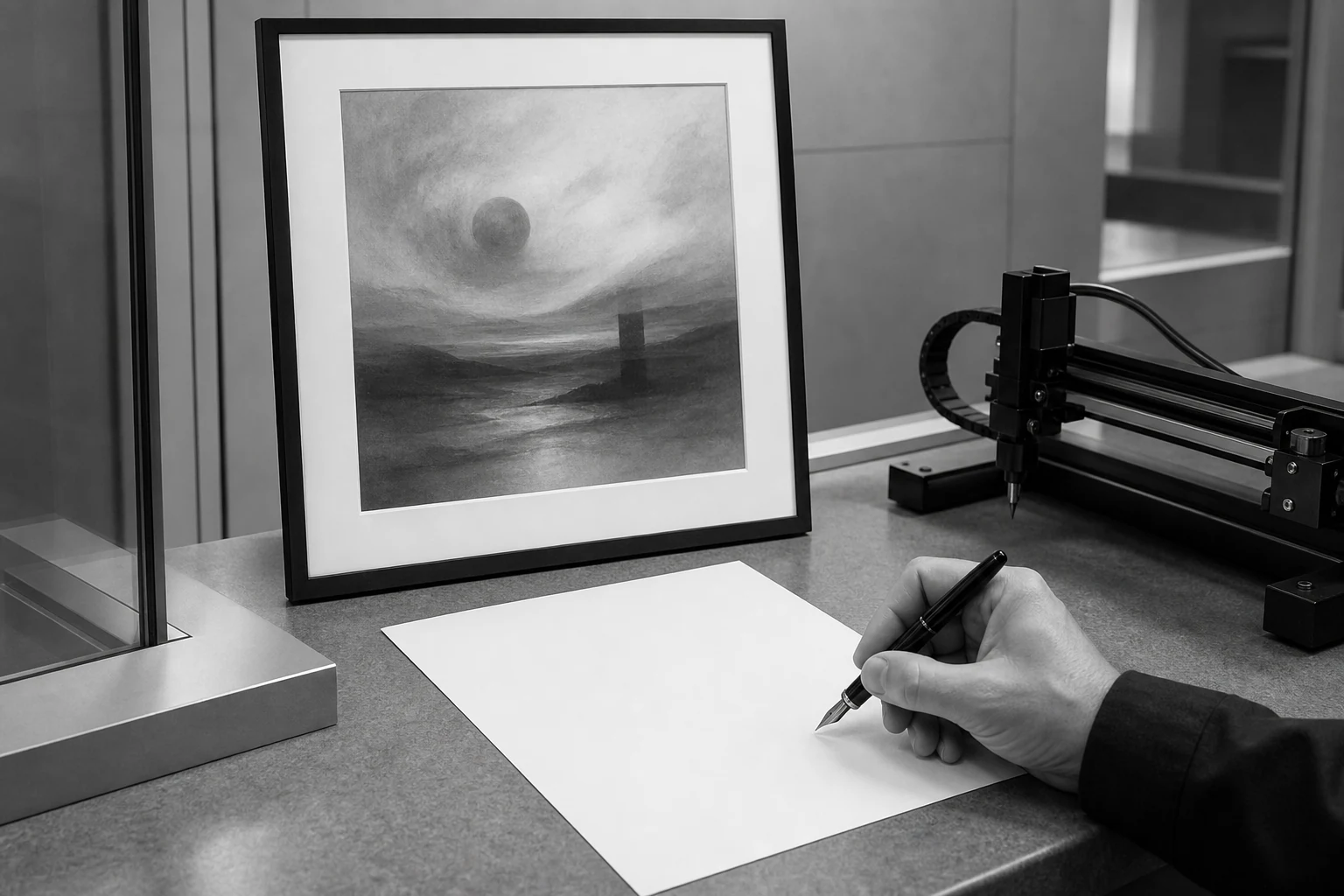
India's Copyright Office has ruled that an artificial intelligence system cannot be named as the author of an image, even when the image meets the legal threshold for originality. The decision concerned Stephen Thaler's DABUS system and a work titled A Recent Entrance to Paradise. After the Delhi High Court asked the office to resolve the application, the registrar accepted that the picture could qualify as an original work but rejected DABUS as its author under Indian law. Thaler was recognized as the person who caused the work to be created. His application failed because he declined to replace the machine's name with his own.
The ruling locates a boundary that image generators obscure. Authorship remains attached to a person who can license the work, defend it, receive payment and answer for its use. A registration form becomes part of the creative process. Its empty name field decides whether an image can enter the legal economy. For artists using generative systems, the decision gives weight to documented human choices in prompting, selection, editing and presentation. Those acts can establish the person behind the result. Studios that advertise autonomous creation face a different problem. Presenting the machine as creator may weaken the human claim needed to circulate the work as property. India's ruling leaves the global dispute open and makes institutional responsibility visible. The image may come from a system; the rights still require someone who can sign.
El autor que exige la ley
La Oficina de Derechos de Autor de India resolvió que un sistema de inteligencia artificial no puede figurar como autor de una imagen, aunque la obra cumpla el requisito legal de originalidad. La decisión examinó el sistema DABUS de Stephen Thaler y una pieza titulada A Recent Entrance to Paradise. Después de que el Tribunal Superior de Delhi pidiera resolver la solicitud, el registrador aceptó que la imagen podía considerarse una obra original, pero rechazó a DABUS como autor bajo la legislación india. Thaler fue reconocido como la persona que hizo posible la creación. Su solicitud fracasó porque se negó a sustituir el nombre de la máquina por el suyo.
El fallo identifica un límite que los generadores de imágenes suelen ocultar. La autoría sigue ligada a una persona capaz de licenciar la obra, defenderla, recibir pagos y responder por su uso. El formulario de registro pasa a formar parte del proceso creativo. Su espacio vacío decide si una imagen puede ingresar en la economía legal. Para los artistas que emplean sistemas generativos, la decisión da valor a las elecciones humanas documentadas durante las instrucciones, la selección, la edición y la presentación. Los estudios que anuncian creación autónoma enfrentan otro problema. Presentar a la máquina como creadora puede debilitar la reivindicación humana necesaria para que la obra circule como propiedad. La imagen puede proceder de un sistema; los derechos todavía requieren a alguien capaz de firmar.









