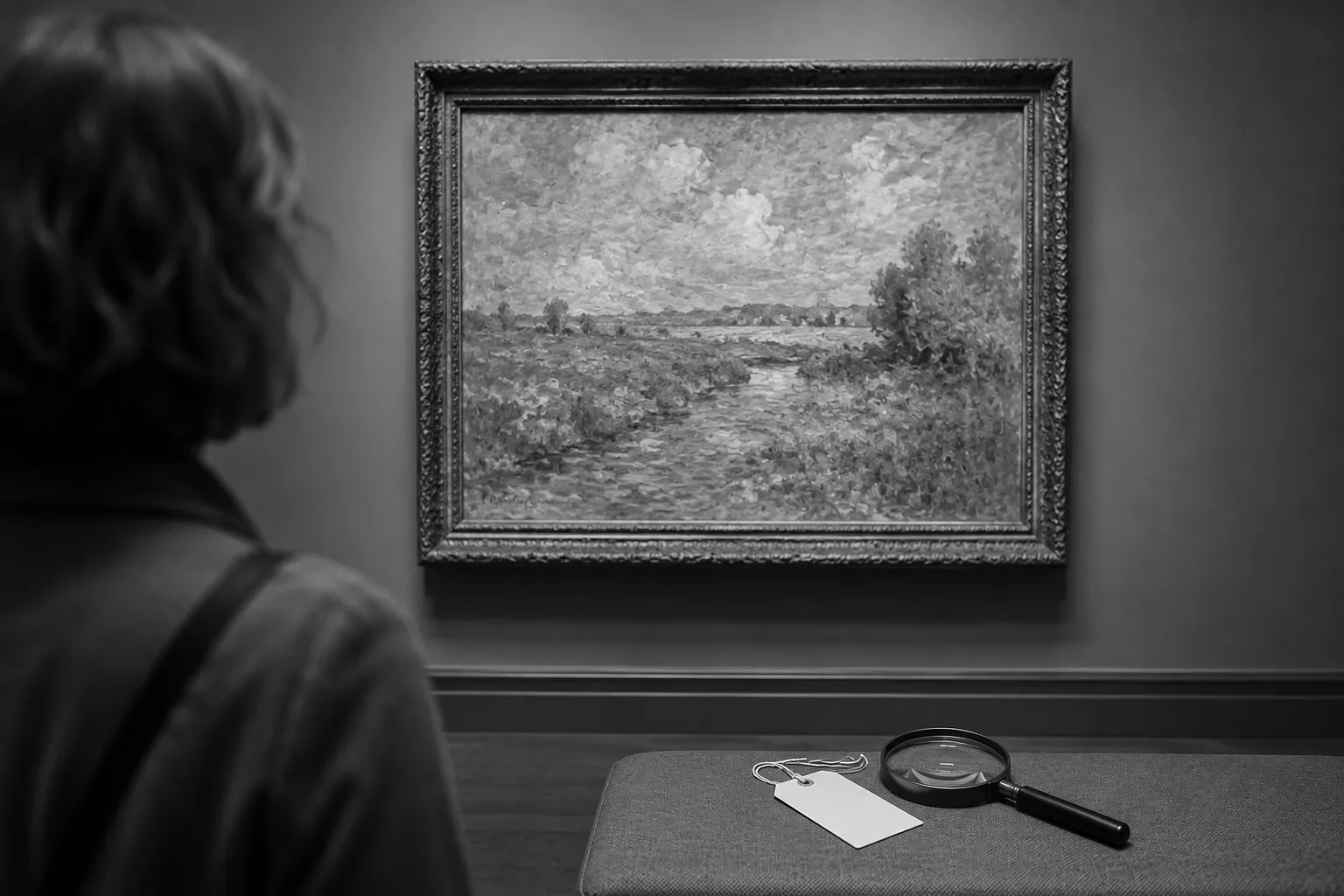
The Accused Monet
A genuine Monet painting became a test case for artificial suspicion after an X user posted it as if it had been generated by AI, Creative Bloq reported on May 23. The post asked viewers to explain what made the image inferior to a real Monet. Millions saw it, and many obliged. They found weak composition, empty texture, incoherent depth, poor color judgment, and a lack of human disorder. The evidence was confident and wrong. The image was an actual Monet.
The episode shows how quickly attribution can rearrange vision. Once the label says AI, the viewer begins looking for defects that confirm the label. Brushwork becomes artifact. Ambiguity becomes glitch. A strange passage of paint becomes proof of automation. The old work is judged from the accusation placed beside it before its surface has time to act. That matters for artists, museums, schools, and markets because the suspicion travels faster than provenance. Generative systems have made fake images easier to produce, and real images easier to mistrust. The false frame is the fraud. It teaches the public to see authenticity as an error waiting to be exposed.
El Monet acusado
Una pintura auténtica de Monet se convirtió en prueba de sospecha artificial después de que un usuario de X la publicara como si hubiera sido generada por IA, informó Creative Bloq el 23 de mayo. La publicación pedía al público explicar qué hacía que la imagen fuera inferior a un Monet real. Millones la vieron, y muchos respondieron. Encontraron composición débil, textura vacía, profundidad incoherente, mal juicio cromático y falta de desorden humano. La evidencia sonaba segura y estaba equivocada. La imagen era un Monet verdadero.
El episodio muestra la rapidez con que una atribución puede reorganizar la mirada. Cuando la etiqueta dice IA, quien mira empieza a buscar defectos que confirmen la etiqueta. La pincelada se vuelve artefacto. La ambigüedad se vuelve fallo. Un pasaje extraño de pintura se vuelve prueba de automatización. La obra antigua queda juzgada desde la acusación colocada a su lado antes de que su superficie tenga tiempo de actuar. Eso afecta a artistas, museos, escuelas y mercados porque la sospecha viaja más rápido que la procedencia. Los sistemas generativos han hecho más fácil producir imágenes falsas y desconfiar de imágenes reales. El marco falso es el fraude. Enseña al público a ver la autenticidad como un error pendiente de ser descubierto.









