August and the Rise of ChatGPT
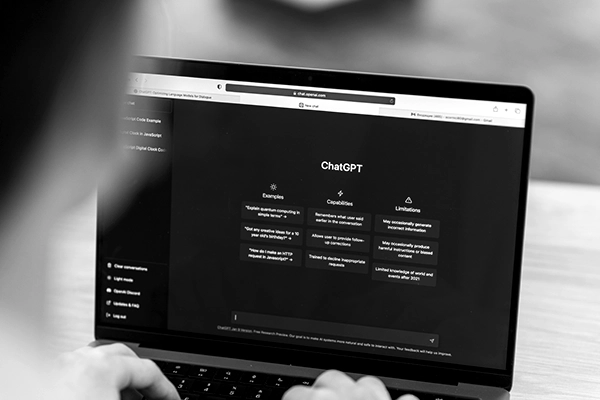
The return to classrooms multiplies the presence of ChatGPT. It has already become the indispensable tool of millions of students. Its use fell sharply in June and July during the long vacation, yet by late August it surged again with the opening of schools in the United States. Students turn to AI more within the classroom than outside it. Some teachers view this as a threat, warning that it erodes effort and weakens critical thought. Others accept it as inevitable, an evolutionary adaptation. Dylan reminds us with his old refrain that times do change. The question is no longer whether to ban or permit, but how to teach students to use AI with awareness and to mark the limits of its role in learning.
The debate inevitably touches on bias. Akli Adjaoute, an authority on AI security, responds that this is no error; it simply mirrors who we are and the world we inhabit. AI invents nothing. It learns from human data and inherits our assumptions, quarrels, and historical burdens. Books, medical records, police files, social media, even job applications, all are mirrors of societies shaped by stereotypes and discrimination. Algorithms replicate them as they stand and, at times, amplify them. It is worth remembering that the technology does not think, does not judge, does not hold an ideology. What it delivers is an imperfect reflection of ourselves. The task ahead is to teach students to handle it critically, for better or worse, a presence now inescapable.
Agosto y el auge del ChatGPT
El regreso a las aulas multiplica el uso de ChatGPT. Ya es la herramienta fundamental de millones de estudiantes. Su empleo bajó en junio y julio, durante las vacaciones, pero a finales de agosto repuntó con el inicio de clases en Estados Unidos. Los alumnos recurren más a la IA en el aula que fuera de ella. Algunos docentes ven en esto un problema y alegan que erosiona el esfuerzo y el pensamiento crítico. Otros sostienen que su uso es inevitable y obliga a una adaptación. Dylan nos recuerda que los tiempos cambian. La disyuntiva no es prohibir o permitir, sino enseñar a usar la IA con conciencia y definir límites claros en el aprendizaje.
El debate se extiende a los sesgos. Akli Adjaoute, experto en seguridad de inteligencia artificial, reacciona: no es un error, refleja quienes somos y el mundo en que vivimos. La IA no inventa nada. Aprende de datos creados por personas y hereda sus supuestos, desacuerdos y cargas históricas. Libros, historiales médicos, registros policiales, redes sociales o solicitudes de empleo son espejos de una sociedad marcada por estereotipos y discriminación. El algoritmo los reproduce tal como los encuentra y en ocasiones los amplifica. Conviene recordar que la tecnología no piensa, no opina, no tiene ideología. Lo que entrega es un reflejo imperfecto de nosotros mismos. La tarea será formar a los estudiantes en el uso crítico de una herramienta que ya es omnipresente.









