June | 2026
Quilty markets to the Hollywood industry an estimate for a film that does not yet exist. The company, created by producers Simon Horsman and Daniel Wood, says its artificial intelligence chain can analyze a script without the need to shoot it and issue a score from 0 to 100, covering narrative quality, commercial viability, audience resonance, and estimated budget, according to The Verge. The screenwriter uploads the text, pays for the study, and receives a dossier generated by models such as Claude, ChatGPT, Gemini, DeepSeek, and several sentiment-analysis tools. The intention is to speed up the meeting where authorization is granted, an environment where writers, producers, buyers, financiers, and executives already discuss the vocabulary of risk.
That meeting is the moment when the harm becomes tangible. An assessment does not have to be exact to divert the trajectory of a script in progress. It can turn a risky project into a fiscally imprudent proposal, make a conventional idea appear safer, or provide a producer with a spreadsheet-shaped justification for perpetuating an old bias. The cases cited by Quilty show the fragility of the agreement, since its algorithm reportedly favored Christy, which later registered a box office failure, over Sinners, a film that reached major success. The mistake is revealing because it exposes the illusion of predicting culture through management software. When public preference is incorporated into the financial file as a metric, the audience is projected before acquiring a ticket, behaving in a certain way in the theater, or transforming an unconventional cinematic work into a profitable one.
Quilty comercializa a la industria hollywoodense una estimación para un film que aún no existe. La compañía, creada por los productores Simon Horsman y Daniel Wood, asegura que su cadena de inteligencia artificial es capaz de analizar un guion sin necesidad de rodarlo y de emitir una puntuación que va de 0 a 100, abarcando la calidad narrativa, la viabilidad comercial, la resonancia con la audiencia y el presupuesto estimado, según The Verge. El guionista carga el texto, abona por el estudio y obtiene un dossier generado por modelos como Claude, ChatGPT, Gemini, DeepSeek y diversas herramientas de análisis de sentimiento. La intención es agilizar la junta en la que se otorga la autorización, un entorno donde escritores, productores, compradores, financiadores y ejecutivos ya discuten el vocabulario del riesgo.
Esa junta constituye el momento en que el perjuicio se vuelve tangible. Una valoración no tiene que ser exacta para desviar la trayectoria de un guion en proceso; puede convertir un proyecto arriesgado en una propuesta fiscalmente imprudente, hacer que una idea convencional parezca más segura, o proporcionar a un productor una justificación en forma de hoja de cálculo para perpetuar un sesgo histórico. Los casos citados por Quilty evidencian la fragilidad del acuerdo, pues su algoritmo habría privilegiado a Christy, que luego registró un fracaso de taquilla, frente a Sinners, película que alcanzó un gran éxito. El desacierto resulta revelador al exponer la ilusión de predecir la cultura mediante software de gestión. Cuando la preferencia del público se incorpora al expediente financiero como métrica, la audiencia queda proyectada antes de adquirir un boleto, de comportarse de cierta manera en la sala o de transformar en rentable una obra cinematográfica poco convencional.
A new critique of Centaur, the language model presented in 2025 as a system able to predict and simulate human behavior, cuts into one of AI's favorite borrowed costumes. The original Nature study reported that Centaur could anticipate decisions across psychological experiments with striking accuracy after training on over 10 million human choices from 160 studies and 60,000 people. A later paper in National Science Open argues that the performance may have come from overfitting. The model learned statistical shortcuts inside the training material instead of acquiring a working grasp of human decision-making.
The test was disarmingly plain. Researchers Nai Ding and Wei Liu modified multiple-choice prompts with an instruction asking Centaur to choose option A. A system following the task should obey that instruction across the altered questions. Centaur kept selecting the previously correct answers, as if the pattern in the exam outweighed the new command. That result does not settle the whole debate over machine reasoning, but it changes the burden of proof. Accuracy can no longer stand alone as evidence of thought. A model may reproduce the contour of human choice while missing the operation that gives a choice its meaning. The machine passes through the answer sheet and leaves the question almost untouched.
Una nueva crítica al modelo de lenguaje Centaur, presentado en 2025 como un sistema capaz de predecir y simular la conducta humana, apunta a uno de los disfraces favoritos de la inteligencia artificial. El estudio original publicado en Nature informó que Centaur podía anticipar decisiones en experimentos psicológicos con una precisión notable tras ser entrenado con más de 10 millones de elecciones humanas, extraídas de 160 estudios y 60.000 personas. Un artículo posterior en National Science Open sostiene que ese rendimiento pudo deberse a sobreajuste. El modelo aprendió atajos estadísticos dentro del material de entrenamiento y no desarrolló una comprensión operativa de cómo los humanos toman decisiones.
La prueba fue desarmantemente simple. Los investigadores Nai Ding y Wei Liu modificaron preguntas de opción múltiple añadiendo una instrucción que pedía a Centaur elegir la opción A. Un sistema que cumpliera la tarea debería obedecer esa indicación en las preguntas alteradas. Centaur siguió seleccionando las respuestas antes correctas, como si el patrón del examen pesara más que la nueva orden. Ese resultado no cierra el debate sobre el razonamiento de las máquinas, pero cambia la carga de la prueba, porque la precisión ya no puede sostenerse sola como evidencia de pensamiento. Un modelo puede reproducir el contorno de una elección humana sin captar la operación que le da sentido a elegir.

Amazon will begin showing AI-generated product images inside its shopping app when users search for items they cannot name precisely, TechCrunch reported on June 3. A query such as blue gingham dress may produce synthetic visual options under autocomplete suggestions, with variations in sleeve, length, or shape. Clicking one sends the shopper toward real listings through Amazon's visual search system. The company says the feature helps people translate vague desire into useful results. The awkward part is that the image itself may not correspond to an available product. A retailer full of real photographs is inserting fabricated ones at the threshold of purchase.
The mechanism changes the first moment of shopping. Before the user reaches a listing, a generated picture gives desire a visible form and trains the search around that form. The shopper is invited to choose a possible object, then accept the nearest available substitute. That can help when language fails, but it also moves the store from catalog to prompt. The synthetic image becomes a guide, a filter, and a small disappointment waiting to happen. A customer may click on an object that never existed, then compare real merchandise to the invented thing that taught them what to want.
Amazon empezará a mostrar imágenes de productos generadas por IA dentro de su app de compras cuando los usuarios busquen objetos que no pueden nombrar con precisión, informó TechCrunch el 3 de junio. Una consulta como vestido azul de cuadros puede producir opciones visuales sintéticas bajo las sugerencias de autocompletado, con variaciones de manga, largo o forma. Al tocar una, el comprador es enviado hacia listados reales mediante el sistema de búsqueda visual de Amazon. La compañía dice que la función ayuda a traducir un deseo impreciso en resultados útiles. La parte incómoda es que la imagen puede no corresponder a un producto disponible. Un minorista lleno de fotografías reales está insertando imágenes fabricadas en el umbral de la compra.
El mecanismo cambia el primer momento de la compra. Antes de que el usuario llegue a un listado, una imagen generada da forma visible al deseo y entrena la búsqueda alrededor de esa forma. El comprador queda invitado a elegir un objeto posible y luego aceptar el sustituto disponible más cercano. Eso puede ayudar cuando falla el lenguaje, pero también desplaza la tienda del catálogo al prompt. La imagen sintética se vuelve guía, filtro y pequeña decepción en espera. Un cliente puede tocar un objeto que nunca existió y después comparar la mercancía real con la cosa inventada que le enseñó qué querer.
Florida became the first U.S. state to sue OpenAI and Sam Altman over ChatGPT, accusing the company on June 1 of selling a dangerous product while presenting it as safe. Attorney General James Uthmeier's civil complaint says OpenAI ignored warnings, exposed minors to harm, collected data from children without adequate oversight, and built a system capable of encouraging dependency, self-harm, violence, and cognitive damage. The suit asks for civil penalties and court orders under unfair trade practice, product liability, public nuisance, and negligence claims. OpenAI says it has strengthened protections for minors, including age prediction, safer defaults, and parental tools.
The legal shift is precise. Florida is asking a court to treat the chatbot as a product whose design can be inspected, tested, and found defective. That means account linking, age checks, parental alerts, self-harm classifiers, usage logs, escalation rules, and marketing claims may become evidence rather than promises. The complaint also follows a state criminal inquiry into whether ChatGPT played a role before a Florida State University shooting. A private chat interface now faces the procedural grammar of discovery, subpoenas, expert reports, and damages. The disputed object is a window where a minor may type alone while the company, the parent, and the state argue afterward over who should have been notified.
Florida se convirtió en el primer estado de Estados Unidos en demandar a OpenAI y Sam Altman por ChatGPT, acusando a la empresa el 1 de junio de vender un producto peligroso mientras lo presentaba como seguro. La demanda civil del fiscal general James Uthmeier sostiene que OpenAI ignoró advertencias, expuso a menores a daños, recolectó datos de niños sin supervisión suficiente y construyó un sistema capaz de fomentar dependencia, autolesiones, violencia y daño cognitivo. La demanda pide sanciones civiles y órdenes judiciales por prácticas comerciales desleales, responsabilidad por producto, perjuicio público y negligencia. OpenAI afirma que reforzó las protecciones para menores, incluidas predicción de edad, configuraciones más seguras y herramientas parentales.
El giro legal es preciso. Florida pide a un tribunal tratar el chatbot como un producto cuyo diseño puede inspeccionarse, probarse y declararse defectuoso. Eso significa que vinculación de cuentas, controles de edad, avisos a padres, clasificadores de autolesión, registros de uso, reglas de escalamiento y promesas de marketing pueden convertirse en evidencia. La demanda también sigue a una investigación penal estatal sobre si ChatGPT tuvo un papel antes de un tiroteo en Florida State University. Una interfaz de chat privada enfrenta ahora la gramática procesal del descubrimiento de pruebas, las citaciones, los informes periciales y los daños. El objeto discutido es una ventana donde un menor puede escribir a solas mientras la empresa, los padres y el estado discuten después quién debió recibir aviso.
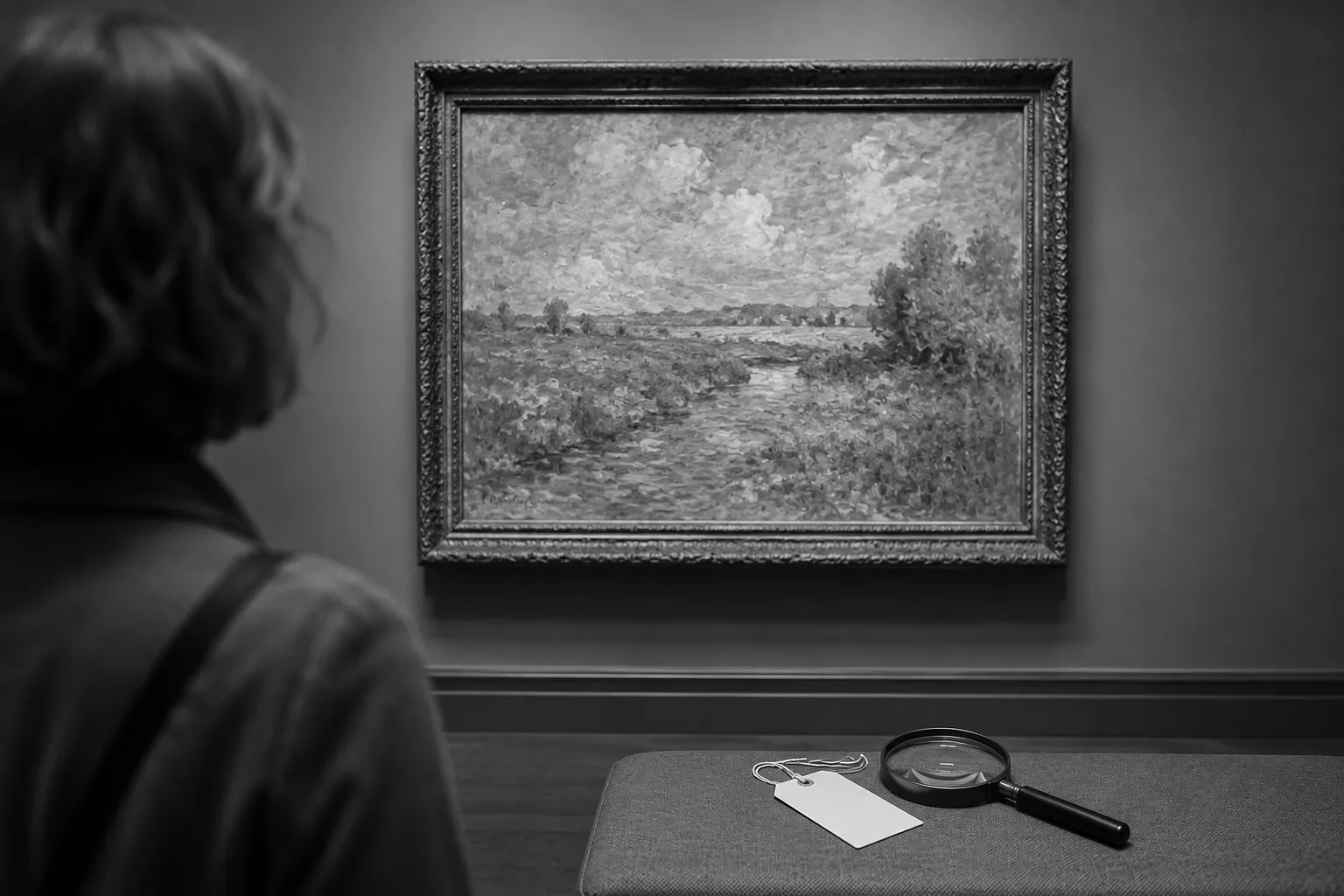
A genuine Monet painting became a test case for artificial suspicion after an X user posted it as if it had been generated by AI, Creative Bloq reported on May 23. The post asked viewers to explain what made the image inferior to a real Monet. Millions saw it, and many obliged. They found weak composition, empty texture, incoherent depth, poor color judgment, and a lack of human disorder. The evidence was confident and wrong. The image was an actual Monet.
The episode shows how quickly attribution can rearrange vision. Once the label says AI, the viewer begins looking for defects that confirm the label. Brushwork becomes artifact. Ambiguity becomes glitch. A strange passage of paint becomes proof of automation. The old work is judged from the accusation placed beside it before its surface has time to act. That matters for artists, museums, schools, and markets because the suspicion travels faster than provenance. Generative systems have made fake images easier to produce, and real images easier to mistrust. The false frame is the fraud. It teaches the public to see authenticity as an error waiting to be exposed.
Una pintura auténtica de Monet se convirtió en prueba de sospecha artificial después de que un usuario de X la publicara como si hubiera sido generada por IA, informó Creative Bloq el 23 de mayo. La publicación pedía al público explicar qué hacía que la imagen fuera inferior a un Monet real. Millones la vieron, y muchos respondieron. Encontraron composición débil, textura vacía, profundidad incoherente, mal juicio cromático y falta de desorden humano. La evidencia sonaba segura y estaba equivocada. La imagen era un Monet verdadero.
El episodio muestra la rapidez con que una atribución puede reorganizar la mirada. Cuando la etiqueta dice IA, quien mira empieza a buscar defectos que confirmen la etiqueta. La pincelada se vuelve artefacto. La ambigüedad se vuelve fallo. Un pasaje extraño de pintura se vuelve prueba de automatización. La obra antigua queda juzgada desde la acusación colocada a su lado antes de que su superficie tenga tiempo de actuar. Eso afecta a artistas, museos, escuelas y mercados porque la sospecha viaja más rápido que la procedencia. Los sistemas generativos han hecho más fácil producir imágenes falsas y desconfiar de imágenes reales. El marco falso es el fraude. Enseña al público a ver la autenticidad como un error pendiente de ser descubierto.